
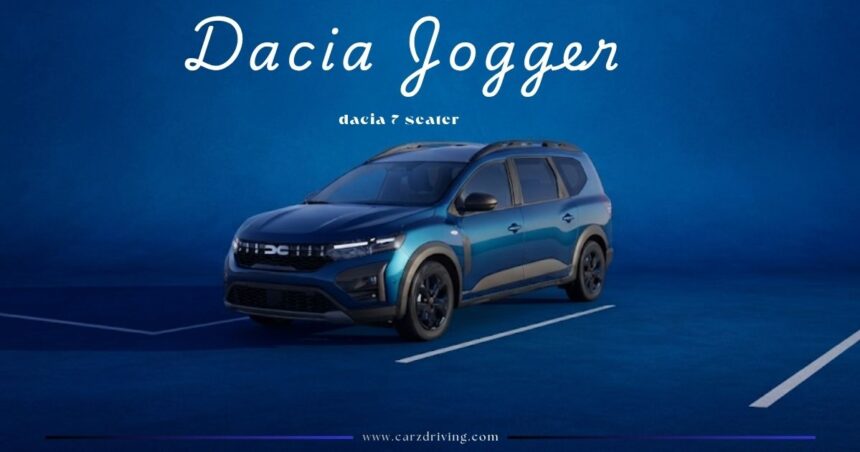
I still remember the first time I squeezed a friend’s whole family into a dacia 7 seater car for a weekend trip, and it was the Dacia Jogger that made the job easy without draining the fuel budget.
This family car first arrived in 2021, and it quickly became one of the most budget-friendly choices in its class, thanks to a purchase price that starts close to £25k.
Dacia 7 Seater
The Jogger shares its platform with the Sandero, Dacia’s entry-level model, but stretches that base into an estate-style body rather than a traditional SUV.
Strong sales figures across the UK and Europe during 2024 helped the Jogger become a genuinely best-selling name in its segment, and a recent mid-life refresh has sharpened its styling and lifted overall value.
Compared with rivals such as the Vauxhall Frontera, Citroen C3 Aircross, and the pricier Bigster, the Jogger still wins on low running costs and modest fuel costs.
It also brings decent interior space, a simple touchscreen, useful safety kit, and the option of a hybrid powertrain, all wrapped up in genuine practicality for families who need real seven seats every day.
What’s New
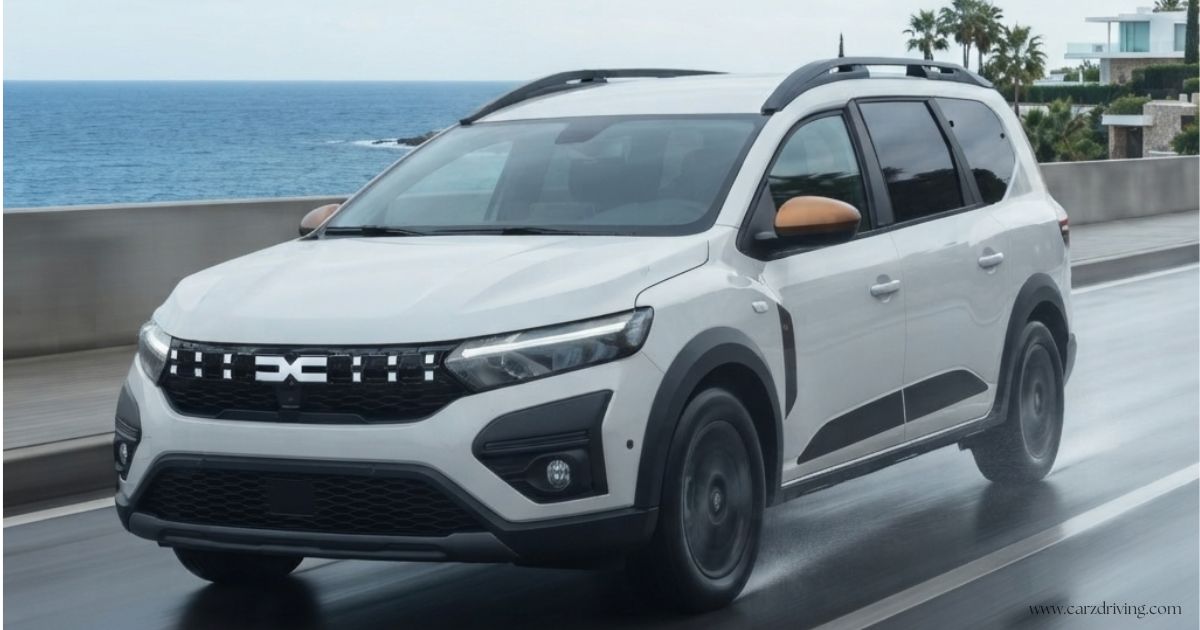
For this update, Dacia gives the Jogger a fresh face borrowed from the Duster, with a bold pixel-inspired grille, a new T-shaped light signature, and sharper LED headlights up front, plus LED rear lights at the back and a shark-fin roof aerial on the roof.
New alloy wheel designs and a reshaped bumper sit alongside a fresh Dacia badge, while the cabin gains a 10-inch touchscreen that supports Apple CarPlay and Android Auto, sitting next to a 7-inch digital driver display and a redesigned steering wheel.
Dacia has also refreshed the dashboard trim and upholstery, using more recycled plastic, and added handy YouClip mount points, storage pouches, extra cup-holders, and phone holders throughout the cabin, plus new air vents for better comfort.
Every version now comes with seven seats standard and a proper third row, alongside Dacia’s own MySafety package of safety assistance systems, which includes autonomous emergency braking. Higher grades can add a multi-view camera or 360-degree camera, electric folding mirrors, and wireless phone charging as an optional extra, and buyers can even choose a bright Starkle paint finish or the personalised My Perso styling pack.
Even so, rivals like the Vauxhall Frontera and Citroen C3 Aircross have pushed Dacia to keep improving the Jogger’s cabin tech and comfort features.
Engines and Performance
Under the bonnet, the entry engine is the 1.0 TCe petrol, a turbocharged, three-cylinder unit with 108bhp, paired with a six-speed manual gearbox and a light gearstick that feels easy to use around town.
This version weighs 1,221kg, reaches 62mph from rest (0-62mph) in 11.2 seconds, and tops out at a top speed of 111mph, giving fair refinement on the motorway and steady steering feel on inclines.
Buyers who want a smoother drive can pick the Hybrid 140, badged HORSE after the engine developed through the joint venture between Renault and Geely; this setup pairs a four-cylinder petrol engine with electric motors, a small 1.4kWh battery, and a two-speed unit instead of a normal four-speed automatic, letting the car run in EV mode for around 80% urban driving.
The hybrid system’s combined output reaches 138bhp, giving enough punch for confident overtaking. The stronger 1.8 Hybrid 155, with 1.8-litre capacity and 153bhp, weighs 1,388kg, which is 167kg heavier than the base 1.6-litre manual, yet it still sprints to 62mph in 9.0 seconds. Both hybrid options only come as automatic, never as manual, and both trade a touch of raw pace for better everyday efficiency.
Fuel Economy and Running Costs
Running a Jogger stays cheap because the 1.0 TCe sits in insurance group 13, while the hybrid rises to insurance group 20.
Official figures claim 61.4mpg, though real-world driving tends to return closer to 47.1mpg for the petrol and around 41mpg to 48mpg for the hybrid, against a claimed 65mpg and a lab-test 61mpg. The Hybrid 155 version, in particular, balances strong mpg with lower emissions better than most rivals in this class.
A 50-litre fuel tank gives roughly 600 miles range between fill-ups, useful for anyone covering 36,000 miles a year. CO2 emissions sit at 136g/km for the manual and 104g/km for the hybrid, which brings roughly a 10% improvement in efficiency and pushes it into cheaper tax bands. Road tax, tied to Benefit-in-Kind or BiK rules, costs about £195 annually for private buyers, and company car drivers benefit from lower BiK too.
Unlike a full PHEV or pure EV, the Jogger cannot plug in, though it can cover up to 50% of town driving on electric power alone. Over three years, depreciation stays gentler than on rivals such as the Vauxhall Combo Life, helping the Jogger hold its value well.
Pricing
Prices for the Jogger start at £18,995 for the entry Essential trim, rising to £20,295 for Expression and £21,595 for the top Extreme grade, meaning the range spans from just under £21,000 to a touch over £25,000 once the hybrid engine is added, a £3,035 premium over the equivalent petrol.
Monthly leasing deals start from around £240 and climb to £320 per month depending on mileage and deposit. Discounts on used cars can knock a further £11,000 to £12,000 off list price within the first couple of years, thanks to steady early depreciation.
Against family SUV rivals such as the Vauxhall Frontera at £23,330, the Citroen C3 Aircross at £24,630, and the Citroen Berlingo at roughly £21,000, the Jogger looks like genuine value.
Even premium seven-seaters like the Skoda Kodiaq, Peugeot e-5008, Hyundai Santa Fe, and the electric VW ID Buzz sit well above £47k, while genuine luxury names such as the Land Rover Defender 110, Audi Q7, BMW X7, and Volvo XC90 stretch from £48k past £60k, and can even top £66k in higher grades.
Interior, Trims and Equipment
The base Essential trim keeps things simple, with manual air conditioning, auto lights, wipers, basic dials, a DAB radio playing through two speakers, and a mix of hard plastic and fabric inserts across the cabin design.
It still includes Bluetooth, a reversing camera, LED front and rear lights, and MySafety features like lane-keep assist, traffic-sign recognition, and autonomous emergency braking as standard.
Step up to Expression trim and buyers gain a soft-touch dash, 16-inch alloy wheels, roof bars, keyless entry, climate control with automatic climate control on some versions, parking sensors, a sat-nav function through the 10-inch touchscreen, plus Apple CarPlay and Android Auto, a phone cradle, wireless phone charging, and simple switchgear with clear buttons rather than fiddly touch controls.
The range-topping Extreme trim adds a soft-feel steering wheel that can be heated (a heated steering wheel), heated front seats, a driver-attention monitor, auto high-beam assist, a 360-degree camera, electric folding mirrors, privacy glass, a shortcut button on the wheel, an upgraded Arkamys sound system, and rugged copper-coloured detailing with My Perso styling touches, all lifting the overall feel of the cabin.
Practicality and Boot Space
The Jogger’s exterior dimensions make it easy to place on a driveway or in a car park: overall length measures 4,547mm, or 4,395mm by some measures, and stretches to 4,753mm when compared against the longer Citroen Berlingo XL. Width comes to 1,848mm, and overall height sits around 1,691mm, with a wheelbase of 2,898mm and a 1,660mm front track.
A rear overhang measurement of 2,975mm, taken from the front axle line, helps explain why the cargo area feels so usable. Inside, headroom stays generous in the middle row, and knee room stays fair even in the third row, helped by a roofline that avoids feeling cramped, and each seat has its own cup-holder and a handy 12-volt socket.
As a true seven-seater, boot space changes a lot depending on how many seats are up: with all seven seats in place, there is just 160 litres, or as little as 40 litres to the parcel shelf; fold the third row flat and space grows to 565 litres, and with both rear rows down it reaches 1,470 litres, or up to 2,085 litres measured to the roofline.
Some listings also quote 1,050 litres, 820 litres, 330 litres, or 209 litres depending on the exact loading height used. Third-row access stays simple thanks to sliding middle row seats and pop-out windows that help visibility for those in the back.
Towing capacity reaches 730kg for the braked hybrid and 645kg for lighter versions, total interior volume can hit 3,500 litres worth of packed space, and the roof carries a load limit of 9.9kg per bar. Compared with rivals like the Citroen C3 Aircross and the smaller Sandero, with figures around 2,672mm, 1,818mm, and 1,850mm for various measurements, the Jogger simply offers more room for the same money.
Safety
Euro NCAP gave the Jogger a disappointing one star rating, built from scores of 69% for adult occupant protection, 41% for child occupant protection, 70% for vulnerable road user protection covering pedestrians, cyclists, and even animals, and only 39% for overall safety assist technology, a weaker result than its sister car, the Dacia Sandero.
Even so, every Jogger comes with an electric handbrake, AEB (autonomous emergency braking), lane-departure warning, lane-keeping assist, blind-spot warning, traffic-sign recognition, a driver monitor, and a seatbelt warning that covers the third row too, all part of the standard safety assist suite from Expression trim upward.
Dacia backs every car with a seven years or 100,000-mile warranty, on top of three years of included dealer servicing, and the brand continues to score well for customer satisfaction in independent surveys.
Rivals
Shoppers cross-shopping the Jogger often look at small vans-turned-people-carriers like the Ford Tourneo Courier, Ford Tourneo Connect, and VW Caddy, or bigger boxy options such as the Citroen Berlingo, where a third row optional setup mirrors the Jogger’s own layout.
Mainstream SUVs from Vauxhall (the Vauxhall Frontera), Peugeot (the Peugeot e-5008), Citroen (Citroen C3 Aircross), and Fiat all compete on similar running costs, though most cost more and hold slightly worse depreciation figures.
Toyota offers a strong plug-in hybrid rival, while buyers who want a diesel engine or an electric option like the VW ID Buzz have to look outside the Dacia range entirely.
Further up the ladder, premium seven-seaters such as the Skoda Kodiaq, Hyundai Santa Fe, Volvo XC90, Land Rover Defender 110, Audi Q7, and BMW X7 deliver more polish and status but ask for a much bigger budget.
Verdict
Having spent real time behind the wheel of family cars in this class, I’d call the Dacia 7 seater Jogger a genuine best buy for anyone who wants seven seats without a huge budget.
The entry 1.0-litre manual on Essential trim keeps running costs and pricing low, while Expression adds welcome comfort and the top Extreme brings extras like privacy glass, parking sensors, and a 360-degree camera.
Anyone who wants smoother performance and better refinement should consider the Hybrid 155 instead. Whichever grade buyers choose, the Jogger delivers strong practicality, useful boot space, and everything a growing family car needs.
FAQs of Dacia 7 Seater
Is the Dacia Jogger still the cheapest seven-seat car in the UK?
Yes, the Dacia Jogger remains the cheapest seven-seat car in the UK, with the Essential trim starting at £18,995.
What engines power the Dacia Jogger?
Buyers can choose the turbocharged 1.0 TCe petrol with 108bhp, or the Hybrid 140 and stronger 1.8 Hybrid 155 with 153bhp, both using electric motors.
How many seats does the Dacia Jogger offer?
Every Jogger comes with seven seats standard, and the rearmost seats are fully removable for extra boot space when needed.
How much boot space does the Dacia Jogger have?
Boot space ranges from a tight 160 litres with all seven seats up to a generous 2,085 litres once the third row is removed.
Is the Dacia Jogger a safe family car?
Despite a disappointing one star Euro NCAP rating, the Jogger still includes reassuring safety kit like autonomous emergency braking and third-row seatbelt warnings.