

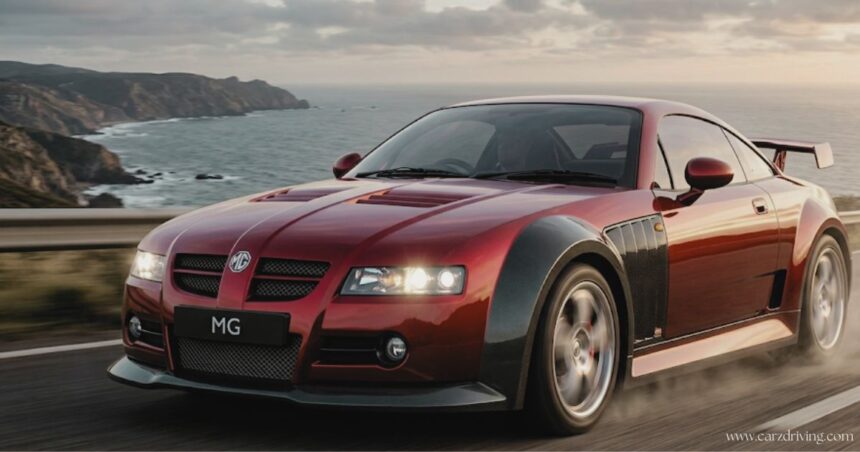
Every fan of British car history knows the MG SV XPower as a strange curio on the road of automotive history. This supercar started life as a dream but slowly became a metaphor for a company that was running out of money.
MG SV
Built by MG Rover during hard times, the body of this car passed through three car companies before reaching the road, and its road to production remains one of the oddest journeys any cars have ever taken.
The MG badge sits on a wide, aggressive-looking shape, and skilled workers made every panel hand-built by hand before paint went on. The same passion that shaped the McLaren F1 also shaped this car, and under the skin sits a Ford V8 engine that delivers real power.
Up front sit headlights borrowed from a humble Fiat Punto, a detail that adds to its charming oddness, while its carbon-fibre panels sit Low to the ground.
Builders used parts from two countries, and each finished car became a single customer car carrying a curiosity that few machines can match.
This ultimate expression of MG’s ambition stayed flawed yet unforgettable, and its slow decline mirrored the fall of the wider British motor industry at that time.
The growl of that engine still gives me goosebumps whenever I stand near one at a car show, and that feeling explains exactly why the SV deserves a proper look at how it came to be, how it drives, and why it still matters today.
Origins
The story starts back in 1996, when a wild concept car called the De Tomaso Bigua (also spelled Biguá) appeared at the Geneva Motor Show. This Italian-styled, American-powered idea came from De Tomaso, a small firm chasing a sports car built to meet strict US regulations from day one.
Money ran short fast, so American entrepreneur Kjell Qvale stepped in with financial backing, but a falling-out between the two sides soon followed.
After the split, the car reached production in Modena, Italy, badged as the Qvale Mangusta, and the firm built roughly 280+ examples of the Mangustas before poor sales brought the project stalled to a halt.
MG Rover, hunting for a halo model in spring 2001, bought the ailing project from the Qvale Automotive Group and gained a ready-made, US-homologated platform almost overnight. The firm first showed its plan through the X80 concept at the Frankfurt Motor Show in September 2001, hinting at a V8 sports car built for a wider market segment.
Early plans called for high volume aluminium builds of around ten thousand cars a year, a target the team soon dropped once reality set in.
Peter Stevens, the same designer behind the McLaren F1, led the reworking of the shape inside a busy studio back in England, working alongside chassis expert Giordano Casarini on fresh chassis development.
A new arm called MG Sport and Racing rose as a subsidiary of MG Rover, and Stevens took the title of Managing Director to push the production ambitions forward.
The team unveiled the finished shape in late 2002, and this sharper look replaced the earlier unresolved styling with a meaner nameplate worthy of the XPower SV, also written as the X-Power SV.
The car kept its patchwork origins alive through donor parts such as Ford V8 engines, a five-speed manual gearbox built by Tremec, OZ wheels, and Brembo brakes. It even carried Fiat Punto headlights and a heater panel lifted straight from a Maserati, small touches that reveal its multi-company, multi-country build process.
Stevens has said the shape drew inspiration from the 2001 film The Fast and the Furious, a detail that still surprises people today.
Every production-spec car rolled through a carbon-fibre body, and skilled hands built the carbon-fibre bodywork in Italy before each shell crossed the sea for paint and finishing back in Longbridge, England.
News of the car’s price and shape reached the press soon after the reveal, sparking debate about whether MG, still linked loosely to former owner BMW since 2000, could really pull off a sale at this level. Looking back, this whole engineer-driven sports car project remains one of the strangest tales in the story of the MG XPower SV.
Design and Styling
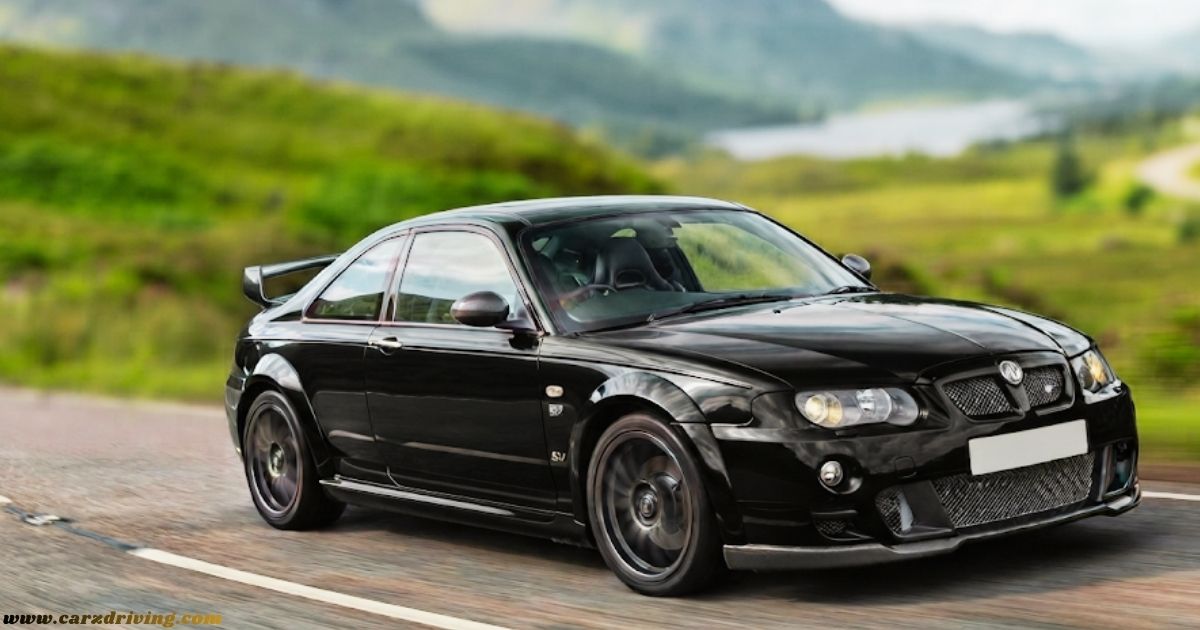
Every fan of styling details notices the impression this car leaves the moment it appears, and reviewers have always praised its shape.
It isn’t a conventionally beautiful or pretty car, yet it stays arresting, menacing, and fully purposeful at the same time, earning it the nickname proper bruiser among fans of the SV. Sitting low and wide, the shape hides a construction quality that beats most rivals of its era.
Up front, a deep front air dam works with an integrated splitter to cut through the air, while splitters and vents along the front wings pull hot engine heat away from the hand-built body. Wide, flared wheel arches wrap around cast alloy wheels, and brake-cooling gills feed air straight to the brake discs behind them. Nothing here counts as decorative; every line serves as a functional detail.
Round back, a tall rear wing joins an underbody diffuser to create real downforce, proving the whole shape stays functional from nose to tail.
Builders made this car in small, low-volume numbers, and the carbon fibre shell shows off tight panel fit and a deep, glossy paint finish that few small builders could match back then.
Much of that shell came together in Italy, and once you walk around it, that vented bonnet and clean panel fit show a level of care you rarely find on a low-volume car.
Engine and Performance
Across its short lifespan, the SV offered several different states of tune, or tunes, each built around a Ford-derived V8 engine. The Standard SV used a 4.6-litre, 4601cc unit built by Sean Hyland, a 32-valve, DOHC design good for 320bhp and 300lb ft of torque.
Peter Stevens himself once claimed power outputs as high as 965bhp were possible, and rumours even mention 1000bhp through nitrous oxide injection, though normal production cars stayed far below that.
Every car sent power through a five-speed manual gearbox built by Tremec, backed by a Dana limited-slip differential and switchable Ford traction control for extra grip. Weight sat close to 1540kg, or 1500kg on some kerb weight figures, keeping the standard car reasonably light for its size.
By 2004, the firm bored out the engine to 5.0 litres and sent it to Roush, creating the SV-R with 385bhp, sometimes quoted as 410bhp, and 376lb ft of torque.
Claims put the SV-R’s sprint at 4.9 seconds, with a top speed near 175mph, while the standard car needed 5.3 seconds or even 5.6 seconds to hit 0-60mph, topping out around 165mph.
Reviewers who tested a driver-focused example felt these performance figures looked ambitious, joking a car would need to get shoved off a cliff to match the claimed 62mph sprint time in real-world use. Still, the MG name behind the V8 engine gave the whole package a proper sporting edge from the very start.
What It’s Like to Drive
Despite its muscle-car looks, the SV hides a driving character that feels far smoother and more refined than most people expect from an American muscle-car engine.
Reviewers gave the car measured praise, calling the whole package quite good and genuinely pleasant to drive on both motorways and tight roads. Final verdicts often agree the cabin feels genuinely comfortable, and the V8 never once shows any nasty snap behaviour through fast corners.
On the move, the engine stays smooth low down, then turns properly eager to rev once you pass 4500rpm, where it truly picks up its skirt and flies.
That climb comes with a rich, bassy, burbling exhaust note that many owners call a recurring highlight of the whole experience, even if low-down torque stays a touch behind a typical American V8. Grip and Traction stay strong, if not quite outstanding, and gentle body roll control helps the car feel planted despite fairly low-profile tyres.
Well-judged steering gives confidence-inspiring turn-in, and once you push harder, the tail slides into a fully controllable oversteer rather than a scary loss of ride quality.
The chassis and gearbox work well together, since the Tremec unit carries ratios matched closely to the engine’s narrow powerband, meaning you rarely miss a sixth gear.
This well-regarded setup, paired with strong revs through the range, feels less truck-like than you’d expect and gives the SV a genuinely characterful side that grows on you the longer you drive it.
Interior
Step inside and the cabin of this SV brings mixed reactions, since its ergonomics split opinion among owners and testers alike.
The seating position sits fairly high, and the steering wheel connects to an old rack with no reach adjustment, which limits fine adjustment for taller drivers. Even so, the Recaro bucket seats hold you firmly and offer strong side grip through corners.
A small Momo leather-bound steering wheel sits ahead of you, while racing harnesses stretch across your shoulders, partly making up for the total lack of airbags in this car.
Trim choices range from Alcantara trim to full leather trim, and the airy cabin feels genuinely spacious for a supercar of this size. Simple creature comforts such as air conditioning, electric windows, and electric folding mirrors round out the package nicely.
Plenty of glass all around gives strong visibility, and generous headroom means you rarely brush the roofline even in tighter turns.
Behind the seats sits enough room for a pair of full-face helmets, while the boot itself swallows a weekly shop without much fuss. This practical side of the SV surprises many first-time passengers who expect far less space from a car built purely for speed.
Rarity and Pricing
Production numbers shift a little depending on the sources you check, but most agree that around 82 total cars left the factory, including 42 SV-Rs.
Original list prices started near £65,000 for the standard SV and climbed toward £82,000, sometimes quoted as £83,000, for the range-topping SV-R. Since these SVs rarely change hands, tracking real asking prices takes patience and a fair bit of luck.
Used examples once traded for between £30,000 and £40,000, showing how much Values dropped before collector interest returned in recent years.
Today, a decent 4.6-litre car commands roughly £50,000, while a well-sorted, low-mileage example, sometimes fully restored, can reach close to £100,000. One dealer even priced a rare pair at £60,000 each, which proves that patient buyers still hunt down every last one of these cars.
Verdict
Opinions on the MG SV split cleanly depending on who you ask, and different sources rarely land on the same final verdict. Enthusiasts and collectors treat it as a truly era-defining, British V8 supercar worth its high price, and they celebrate the interesting engineering hidden beneath its patchwork origins. C
ritical road-testers, on the other hand, call it merely competent and comfortable, a capable car that never quite reached its full potential.
Blame for that gap often falls on high pricing and poor marketing, both of which stopped the company from selling as many cars as its ambition deserved.
The shape still looks visually dramatic, and the whole project shows real promise, yet it needed one more round of final polish before it could feel truly desirable and full of genuine excitement.
Even so, it stands as a proper metaphor for MG Rover’s final years, a rare, well-engineered car that did not survive long enough to reach its rightful place in the sun.
FAQs of MG SV
What engine does the MG SV use?
The MG SV uses a Ford-derived V8 engine, ranging from a 4.6-litre 320bhp unit to a 5.0-litre Roush-tuned 385bhp version in the SV-R.
How many MG SVs were made?
Only around 82 units left the factory in total, including 42 SV-Rs, making the MG SV a genuinely rare find today.
How fast is the MG SV?
The standard MG SV hits 0-60mph in about 5.3 seconds, while the more powerful SV-R claims a 4.9-second sprint and a 175mph top speed.
Why did the MG SV fail commercially?
High pricing and poor marketing held back sales, leaving this ambitious British V8 supercar unable to reach its true potential.
Is the MG SV a good investment today?
Yes values have climbed from around £30,000-£40,000 to £50,000-£100,000, as collectors rediscover this forgotten British supercar’s charm.