

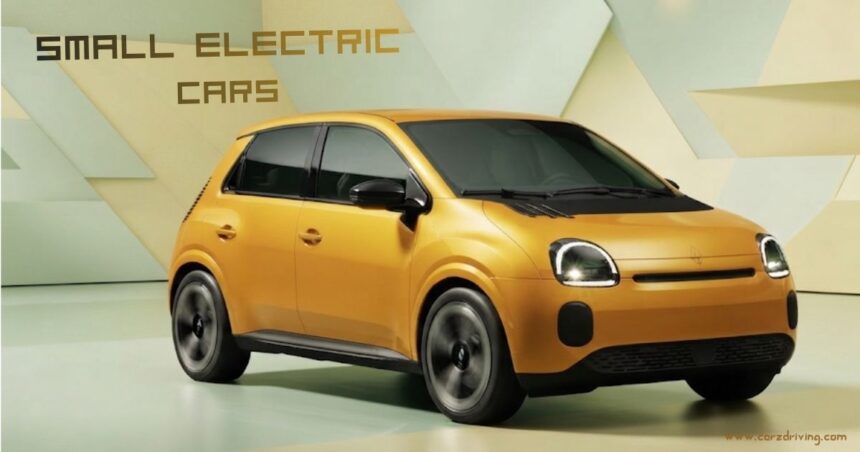
I have spent years testing small electric cars, and I can say this market has never looked stronger than it does in 2026. Early EVs felt like a gadget for early adopters, but today’s electric cars are mainstream, and UK roads now carry more of them every month.
Manufacturers built this class to solve one specific worry: range anxiety. City drivers rarely need three hundred miles of range; they need a car that copes with stop-start traffic, city-centre traffic, and urban traffic without draining fast.
That is where energy recuperation helps, since braking in traffic actually tops the battery back up, and electric torque makes even a modest motor feel punchy next to an old diesel-engined car or a tired petrol hatchback.
I like to call these cars city-scythers, because that is exactly what they do best: they nip through gaps that a large EV or combustion-engined SUV simply can’t reach. Drive one inside a ULEZ or any other ultra-low emissions zone and the charge clears instantly, and I have watched neighbours switch cars purely to dodge that daily bill. For plenty of buyers, one of these cars becomes their second car, a low-risk way to test electric mobility before the whole household commits.
Small Electric Cars
Cost is still the question people ask me most, and the honest answer is that the cost of going electric has fallen fast. Government grant schemes, the wider electric car grant support, and generous incentives all chip away at the expensive proposition electric cars once represented.
Falling base prices, together with new Volkswagen models promised for 2025, mean an electric hatchback no longer costs a fortune. Add lower maintenance costs, cheaper energy costs than a fuel pump, and useful tax benefits, and the numbers start to make sense quickly.
Charging is simpler than people expect too. Most owners just charge at home overnight, though I always tell friends to check if they can also charge at work, since free top-ups add up fast.
Out in town, charging points keep multiplying, especially around the natural habitat of compact electric cars: supermarkets, car parks, and high streets.
That network explains why these cars handle the daily commutes most of us actually do, and why a city car with a smaller battery still gets you exactly where you need to be, even at lower speeds through busy streets.
Some brands sell proper electric hot hatches, cars that pair instant acceleration with a calm interior, so the school run doesn’t feel like a chore and a Sunday blast still puts a smile on your face.
Electric SUVs cover the taller end of the market for families who need boot space, but shoppers on their own or as a couple usually do better with these smaller electric powertrains. We physically tested every car mentioned below that’s how we test works on this site driving each one at lower speeds in traffic and out on faster roads, as of 20/05/2026, so what follows reflects real experience rather than spec-sheet guesswork.
That is a big part of why small EVs enjoy such growing popularity, offering genuine affordable pricing without asking you to give up daily usability.
The value proposition here is simple: lower running costs, an efficient drivetrain, and a car that suits any commuter heading into town every morning. It’s clear that EV technology has matured to the point where a sensible electric models lineup can also be the first choice for drivers who simply want an easy life.
Renault 5 E-Tech
Renault clearly borrowed some cheeky character from the smaller Twingo sitting below it in the range when it built the Renault 5, and the result is a proper style icon. I still remember sitting in one at a dealership and thinking how well it echoed the original hatchback while driving like a completely new car.
Prices start at £21,495, and buyers pick between a 40kWh and a 52kWh battery, with official WLTP figures of 194 miles and 255 miles. Inside, the infotainment system feels slick to use on the move, running Google Maps and Google Assistant through a genuinely top-class infotainment setup, and the whole car feels right-sized for the city rather than cramped.
Our own Ben Miller has been living with a Renault 5 daily, and his reports back up everything I have found on shorter test drives.
Our test car, the comfort range 52kWh techno+ in Auto 5dr form, ran 0-62 mph in 7.9 sec and covered an official 252 miles on a charge, with 5 seats, a 326 litres boot, and an insurance group of 22E. It sits below the pricier Renault Megane and Scenic in the range, yet it borrows enough of their 10.3in screen and 10.1in screen setup to feel special, and I appreciated the physical controls for the air-con, something the rival Cupra Born still gets wrong.
Go for the larger battery and Renault claims up to 253 miles, more than a Hyundai Inster manages even in Long Range guise.
A 100kW charger takes a 15-80% top-up down to about half an hour, and I still smile at the little charging indicator built into the badge on the bonnet. Depreciation should stay gentle too, according to Will Nightingale, our Reviews Editor, who has watched demand stay strong since launch.
New examples start from £20,995, nearly new cars from £17,360, and leasing deals from £245 a month with a £2,946 initial payment on a 48 month contract and 5000 miles p/a.
That works out cheaper across the term than typical PCP or HP deals, with no balloon payments to worry about, and road tax already included in most quotes. Even the entry-level model never feels stripped out, the mid-range trim is the sweet spot in my view, and the whole car feels genuinely bang on trend while offering attractive pricing that undercuts most rivals.
Hyundai Inster
Few small cars pack in maximum interior space quite like the Hyundai Inster. Clever touches include a front passenger seat that folds down as a table, plus individual rear seats that slide to trade legroom for boot space, helped by genuinely flat floors front and back.
Prices open at £23,755, and shoppers choose between a 42kWh or 49kWh battery, giving official ranges of 203 miles and 229 miles, with 113bhp and a 10.6 seconds sprint on the bigger pack. It only carries four seats, so families with three kids should look elsewhere, but everyone else finds it roomy.
Our recommended 02 trim, badged Long Range 49kWh, does 0-62 mph and returns 223 miles, with seats for 4, a 238 litres boot, and an insurance group of 23D.
Styled with SUV style cues and a rufty-tufty bodywork look, it drives with a genuinely comfy ride thanks to soft suspension and well-weighted steering, making it feel more composed than a Dacia Spring and noticeably more spacious than a Citroën ë-C3 or Fiat 500e.
Compared with a BYD Dolphin, the Inster trades some rear legroom for extra boot space, since it only offers two rear seats rather than a proper bench. Darren Moss, our Deputy Editor, rates the large windows for the visibility they give, especially useful when threading through tight streets. New prices start around £17,250, nearly new from £15,740, and leasing from £233 a month, with a £2,791 initial payment across a 48 month contract and 6000 miles p/a — cheaper overall than PCP or HP, no balloon payments, and road tax rolled into the price.
Citroën e-C3
Stellantis has turned Citroën into more of a budget brand, chasing buyers who might otherwise pick one of the Dacias. The e-C3 doesn’t feel stripped back though; its 2.54m wheelbase lets four tall adults sit in real comfort. Priced from £19,995, it skips a glass roof, powered seats, and leather upholstery in favour of just the useful stuff, and I found the cabin genuinely pleasant for a supposedly cheap car.
On the road, the soft ride and supple ride soak up rough tarmac nicely, though enthusiastic drivers will notice some roly-poly handling through bends.
With its SUV styling, the e-C3 undercuts almost everything bar the Dacia Spring, and it feels more inviting inside than an MG4. My only gripe is the 10.25in infotainment touchscreen, which looks dated despite supporting Android Auto and Apple CarPlay.
BYD Dolphin Surf
I would pick the mid-spec Boost version of the BYD Dolphin Surf every time, with its 43.2kWh battery and 87bhp motor. It won’t win any drag races, needing 12.1 seconds for 0-62mph, but it covers a useful 200 miles range, and at £21,950 cheaper trims start from £18,675 it comes loaded with electric front seats, automatic wipers, folding mirrors, and a 10.1-inch rotating infotainment screen.
There are handy cubbies, deep door bins, and even though it is a strict four-seater, standard kit runs to adaptive cruise control, keyless entry, and air conditioning. Boost trim adds alloy wheels too, and bumps the charging rate from 65kW to 85kW, while the entry battery’s 30kWh usable capacity steps up to the bigger pack once you choose Boost.
It undercuts a Citroën e-C3 and even a Renault 5 on price, and depreciation should stay reasonable, although it lacks a Euro NCAP rating at the time of writing. George Hill, our Used Cars Writer, was impressed by rear space despite the four-seat layout.
New prices start from £16,995, nearly new from £12,990, and leasing from £252 a month with a £3,029 initial payment over a 48 month contract and 5000 miles p/a, better value than PCP or HP, with no balloon payments and road tax included.
Renault Twingo
Renault’s new Twingo rides on a leaner version of the AmpR Small architecture, helped along by an almost 200kg crash diet that makes it feel properly agile and playful on a twisty back road. Power comes from an 80bhp single e-motor on the front axle, delivering 129lb ft torque for a 12.1sec 0-62mph time and an 81mph top speed.
The 27.5kWh battery only gives a sub-150-mile range, so this car borrows more from old-school hot hatches than long-distance cruisers, but I loved how lightweight it felt through corners.
Clever packaging means adults fit in the back without complaint, and plenty of small interior quirks keep the cabin fun to sit in. Renault says pricing should undercut £20k once the electric car grant is applied, though buyers will have to wait until early 2027 before one lands on the driveway.
Fiat Grande Panda
The Fiat Grande Panda kicks off a whole new family of Panda models, and it leans hard into design heritage from the 1980 original, including a useful dashboard shelf inside. What struck me on my first look was the transparent yellow Perspex, the sustainably sourced plastics, and the playful exterior detailing this is proper Italian modernism, not a nostalgia exercise.
There’s even a captive charging cable tucked behind the front grille, a small detail I genuinely liked. Built on the same budget platform as the Citroën e-C3 platform, it isn’t the sharpest thing to drive, and I have doubts about the claimed 199 miles, since real-world efficiency fell short on my test drive. Even so, at £20,995, it is a proper bargain.
Kia EV2
The Kia EV2 has a genuinely solidly put-together cabin, dressed up with cutesy design details and splashes of colour throughout.
A single 145bhp motor drives the front wheels, and buyers choose between Standard Range 42kWh and Long Range 61kWh batteries, good for 197 miles or 281 miles respectively.
Early First Edition cars come loaded with toys, though the rest of Kia’s trim levels and the bigger battery follow soon. Spec it up to the flagship GT-Line S with a heat pump and the price climbs to £33,295, against an entry point of £24,245.
Cupra Raval
Cupra built its reputation on fun, and the Raval VZ Extreme proves the point, hitting 62mph in just 6.8sec thanks to a 223bhp electric motor. Buyers get a choice of four powertrains starting at 114bhp, paired with either 37kWh or 52kWh batteries, with prices spanning £26,995 to £36,310.
As the first of the VW Group’s MEB+ platform cars in this class, the Raval leads a new wave of supermini-sized EVs, with sister cars from VW and Skoda following soon.
I found it practical enough to double as a proper family car, yet it turns into a genuinely composed cruiser on the motorway and stays entertaining when you find some twisties.
Renault 4 E-Tech
Think of the Renault 4 E-Tech as the practical sibling to the Renault 5, trading a little style for a much bigger 420-litre boot and more room for rear passengers. That practicality costs a £4200 premium, but I think it is worth it for anyone who actually uses the back seats regularly.
One 52kWh battery and a 148bhp motor are the only choices, giving 8.2 seconds for 0-62mph and an official 247 miles range.
Inside, it borrows the same Google Maps and Google Assistant setup, so the infotainment feels every bit as sharp as its sibling’s. On the road, expect balanced handling and genuinely tidy cornering, even if it never pretends to be sporty. At £23,445, I would call it the pragmatists’ pick of the whole Renault EV family.
Mini Cooper Electric
The newest Mini Cooper Electric finally moves onto a purpose-built electric platform, ditching the old combustion car underpinnings that forced awkward compromises before.
Inside, fabric coverings now dress the dash and doors, replacing the soft plastics and chrome of before, and the 24cm OLED circular touchscreen somehow makes the whole minimalist cabin feel special rather than bare.
Entry prices of £26,905 get you the Cooper E, running a 40.7kWh battery for a 7.3 seconds 0-62mph sprint and a 190-mile range. I would stretch to the Cooper SE instead, with its bigger 54.2kWh battery good for 250 miles, a car that also beats an Abarth 500e to 62mph and enjoys noticeably faster charging too.
One to avoid: Dacia Spring
The Dacia Spring sits among the cheapest new cars you can buy, but cheap doesn’t mean good value here. Its tiny 36.8kWh battery pairs with either a 44bhp or 64bhp motor, hitting 0-62mph in 13.7sec or a sluggish 19.1sec.
Charging is slow too, taking 45 minutes to go from 20 to 80 per cent because it caps out at just 30kW DC charging, and the official 140 miles range shrinks fast in real driving.
Open the tinny doors and the cabin mixes bright colours with a decent-looking dash, though soft touch materials are in short supply. Rear adult passengers get almost no legroom, and there is no seat height adjustment for the driver either.
To its credit, the light steering and tight turning circle help with visibility and manoeuvring, but cheap tyres, excessive bodyroll, flimsy build quality, and a one-star Euro NCAP rating mean I steer friends away from this one at £15,990.
Coming soon: VW ID. Polo
VW is bringing a whole pint-sized family to the MEB+ platform, and alongside the ID. Cross sits the new ID. Polo. I drove an early prototype and came away impressed. Being front-wheel drive frees up cabin space, giving more boot space than you would get in a similarly sized Golf.
I was genuinely pleased to find proper physical buttons for the climate control and the windows, rather than fiddly haptic buttons on the steering wheel. Buyers choose between a 37kWh battery with 114bhp or a 133bhp electric motor, or a bigger 52kWh battery good for 208bhp. Prices should start Under £22k, and Volkswagen fans should look forward to the ID. Polo GTI too, the first electric VW ever to wear the GTI badge, though the main niggle so far is a touch of wind noise at speed.
Coming soon: Skoda Epiq
Skoda rounds off the MEB+ quartet, sitting above the ID. Polo and Cupra Raval in size, while still promising to be the brand’s most affordable electric car yet. Expect generous rear seats, a huge 475-litre boot, plus a handy 25-litre frunk for stashing charging cables out of sight.
I drove the prototype and the brake feel already feels far more natural than the current Skoda Enyaq’s.
Batteries will be a 37kWh battery or 52kWh battery, spread across three motors and three trim levels producing 114bhp, 133bhp, or 209bhp. Prices should start around £24,950, and on a 100kW DC feed the top model needs only 22 minutes charging from low to nearly full.
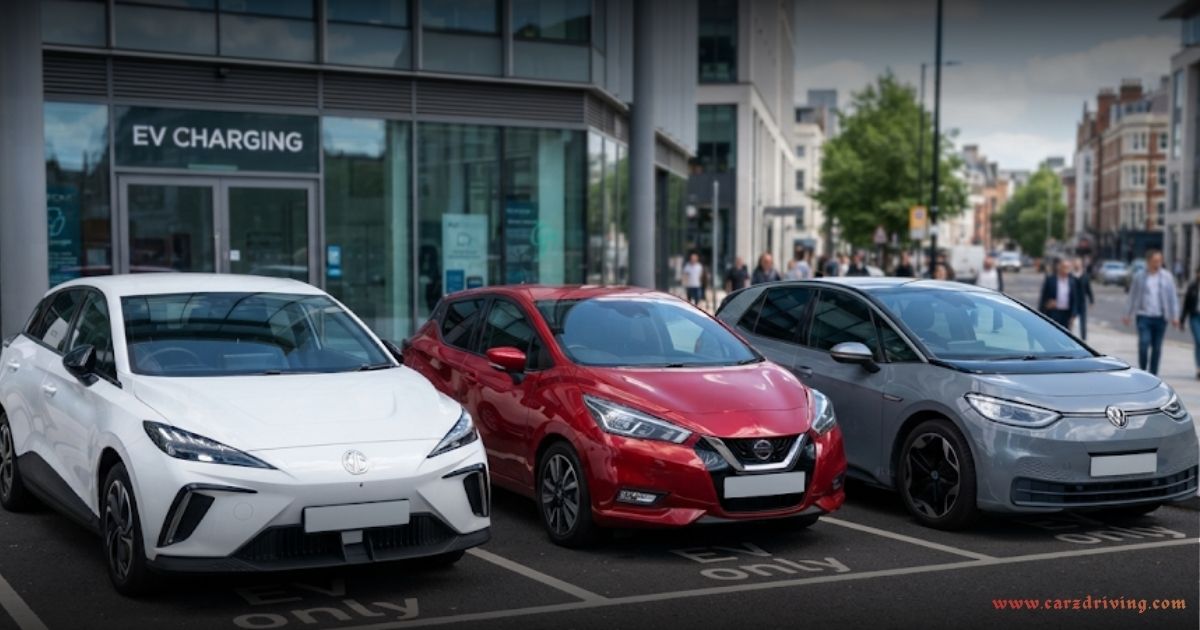
Overview: The best small electric cars for you
Our current favourite in this class is the MG4 Urban, a car that is well priced, genuinely practical, and backed by a strong safety rating.
For something with real pedigree, the Renault 5 carries a What Car? Car of the Year Award, mixing cheeky looks with real electric substance even the basic version feels nippy, and stepping up to the larger battery stretches range to 252 miles range.
The Nissan Micra, meanwhile, shares its underpinnings with that same sibling, so it is just as good to drive and just as competitively priced.
MG4 Urban
Don’t confuse this with the regular MG4 the MG4 Urban is a different, cheaper, roomier car entirely. Even the base 148bhp electric motor feels quick by EV standards, and the Standard Range version covers 201 miles, while stepping up to Long Range brings 258 miles, more than most rivals manage.
I liked the commanding driving position and the fact that Urban keeps physical controls for the air conditioning instead of burying it in the touchscreen, which itself measures a clear 12.8in screen. Space is a highlight too rear-seat passengers get more room than in a Hyundai Inster, and the boot space beats most rivals as well.
MG isn’t eligible for the official EV grant, so it offers its own £1500 saving instead, a move Will Nightingale, our Reviews Editor, rates highly. New prices start from £17,489, nearly new from £17,498, and leasing from £250 with a £3,005 deposit across a 60 month contract and 5000 miles p/a, cheaper than PCP or HP, with no balloon payments and road tax thrown in. Combine that with aggressive pricing and a five-star Euro NCAP rating, and it is easy to see why this car tops our list.
Nissan Micra
Award-winning Renault 5, the Nissan Micra inherits most of its sibling’s strengths. I would choose the Extended Range version, which bumps power from 121bhp up to 148bhp and stretches range to 260 miles range, further than most rivals thanks to a genuinely aerodynamic shape.
The 52kWh battery supports 30 minutes charging from a fast public charger, and every Micra gets an EV heat pump to protect range in cold weather. My one complaint is the rear bench, which feels tight for taller passengers a BYD Dolphin Surf does better here though 326 litres storage easily swallows a weekly shop or a set of holiday suitcases.
Claire Evans, our Consumer editor, also flagged an annoying boot entrance lip that makes lifting heavy items awkward. New prices start at £18,779, nearly new from £20,250, and leasing from £181 with a £2,172 deposit over a 36 month contract and 5000 miles p/a, again beating PCP or HP, with no balloon payments and road tax included.
Cupra Born
Genuinely fun-to-drive small EVs are rare, but the Cupra Born delivers.. Choose the bigger 79kWh battery and the sprint drops to a 5.6sec sprint, though I think most drivers will be happy with the standard car.
Every version rides comfortably, and the turning circle of just 10.2m makes it easy to place in town. Compared with its cousin, the Volkswagen ID 3, the Born feels sharper, with genuinely tidy handling and precise handling through corners. Lawrence Cheung, our New Cars Editor, always picks the 58kWh car since it offers three rear seats, while the 77kWh model only manages two rear seats.
New prices start from £27,990, nearly new from £23,000, and leasing from £320 with a £3,835 deposit across a 48 month contract and 5000 miles p/a, undercutting typical PCP or HP deals, with no balloon payments and road tax already covered.
Renault Megane
The Renault Megane has swapped its old petrol identity for a role as an electric SUV, going up against the Cupra Born, MG4 EV, and Nissan Leaf.
Inside, I found the driving position genuinely easy to get comfortable in, with plenty of seat adjustment and steering wheel adjustment, plus loads of clever storage cubbies I even fit seven carry-on suitcases in the boot during one trip.
The VW ID 3 and Cupra Born both beat it for rear space, though. I would stick with entry-level Equilibre trim over pricier versions, since its smaller 18in alloy wheels give the best ride comfort.
That said, light steering makes the Megane feel a little vague when you are trying to place it precisely. Stuart Milne, our Digital Editor, praised how quiet the cabin stays on the motorway.
New prices start from £26,995, nearly new from £23,348, and leasing from £316 with a £3,796 deposit over a 48 month contract and 5000 miles p/a, again cheaper than PCP or HP, no balloon payments, and road tax included.
MG4
The regular MG4 EV remains a proper bargain, undercutting nearly every rival its size. The SE model covers an official 218 miles range, while the Long Range model, with its bigger 61.7kWh battery, stretches that to 281 miles, and even in winter, our 196 miles real-world result during winter testing impressed me.
The driving position suffers slightly from an offset steering wheel, but standard kit still includes adaptive cruise control, rear parking sensors, and even vehicle-to-load capability to power gadgets from the car’s own battery.
Go for the Long Range car and the 135kW charging capacity beats a rival Cupra Born, according to Will Nightingale, our Reviews Editor.
New prices start from £22,729, nearly new from £16,675, and leasing from £295 with a £3,538 deposit over a 48 month contract and 6000 miles p/a, cheaper than PCP or HP, no balloon payments, road tax included.
Volkswagen ID 3
A recent mid-life refresh has kept the Volkswagen ID 3 relevant. The facelift finally brought proper soft-touch materials throughout the cabin, though some trim still lags behind a BMW 1 Series; the centre console, for instance, still uses cheaper plastics.
On safety, automatic emergency braking, lane-keeping assistance, and a driver fatigue monitor all come as standard, and the car scored five stars in Euro NCAP testing back at its 2020 crash test, according to Steve Huntingford, our Editor. New prices start from £22,746, with nearly new examples from £14,995.
Cheap electric cars are available
Cheaper battery chemistry keeps changing this segment. Lithium iron phosphate batteries cost less to make, and new Volkswagen models due by 2025 promise an electric city car with genuinely practical range. Running one costs less too expect lower maintenance costs and energy costs, plus useful tax benefits on top.
Small EVs suit city driving especially well, since charging infrastructure tends to be dense downtown, and parking spaces reserved for an electric car licence plate are often easier to find.
Under the skin, modern lithium-ion batteries offer strong energy density even in small packs, which easily covers the average commuting distance of about 30 miles.
Beyond cost, there is proper CO2-free driving, and smaller cars naturally show lower energy consumption too.
I would recommend this class especially to novice drivers who care about staying environmentally conscious, since smaller batteries also mean faster charging, and a growing range of cars now caters directly to urban novice drivers starting out.
Tiny cars are on-trend
The rise of small electric cars shows where this market is heading next. These micro-cars compete directly with electric bikes and electric scooters, and they charge almost as easily as smartphone charging works.
They can’t match a proper electric car for dynamics or range, but small-format electric cars like these hint strongly at the future of driving in busy cities.
FAQs of Small Electric Cars
What is the best small electric car to buy in 2026?
The Renault 5 and MG4 Urban lead the pack, offering affordable pricing, strong range, and a genuine safety rating.
How far can a small electric car travel on one charge?
Most small electric cars offer a range between 200 miles and 260 miles, depending on battery size.
Are small electric cars cheaper to run than petrol cars?
Yes, lower maintenance costs, cheaper energy costs, and useful tax benefits make them cheaper to run than petrol or diesel-engined cars.
How long does it take to charge a small electric car?
A fast 100kW charger typically takes about half an hour for a 15-80% top-up, depending on battery size.
Are small electric cars good for city driving?
Absolutely their compact size, instant acceleration, and access to dense charging infrastructure make them ideal for urban traffic and city-centre traffic.