

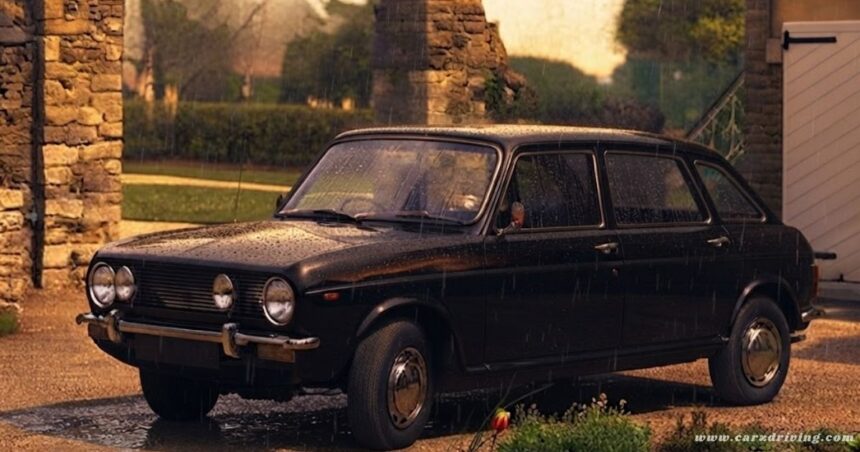
The British Motor Corporation built the Austin Maxi under the project name ADO14, and Sir Alec Issigonis shaped this car as his final design before it reached showrooms.
Buyers found a British hatchback for the very first time, and the car carried a five speed gearbox at a time when most British Motor Holdings rivals stuck with four gears.
The British Leyland Motor Corporation launched this model first among its new lineup, since the merger of Leyland Motor Corporation with British Motor Holdings, which itself joined BMC and Jaguar, took place in 1968.
The first version, called the 1500, used a fresh 1485cc 4 cylinder E series engine paired with a cable change gearbox, and this combination drew sharp criticism from both motoring press and everyday drivers.
BLMC brought in engineers from Triumph, a brand under Leyland since 1961, to fix problems across the wider Austin Morris range, and by October 1970 the Maxi returned with a doubled lineup covering the original 1500 and a new 1750.
Both cars gained a smoother rod operated gear change, while the 1750, fitted with a longer stroke 1748cc engine, carried enough power to move the car’s weight with less strain.
BLMC added a sportier trim called the Hi-Line, or HL, in 1972, and this version used twin carburettors alongside a sports steering wheel, crop Nylon seat coverings, and a vinyl covered padded dash.
By 1979, the HLS replaced the HL as the sportiest choice, while a plainer HL kept the same features minus the twin carburettors, and the ageing 1500 left the lineup that same year due to dwindling sales.
The final update landed in 1980, when a new grille, bumpers, wheel trims, and interior trim turned the car into the Maxi 2, and although the Austin badge stuck around for seven years, most units rolled out of the Morris works in Cowley, Oxford, while the engine and gearbox came from a purpose built plant in Cofton Hackett, near Longbridge, Birmingham.
Sales never soared past half a million over a 12 year run, and early design compromises and shaky styling held the car back from bigger numbers.
Owners who stuck with the Maxi grew fond of its practicability, and it wasn’t rare to see the same driver buy several over the years, building a genuine loyal following around a car that many overlooked.
Styling Problems
BMC boss George Harriman decided the new car had to share doors with the BMC 1800, purely to cut retooling costs, and that single choice reshaped the whole project known as ADO14.
What started as the Austin 1500 ended up with a wheelbase close to 106 inches, nearly matching the unloved 1800, and the shared doors locked in the windscreen angle and the shape of the mid-section before designers had a real say.
Early prototypes carried a booted rear end and an awkward v-shaped point at the front, and the team went through round after round of revisions trying to find a shape that worked.
Roy Haynes, a former Ford design director, stepped in and gave the car a cleaner front end and the hatchback rear that buyers eventually saw in showrooms, borrowing cues that echoed the earlier Renault 16 from 1965.
Issigonis wanted a two-box body that protected passenger space over engine space, with a wheel at each corner for sharp handling, and this goal explains the short rear end paired with a long wheelbase and elongated mid-section.
The finished shape lacked real panache next to its short boot and short bonnet, yet it delivered a genuinely massive interior and generous load space that families noticed the moment they climbed in.
Austin Maxi engineering
Engineers pushed the older A-Series engine as far as it would go, capping out near 1300cc, so BMC built the all new E-series unit at 1485cc to compete in the same 1500cc class as the Cortina.
The firm spent an estimated £14 million building a fresh plant at Cofton Hackett, near Longbridge, and Bill Davis, deputy managing director, told The Times the whole factory would stay ahead of its era for years.
Unlike the older overhead valve A-series and B-series units, the E-series used an overhead camshaft layout as an inline four, with room planned for six cylinders later on.
Fitting this engine transversely into a front-wheel-drive layout meant designers used siamesed cylinder liners and skipped water jacketing between cylinders, a choice that limited capacity growth and later caused headaches for the Allegro.
Beyond the engine, the Maxi offered a five-speed gearbox run through a cable-operated gear linkage, alongside independent Hydrolastic suspension carried over from the 1100/1300.
Charles Griffin, BMC director of engineering, described the fifth speed as a built-in overdrive gear, while the rod linkage system that later replaced the cable setup worked through fluid-based displacer units that created a real dynamic interaction between the front and rear wheels.
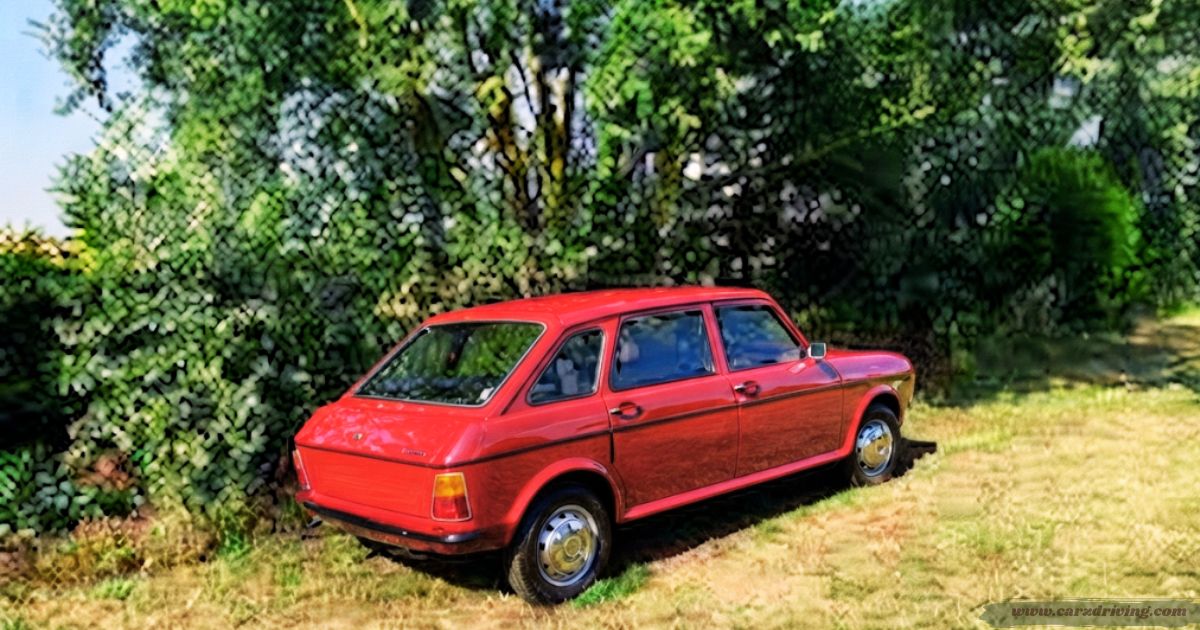
Launch of the Austin Maxi
BMC developed the car, but the British Leyland Motor Corporation, or BLMC, launched it first among their new models, skipping a booted saloon version in favour of the Morris Marina.
Lord Donald Stokes, who took charge in 1968, told the New York Times the car would spark a revolution for middle-class family motor cars the way the Mini had for small ones.
George Turnbull, running the Austin Morris division, oversaw a huge testing regime covering a million miles from southern Europe to the Arctic Circle, and he predicted sales near 150,000 units in year one.
Behind closed doors, though, everyone knew the cable-operated gear change and the engine both needed more work before launch.
Despite those doubts, the car launched at Estoril, Portugal, in April 1969, since the money already spent on the Cofton Hackett plant demanded a return, and the gathered motoring press left with plenty of criticism to publish.
Early impressions of the Austin Maxi
Andrew Marriott, writing for Motor Sport magazine, called the gear change vague and said new owners would need real time to adjust to it. Archie Vicar, reviewing for Today’s Driver, and Julian Mounter, at The Times, both piled on, with Mounter comparing the shift feel to stirring treacle with a long thin cane.
Vicar mocked the new fifth gear outright, joking that Longbridge struggled enough with four cogs without adding a fifth, a line that reads oddly now given today’s eight-speed and 10-speed auto boxes.
Jeff Daniels, at CAR magazine, went further still, calling the shift one of the worst gear-shifts in Europe and criticising the interior noise that came from several directions at once.
Still, Marriott found real praise for the car’s road-holding, saying it handled twisty roads with a feel closer to the Mini mark than to larger family cars, and he predicted a bright future if the car proved robust over time.
Buyers also liked a clever feature: the rear seats folded completely flat, turning into a double bed when needed, a genuine edge over the rival Renault 16.
Maxi sales fall off a cliff
Early demand looked strong for a brand new British car, and even Apple Records bought a Snowberry White example fitted with a Webasto sunroof.
John Lennon borrowed that very car for a trip to Durness, Scotland, with Yoko Ono, Julian Lennon, and Kyoko, and he swerved into a ditch along the narrow A838 after spotting oncoming traffic, sending both him and Yoko to hospital.
Strikes at Pressed Steel Fisher, the body supplier, cut weekly output from 2,000 cars a week down to 1,300 by September 1969, and market share slid from 3.3 per cent in May to just 1.4 per cent by December.
Fleet buyers also balked at the price next to the Ford Cortina and Vauxhall Victor, yet Lord Stokes stayed publicly confident about the car’s future.
Improving the Maxi
Within months of launch, the Cowley production line began tackling vibrations and road noise, and by 1970 the old cable gear change gave way to a sturdier rod system.
A new grille with a centre badge, fresh seat facings, a veneered wood dash, and a smaller steering wheel all arrived at once, and the price held steady even as rivals climbed, pushing market share back above 3 per cent.
The bigger change came in October 1970, when a longer engine stroke created the 1750cc version of the engine, followed by the Maxi High Line, or HL, in October 1972.
Twin SU HS6 carbs, new inlet manifolds and exhaust manifolds, a wider overhead camshaft overlap, and a raised compression ratio of 9.5-1 up from 8.75, achieved through new pistons, delivered a real 10 per cent power boost.
That work pushed output to 95bhp at 5,350rpm, cutting the 0-60mph sprint to around 13 seconds with noticeably sharper acceleration, while extras like electric windscreen washers, a heated rear window, brushed nylon panels, a padded dashboard, and an aluminium-spoked sports steering wheel rounded out the package.
Autocar, writing in December 1972, praised the car’s cornering and backed the five-speed box as the shape of things to come, while Bill Boddy, the Motor Sport editor, pointed to its interior space and load capacity as the real selling point.
Comparing the Maxi
In its early years, the Maxi faced one true rival in the family hatchback market, the Renault 16, and road tests regularly pitted Gallic idiosyncrasy against British sturdiness. CAR magazine, by October 1973, admitted the car had shed its unsavoury image, noting that the top HL cost roughly the same as the mid-range 16 TL, just below the flagship TS.
Reviewers still called the engine mediocre next to the French car’s mechanical refinement, quietness, ride comfort, and handling, and once the Volkswagen Passat hatchback arrived, undercutting both rivals on price, comparisons only grew tougher.
What Car?, testing all three in November 1975, picked the Maxi for load carrying, the Renault for comfort, and the Passat for styling and performance, concluding that British Leyland let the car’s design fall behind.
By the time the Chrysler Alpine and the similarly styled Renault 20 appeared, CAR described the Maxi as yesterday’s ideas, criticising the harsh rev range and juddery drivetrain, yet still calling it a reliable workhorse worth the money despite its lack of sophistication, its ageing looks, its old-fashioned dashboard, and its odd ride.
Further Maxi development
British Leyland Special Tuning, based in Abingdon, built the Pluspac A package for an extra £66 for Austin Maxi, adding SU carbs, a polished inlet manifold, and a new exhaust system that lifted the 1500cc engine from 74bhp to 83bhp.
A similar kit reached the Maxi 1750, while Downton Engineering of Wiltshire went much further with its £200 Stage 2 package, fitting a modified cylinder head that pushed output to 105bhp and a 100mph top speed.
Later years brought only small changes, such as Hydragas suspension replacing the older Hydrolastic setup, before the Maxi 2 revamp of 1980 added new bumpers, side indicators, and plastic wheel trims, along with revised instruments and switchgear inside.
The range-topping Maxi HLS carried the same engine as the HL but added a burr walnut dashboard, while the Austin name survived only on export models, and matt black bumpers replaced chrome near the very end.
By 1981, when the last car left the production line, it looked dated next to newer rivals like the hatchback Vauxhall Cavalier, and total output settled at just over 450,000 across the full 12-year run.
Even so, the car kept a devoted fan base among drivers who valued space and reliability over flashy looks, and I’ve spoken with a few owners over the years who still swear the Maxi was the most honestly practical family car Britain ever built.
FAQs of Austin Maxi
What made the Austin Maxi Britain’s first true hatchback?
The Austin Maxi, developed under ADO14 by BMC, combined a two-box body with a five speed gearbox, making it Britain’s first British hatchback.
Why did the Austin Maxi’s gear change get so much criticism?
Early models used a troublesome cable-operated gear linkage, which the motoring press called sloppy until BLMC replaced it with a smoother rod operated gear change in 1970.
What engine powered the Austin Maxi?
The Austin Maxi ran on the all-new E-series engine, starting at 1485cc and later growing to 1748cc in the sportier 1750 and HL versions.
How many Austin Maxis were made in total?
Just over 450,000 units rolled off the Cowley production line during the car’s 12 year run, a modest number that still earned it a devoted loyal following.
When did Austin Maxi production finally end?
Production ended in 1981, closing out the story of the Maxi 2 with a car that, despite its flaws, remained genuinely practicable and much loved.