
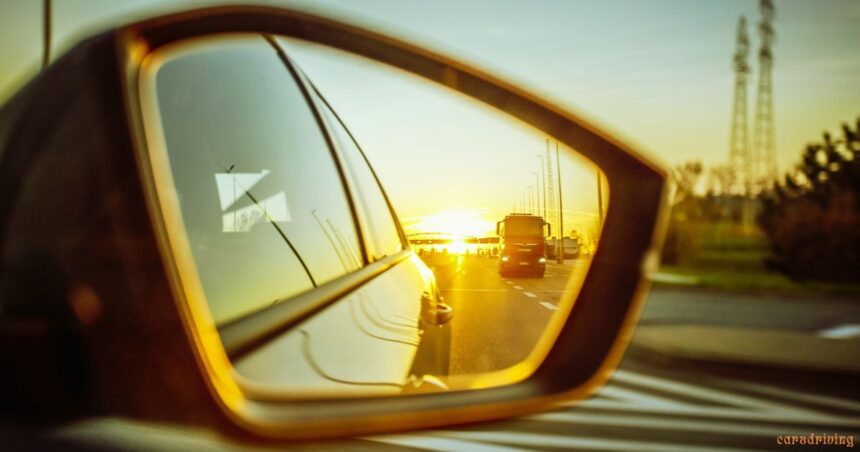
Modern mirror car blind spot assistance technology and warning systems have come a long way, but no gadget replaces a driver who understands their surroundings.
The nearside and offside areas of your vehicle both carry risks, and without proper insurance, awareness, and training, even a brief lapse in checking your wing mirror for a moving vehicle can prove fatal.
What is the Blind Spot?
A blind spot is a zone around your vehicle that your regular mirrors simply cannot show you, and it sits directly behind, in front of, and along the sides of your car in ways that catch even experienced drivers off guard.
These physical limitations are not flaws in your car but rather unavoidable realities that every driver must actively work around.
For drivers of lorries and buses, the passenger side blind spot is especially dangerous because a cyclist or pedestrian riding alongside can stay completely hidden for several seconds, sometimes with tragic consequences that make headlines.
Even in a regular car, wide roof pillars and the positioning of car seats create enough of a gap in your view that someone turning or changing lanes.
I once nearly missed a cyclist on my passenger side simply because my mirror angle had shifted slightly, and that moment stayed with me.
The sides of your vehicle will always carry some level of risk, but knowing that roof pillars and headrests contribute to the problem helps you compensate with better habits.
Every driver, regardless of experience, owes it to themselves and others to treat the blind spot zone as a real and present danger on every journey.
What is a Mirror Car Blind Spot?
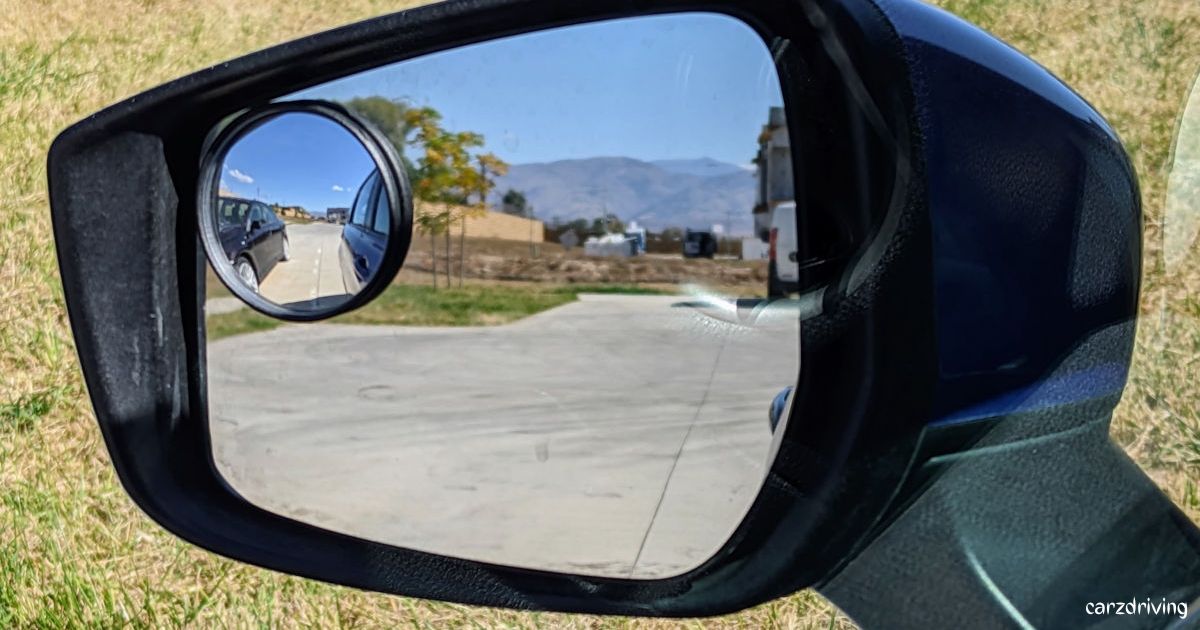
A blind spot mirror is a small convex mirror that clips or sticks onto your standard side mirror to dramatically widen your driver’s field of vision beyond what a flat mirror can offer.
These little additions are surprisingly inexpensive and easy to install, yet they can shrink your blind zone enough to make a real difference when merging into traffic.
I fitted one to my own car a few years ago and immediately noticed how much more of the road I could see without moving my head.
You can choose between a fixed design that gives you a permanent wide view or an adjustable model that you can angle precisely to match your driver’s height and seating position.
Both options serve the same purpose, but the adjustable model gives you more control, especially if multiple drivers share the same vehicle.
Some modern vehicles now come with blind spot mirror functionality built directly into their mirror housings, which is a welcome development, but millions of older cars still rely on aftermarket add-ons to get the same benefit.
Whether you go factory-fitted or aftermarket, the goal remains the same: expand your driver’s field of vision to cover the gaps your standard side mirror leaves behind.
A convex mirror bends light in a way that a flat mirror cannot, giving you a broader picture of what is happening in your blind zone at any given moment.
Why the Placement of Mirrors Matters
Your car wing mirrors, both left and right, give you a limited view of adjacent lanes, and while they are better than nothing, they regularly fail to show approaching cyclists or smaller vehicles creeping up alongside you.
Getting your mirrors properly adjusted before every journey is not just good practice, it is the single most effective way to minimize your blind spot and reduce the risk of accidents. I always take thirty seconds before pulling away to confirm that both exterior mirrors are positioned exactly where I need them.
While your interior rearview mirror provides a sweeping, panoramic view of the road directly behind you, it fails to capture the areas immediately flanking your rear bumpers.
This is exactly where a blind spot mirror steps in to fill the crucial visual gap. These interior reflections complement your door mirrors beautifully, but only when everything is aligned correctly and you know how to read what each mirror is actually showing you.
Never underestimate the importance of having all your exterior mirrors clean, correctly aimed, and working together with your interior rear view mirror before setting off.
A mirror that is even slightly off angle can hide a smaller vehicle or approaching cyclist completely, turning what felt like a safe manoeuvring decision into a near miss.
Every adjustment you make to your left and right mirrors before pulling away is an investment in your safety and the safety of everyone around you.
Where Should You Place a Blind Spot Mirror?
The best position for a blind spot mirror is the upper outer corner of your side mirror, placed as far from the vehicle body as possible to maximize the additional field of vision it provides without obstructing the main reflection you rely on every day.
This placement works well for most drivers, though your ideal spot may shift slightly depending on your driver’s seating position, your height, and your personal preference for how much overlap you want between the two reflections.
Getting this position right the first time saves you from constantly second-guessing what you can and cannot see.
Before you drive away, take a moment while parked to check that your blind spot mirror shows you a clear picture of the adjacent lane and reveals any pedestrians or cyclists approaching from behind on either side.
If your visibility feels limited or the image looks distorted, do not hesitate to reposition the mirror until you are confident the angle is correct.
A poorly placed blind spot mirror gives you false confidence, which can actually be more dangerous than having no mirror at all.
Always make sure both your main side mirror and your blind spot mirror are clean and properly aligned before every journey, because a dirty or misaligned mirror defeats the entire purpose of having it there.
Your personal preference for exact positioning matters, but it should never override the fundamental goal of covering your blind spot without obstructing the main reflection your driving depends on.
Once you find the sweet spot, mark it mentally or with a small reference point so you can restore the position quickly if the mirror ever shifts.
How to Adjust Your Car Mirrors
Start by sitting fully in your driver seat and finding a comfortable seat position before you touch anything else, because your steering wheel, gear lever, and pedals all need to feel natural and within easy reach before your mirrors mean anything.
Once your body is settled, gently reposition your rear-view mirror so it frames the middle of your rear window perfectly, giving you a clean sightline without needing to move your head at all.
This small habit, done consistently before every drive, builds the kind of muscle memory that makes mirror checking feel automatic rather than forced.
Next, locate the controls for your door mirrors, which might be electronic buttons on the driver’s side panel or small levers that you adjust manually depending on your car model.
Start with your driver’s side mirror and adjust it so you can see a clear stretch of road beside you with just a thin sliver of your own car visible at the inner edge.
When you move on to the passenger door mirror, you may need to physically move between the passenger seat and driver’s seat to check the positioning accurately, or ask someone to adjust it while you confirm the view from behind the wheel.
Once all three mirrors are set, sit back in your driver’s seat and do a final sweep to confirm everything looks right before you move off, adjusting anything that feels even slightly off.
Remember that your seating position should stay consistent every time you drive, because even a small shift in how you sit changes what your mirrors show you and can reintroduce blind spots you thought you had eliminated.
Good mirror discipline starts before the engine turns on, and building that routine into your pre-drive checklist makes you a noticeably safer driver from day one.
Which Mirrors Do I Check and When?
Driving safely means constantly feeding your brain information about your surroundings, and your mirrors are the primary tool for doing that, which is why knowing which one to check and exactly when to check it is a skill every driver needs to master.
Before any manoeuvre, the sequence matters: when pulling away, always start with your internal mirror to read what is happening behind you, then scan your outside mirrors, and finish with a physical blind spot check before moving. Skipping any step in that sequence, even once, is how accidents happen.
When changing lanes, check your interior mirror first, then shift your eyes to the outside mirrors covering the direction you plan to move, and always complete the check with a shoulder glance into the blind spot before committing to the move.
Overtaking demands even more attention, with your right wing mirror taking priority to confirm the path ahead is clear, followed immediately by a check of your right side blind spot before you pull out.
Turning left means checking your interior mirror before the turn and your left door mirror during the approach, then glancing at your interior mirror again once the manoeuvre is complete.
For turning right, the process mirrors the left turn but focuses on your right door mirror and a final interior mirror check after the move.
When slowing down or stopping, always check your interior mirror first because a driver following too closely behind might not react in time to your braking, and adjusting your speed gradually gives them the best chance of stopping safely.
Even opening doors after parking requires a blind spot check and a mirror scan, because a passing car or pedestrian can appear in seconds.
Blind Spot Detection
Blind spot detection, commonly called BSD, uses ultrasonic sensors embedded in your side mirrors or rear bumpers to constantly scan for approaching vehicles entering your blind spot zones, triggering a visual warning that often appears as a red triangle icon on your mirror surface.
When you then signal to change lanes while an approaching vehicle is detected, the system escalates from that visual cue to an acoustic signal that grabs your attention before you drift into danger.
In more advanced setups, systems like Electronic Stability Control and ESC can tighten your seatbelt or even apply the brakes to prevent a collision before you have time to react.
Blind spot assist systems work through radar units mounted at the rear corners and sometimes all four bumpers of the vehicle, operating at a shorter range than the front-facing radars used for automated emergency braking and adaptive cruise control, typically covering 50 to 100 metres rather than the 200 metres that forward radar systems can reach.
Motorcyclists present a particular detection challenge because they are physically smaller than most vehicles, but a well-positioned corner radar handles this better than cameras or ultrasonics alone.
Because radar sensors sit behind body panels, they stay protected from dirt and parking knocks, though severe weather can occasionally trigger a false alert.
The radar sensors are mapped precisely to the vehicle dimensions, angled from the rear part of the front doors to create a wide field of view that sweeps across adjacent traffic rather than just looking straight back.
Some systems cover two lanes or more to catch vehicles approaching from further across a motorway, though brands like Volkswagen’s Side Assist deliberately ignore anything beyond one lane to avoid overwhelming the driver with constant alerts, and this system only activates above 40mph for pure motorway use.
It is also worth knowing that blind spot assist systems switch off when towing a trailer or caravan, and most do not function when stationary, so always check your mirrors and look over your shoulder when moving off from a parked position.
Thatcham Research, which serves as Euro NCAP’s UK partner and is funded by the insurance industry, has developed an Assisted Driving Grading system to independently assess how well these technologies perform in real conditions.
The broader shift toward automated driving and lane changing automation means blind spot assist is no longer just a safety feature but a foundational requirement for any vehicle that aims to support hands-free lane keep assist or fully self-driving capability.
At 19mph or above, most systems begin actively monitoring the adjacent lane and display a warning indicator light in the mirror or dashboard, with a warning sound added the moment you signal toward a detected hazard.
New Laws Require a Minimum Level of Assistance Technology
EU law has long required lorries to carry specific mirror car blind spot, but until recently that obligation did not extend to passenger cars, which meant millions of drivers were relying solely on standard mirrors and the stick-on blind spot mirrors available at any automotive supply shop.
Since July 2022, however, all new car designs entering the UK market must comply with the EU directive on advanced driver assistance systems, bringing autonomous emergency braking, AEB, and lane-keeping warning systems into the mainstream as legal requirements rather than optional extras.
This regulatory shift has fundamentally changed what buyers can expect from a new car straight off the forecourt.
The same directive also covers what different manufacturers label as blind spot detection, blind spot assist, blind spot monitoring, or side assist, depending on who built the car, and what was once exclusive to premium brands is now appearing across mainstream cars at every price point.
Some companies have gone even further by offering retrofitted blind spot and lane assistance systems for older cars that predate the regulation, giving drivers of existing vehicles a route to the same protection. This growth in availability means there is very little reason for any driver today to go without some form of blind spot coverage, whether factory-fitted or added afterwards.
Blind Spot Assist and the Future of Automated Driving
Blind spot assist started life as a pure safety feature, but it has quietly become one of the most important building blocks for the future of automated driving technology and self-driving cars, because no vehicle can perform automatic lane changing without first knowing exactly what is in its blind spot.
Without reliable blind spot data feeding into the vehicle’s decision system, the car simply cannot change lane safely on your behalf, which is why engineers treat this sensor input as non-negotiable in any advanced automated driving architecture.
The leap from assisted driving to true autonomy runs directly through the blind spot.
Advanced systems now go beyond warning the driver and can actively steer the vehicle back into its lane to prevent a collision with something hidden in the blind spot, working in a way that feels similar to lane keep assist but triggered by side detection rather than line markings.
This kind of active intervention marks a significant evolution from passive warning lights to systems that physically take control when the situation demands it.
As automated driving matures, the blind spot sensor network will only grow more sophisticated, eventually communicating with other vehicles on the road to share position data in real time.
Where Are the Biggest Risks to Not Checking Your Mirrors?
Anyone who has ever sat a driving test knows that nerves can wipe out even the most practised basic skills in an instant, and mirror checks are often the first casualty when anxiety takes over behind the wheel.
The real-world consequences of skipping those checks go far beyond a failed test, though, because driving without proper mirror discipline can be absolutely fatal when it leads to swapping lanes directly into another vehicle or braking harshly without knowing who is following closely behind you.
I have spoken to drivers who discovered their blind spots the hard way, and not one of them would tell you the moment was worth the risk.
Failing to check your blind spots before moving creates direct exposure to collisions with other road users and pedestrians who had every right to expect you saw them. During a driving lesson, your instructor or accompanying driver provides a safety net that disappears the moment you pass your test and drive alone, making those independent checks your sole responsibility from that point forward.
Building the habit of thorough mirror and blind spot scanning during lessons means it becomes second nature rather than something you have to consciously remind yourself to do every time.
Tips to Reduce Blind Spot-Related Accidents
Always check your mirrors and your blind spot mirror together before changing lanes, overtaking, or turning, because using both in combination gives you far more coverage than either one alone.
Adding a shoulder check to your routine costs you less than a second but dramatically reduces the chance of missing a pedestrian or cyclist who has slipped into the gap between what your BSD system and mirrors can see.
I make this a non-negotiable habit at every intersection, cycle lane, and pedestrian crossing, because those are the places where the consequences of a missed check are most severe.
When exiting your vehicle, take a moment to check for cyclists approaching from behind before pushing the door open, because dooring accidents cause serious injuries and are entirely preventable with a simple glance.
In tight parking or manoeuvring situations, ask someone outside the car to guide you rather than relying solely on your mirrors, because a second pair of eyes covers angles that no mirror can reach.
Take the time to properly install and test your blind spot mirror after fitting it, confirming that it adds to your mirror view rather than distorting or duplicating it in a way that creates confusion.
Conclusion
Mirror car blind spot remain one of the most persistent critical safety issues in everyday driving, particularly in urban settings where the mix of vehicles, cyclists, and pedestrians makes precise awareness absolutely essential.
No system is completely foolproof, but combining properly adjusted mirrors, a quality blind spot mirror, and consistent cautious habits gives you the strongest possible defense against the kind of accidents that blind spots cause.
Every driver, whatever their level of experience, carries a personal responsibility for managing blind spots actively and treating that responsibility as a core part of what responsible driving actually means.
Mirror Car Blind Spot
What is a mirror car blind spot and why is it dangerous?
A mirror car blind spot is a hidden zone around your vehicle that your wing mirrors cannot detect, making cyclists and pedestrians completely invisible to the driver.
Where should I place a blind spot mirror on my car?
Always position your convex blind spot mirror at the upper outer corner of your side mirror for the widest field of vision without obstructing your main reflection.
Can a blind spot mirror replace blind spot detection systems?
A blind spot mirror improves your view but never fully replaces an electronic blind spot detection system that uses radar sensors to warn you of approaching vehicles.
How do I know if my car mirrors are correctly adjusted?
Your wing mirrors are correctly adjusted when you see a clear road view, a thin sliver of your car, and no dangerous blind zones hiding cyclists or pedestrians.
Is checking your blind spot really that important?
Skipping a blind spot check before changing lanes, turning, or overtaking can prove absolutely fatal for vulnerable road users sharing the road with you.