

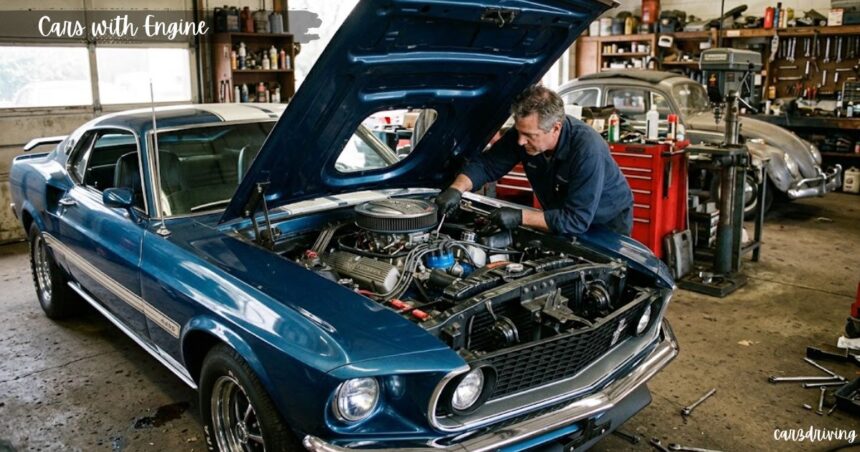
Every time I start a car, I think about what sits under the hood of cars with engine. The engine is the heart of any car, and it is the beating heart of every vehicle I have ever driven. Engines evolved from simple mechanical systems into high-tech power units that chase performance, efficiency, and sustainability.
Knowing the types of car engines helps you match one to your driving needs. Some iconic vehicles hide a surprising connection, because they use a shared engine beneath carbon fiber panels or leather interiors. Brands swap power units more often than most people expect, and this car story shows how.
Cars with Engines
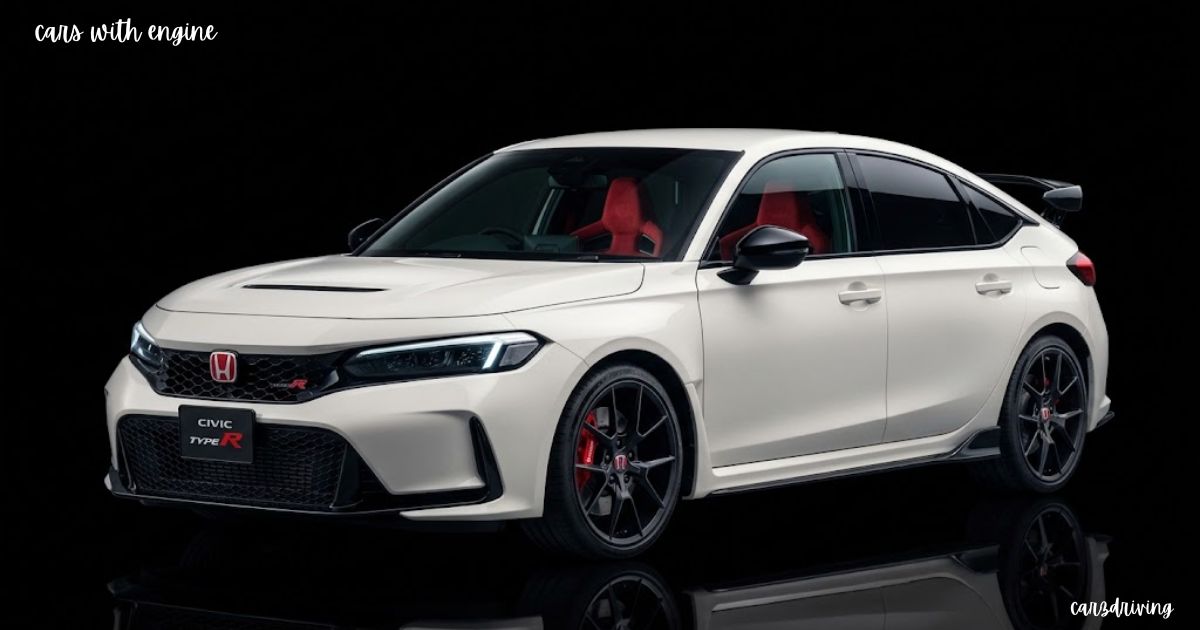
Over eleven generations, the Honda Civic gave us six iterations of the Honda Civic Type R. Each one uses a 2.0-litre four-cylinder with VTEC, and since the second-gen EP3 that fans call the Breadvan, the unit has carried a K20 engine code. The newest FL5 adds a turbocharger for 325bhp and 310lb ft, and it sends those outputs through the front axle only, which makes it one of the best hot hatches around.
The Ariel Atom has borrowed these engines for two decades. The early models used the screaming K20A, while later versions switched to the turbocharged K20C. Its lightweight construction and Honda reliability deliver absurd performance, so it feels like a roller coaster on wheels, looks like a Meccano set, and still beats exotics that cost ten times more.
Internal combustion engines, or ICE for short, work by burning fuel inside the cylinders. A petrol unit, which some people call gasoline, uses spark plugs to light the air-fuel mixture, and it feels smooth, quiet, and full of responsiveness for daily use in smaller cars.
A diesel unit will compress air until it gets hot enough to burn fuel, so you get better fuel economy and more torque for heavy vehicles and long drives, though it runs noisier and needs more maintenance.
A hybrid engine pairs a combustion engine with an electric motor that handles low-speed driving, while the petrol side covers higher speeds, so you enjoy lower running costs and reduced emissions.
Pure EVs run on batteries and stay emission-free, which suits city driving, though the charging time still annoys me. A hydrogen fuel cell mixes hydrogen with oxygen and releases only water vapour, but few hydrogen stations exist, so Toyota and Hyundai still lead the way.
Governments and carmakers push zero-emission vehicles hard, and they see electric options and cleaner alternatives as the way forward. Biofuels also look promising, yet I still love a classic car engine for its character. Choosing wisely means knowing what each engine can do.
Engine configurations and layouts decide how the cylinders sit and how a car feels. Inline engines line up in a straight line, stay compact, and suit small cars, while a V-type design forms a V shape that packs more power into sports cars. Flat engines, also known as boxer engines, push pistons in opposite directions, which adds balance and stability, and Subaru and Porsche love that setup.
A two-stroke engine finishes a power cycle in two strokes and makes plenty of power from a small body. A four-stroke needs four, so it gives better durability and a calmer ride. Most modern cars use a four-stroke, and I understand why.
The Alpine A110 uses a 1.8-litre turbo four that felt dull in the third-gen Megane RS, yet it shines here with a rorty sound. The Ultime takes GT4 racecar internals and makes 340bhp on 102-octane fuel, or 321bhp on normal fuel. I would pick that small car over many bigger ones.
The four-cylinder boxer warble belongs to the EJ in the Subaru Impreza, and I still smile when I hear it. Fans love the Nineties Turbo and the rally star 22B, plus anything with WRX or STI badges. The Prodrive P25 restomod pushes 450bhp, while the Toyota 86 and Porsche 718 carry the sound forward.
The Ford Sierra RS500 Cosworth grew out of motorsport regulations and Group A racing, and it won many Touring Car titles and the 1987 Nürburgring 24 Hours. Its Cosworth YB engine made 224bhp in homologation form but much more in competition specs.
The Mercedes-Benz 190E Evo II began as the 2.3-16 with 182bhp on the road and 300bhp on track, and Ayrton Senna won a famous race at the Nürburgring in it. Later Evo models grew to 2.5 litres, reached 232bhp in road-legal trim, and took the DTM title in 1992, so the Mercedes-Benz badge never looked better.
The Mercedes-Benz S-Class and Pagani Zonda share the M120 V12, which started life in a luxury sedan and became the soul of a hypercar. Horacio Pagani tuned it, Juan Manuel Fangio helped arrange the deal, and AMG still supplies his engines. Even Mercedes needs help sometimes, so the fourth-generation A-Class runs a 1.5-liter diesel from Renault.
The 4.0-liter twin-turbo V8 sits in the G63 AMG and the Aston Martin Vantage, and the boxy SUV actually makes more power. The 2009 Lotus Evora takes a 3.5 litre V6 from Toyota, the kind once found in a Toyota Camry, and Lotus reworked it for the track. The Toyota Supra uses the B58 inline-six from BMW, the same unit that powers the Z4.
The McLaren MP4-12C carries VRH DNA from the Nissan R390, a Le Mans racer that Ricardo reworked. The Ford Crown Victoria shares roots with the Koenigsegg CC8S, where a supercharger and bigger displacement turned the 4.6-liter modular engine, a Ford V8, into 664 horsepower for the Autobahn.
The GM small block, also called the LS engine, powers the Chevrolet Tahoe and the Ultima GTR, where it makes 400 horsepower or over 1,000 horsepower. The Donkervoort D8 GTO, a Caterham-style featherweight, uses the 2.5-liter five-cylinder from the Audi RS3, and its exhaust note wins me over every time. I measure all of this in bhp and horsepower, since power numbers tell the story fast.
Conclusion
Whether you prefer petrol, diesel, hybrid, or electric, the right pick among cars with engine depends on how you drive and your budget
Every driver gains from knowing the types of car engines, since technology keeps making them cleaner, quieter, and more efficient for a greener driving future. Look under the hood before you buy, and ignore the price tags for a minute.
A high-revving Honda engine in the Ariel Atom and the V12 from the Mercedes-Benz S-Class in the Pagani Zonda show that engines can leave their original purpose far behind. This kind of collaboration sits right beside fierce competition in the car world.
FAQs
What are the main types of cars with engine?
The main types of car engines are petrol, diesel, hybrid, electric, and hydrogen fuel cell.
How does a petrol engine differ from a diesel engine?
A petrol unit uses spark plugs to light the air-fuel mixture, while a diesel unit will compress air until it ignites the fuel.
Why do some cars share the same engine?
Brands share a shared engine to cut costs and borrow proven performance, like the M120 V12 in the Mercedes-Benz S-Class and Pagani Zonda.
What is the difference between a two-stroke and a four-stroke engine?
A two-stroke finishes a power cycle in two strokes, while a four-stroke needs four and offers better durability.
Which engine is best for a greener driving future?
Hybrid, electric, and hydrogen units lead the way because they bring reduced emissions and a greener driving future for every driver.