
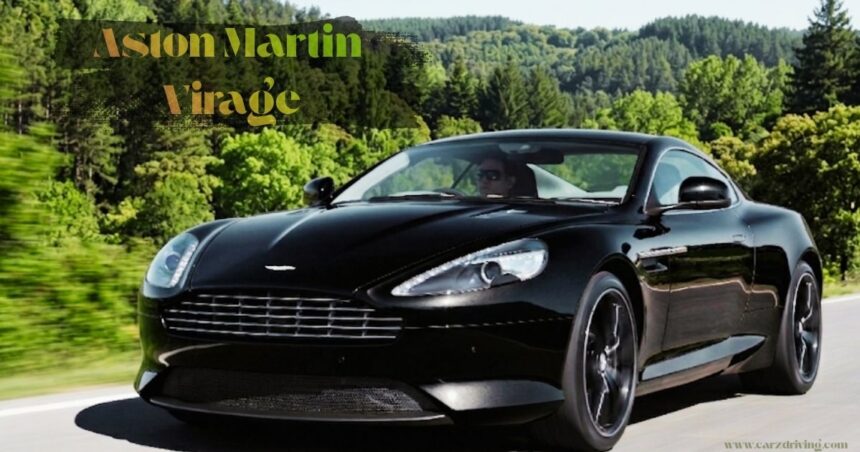
Few cars carry the kind of quiet authority that the Aston Martin Virage brings to every road it travels. I remember standing at the Birmingham Motorshow in 1988, watching people stop mid-stride just to stare at this machine designed by John Heffernan and Ken Greenley, it wore its contemporary styling like a tailored suit.
Unlike the older V8 models that preceded it, the Virage felt like a genuine step forward, introducing a reworked 5.3 litre V8 engine with revised cylinder heads featuring four valves per cylinder, cleverly engineered to work alongside catalytic converters without sacrificing punch.
Back in 1981, Victor Gauntlett took over as chairman of Aston Martin and immediately recognized the problem the brand needed a new car badly.
The Newport Pagnell factory was producing just four cars a week at a time when Ferrari was pushing out 50, and rivals like the BMW 6-Series, Ferrari Mondial, and Porsche 928 were eating into the market.
The result of Gauntlett’s vision was the internally designated DP 2034 a front-engined, rear-wheel-drive coupe built on a shortened Lagonda steel platform and chassis, powered by the trusted Tadek Marek-designed engine modified to run on lead-free petrol and meet strict emission laws without losing performance.
By April 1986, Callaway Engineering out of Connecticut had already begun their four-valve conversion, finishing the work 18 months later and delivering a unit producing 326bhp and 365 lb ft of torque a clear step up from the 305bhp and 340 lb ft of the Series V V8 saloon.
Meanwhile, the Virage wasn’t just competing in the sports car segment it was positioning itself as a proper grand tourer, a luxury machine handcrafted at Newport Pagnell with a story that stretched far beyond any mass-produced rival.
Much like the shift from cassette to CD, the Virage represented Aston’s own digital revolution arriving between the DB9 and DBS at around £150k, it offered something the £125,050 DB9 simply could not match, even as Aston insisted both would continue in production side by side as part of a balanced model line-up in an increasingly competitive market.
The Virage was never a dribble-production experiment it was a full commitment. From the DB7 introduced in 1994 at £80k to the nearly identical V8 Coupe that replaced it in 1996 and ran until 2000, the Virage sat in a unique window of Aston’s history.
Just 411 coupes including 80 examples of the Vantage 6.3 from 1993 and 233 Volantes were ever made, numbers that today make each surviving car incredibly special. That Balmoral Green example I arranged to drive, registered in January 1990 and one of the earliest produced, remained absolutely immaculate a perfect example of the breed and proof that this car’s heritage and distinctive character are far too strong to remain overlooked forever, even if its more angular design has kept it in the shadows of the Vanquish and DB5 in the public eye.
Aston Martin Virage Design & Styling
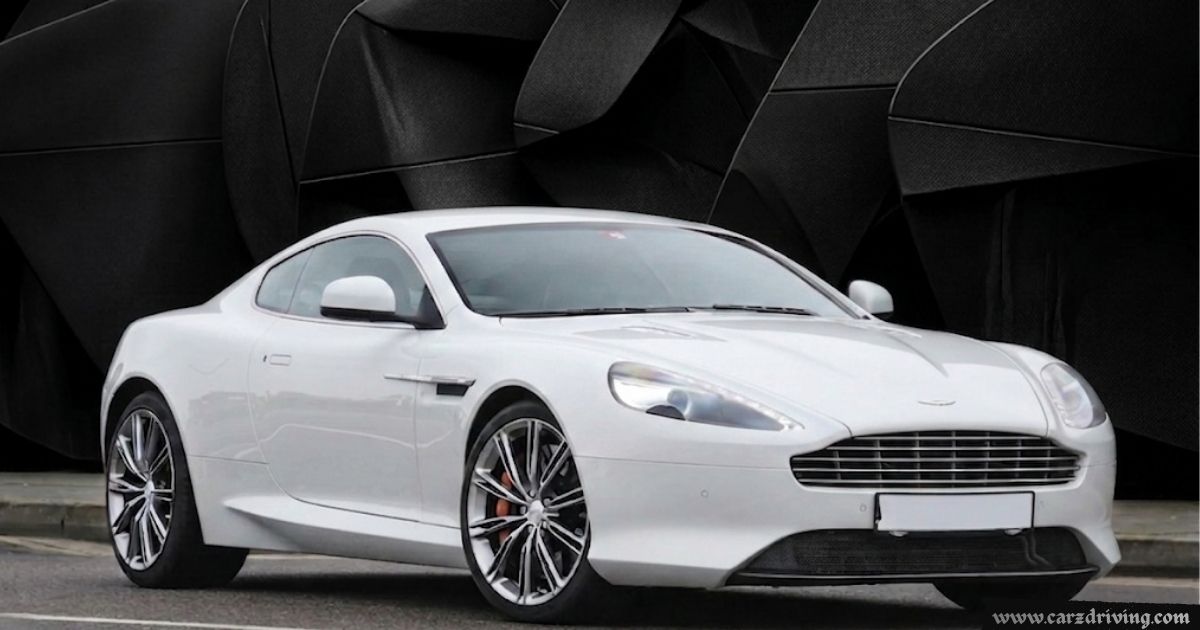
The moment you see the Martin Virage in the metal, the word that comes to mind is imposing.Standing next to a DB9, you immediately notice the tougher stance the sills and skirts have been bolstered, the grille sits slightly wider, and those headlights borrowed from the Rapide give the front end a sharper, more purposeful expression.
A subtle rear diffuser completes the look, adding visual weight low down and delivering just the right suggestion of extra sportiness, while every single body panel bar the roof and boot was carefully massaged by the design team in their pursuit of perfect proportions.
What makes the Virage’s design story truly fascinating is how the Lagonda chassis with its boxy bumper infrastructure forced Heffernan and Greenley away from a more rounded platform toward something crisper and more angular.
The team moved directly from a quarter-scale full-size model in one hit, conducting extensive aerodynamic testing at Southampton University’s wind tunnel, which quickly revealed the tail needed to be raised to counter rear lift.
The original concept featured pop-up headlights dropped after Aston’s poor experience with them on the Lagonda saloon replaced instead with fixed units sourced from the Audi 200, while rear light clusters came from the VW Scirocco and indicators from the Porsche 928.
The body itself was crafted from hand-formed aluminium panels, sitting over an all-new suspension setup featuring double wishbones up front and a cast aluminium De Dion rear axle located by triangulated radius rods and a Watts linkage, with Bilstein dampers developed specifically for the car.
Five design studios competed for the contract in May 1986 including William Towns, the man behind the original DBS and Lagonda saloon before the jury of executives, dealers, and customers at Newport Pagnell’s Service Department awarded the October contract to Royal College of Art tutors John Heffernan and Ken Greenley.
Who had previously created the Panther Solo and Bentley Continental R. As Performance Car magazine put it in April 1990, the car looked “big and solid looking, ultra-smooth and finely integrated” and standing beside one today, that verdict still holds.
The shut lines are inch perfect, and the door closes with a satisfying, solid mechanical click that tells you everything about how this car was built, right down to the hand-formed aluminium panels and every carefully considered evolutionary rather than revolutionary design decision the team made.
Interior
Step inside the Martin Virage and the first thing that hits you is the sense of stepping into an exclusive gentleman’s club one where every surface has been chosen with care.
The flat-fronted dashboard is surprisingly simple at first glance, but the soft Connolly leather has been perfectly handstitched, and the yards of thick walnut veneer stretching across the fascia give the cabin the warmth and character of a piece of Queen Anne furniture.
The armchair-like seats are generous and enveloping, and thanks to the car’s substantial dimensions, there is so much interior room that two adults sit with genuine space between them.
Look a little closer and the subtle differences between the Virage and its siblings become clear. Where the DB9 makes do with clear plastic on the switchgear, the Virage uses real glass a small but meaningful upgrade in perceived quality.
The controls for the electric seats are machined metal, and the satnav has been upgraded to a Garmin unit that tilts smartly out of the top of the dash, replacing the old Volvo-sourced system a legacy of Ford’s ownership that was frustratingly fiddly and increasingly outdated by the time the Virage arrived.
The graphics on the new system look smarter and feel far more in keeping with the rest of the Aston interior.
A customer who bought a DB9 back in 2004 and returned to spec a 2011 Virage might initially feel short-changed the cabin shares its DBS interior and DB9 interior DNA but build quality and materials tell a different story on closer inspection.
The mohair hood of the Volante, the hand stitched Connolly hide, and the polished burr walnut throughout all speak to a level of craft that no mass-produced rival could touch.
There was scope for Aston to be bolder here, and with seven years having passed between the DB9’s debut and the Virage’s arrival, some critics felt things needed to move on but for those who truly appreciate luxury built by hand, the Virage interior remains deeply, unapologetically special.
Engine & Performance
The Martin Virage packs a 6.0-litre V12 sitting within the same trusted aluminium architecture that underpins its siblings, mated to a six-speed torque-converter automatic gearbox that handles power delivery with composed authority.
Aston’s engineers worked the V12 hard, extracting 490bhp and 420lb ft of torque figures that neatly split the DB9’s 470bhp and the DBS’s 510bhp while shortening the final drive ratio to give the car more immediate punch from a standing start.
The result is a 0-62mph sprint completed in just 4.6secs, with a top speed of 186mph, making this one of the most capable grand tourers Aston has ever produced.
The sport button is where things get genuinely exciting. Press it and the car opens valves in the exhaust above 3000rpm, delivering a far meatier engine note though it never quite screams like a Ferrari V12 while simultaneously sharpening the gearbox mapping and, most importantly, tightening throttle response by reducing pedal travel from 75mm down to just 52mm of ankle flexing.
That 23mm reduction transforms how alive and eager the car feels underfoot, and when you drop a couple of gears and commit to the throttle, the surge of acceleration that follows is deeply satisfying though if you want the full force from the rev range, you will find yourself working the gearbox harder than expected to truly harness all that V12 power and torque.
Leave the sport mode unpressed and the Virage reveals its true GT loafing character relaxed, refined, and perfectly suited to cross-continental motorway cruising with the engine loud enough to sound exciting but never obtrusive.
The earlier 5.3-litre V8 version tells a different but equally compelling story the engine erupts into life with a baritone, gravelly note the moment you turn the ignition, and despite the car tipping the scales at 1,973kg (4,349lb) around 238kg (525lb) more than a Jaguar XJ-S V12 the free-revving unit delivers its 326bhp with real enthusiasm.
Around 40 percent of early cars left the factory with the ZF five-speed manual gearbox, the majority opting for the Chrysler four-speed TorqueFlite automatic transmission, later replaced with a revised four-speed unit in 1993.
The clutch feels surprisingly light, the gearlever guides smoothly into first gear, and despite longer physical throws between ratios, the ZF box never feels notchy or vague a small brass plaque on one of the cam covers even names the Aston employee who built that specific V8 by hand, a detail no mass-produced Jaguar or Porsche could ever offer.
Ride & Handling
The Aston Martin Virage rides with a confidence and composure that genuinely surprises you the first time you push it hard into a fast corner.
Credit goes largely to the variable dampers and the sophisticated software controlling them where older Astons offered just five fixed algorithms, jumping immediately to the stiffest setting at the press of the damper button, the Virage defaults instead to the next most comfortable level and builds up from there only as the situation demands.
The result is a marked reduction in the jarring transitions between settings you notice a degree of extra tautness when you press the button, but the transition is subtle, and the car simply adapts as you drive quicker.
Push on through fast corners and the improvements become even clearer roll and pitch reduce noticeably, there is far less squat at the rear, and the back end no longer squirms and porpoises around the way the DB9 was known to do.
There is still movement present, but it never becomes off-putting it never makes you want to back off and slow down, which is exactly what a great grand tourer should achieve.
The 20-inch wheels keep the ride firm for a grand tourer, and hitting really sharp bumps produces the occasional jolt, but the overall compliance and poise of the suspension mean you always feel relaxed and in control, with no sense of the chassis trying to spit you toward the nearest hedge.
The steering is not the last word in tactile feel, but it delivers genuine precision and keeps you well informed about what the front wheels are doing beneath you.
Grip levels impress throughout despite the considerable mass of that V12 pressing down over the front wheels, the Virage turns in with real willingness and a direct feeling that makes the handling feel almost snappy for a car of this size and weight.
With close to 50/50 weight distribution and reasonably accurate steering, I found myself able to balance the throttle through high-speed bends and nail the exit with confidence, the abundant torque responding instantly for another hard burst of acceleration.
Compared to the previous V8 model, the Virage feels far more civilised easy to drive, genuinely refined, with supple suspension that absorbs road imperfections without drama and despite the 15mpg fuel economy, I could easily imagine cruising all the way to the French Riviera in complete luxury, the kind of effortless grand tourer experience that pure sports car rivals simply cannot replicate.
Body roll stays largely in check through fast corners, and on a dry autumnal day, there is very little worry about losing the rear though the car’s bulk always reminds you that overly confident direction changes deserve respect, and a fast change of direction without proper commitment could end messily.
Safety Through ABS
In March 1992, Aston Martin took a significant step forward with the Virage by introducing a 6.3 litre engine variant that brought genuine improvements across power, braking, and handling in one carefully considered package.
For the very first time on an Aston Martin, the engineers fitted ABS a landmark moment for a brand that had long relied on driver skill alone to manage its considerable stopping demands.
The body changes remained deliberately minimal, with flared wheel arches, a revised front spoiler, and an optional rear spoiler rounding out the visual updates, while the real story sat beneath the bodywork in the significantly improved braking system, upgraded performance, and newly available anti-lock brakes that transformed the car’s safety credentials and made the 1992 upgrade feel thoroughly modern.
Volante
The Virage Volante made its world premiere at the 1990 Birmingham Motor Show as a proper full four seater built to capture the spirit of grand touring at its most indulgent.
The powered hood was finished in mohair, the interior wrapped in hand stitched Connolly hide with polished burr walnut throughout, and the same dependable 5.3 litre V8 sat under the bonnet with some cars later converted to the more potent 6.3 litre specification for owners who wanted even more performance from their open-top Aston.
A total of 233 Volantes were produced before production ended, each one representing the very best of what Newport Pagnell’s craftsmen could achieve in an open-top grand tourer format.
Priced at £10,000 more than the Virage coupe, the Volante version impresses with how little rigidity it sacrifices compared to its fixed-roof sibling.
There is marginally more shake through the steering, but wind noise stays well suppressed with the roof up, and the standard wind deflector proves its worth the moment you drop the mohair hood without it, disturbance rolls back around the windscreen with real force.
Taller drivers those over six foot will want to note that even at 5ft 9in, hair gets buffeted noticeably by the airflow coming over the screen, so the wind deflector earns its place as standard equipment rather than an optional afterthought.
As a complete package both the Virage Volante and the coupe Aston created something genuinely terrific.
Set against the DB9 and the DBS, the Virage feels more sophisticated in both chassis behaviour and overall driving experience, and while the flagship DBS remains safely out of reach of the Virage’s encroachment, the DB9’s position in the model line-up looks far less certain when the Virage sits alongside it in a competitive market where buyers demand the very best.
The digital revolution that the Virage represents in Aston’s history is nowhere more apparent than in the Volante a car that combines luxury, performance, and genuine open-air theatre in a way that very few sports car rivals from any era have managed to match.
Aston Martin Works Package
Aston Martin Works put together an impressive range of upgrade packages for the Virage that transformed already capable cars into something genuinely exceptional.
The headline offering was the 6.3 litre engine conversion, a significant mechanical enhancement that demanded corresponding upgrades to the brakes, wheels, and suspension to safely manage the considerable step up in extra performance and power that the larger displacement delivered.
Beyond the purely mechanical changes, Works also offered a suite of more aggressive styling options flared wing panels, a deeper air dam, and side skirts giving owners the freedom to sharpen the Virage’s visual presence to match its mechanical capability.
What made the Works programme particularly appealing was the flexibility it offered customers could select any combination of the above upgrades and apply them to either new cars or their existing cars, meaning a Virage already living in a private garage could be transformed without needing to start from scratch.
The team at Newport Pagnell handled every conversion with the same handcrafted care that went into building the original cars, ensuring that the handling, performance, and overall character of each upgraded Virage remained consistent with Aston’s exacting standards.
For anyone who felt the standard car left a little performance on the table, the Aston Martin Works upgrade programme answered that question definitively and the cars that went through it remain among the most desirable Virage variants on the market today.
Engine Development History
The engineering story behind the Martin Virage’s powertrain begins with a clear need four valves per cylinder was the obvious route forward, and in April 1986, Aston Martin awarded the four-valve conversion project to Callaway Engineering based in Connecticut, a decision that would prove pivotal in the car’s development.
Over the following 18 months, Reeves Callaway and his team delivered a unit producing 326bhp and 365 lb ft of torque a meaningful step beyond the 305bhp and 340 lb ft of the Series V V8 saloon with the scope of the work clearly defined: design, execute, and prove the initial durability of the four-valve configuration, after which Aston’s own engineers would take over the ancillaries and the all-important engine management system required to meet strict emission laws and compliance standards.
As Reeves Callaway himself explained in Paul Chudecki’s 1990 book Aston Martin and Lagonda Volume 2: V8 models from 1970, the responsibility was cleanly divided Callaway Engineering delivered the core four-valve architecture, and Aston handled everything else.
That “everything else” involved significant development work a new Weber-Marelli electronic fuel injection system, a redesigned intake manifold, and a revised cooling system all formed part of the finished production engine package.
Victor Gauntlett had originally pushed for a completely new chassis, but practical considerations around the need to rationalise components and increase production volumes led the team to adopt a shortened Lagonda steel platform instead a compromise that influenced every aspect of the car’s final form, from its engineering priorities down to the power output and torque output figures the team targeted.
The resulting engine conversion and fuel injection system combined with the new manifold design delivered a unit that met lead-free petrol requirements and satisfied both UK and American emission laws without the performance losses that less thorough development programs of the era often accepted as inevitable.
Design & Name Origins
In May 1986, Victor Gauntlett approached five design studios simultaneously, giving each just four months until August to produce a quarter-scale model of their vision for the new Aston.
Among those invited was William Towns, the man responsible for both the original DBS and the Lagonda saloon, though the eventual winner would come from a different direction entirely.
The entries went on display in the Service Department at Newport Pagnell, where a mixed jury of executives, dealers, and customers voted for their favourite and in October, the contract was awarded to Royal College of Art tutors John Heffernan and Ken Greenley, whose previous credits included the Panther Solo and the Bentley Continental R.
Heffernan recalled in a 2018 interview that Gauntlett’s approach was characteristically laconic a simple phone call delivering a clear brief: replace Bill Towns’ DBS, which had stopped selling.
The Lagonda chassis brought its own constraints, with the boxy bumper infrastructure pushing the designers away from the more organic, rounded platform Heffernan had originally envisioned.
To save time, the team moved directly from quarter-scale to full-size model in a single step, running extensive aerodynamic tests at Southampton University’s wind tunnel tests that revealed the tail needed raising to counter rear lift, and that the originally planned pop-up headlights needed replacing with fixed units sourced from the Audi 200.
The rear light clusters came from the VW Scirocco and the indicators from the Porsche 928, while the body was constructed from hand-formed aluminium panels over a suspension setup combining double wishbones at the front, a cast aluminium De Dion rear axle located by triangulated radius rods and a Watts linkage, and Bilstein dampers developed specifically for the Virage.
For the name, Gauntlett wanted something beginning with V to align with Vantage and Volante and settled on Virage, taken from the French word for curve.
The car debuted at the 1988 British Motor Show at the National Exhibition Centre in Birmingham, where 144 customers placed orders before the show had even closed, each paying a £20k deposit to secure their place in the queue.
Aston displayed two examples on the show stand one silver, one in metallic green with Ken Greenley telling Autocar magazine in its October 26 1988 issue that having two cars rather than one gave the brand real credibility and signalled a genuine production line at work, though in truth the cars on display were among just five prototypes built since April 1987, and the first customer deliveries wouldn’t happen until January 1990.
Debut & Reception
When the Martin Virage broke cover at the 1988 British Motor Show at the National Exhibition Centre in Birmingham, Victor Gauntlett stood before the crowd and declared the car worthy of Aston’s great past and its exciting future and 144 customers agreed immediately, each handing over a £20k deposit before the show ended.
The show stand carried two examples one silver, one in metallic green a deliberate move to signal credibility and the presence of a genuine production line, even though the cars on display were two of just five prototypes produced since April 1987. Due to several last-minute issues, January 1990 marked the date when the first examples finally reached their owners 18 months after the debut that had generated such enormous excitement.
When journalists eventually got behind the wheel, the verdict was overwhelmingly positive. Sports Car International declared in its September 1990 issue that the new car outperforms the old in every respect quicker, delivering sharper handling, more refined, and blessed with an “astonishingly good ride.”
The craftsmanship at Newport Pagnell had always been legendary, but now it sat alongside Nineties standards of quality and reliability that the brand had not always been able to guarantee.
As Gauntlett had told Road & Track in January 1989, the car needed to be evolutionary rather than revolutionary a clear successor to the post-war Aston Martin tradition, and a self-evident continuation of everything the brand stood for.
The pricing, however, placed the Virage in extraordinary company at £120,000 on launch, rising later to £135k, it sat above the Bentley Turbo R, Ferrari Testarossa, and Lamborghini Countach in the showroom price list, making it one of the most expensive cars available in Britain at the time.
It was never destined to be a high-volume seller just 411 coupes (including 80 examples of the Vantage 6.3 from 1993) and 233 Volantes left the factory before the V8 Coupe took over in 1996 but those numbers are precisely what make surviving examples so desirable today.
Ford had taken a major stake in the company a year before the Virage’s debut and stayed true to its promise of no badge engineering, allowing Aston to continue delivering genuinely handcrafted, low-volume cars built at Newport Pagnell rather than the later Gaydon factory a fact that makes every Virage an authentic piece of automotive history.
Legacy & Market Value
The Martin Virage has spent decades as the brand’s best-kept secret, and much of that comes down to timing.
The arrival of the DB7 in 1994 at £80k pulled buyers toward a more affordable, more curvaceous alternative that eventually sold around 7,000 units built on what had started life as a Jaguar project, it nevertheless offered the kind of smooth lines that felt more instinctively like an Aston to many eyes.
The Virage’s more angular design, its relatively small production run, and the absence of the handcrafted intimacy that Newport Pagnell had always represented left it sitting in an awkward position between the old world and the new, even as the car itself was a genuinely exceptional machine.
By the time the V8 Coupe its near-identical replacement finished production in 2000, the Virage had been quietly overlooked by a public that had moved on to the Vanquish and its near-perfect proportions, leaving the Virage’s more angular design without the iconic status it arguably deserved.
The James Bond factor played a significant role in this neglect. During the Nineties, when both the Virage and the V8 Coupe were in production, Bond’s preferred vehicles were BMWs meaning the Virage never achieved the kind of British culture penetration that made the DB5 immortal.
Without that cinematic exposure, the car never embedded itself in the public consciousness the way its more famous siblings did, leaving it without the cultural shorthand that drives collector demand for the DB5 and even the later Vanquish with its classic lines.
The contrast with the DB4 and the successor models that followed speaks to a broader pattern in Aston’s history the cars that Bond drove became part of the national tradition, while those he didn’t remained firmly within enthusiast circles, regardless of their mechanical merit or post-war Aston heritage.
Today, a Virage 5.3 coupe representing the breed at its purest can be found for around £50,000 roughly £25k less than a comparable Vanquish commands on the current market.
That gap reflects perception rather than reality, because in terms of handmade craftsmanship, low-volume exclusivity, and sheer driving character, the Virage holds its own against almost anything Aston Martin has ever produced. The Balmoral Green example I drove registered in January 1990 and among the earliest produced remained absolutely immaculate, its shut lines still inch perfect, its door still closing with that deeply satisfying mechanical click that only a car built by hand at Newport Pagnell can deliver.
The walnut veneer fascia still looked like a piece of Queen Anne furniture, the armchair-like seats still embraced you properly, and at 15mpg on a cross-country run, you quickly forget the fuel economy figure when the V8 pulls hard and the exhaust fills the cabin with that unmistakeable gravelly note.
This handsome, powerful, and endlessly distinctive sports car and grand tourer will not remain overlooked forever its heritage is simply too strong, its history too fascinating and too unique for that to happen and when the market finally catches up, those who bought at £50,000 will look very wise indeed.
Specifications
The Aston Martin Virage in its original form ran a 4 OHC V8 displacing 5340cc, producing 330bhp at 6000rpm and 350 lbs-ft of torque at 3700rpm figures delivered through either a 5-speed manual or a 3-speed automatic transmission, later updated to a 4-speed automatic from 1993 onward.
The brakes consisted of front ventilated discs paired with rear solid discs, the car carried a weight of 1790kg, and the dimensions stretched to 4737mm in length, 1854mm in width, and 1321mm in height substantial numbers that translated into a genuinely commanding road presence and the interior room to match.
0-60mph arrived in 6 seconds improving to 5.5 seconds after 1993 and top speed stood at 155mph, rising to 174mph with the updated specification, making the standard Virage a genuinely rapid grand tourer capable of embarrassing many sports car rivals of its era.
The later 6.0-litre V12 variant raised the stakes considerably, extracting 490bhp from its aluminium architecture and pushing through a six-speed torque-converter automatic gearbox in RWD configuration. 0-62mph dropped to just 4.6secs, top speed climbed to an impressive 186mph, and the car tipped the scales at 1785kg all available at a price of £150,000.
Positioned precisely between the DB9’s 470bhp and the DBS’s 510bhp, the Virage’s engine specifications and power output and torque output figures tell the story of a car engineered to occupy a very specific and deliberate space in the Aston Martin range refined enough for daily grand tourer duty.
Fast enough to embarrass almost any sports car it encountered on the road, and exclusive enough in its weight distribution, braking system, acceleration, and overall performance package to justify every penny of its considerable asking price.
FAQs of Aston Martin Virage
What makes the Aston Martin Virage different from other Aston Martin models?
The Aston Martin Virage stands apart as a handcrafted, low-volume grand tourer built at Newport Pagnell with a 5.3-litre V8, Connolly leather interior and evolutionary styling that bridged the gap between the old and new Aston Martin era.
How fast is the Aston Martin Virage?
The Virage sprints from 0-60mph in just 6 seconds with a top speed of 155mph, while the later 6.0-litre V12 variant hits 186mph with 490bhp on tap making it a genuinely fearless performance machine.
How much does an Aston Martin Virage cost today?
A Virage 5.3 coupe can be found today for around £50,000 roughly £25k less than a comparable Vanquish making it one of the most undervalued handmade British sports cars available to collectors right now.
How many Aston Martin Virage cars were ever made?
Just 411 coupes and 233 Volantes were ever produced at Newport Pagnell, including 80 examples of the rare Vantage 6.3, making every surviving Virage a genuinely precious piece of British automotive heritage.
Is the Aston Martin Virage a good investment?
With its handcrafted build, low-volume production, V8 performance, and deeply compelling heritage, the overlooked Aston Martin Virage represents one of the most compelling hidden investment opportunities in the classic British sports car market today.