

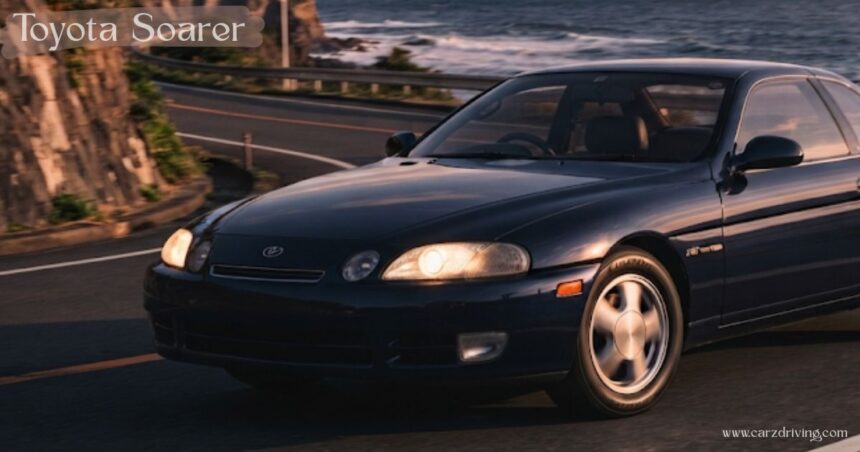
My first ride in a Toyota Soarer taught me why fans still talk about this car today. Toyota built the Soarer across four generations, starting with the Z10 in 1981 and running through to the Z40, which stayed in production until July 2005. Toyota kept improving the car every few years, moving from the Z10 to the Z20 in 1986, then the Z30, which spanned 1991 to 2000, and finally the Z40 in 2001.
Over these 24 years, Toyota packed the Soarer with fresh ideas that few rivals matched at the time, and each JDM-only trim carried its own cylinder-head design, from the smooth 4.0-litre V8 down to smaller sixes.
The badge on the bonnet said Soarer, but under the skin, this car shared its bones with Lexus. Toyota sold the same shape abroad as the Lexus SC400 Coupe, wearing a different name but carrying the same engineering soul.
Back in 1989, when Toyota launched Lexus as a rival to the Germans, buyers in the UK could not import a Soarer through official channels, and a genuine example would have cost well over £75,000 if it had. That is one reason a tidy used Soarer, priced around £1,350, feels like such a find today.
Step inside an early UZZ30 and you feel velvet-smooth power from a V8 motor, though the cabin stays simple, with cloth or velour seats instead of leather, and no fancy TV screen or sat-nav fitted as standard.
Move up to the UZZ31 and Toyota adds air suspension, while the flagship UZZ32 throws in four-wheel steer and a clever TACS, short for Toyota Active Control Suspension, which reads height sensors, yaw velocity sensors, and lateral-G sensors to keep the car flat during hard cornering and cut out roll almost completely.
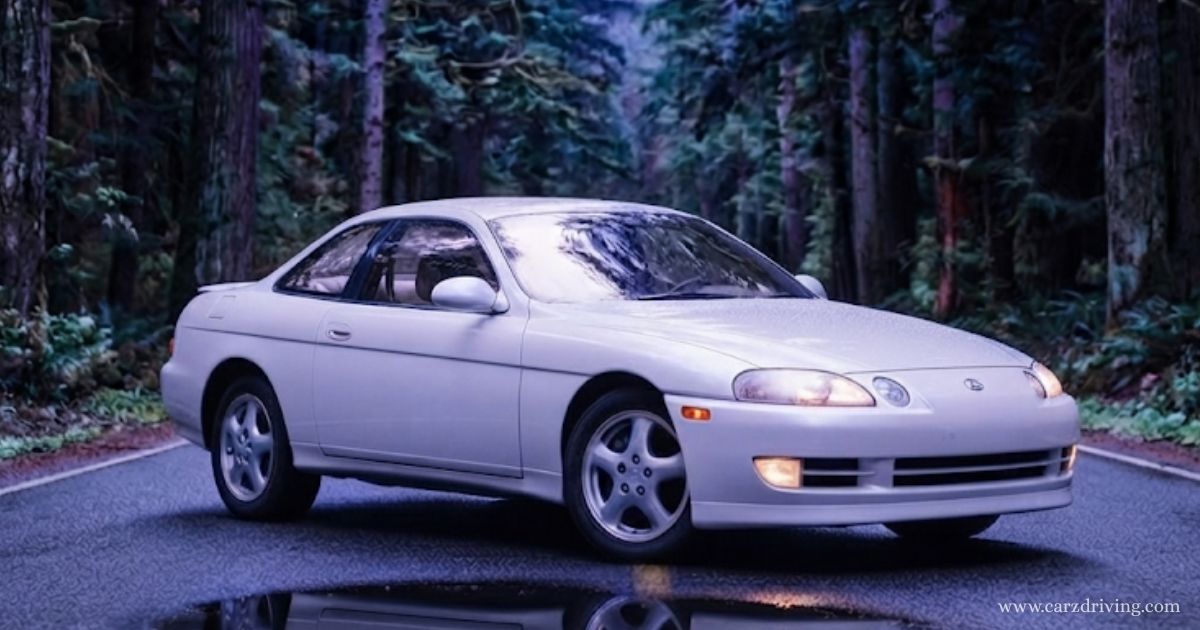
Toyota Soarer
Owners who track their Soarer’s paperwork often keep a full UK service history, a clean MoT record, and a matching reg number that adds a bit of character. My own checks always start with the MOT certificate, since a fresh pass tells you plenty about cloudy headlights, worn door trims near the switchgear, and tired instrumentation that fades with age.
I also test the coolant pump and the power steering pump, since both wear out over time, and I always check for coil pack connector clips, since these crack easily. Rust likes to creep into the front top mounts, so a torch and a careful eye save headaches later.
The heart of any Soarer is the 1UZ-FE four-cam V8, a smooth unit that made this car the cheapest route into real V8 motoring for petrolheads on a budget. Toyota rated the engine at around 260hp in stock trim, and a puff of blue smoke on cold starts usually points to worn valve stem seals rather than anything serious.
A period Motor Week review timed a 1985 car through smog equipment at a six-second 0-60mph run, while the rare twin-turbo straight six engine found in the 2.5 Soarer reportedly dipped into the five-second 0-60mph range. Some owners fit Cobra-style side exhausts for extra character, and the sound only adds to the appeal.
Values listed on PistonHeads and similar sites still surprise people, and a bargain like Shed’s own third-generation find shows why.
Even with tired paintwork, a bit of cutting compound and some polishing heads bring the finish back to life, and the alloys, if original, add a nice touch that a marque expert would appreciate.
Buyers often ask about colour-coding, since a light blue first-owner car might have suited cloth trim better than leather. Every Soarer door swings on hinges built like a Boeing landing-gear, so door drop rarely troubles these cars after 23 years, unlike so many rivals of the same age.
Toyota’s engineering did not stop at the Soarer badge. The same platform that carried the Z30 also underpinned the JZZ30, which shares deep roots with the JZA80 Supra.
The 1JZ-GTE, rated at 280 PS, later joined by the 2JZ-GTE, gave Japan-only buyers serious performance long before export markets saw anything similar; a private vendor selling one today usually points buyers toward a lap of a local test circuit to feel the difference.
The Z20 brought the retractable hardtop idea to life through the limited 500-unit Aerocabin, and the earlier 7M-GTE turbo engine gave way over time to smoother setups riding on Tokico coilovers.
The dashboard-mounted Electro Multi Vision screen and digital dash, part of the TEMS system, made the cabin feel years ahead of its time. That same air suspension technology later found its way onto the Lexus LS400 and even the Lexus SC430, tying the whole Soarer story together across decades and continents.
Z30 the chassis behind every 1JZ-GTE swap
The Z30 generation is the one most collectors chase, and once you understand why, the appeal makes sense. Toyota built the Z30 on a body shell and suspension geometry shared with the export Lexus SC300 and SC400, so the same engine bay could swallow different engines depending on the market.
Buyers cross-shopping the naturally aspirated 2JZ-GE or the V8-powered 1UZ-FE often land on this same chassis, just wearing a Lexus badge instead of a Toyota one. JDM buyers got something nobody else received: the JZZ30, powered by the 1JZ-GTE twin-turbo engine and capped at 280 PS under a gentlemen’s agreement cap that Japanese manufacturers followed at the time.
Inside that engine sit parallel turbos, specifically CT12A ceramic turbos, and the cylinder-head bolt patterns, oil-feed routings, and accessory mounting points on the 1JZ-GTE later shaped the 2JZ-GTE that arrived two years later.
This close engine family link explains why parts interchange between the JZZ30 and the JZA80 Supra runs so deep; the two platforms share far more than badges suggest, and mechanics familiar with one usually feel at home with the other.
Toyota also fitted the Z30 with the world’s first factory CD-ROM GPS navigation system, a genuine JDM-only option that beat Cadillac OnStar to market by five years. The EMV multi-function touchscreen that ran this system now sits at 30-plus years old, and failures show up often.
Sourcing JDM-specific replacement parts grows harder every year, and buyers who need one usually end up hunting through dismantlers, facing real difficulty and rising cost along the way. Cars built from May 1991 onward still turn up for sale within the Lexus lineup heritage, proving how well Toyota built this Soarer.
Aerocabin
Long before folding roofs became common on convertibles, Toyota built something special near the end of the Z20 production cycle. In 1989, the brand launched a limited edition called the Aerocabin, fitted with a folding metal hardtop driven by a folding mechanism and a roof mechanism that worked through fully electronically operated motors.
This retractable roof idea beat the Mercedes-Benz SLK by roughly a decade, and it landed fifteen years ahead of the later production version found on the Lexus SC430 Z40.
Toyota built the Aerocabin as a strict two-seater, since the roof mechanism needed the space where rear seats would normally sit.
Power came from the 7M-GTE single-turbo I6, a 3.0L engine paired with a 4-speed automatic gearbox, and every car left the factory in GT line trim with tan leather and pearl paint as standard trim.
A later version, sometimes called the Z30 Aerocabin and coded UZS131, gets filed under a different V8 chassis code, so shoppers should not confuse the two.
Every one of the 500-unit run sold only in Japan, since the Aerocabin never reached any export market. That rarity brings real complexity for anyone chasing surviving examples today, since the roof is no longer factory-supported. No proper aftermarket replacement route exists for a broken folding mechanism, and that gap turns simple wear into a genuine ownership risk for owners who love this quirky little coupe.
Differences between JDM & USDM
People often ask what really separates a JDM Toyota Soarer from its export-market cousin, and the honest answer starts with the same car wearing a different badge.
The Z30 shares its body shell, suspension, and platform with the Lexus SC300 and SC400, so a 1991 Soarer and an American SC300 roll off nearly identical mechanically, aside from steering side and trim choices.
JDM SC buyers got extras that US shoppers never saw on their own cars. The JZZ30, running the 1JZ-GTE twin-turbo, plus the 2.5GT-T trims, arrived only in Japan, alongside factory CD-ROM GPS navigation, an EMV touch-screen multi-function display, and JDM-specific climate-control modules.
The retractable-roof body variant, better known as the Aerocabin, built only 500 units on the Z20 chassis back in 1989, and various trim levels carried JDM-only interior packages that buyers elsewhere simply could not order.
The Z40 kept this pattern alive. Toyota sold the 430SCV in Japan from 2001 until July 2005, and this car matched the US-market Lexus SC430 piece for piece before Toyota finally retired the Soarer name and folded the badge into the Lexus SC430 worldwide.
For anyone acting as importers today, that history carries a real practical implication: JZZ30 cars fitted with the 1JZ-GTE, alongside genuine 1989 Aerocabins, justify the extra paperwork and shipping cost, while shoppers chasing the plain 2JZ-GE NA or the 1UZ-FE V8 drivetrain usually find the LHD Lexus SC300 or SC400 a simpler, lower-friction route to the same chassis and factory engineering by 2000.
FAQs
What engine powers the Toyota Soarer?
Most Soarer models run the smooth 1UZ-FE V8 motor or the punchy 1JZ-GTE twin-turbo six, depending on trim.
Is the Toyota Soarer the same as a Lexus?
Yes the Soarer shares its body shell and platform with the Lexus SC300 and SC400, just wearing a different badge.
What makes the Aerocabin special?
The Aerocabin was a 500-unit JDM-only coupe with a rare folding metal hardtop, a genuine engineering treasure from 1989.
How much does a Toyota Soarer cost today?
Prices vary widely, but a tidy used Soarer with solid UK service history can still be found around £1,350, a real bargain for petrolheads.
What should buyers check before buying a Soarer?
Always inspect the air suspension, coil pack connector clips, front top mounts for rust, and the MOT certificate before falling in love.