

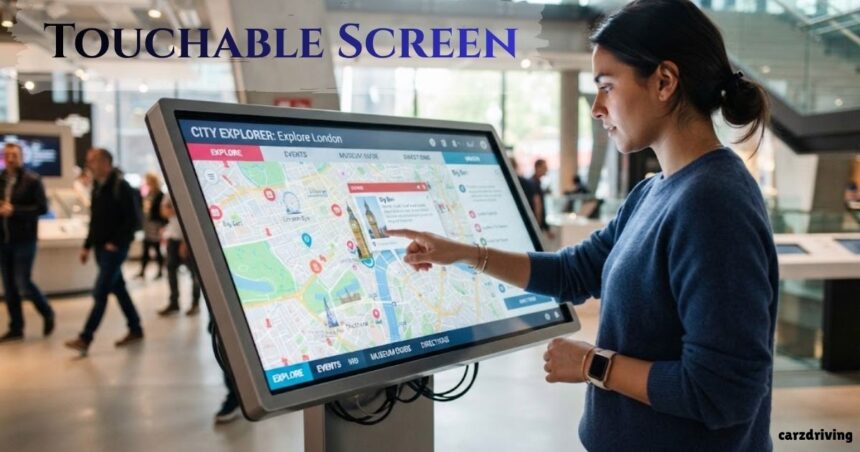
I use a touchable screen every single day, and I bet you do too. Touch screens are revolutionizing our daily lives, from smartphones and tablets to laptops and self-service kiosks.
This comprehensive guide shows how seamless interfaces shape our digital experiences, and I explain the types of technology behind them. Whether you use electronic devices or other digital devices, an intuitive and efficient way to interact with interfaces matters.
What is a Touch Screen?
A touch screen is an electronic visual display and a computer display device that also works as an input device. I press the display screen with my finger or a stylus pen, and the touchscreen reads the pressure of touch as touch input.
Tapping, swiping, and dragging give me direct interaction with displayed content and digital content, so I no longer need a mouse or a keyboard.
These traditional input devices, meaning keyboards and mice, feel slow next to touch screen devices, which have become ubiquitous in our daily lives, from smartphones to interactive information kiosks. Every stylus stroke and every tap on elements on screen feels intuitive to me.
Types of Touch Screens
The market offers several types of touch screen technologies, and I usually sort them into four types: resistive, capacitive, infrared, and surface wave. The two most common are resistive, which reads pressure, and capacitive, which reads electrical charges.
Among the less common types, infrared (also written infra-red) uses infrared light, and surface acoustic wave systems use sound. Each touch sensor works differently, and multi-touch designs detect multiple touches at once.
Resistive Touch Screens
Resistive touch screens use two flexible sheets made of a resistive material, and a thin gap separates them. A thin metallic electrically conductive layer covers the touch panels, and conductive connections run along the sides and along the top and bottom.
When I press, the sheets meet at a point of contact, the electrical current shows voltage changes, and the controller finds the touch location for processing.
They rely on pressure, not electrical conductivity, so a finger, a gloved hand, a stylus, or any object works. That makes them durable in dusty environments and wet environments, and they suit ATMs, point-of-sale systems, and industrial applications.
They are less expensive, even the cheapest, compared with capacitive screens, but multiple layers cause lower clarity, weaker clarity overall, lower sensitivity, and no multi-touch gestures.
Capacitive Touch Screens
The most common screen in my pocket uses electrical properties. A transparent conductive material, usually indium tin oxide (ITO), creates an electrostatic field, and my finger disturbs it, which changes the capacitance.
The software and the controller then find the touch location. Projected capacitive touch (PCT or PCAP), the most advanced version, places conductive wires in rows and columns on two parallel sheets of glass to form a grid, and it applies voltage sequentially.
It reads multiple touch points, and because the technology sits inside the screen, it gives a thinner bevel. You get high sensitivity, responsiveness, clarity, brightness, multi-touch gestures, and durability with no moving parts on smartphones, tablets, and laptops. It works with bare fingers and conductive styluses, but regular gloves, plastic styluses, and other non-conductive objects fail.
It stays more expensive than resistive screens, electromagnetic interference hurts it, and noise can trigger unintended touch inputs.
Infrared Touch Screens
Infrared screens place LEDs and photodetectors along the edges of the screen, and they use the infra-red spectrum for sensing and detection in interactive touchscreen technology. Infra-red light sensors and IR sensors sit on the vertical and horizontal axis of the bezel, and the infra-red beams cast an invisible grid of light beams.
A finger touch, a pen, or a solid object breaks the beams, and the sensor spots the broken beams to calculate the touch point, so it senses any type of touch. With no additional layers, it delivers excellent clarity and stays highly durable. However, direct sunlight hurts it, larger bezels hold the sensors, and it stays more expensive.
Surface Acoustic Wave (SAW)
Surface acoustic wave screens use ultrasonic wave technology across the touch panel. Transducers and reflectors send ultrasonic waves, and these acoustic waves form an invisible grid. When my finger, a gloved hand, or a soft tip stylus touches the glass, a wave absorbed by the touch reveals the position of the touch event.
Many people call it the most advanced option, and it offers excellent clarity and a highly durable build. Still, contaminants cause trouble, environmental damage happens, it is not suitable for outdoor use, and it stays more expensive than resistive or capacitive screens.
Advantages of Touchable Screen
Intuitive interaction is the biggest win I see. Simplified input makes tasks quicker, easier, and faster, and it shortens the learning curve for new users, so user-friendly designs win. Touch has revolutionized how we work, and direct interaction gives an immersive experience. Skipping physical keyboards and mice brings space-saving space efficiency, compact device designs, and streamlined portable devices.
Pinch-to-zoom, rotation, two-finger scrolling, swipe navigation, tapping, swiping, and dragging all count as gestures, and multi-touch adds complex multi-touch gestures. Versatility covers button presses, and dynamic context-sensitive controls plus flexibility in interface design boost the enhanced user experience and increased productivity compared with traditional input methods.
On-screen keyboards help, accessibility serves all ages and abilities including people with disabilities, and durable materials give longevity and durability through repeated use, which makes the whole setup more efficient.
Applications of Touch Screens
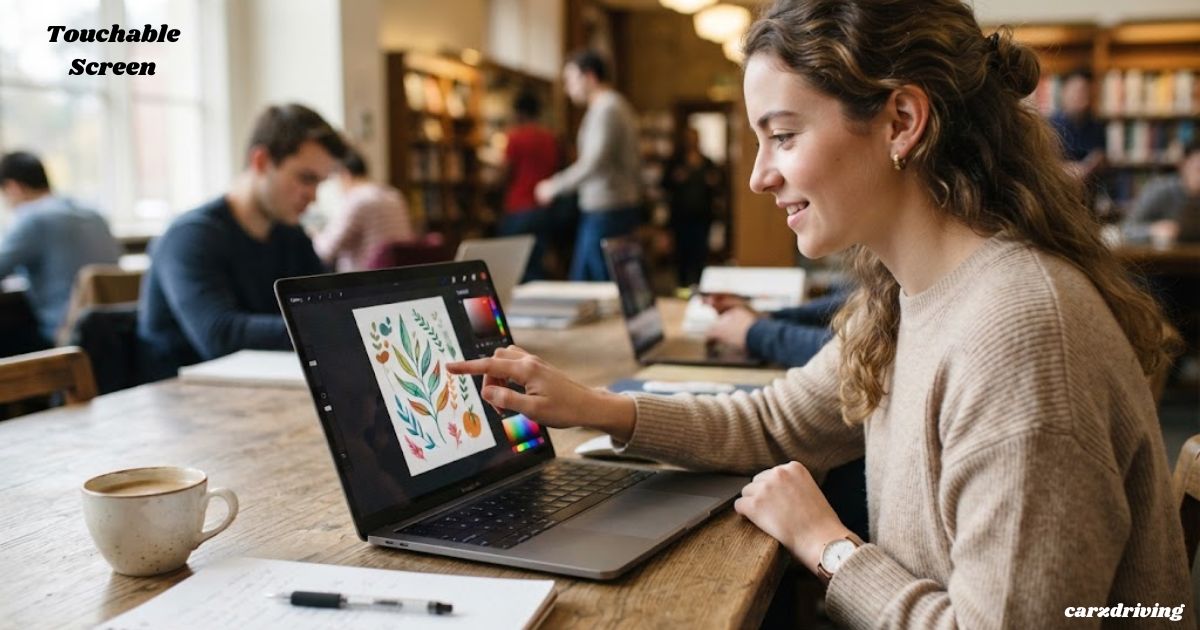
I tap mobile devices daily, and smartphones, tablets, laptops, computers, and desktop monitors all deliver seamless user interaction. Retail environments use point-of-sale terminals for employees and customers, and I use ATMs and self-service kiosks too. Public information kiosks offer wayfinding. In education, interactive whiteboards and student tablets support classroom learning.
Healthcare facilities use touch for patient monitoring, medical equipment control, and medical imaging equipment. Manufacturing and industrial settings rely on industrial control panels, process control systems, machine operation and management, ruggedized touch screens, and other control panels. Gaming thrives through mobile games and casino gaming machines, and home automation runs on smart home systems.
The Evolution of Touch Screen Technology
The touch screen evolution began in the 1960s. In 1965, E.A. Johnson built the first finger-driven touch screen. Resistive touch screen technology arrived in the 1970s, and multi-touch systems followed in the 1980s.
PDAs and early smartphones appeared in the 1990s, and capacitive touch screens reached widespread adoption in the 2000s with modern smartphones. Personal computing and mobile devices pushed this growth, and the 2010s and beyond bring refinement and new innovations.
Limitations of Touch Screens
Touch limitations exist, and I notice them often. Fingerprints and screen smudges demand regular cleaning. Prolonged use causes arm fatigue, which people call gorilla arm syndrome. Extended typing and precise drawing need additional accessories like styluses, gloves do not always work, and larger screens catch accidental inputs.
The Future of Touch Screen Technology
I expect haptic feedback and tactile feedback to feel far more real soon. 3D Touch adds pressure sensitivity, and AR, short for augmented reality, blends physical and digital interactions.
Better touch sensitivity and accuracy may suit drawing and writing. Energy efficiency will cut power consumption and extend battery life, and touchless gesture controls will read gestures near the screen surface.
How Does a Touchscreen Work?
My touch changes the electrical charge at a specific location, and the controller receives the signal and turns it into an action.
Choose The Right Touchscreen Technology for My Needs
Pick touchscreen technology by weighing a few factors. Check sensitivity and touch sensitivity for a finger, a gloved hand, or a stylus, plus the precision you need. Judge durability against your usage and environment, including scratches, impacts, and liquid spills.
Study the lighting conditions, because bright environments and outdoor environments bring glare and reflections. Balance cost, budget, and cost-effectiveness, and check integration with your hardware, software systems, drivers, and software support.
Differences Between Capacitive and Resistive Touchscreens?
Capacitive touchscreens and resistive touchscreens show distinct characteristics. Capacitive models sense the electrical charge of a finger, give great touch accuracy, support multi-touch gestures, and power smartphones and tablets.
Resistive models use two conductive layers that meet when someone pressed the screen, so they feel more versatile with input methods like a gloved hand or a stylus. Manufacturers use them in industrial environments and ruggedized environments.
How Can I Maintain My Touchscreen Laptop’s Performance?
To keep your touchscreen laptop fast, follow these tips.I install software updates and driver updates, adjust power settings, control temperature and humidity, and keep ventilation clear for better performance.
The Difference Between Single-Touch and Multi-Touch?
Single-touch reads only one touch input, so I can do tapping and dragging but no multi-finger gestures or pinch-to-zoom. Multi-touch reads multiple touch inputs simultaneously from two or more fingers. That allows pinching for zooming in and zooming out, and rotating images with a twisting motion.
What Is the Role of Touchscreen Drivers?
They turn touch input into digital signals. They also ensure functionality, calibration, and compatibility with your software applications.
Does Touchscreen Affect the Battery Light of Devices?
Yes, touch input detection and processing raise power consumption. However, advancements in technology and power management strategies give devices comparable battery life to non-touchscreen counterparts, so battery life suffers very little.
Can Touchscreens Be Used with Any Operating System?
Yes, touchscreens work with various operating systems, but I always check the compatibility of touchscreen drivers and software. Each system sets its own touchscreen requirements and offers different levels of touch support and touch functionality.
How Can Touchscreens Enhance Accessibility?
Touchable Screen removes peripherals like a mouse or a keyboard. Users adjust font sizes, contrast, and color schemes for better readability, and they have customized screens to fit individual needs. Voice commands and haptic feedback help people with visual impairments and auditory impairments.
FAQs
Why is my touchable screen running slow?
A touchable screen slows down when software updates or driver updates are missing, the screen is dirty, or the temperature runs too high.
How do I make my touchscreen faster?
Clean the screen, install driver updates, adjust your power settings, and keep good ventilation for better performance.
What is the difference between capacitive and resistive touchscreens?
Capacitive touchscreens sense the electrical charge of your finger, while resistive touchscreens react to physical pressure.
Can I use a touchscreen with gloves?
Yes, resistive touchscreens work with gloves, and capacitive touchscreens need specialized gloves or a stylus.
Does a touchscreen drain my battery?
A touchscreen uses a little more power consumption, but smart power management strategies keep your battery life nearly the same.