
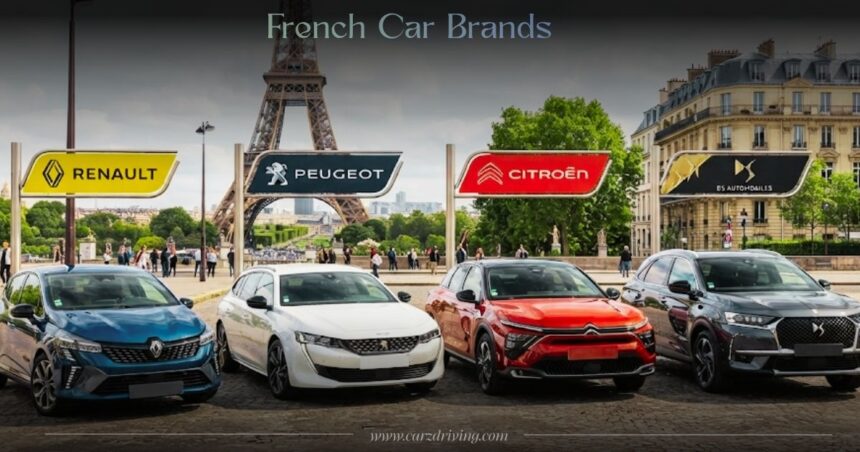
French car brands never lean only on heritage; they keep building the future of driving. The auto world keeps evolving, and by 2026, electric vehicles feel like a normal reality, urban areas keep shrinking, and customers want more comfort paired with intelligent technology.
French Car Brands
French automakers lead here, with Renault and Peugeot pushing affordable EVs, while Citroen keeps its cars easy on the ride, cutting the stressful part out of the daily basis of driving. Even luxury brands like DS Automobiles deliver real style without the astronomical prices you’d expect from German competitors.
France has never followed the crowd on cars. French brands skip the chase for raw power and instead focus on intelligent design, strong efficient fuel economy, and practicality built for the real world.
That’s exactly why they hold onto their relevance today, since they understand present generations of drivers, especially inside congested cities, and as the whole industry drifts toward cleaner mobility, French brands already stand there waiting.
France has never built boring cars either. French cars carry a reputation for radical thinking, clever engineering, and, honestly, a touch of pure madness in the best sense. Starting from an ordinary hatchback and running all the way to the fastest hypercar on the planet.
Take Bugatti: Ettore Bugatti founded it back in 1909 in Molsheim, and the brand has always chased performance through craftsmanship-driven engineering, blending real art with mechanical legend.
Modern Bugatti contemporary hypercars push straight to the edge of speed and power, and each car works like a collector masterpiece built through record-breaking performance and deliberately low production.
Bugatti was never meant to be practical; it exists to prove that when you remove all boundaries, the French car tradition can still build the fastest cars in the world.
Ligier tells a different story. Guy Ligier, once a former racing driver, became the founder, and although the brand began on the race track in motorsport, it’s now known for small microcars and small quadricycles built for urban living.
These compact cars stay easy to park and simple to drive, and across parts of Europe, some models run without needing a full traditional license. Ligier leans hard into convenience and accessibility in the city, and as congestion keeps climbing in cities, brands like this stay relevant to real contemporary mobility.
Aixam sits among the biggest manufacturers of light quadricycles in Europe, and both young drivers and elderly people genuinely like these smaller cars.
Several electric Aixam models now offer a cleaner way to move through town, and the brand keeps improving safety and cabin design compared with older microcars, proving French brands aren’t only about speed but also real practical solutions.
Venturi began by building sports cars back in the 1980s, before shifting toward electric sports cars and real innovation, chasing electric racing and land-speed record ventures along the way. It never aimed for large quantities; instead, it pours effort into serious high-performance electric development, holding a genuine place in France’s growing EV technology.
Delage dates back to 1905, carrying a history built on luxury and racing success before fading through the decades. Recently, the name returned with smaller-production high-performance models, and the brand still specializes in craft, exclusivity, and careful heritage design, standing as a symbol of France’s historic association with elegance and superior engineering.
Reliability stays a fair question for French cars, since controversy has followed the topic for years, but honestly, the truth sits between the two extremes. Here’s a fair look at both the advantages and disadvantages.
On the plus side, you get smooth suspension that copes well with rough roads and uneven roads, along with fuel-efficient engines, a real focus on modern technology, wider use of hybrid cars, strong value for money against competitors, and genuinely compact designs built for city driving.
On the downside, high-tech electronics can confuse some local mechanics, careful maintenance stays important for reliability, resale value dips in certain markets, and quality of services depends heavily on your dealership, since not every model suits aggressive driving.
So which brand fits your decision? It depends entirely on your lifestyle and mode of driving. Renault stays a genuinely smart, reliable car if you want something effective and less expensive for your regular basis of driving around the city.
Peugeot balances real sophistication with a sophisticated touch for drivers who care about design. If ride comfort matters most and you spend real time on the road, Citroen brings a relaxed ride that’s hard to beat, and buyers chasing French luxury car brands will fall for DS Automobiles.
If driving joy feels like a genuine hobby, Alpine delivers a pure experience and a rewarding experience in equal measure, while Bugatti stays a world of its own, built less for daily driving and more for pure exclusivity and inheritance.
Ligier and Aixam suit city-oriented mobility far better, while Venturi and Delage sit closer to true innovators and serious collectors. And if you’re chasing imported French cars, trusted exporters such as SAT Japan can help you land the right model for your needs.
Renault
I still remember sitting in my uncle’s old Renault hatchback as a kid, and that ride sparked my love for French cars. Louis Renault built this company back in 1899, and it shaped the daily movement of people for 100 years.
The brand earned real fame across Europe by building small cars and practical cars for ordinary families, with names like the Clio and the Megane leading the charge, and every one of them stayed genuinely affordable.
Renault now puts serious weight behind electric cars, and it became one of the first big names to push low-cost EVs onto European roads.
That early bet gave the brand real skill in battery technology and city transportation, and Renault still blends intelligent design with safety features and fuel efficiency to build real-life driving cars. If you want a modern, strong, EV-based daily car, Renault feels like the smartest place to start.
The Renault 5 E-Tech landed in 2024, and it carries the DNA of the original Renault 5 straight into the electric age. The design cues stay familiar, with sharp lighting signatures and a sloped rear that give it real charm, and I’d call it one of the most charming EVs on sale today.
The old Renault 5 ran a tiny 782cc engine, but this version runs on an all-electric powertrain that makes either 120bhp or 148bhp, with the stronger motor hitting 0 to 62mph in 7.9 seconds.
That kind of nimbleness and the smaller frame suit city streets and twisting country roads perfectly, and the car rewards you with agile handling and a precise drive.
Inside, French designers blended heritage design for a modern age, and small touches like dashboard stitching copy the plastic moulding from the original, while the cabin still fits five adults around a clean dash layout. Fans who love the look but want more punch can step up to the Alpine A290, which offers 217bhp and a proper sporty driving experience.
If you love the retro aesthetic of the Renault 5 E-Tech but need more room, look at the Renault 4 instead, a boxier, all-electric family car built with a heritage-inspired car feel that reaches back to 1961. It keeps a familiar front grille design and rear lighting profile, and you can even pick a plein sud canvas sunroof, but the cabin gets real upgrades, including a central touchscreen, USB-C ports, and full ADAS support through its advanced driver assistance system for a safer drive.
The Renault 4 shares its platform with the Renault 5 E-Tech but stretches it with a longer wheelbase for extra room, giving it a small crossover profile that swallows family trips and luggage with ease.
Renault quotes a WLTP range of 249 miles, which usually settles closer to 220 miles on real roads, and that covers most weekly journeys without stress. This car feels far from just nostalgic; it earns a genuine spot on any next-car shortlist thanks to its family-friendly practicality and genuine functionality.
Peugeot
I test drove a used Peugeot hatchback years ago, and it changed how I saw French design forever. The brand’s roots go back to 1810, long before cars existed, when it made tools and bicycles before moving into the auto industry in the late nineteenth century.
Over the decades, Peugeot built a name for stylish, practical cars, and the 205 GTI gave the brand real legendary status by proving that small cars could feel thrilling.
Modern Peugeot models focus heavily on interior design, a sharp digital dashboard, and clean exterior design, and both the SUVs and hatchbacks feel comfortable and confident on the road. For any driver who wants more than a run-of-the-mill vehicle, yet still needs something affordable and convenient for everyday life, Peugeot stands out as an excellent option.
The Peugeot 308 shows this well, since it’s a C-segment family car with a bold grille, a long bonnet, and a fluid silhouette shaped by smooth lines.
It carries a stronger French design language than most of its mainstream competition, and its versatility shows in how it’s sold: the hatchback version feels sleek and sporty, while the 308 SW station wagon keeps that unique design but adds real practicality for your lifestyle.
Under the skin, Peugeot gives you flexible powertrain choice, from an efficient diesel built for long-distance motoring to a mild hybrid or plug-in hybrid that balances performance and economy, plus an all-electric variant for anyone with home charging infrastructure nearby.
The i-Cockpit and real driving sensibility run through every model, and the 308 works as a solid companion for everyday driving.
The Peugeot E-Rifter shares its bones with the Citroën ë-Berlingo and Vauxhall Combo-e Life, but it feels like the premium pick of the three, thanks to rugged-SUV styling such as roof bars, a taller ride height, and protective body cladding for rough countryside roads. Its DNA still leans toward everyday use, given its van-like body shape.
The E-Rifter MPV is all about functionality, offered in short-wheelbase or long-wheelbase five-seat trims, or a seven-seat XL model, but the goal stays the same: maximum practicality with minimal fuss in a French-styled package.
A single electric powertrain keeps things simple, with an official WLTP range of 172 miles, enough for weekend adventuring on a single charge.
A fast charge takes you from 0 to 80 percent in about 30 minutes, ideal whether you’re chasing the Scottish highlands for weekend camping or just managing normal family life. Not everyone loves its van-like silhouette, but as an all-electric box that shrinks your carbon footprint, the E-Rifter makes a strong case for your next car.
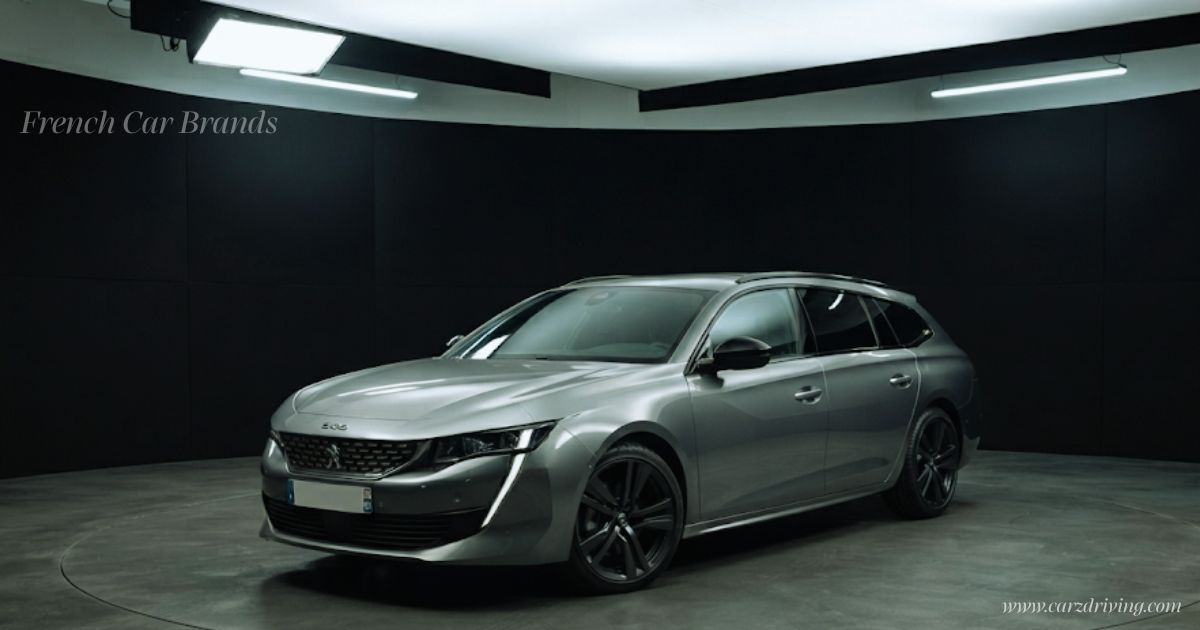
Then there’s the Peugeot 508, an option worth a look if a Skoda Superb, BMW 3 series, or Audi A4 no longer excites you. It wears a striking fastback saloon shape, with an aggressive front grille and defined lines throughout.
Inside, the i-Cockpit divides opinion, a bit like Marmite, and the compact steering wheel takes some getting used to, but the futuristic cabin stays genuinely user-friendly, with a 10-inch central infotainment screen, a digital display, and neat piano-style physical buttons.
The choice of powertrains stays simple: full petrol or plug-in hybrid on post-facelift cars, and robust diesels with strong fuel economy on pre-facelift models, especially the 1.5-litre diesel that returns 63.6mpg.
For real punch, the Peugeot 508 PSE, badged Peugeot Sport Engineered, pairs a 200bhp 1.6-litre petrol engine with a pair of electric motors to deliver 355bhp and a sprint to 62mph in 5.2 seconds. If you want more boot space, the 508 SW estate version proves you don’t always need an SUV, and it stands as a genuinely unconventional escape from the German executive car formula.
Citroën
My first ride in a Citroën felt like floating, and I’ve never forgotten that soft, cushioned feeling. Andre Citroen founded the brand back in 1919, and it built a fast reputation for bold engineering, including early use of front-wheel drive and a smooth hydropneumatic suspension that few rivals could match.
Citroën cars simply feel different from other brands. They put heavy focus on comfort during rides and use soft suspension to keep things simple: take the stress off the road. Even today, Citroën keeps building cars that absorb shocks and ease everyday driving in the city, and if you care less about sporty performance and more about comfort, Citroën stands out as one of the most unusual names among French car brands.
The Citroën Ami proves this bold streak, since the brand spotted an opportunity and simply took it. It’s technically a quadricycle rather than a true car, which sidesteps some car regulations while keeping it strictly for urban use, yet it stays car-shaped and genuinely unique.
Built for short journeys and city driving, it works as an alternative to a bike or electric scooter, giving riders more protection from weather and road users, and honestly, it’s a genuinely special little machine.
The cabin stays compact but seats two people, with room for small bags, and a cargo version drops the passenger seat for a proper delivery space with room for 400 litres of cargo.
It’s not a car for every market, but it suits anyone who wants something more protective than an electric bike. It tops out around 28mph, so its compact frame only really works for town use and light rural driving, since motorways stay off-limits under current regulations.
Still, the Ami carries real fun personality, and owners love its quirky design and distinctive features, which appeal to city dwellers chasing simple, no-fuss mobility without the weight of a full-sized car.
The Citroën C3 Aircross takes that boldness further, arriving as a boxy crossover with a high-ride height and a clever trick: you can spec it with seven seats.
Few SUVs in this size offer that kind of flexibility, and the C3 Aircross fits seven inside a genuinely compact frame, with two adults sitting comfortably on the back row, though I wouldn’t pack all seven for a full long holiday trip.
Fold the rear seats down and real practicality returns, adding 330 litres of boot space, or 460 litres on the five-seater version, which makes family adventures with children or grandparents far easier.
Its powertrain options cover pure petrol, mild hybrid petrol, and an all-electric version on the five-seat trim, giving buyers a real choice between seven-seat practicality and zero-emission driving depending on their home setup.
Family-focused and genuinely functional, with a dose of Citroën flair, the C3 Aircross backs up its comfortable interior and steady ride comfort with real versatility, making it a truly capable French crossover for a car of its compact dimensions.
The Citroën C5 X rounds out the range with blended styling and an armchair ride comfort that’s hard to beat. Although discontinued in May 2025, it still stands as standout French engineering, and plenty of low-mileage examples remain on the used-car market. Its crossover-estate shape even gets called a big hatchback, and whichever label sticks, it delivers a smooth ride thanks to hydraulic dampers, with a plush cabin and higher-spec trims that add memory foam comfort.
The C5 X carries strong powertrain choice too, with full petrol, mild hybrid, and plug-in hybrid options that make it easy to match any driving lifestyle, and the PHEV offers 39 miles of all-electric range, ideal for school runs and local commutes, plus short runs during the week without burning any fuel.
Citroën’s own history includes the legendary Citroën DS, and for fans of heritage Citroën models who want something more down to earth than a full DS, the C5 X remains a genuinely left-field alternative.
DS Automobiles
I sat inside a DS Automobiles showroom car once, and the stitched leather alone told me this brand takes design seriously. Launched in 2015 as a separate brand built around Citroen’s high-end models, its mission statement stays clear: deliver French luxury car brands that can match German brands head-on.
DS focuses hard on interior quality, careful stitching, bold aggressive dashboard designs, and driver assist technologies, while pouring real investment into electrification and hybrid technology. DS cars feel artistic and expressive, unlike most traditional luxury brands, and they aim to reach customers who want real style without following the masses.
The DS N°8 captures that spirit fully, built for anyone who still dreams of past Citroën models, since switching your allegiance to the DS brand might feel like a homecoming.
Inspired by the legendary 1955 Citroën DS, this Parisian brand builds automobile art, and the flagship DS N°8 works as an automotive sculpture of modern French luxury, blending avant-garde design with cutting-edge electric performance.
It arrives with a fastback crossover SUV profile, carrying sharp styling and clean defined lines across the body, while the cabin brings iconic upholstery, a plush finish, and a dash layout pulled from a futuristic, 1950s alternative era.
Call it poetic styling, but the DS N°8 is genuinely a capable all-electric car sitting in the executive segment, with two battery options and two powertrain options: the smaller 74kWh battery delivers 341 miles of WLTP range, while the bigger 97.2kWh battery stretches that to 466 miles for long-distance drivers.
You can pair either battery with the single-motor option, or take the bigger battery with the twin-motor option, which sprints from 0 to 62mph in 5.4 seconds and produces 370bhp. Just like the original Citroën DS, the N°8 glides down the road, staying cushioned and offering a genuinely comfortable ride. It won’t suit every driver bored with the usual German executive suspects, but for anyone chasing a French love letter built on comfort and design, it delivers.
Alpine
One of the French Car Brands Alpine watching it slip through a mountain pass once made me understand what real driving feels like. Jean Redele founded the brand in 1955, and it built its reputation through rally race wins, especially with the original A110, a car that became genuinely legendary through the 70s. Alpine later resurfaced and got revived by Renault, returning as a modern sports car for a new generation.
Alpine never chased massive horsepower. Instead, it leaned on lightweight engineering, and that choice delivers real tough handling and genuine driver engagement.
Every model targets enthusiasts who care about balance and precision, and its vehicles still promise pure driving emotion for anyone chasing a sports car experience without extra weight or complexity.
Here’s a quick history lesson: Alpine started life as a French sports and racing car manufacturer in the mid-1950s, staying closely tied to Renault before Renault acquired it fully in 1973. Alpine built its name on the rear-engined two-seater coupé, the Alpine A110, a genuinely striking slice of French engineering. By 2017, that same familiar profile returned through a full modern reimagination.
Lighter than most rivals in its class, the A110 slices through twisting roads, sticking to the tarmac, and even the lowest-spec engine, a mid-mounted 1.8-litre turbocharged petrol engine, still hits 0 to 62mph in 4.5 seconds. Choose the 296bhp version instead, and you shave off 0.6 seconds more from that sprint.
It’s never just about performance, though. Like other retro-inspired Renault models, Alpine captured the soul of the original car, keeping its signature quad headlights and tapered rear inside a fully modern frame.
Even as a two-seater, it stays genuinely roomy, easily fitting two 6-foot adults in real comfort, while the tech stays focused on performance over excess. With a throaty exhaust note, the A110 announces its arrival like a proper sports car should, delivering a fun French performance car that lands as a reinvented modern classic built on real heritage and genuine driving purity.
FAQs
Which French car brands are the most popular today?
Renault, Peugeot, Citroën, DS Automobiles, and Alpine lead the pack, each blending heritage with real innovation.
Are French cars reliable?
Most French cars offer smooth suspension and fuel-efficient engines, though maintenance and resale value vary by market.
Which French car brand focuses on comfort the most?
Citroën stands out for ride comfort, using hydropneumatic suspension to keep every drive genuinely relaxing.
What makes Bugatti different from other French car brands?
Bugatti chases pure performance and craftsmanship, building hypercars rather than everyday practical cars.
Which French car brand suits drivers who want driving joy?
Alpine delivers real driving emotion and lightweight engineering, making it the pick for anyone who truly loves the road.