
Dominic Toretto and Brian O’Conner became the faces of this generation, but honestly, the fast and furious car stood right beside them as main characters too.
Since 2001, fans have watched an American V8 roar against Japanese turbo engines, with a nitrous oxide tank deciding races and a Dodge Charger or Nissan Skyline stealing every scene it entered.
The evolution of these models, their personalities, and the way the fleet of cars changed across 10 movies mirrors how the whole pop culture juggernaut grew from a local story about street racers into a global spy thriller filled with supercars and tanks.
Watching The Fast and the Furious unfold taught me how much Japanese car culture shaped an entire generation of builders.
The JDM icons, the modified Japanese imports, and the tuner car icons like the Nissan Maxima, Skyline GT-R, Lexus LFA, and Honda NSX kept real cameos rolling through two decades of storytelling.
If you scroll through any fast cars list with pictures, you will notice the modifying zeitgeist never really faded, and that is exactly why people still search for the iconic furious cars and the Top Fast and Furious Cars that made the Fast & Furious Saga what it is.
Iconic Fast and Furious Car Lists
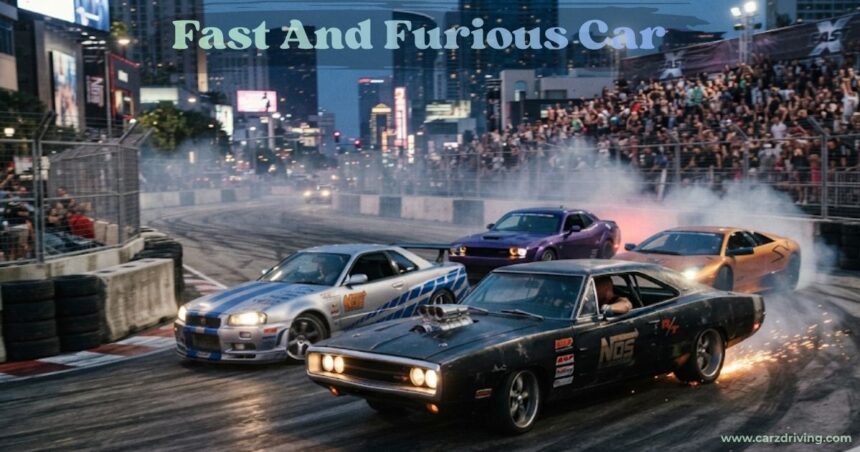
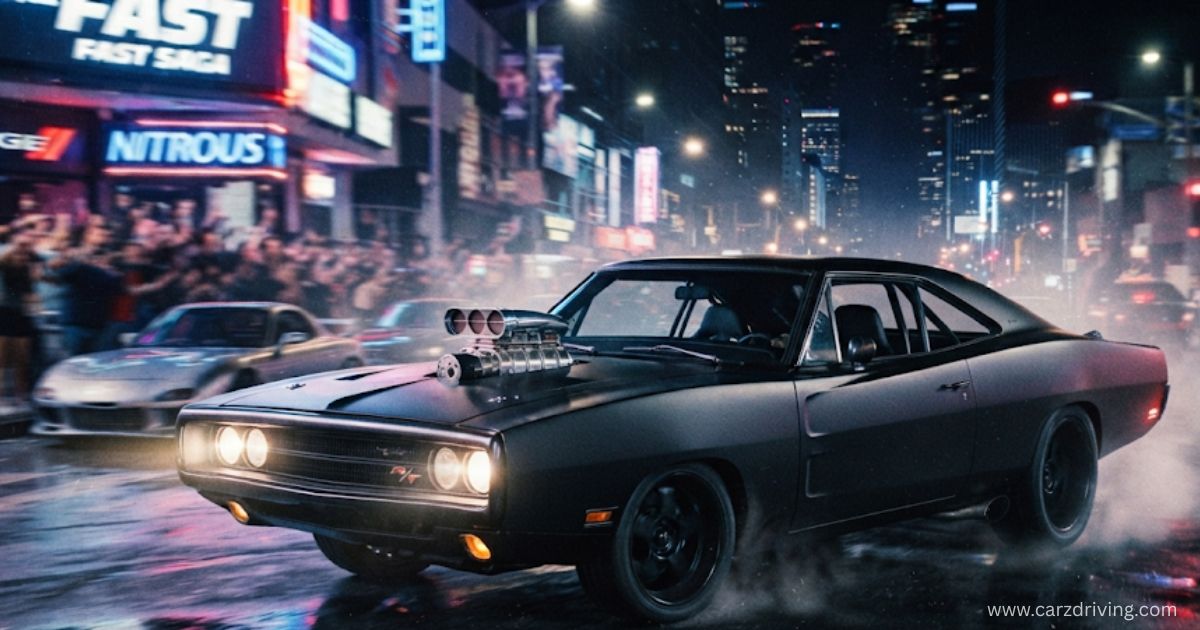
Nothing beats talking about the 1970 Dodge Charger R/T, the car with a supercharger loud enough to shake the theater, doing wheelies before it later turned into the off-road version and the terrifying Ice Charger with a jet engine bolted in.
Right beside it sits the 1995 Mitsubishi Eclipse, painted bright green, sometimes remembered as the Kawasaki Green coupe, and the 1994 Toyota Supra MK IV, a true JDM legend known simply as the orange Supra.
Then there’s the 1997 Mazda RX-7 VeilSide Fortune, driven by Han in Tokyo Drift, wrapped in a stunning VeilSide body kit that made it one of the best drift cars ever filmed.
I have always had a soft spot for the 1999 Nissan Skyline GT-R R34 from 2 Fast 2 Furious, painted silver-and-blue, a car that Paul Walker himself adored in real life.
The 1967 Ford Mustang Fastback, driven by Sean Boswell against the Drift King, carried a swapped RB26 engine pulled straight from a Nissan Silvia, while the 2011 Lexus LFA gave Han and Gisele an unforgettable V10 sound cruising the Autobahn.
Add the 1969 Yenko Camaro SYC, the jaw-dropping 2013 Lykan HyperSport worth $3.4 million jumping between skyscrapers in Abu Dhabi, and the armored Gurkha LAPV built for Luke Hobbs, and you start to see why Dwayne Johnson’s character needed something that heavy.
The list keeps growing with the Honda S2000 owned by Johnny Tran, a black roadster powered by a screaming VTEC engine, and the Nissan Silvia S15 nicknamed Mona Lisa, built purely for drifting.
The 1970 Ford Escort RS1600 Mk I, a proper rally car, pulled off a wild ramp jump, while the Subaru Impreza WRX STI, a true rally sedan, proved itself on both asphalt and off-road terrain.
The custom Flip Car, driven by Owen Shaw and shaped like a Le Mans prototype, used a ramp-like nose to flip enemy vehicles clean off the road.
Suki’s pink S2000 flaunted a VeilSide Millennium body type during that unforgettable drawbridge jump, and years later, Han’s 400Z, the 2023 Nissan Z from Fast X, gave fans a widebody tribute to his old RX-7.
Modern chapters brought the 2022 Dodge Charger Daytona SRT EV, an electric muscle car proving Mopar still leads, alongside the 1970 Plymouth Road Runner that tied Dom to Han in Tokyo Drift.
The 2009 Subaru Impreza WRX STI from Fast & Furious 4 wore a blacked-out style with upgraded suspension built for desert chasing, while the 1987 Buick Grand National GNX, nicknamed stealth bomb, chased down a tanker truck in one unforgettable scene. Dom’s Charger even earned its own nickname, The Curse, cementing it as the true muscle king of the saga.
The 1994 Toyota Supra JZA80 ran a legendary 2JZ engine under a giant wing, outrunning a Ferrari in a loyalty moment fans still quote today.
That same energy carried into the triple nitrous tanks fitted on the R34, turning it into a genuine cultural phenomenon, while Fast Five introduced the open-wheeled tank, the Flip Car powered by an LS3 engine, tearing through highway havoc.
Furious 7 then delivered the real skyscraper jumps with only 7 units of the Lykan ever built, and closed everything out with the emotional Maximus Ultra Charger, built by SpeedKore, wrapped in carbon-fiber for Dom and Brian’s farewell.
Digging into the real history, the 1994 Toyota Supra A80, called the Nuclear Gladiator, painted Lamborghini-Orange, was actually a left-hand-drive car with a targa-top, borrowed from Craig Lieberman himself. It already carried a modified 2JZ-GTE engine producing 570bhp from a 3-litre block before the crew even added the orange paint job, and the junker on the tow truck was just for show.
The Mazda RX-7 FD, a rotary-powered icon, appeared twice once introducing Dom in the first film, and once as Han Seoul-Oh’s car in Tokyo Drift. The producers rented it from Keith Imoto, originally fitted with a 13B engine and a roll cage removed simply because Vin Diesel couldn’t fit inside, and this same car later reappeared as Orange Julius’s ride.
The Tokyo Drift version came straight from Veilside for $150k, first shown off at the Tokyo Auto Salon in 2005, before getting repainted in House of Kolor Orange.
The 2003 Nissan Fairlady Z33, essentially the JDM Nissan 350Z, ran a VQ35DE V6 but got an aftermarket twin turbo kit from APS, pushing output up by 170bhp to roughly 450bhp. Fans still admire its Andrew Evolution wheels and carbon fibre trim, all supplied for that unforgettable Tokyo Drift antagonist build.
Meanwhile, the 1999 Nissan Skyline R34 GT-R V-Spec earned cult classic status worth over £100k, though the Bayside Blue GT-R used in Mexico wasn’t even real, running basic rear-wheel drive instead of the legendary ATSSA AWD system.
That genuine R34, fitted with HKS engine upgrades, came from four cars imported by MotoRex wearing matching C-West body kits, HRE wheels, and blue stripes, while a final unit from Middlehurst Motorsport got destroyed in the bridge-jump scene.
The Mitsubishi Lancer Evolution VII and Evolution IX brought serious rallying heritage despite never touching dirt on screen, thanks to their famous all-wheel-drive systems, donated by Mitsubishi Japan and modified to resemble the upcoming Evo VIII.
These cars were originally built for a rally team in Austria, tracing back through the Evo I of 1992 all the way to the Evo X retired in 2016, a lineup that grew huge on the grey import market after going worldwide in 1998 and dominating motorsport.
The Nissan Skyline GT-R C10, known as the Hakosuka, first launched as a 4-door sedan in 1969 and later a 2-door coupe in 1971, packing 160bhp and a limited slip differential.
Fans nicknamed it the Box Skyline, and today it fetches nearly £200k, making Brian’s cameo in Brazil one of the priciest Kyusha appearances in the franchise. Even the Honda S2000, first driven by stunt actor RJ DeVera as Danny Yamato, only carried a Comptech supercharger good for 290bhp before becoming Suki’s pink ride.
The 1995 Mitsubishi Eclipse, rented from John Lapid, only made around 140bhp despite claims of a turbocharged 4G63 engine, while a 2003 Mitsubishi Eclipse Spyder later became Roman’s car in the sequel. The Nissan Silvia Spec-S S15, tracing back to Datsun’s 1965 roots through the S13, S14, and S15 generations, appeared as Letty’s 240SX in the first film and cost a reported $7,000,000 for Tokyo Drift, even though it used the base Spec-R shell without the real SR20DET engine or true 500bhp output.
And finally, the 1993 Honda Civic Coupe EJ1 heist cars never carried real Type-R performance, just cheap DX models dressed with Axis wheels, VIS GT Bomber body kits, Veilside rear spoilers, and later Bomex kits, running humble B18 engines rated near 1.5-litre and 100hp.
The History of the Franchise
Every movie in this saga reflects real automotive trends, technologies, and cultural icons of its era, shifting with each new generation of fans.
The first film captured Los Angeles street racing inside a neon-lit world built on nitrous oxide, body kits, and imported Japanese coupes, defining the golden import scene through the Mitsubishi Eclipse, Mazda RX-7, Nissan Skyline GT-R R34, and that unforgettable orange Toyota Supra.
By 2 Fast 2 Furious, the story moved to Miami, blending American muscle cars like the 1969 Yenko Camaro and 1970 Dodge Challenger with Japanese imports in a true fusion of cultures built on raw power meeting precision.
Tokyo Drift pushed the saga deeper into JDM culture, lighting up the neon skyline of Tokyo with pure drifting through the Nissan Silvia S15 and Mazda RX-7 VeilSide, alongside the Nissan 350Z, cementing an entire underground racing culture.
By the time the crew reached space, the franchise had grown far beyond the garages of Los Angeles into full intercontinental missions
The Evolution of Car Stunts
The early films leaned on realistic street races, but somewhere along the way, physics basically became optional.
Later movies delivered jumps between skyscrapers, cars dropped from a plane, and even races with a submarine, each one pushing the stunts further than the last. Studios built dozens of identical stunt cars just to survive these increasingly wild sequences.
Technical Equipment
Behind every scene, real Engines and Tuning work shaped the story, even when the on-screen specifications got exaggerated for drama.
Turbocharging, nitrous oxide injection systems, and chip tuning all reflect actual performance principles used by real builders. On the outside, Exterior Modifications like flashy vinyls, aerodynamic body kits, and glowing neon underglow captured the entire 2000s tuning culture perfectly.
Influence on the Automotive Industry
This franchise genuinely changed the automotive world, and I’ve seen it firsthand at car meets where people still chase that movie magic.
After the first film released, sales of the Mitsubishi Eclipse and Toyota Supra exploded on the secondary market, driving huge demand for tuning components everywhere. Even automakers started working directly with filmmakers, just like Dodge did when it offered its Charger model for the cameras.
The Geography of Car Cultures in the Franchise
Each movie introduced a totally different car culture to audiences worldwide, and that variety kept the saga feeling fresh. Tokyo delivered nonstop drifting, Rio de Janeiro turned into chaotic races through the favelas, and Abu Dhabi closed things out with jaw-dropping hypercars.
The Actors and Their Car Preferences
The cast’s love for cars never felt like acting to me, and that authenticity shows on screen. Vin Diesel genuinely loves classic muscle cars, just like his character does, while the late Paul Walker was a true fan of Japanese cars, especially the Nissan Skyline GT-R. His personal collection held dozens of rare cars, a passion that clearly bled into every performance he gave.
Collecting and Replicas
The franchise sparked a genuine multi-million dollar market for collectibles and replicas, turning movie props into real Holy Grails for collectors.
The most valuable original hero cars, the ones used by the main actors, rarely come up for sale, though one famous Barrett-Jackson auction in 2021 saw the orange Toyota Supra MK IV sell for $550,000. Productions typically build a Hero Car for close-ups, several Stunt Doubles for destruction scenes, and Process Cars for interior dialogue shots.
Workshops like TopSecret in Japan and MagnaFlow in the USA now build faithful replicas, ranging from $30,000 for a basic build up to $150,000 for something closer to screen-accurate, right down to the vinyls and engine modifications.
Collectors who can’t afford a full build often turn to scale models instead, with brands like Hot Wheels, Jada Toys, and Greenlight releasing versions in 1:64, 1:24, and 1:18 sizes. Some limited series models become valuable collectibles themselves, though anyone building for profit needs to remember Universal Studios holds the copyright, which is why most builders stick to private use.
Conclusion
Looking back at everything this fast and furious car franchise built, it clearly became a global cultural phenomenon that changed how people see cars entirely.
A car stopped being just a means of transportation and became self-expression, part of the family, and the heart of countless adventures, even as the story leaned harder into fantasy with every sequel.
FAQs of Fast And Furious Car
What is the most iconic fast and furious car?
The 1970 Dodge Charger R/T driven by Dominic Toretto remains the most legendary symbol of the entire franchise.
Which fast and furious car is the most expensive?
The 2013 Lykan HyperSport, worth $3.4 million, stands as the priciest hypercar ever featured in the series.
What car did Paul Walker drive in fast and furious?
Paul Walker famously drove the 1999 Nissan Skyline GT-R R34, a car he genuinely loved from his own personal collection.
Are the fast and furious cars real or replicas?
Most hero cars were real, modified vehicles, though stunt doubles and replicas were built for dangerous scenes.
How did fast and furious cars influence car culture?
The franchise sparked a massive tuning culture, boosting demand for JDM icons and muscle cars worldwide.