

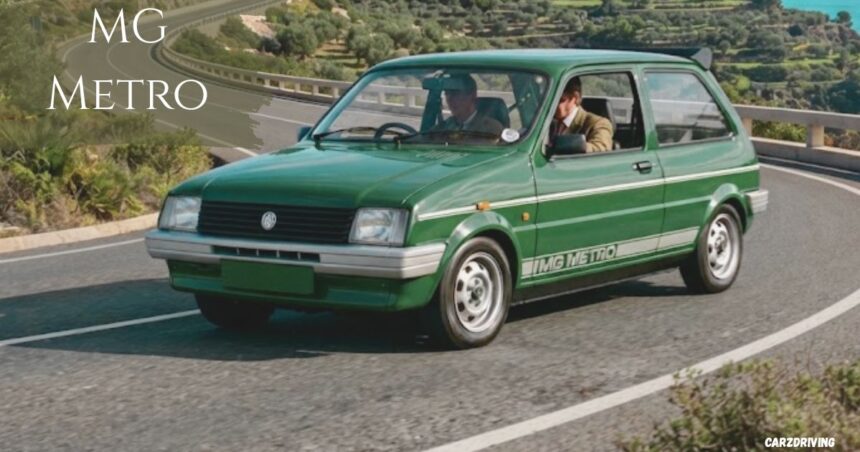
My first ride in a MG Metro taught me why so many British drivers fell for this humble hatchback back in October 1980. Engineers built the car as a new concept to replace an ageing icon, and they gave it a better appointed car feel without asking buyers to pay for a larger car price tag. British Leyland needed a fixture in the sales charts, and the Metro delivered exactly that within its first year on sale.
Long before I understood the history, I assumed the Metro simply borrowed parts from the Mini, but the truth runs deeper than that.
The A-Series powerplant and the running gear came straight from the Mini, yet the cabin offered a roomier driving position, more cabin space, and a genuinely useful hatchback boot. Many Mini owners once treated a scrapped Metro as a parts bin, and that habit alone tells you how tightly the two cars share their roots.
The Super Mini class grew crowded fast, so British Leyland leaned on its MG name to add some sparkle, and eighteen months after the MG factory in Abingdon closed, the badge returned on the MG.
Some diehard Mini enthusiasts and Mini loyalists dismissed the newcomer as a curse rather than a blessing, yet the motoring press welcomed the MG as a step in the right direction. MG fans soon warmed to the little car, and the badge gave the humble Metro a formula that worked.
By October 1982, MG unveiled the Metro Turbo at the Birmingham Motor Show, and the reveal marked the closure of any doubt about the brand’s commitment to performance car buyers.
The car wore an octagon badge, a sporty bodykit, alloy wheels, red seatbelts, and a digital boost gauge that made every drive feel special. Fans of proper sportscars finally had a naturally-aspirated MG followed swiftly by a turbocharging-equipped version in ’83, and the hot hatch revolution had found its forerunner.
I still think the Metro deserves credit for the giant-killing performance and nimble handling it borrowed from the Mini, wrapped in a smoother ride and a hot hatch attitude that surprised bigger cars on twisty roads.
Owning one meant fewer compromises and, thanks to friendly parts prices, a fair MoT bill each year. Buyers in the 1980s wanted luxury versions too, so the Vanden Plas 1300 brought comfort into the range, and even classic circles today treat the Rover Metro with fresh curiosity.
What strikes me most, having driven a few tired examples, is how the little car still handles daily use without drama, and it’s easy to see why resentment faded once people got behind the wheel themselves. This unassuming hatchback quietly became a brand in its own right, and it earned every bit of the enthusiasts’ respect it still enjoys.
The exact launch date, October 8th 1980, still gets mentioned by owners’ club members whenever the Metro’s birthday comes up, and each model in the range added its own personality to the story.
Chasing a good example became fun for me, and the once-thriving Mini parts trade would strip any rusty Metro within hours, treating it as a donor for high performance Mini builds. That kind of enthusiast passion keeps the story alive today, and it’s why I still enjoy explaining it to newcomers.
MG Metro History
Back when the car wore the Austin mini Metro badge, engineers judged it against the Fiesta, and that rival still ran on an old Kent engine with a pushrod design, so the newcomer didn’t look outdated at all.
BL chairman Michael Edwardes pushed hard against relying on government hand-outs, and he needed a hit to prove the company could stand on its own. Choosing the tried A-Series engine, refreshed into A-Plus form, gave the small car a heart that would later power 1990s Minis and easily match the thirsty 895cc Polo.
Every mechanics shop across the country already knew the A-Series by heart, which mattered once the car reached showrooms.
During a 1978 ride-and-drive session, Edwardes and his team drove an early prototype and found the refinement lacking, so the engineering team rushed to fix the styling before the 1980 launch date arrived. Their late scramble paid off, because the finished hatchback felt far more polished than anyone expected from such a short deadline.
On sale, buyers chose between 998cc and 1275cc engines, and the range-topping HLE trim sat above an available automatic version built around the same four-speed AP gearbox used in the Mini. The mini Metro tag disappeared in 1981, leaving the car known simply as the Metro, and that same year set the stage for reviving the MG name. A year later, in 1982, the MG reached dealers, soon followed by the punchier MG Turbo.
A facelift landed in 1984, bringing a fresh dashboard, chunkier seats, and a smarter front end style, alongside a wider track and a new five-door model for family buyers.
Years later, the Rover Metro finally paired the newer K-Series motor with the Hydragas system exactly as inventor Alex Moulton had originally intended. Sadly, disappointing NCAP crash test results hastened its exit in 1997, closing the book after a run of 17 years.
The MG earned its badge honestly, with a modified camshaft, bigger valves, and a twin outlet exhaust manifold feeding a single SU carburettor for 72bhp at 6000rpm.
Engineers left the suspension, steering, and brakes alone, trusting them to cope, but they still fitted sporty pepper pot alloy wheels wrapped in low-profile tyres. The gear box carried over unchanged, though the smaller tyres altered the gearing just enough to notice on the road.
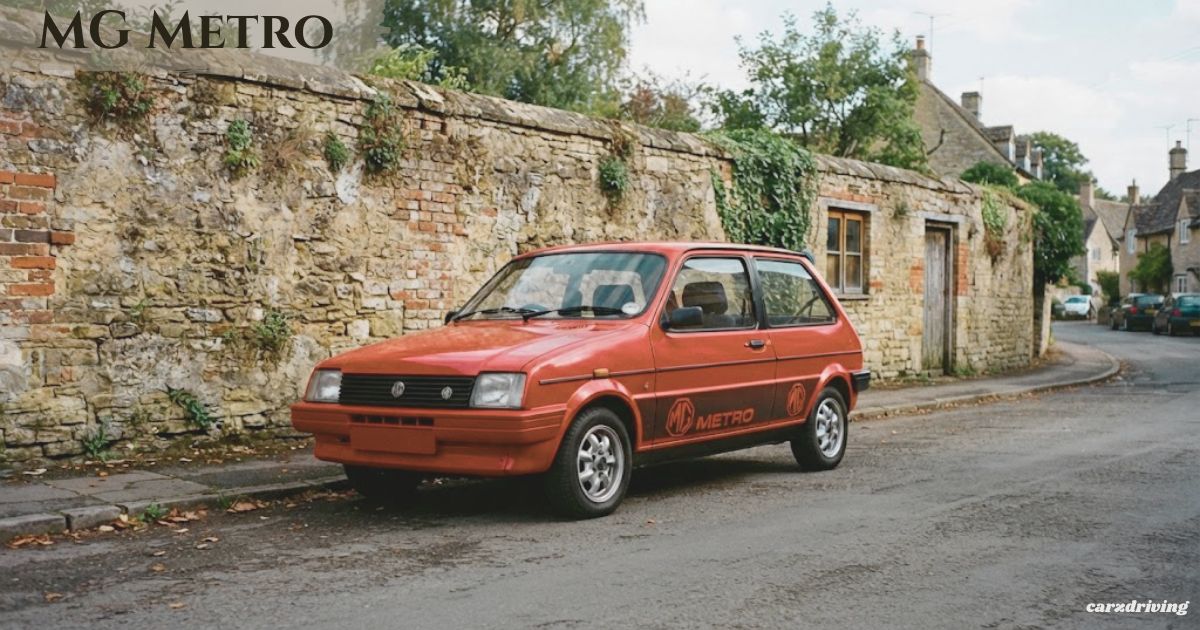
A rear hatch spoiler and a neat slatted grille carrying the red and silver MG badge gave the car its MG status at a glance, backed up by side and rear transfers on the flanks.
Inside, supportive front seats wore red seat belts, and a leather covered steering wheel finished the sporty feel, with fabric inserts dressing the door panels alongside a matching red carpet. The switches and dash stayed close to the standard car, though a rev counter joined the speedometer for the first time.
The Turbo pushed things further still, with a specially-developed head built purely for turbocharging, feeding a single SU carb through a Garrett T3 turbo for at least 93bhp.
That combination cut the 0-60mph sprint under ten seconds and pushed the 112mph top speed figure well past most hatchback rivals of the day. Underneath, the three-door shell wore a deep front spoiler, wheel spats, and a rear spoiler, all standing on distinctive 13-inch wheels.
Behind those wheels sat servo-assisted brakes with four-pot calipers biting on vented discs, giving the hot hatch braking to match its pace. A tweak to the bonnet line arrived in October 1984, alongside a lightly revised interior dash, and the sportier Octagonal side graphics followed in 1989 to keep the look current.
Through every one of these changes, the Metro kept earning its place as Britain’s best-selling car, taking the title in both 1982 and 1984.
Bodywork
Rust remains the biggest threat to any surviving Metro, and the classic warning sign runs down the wing just behind the headlamp. Luckily that panel is a bolt-on panel, though a genuine replacement now costs around £180-£200 once you track one down. The front valances and rear valances rot just as easily, and being double-skinned panels, they’re never a five-minute fix, even with pattern parts sitting around £100.
Just like the bigger Range Rover, the Metro started life as a three-door, and the later five-door shell seems to suffer more around the wheelarches.
Repair sections for those arches cost roughly £40 each from Magnum Classic Panels, though you’ll still want a decent bodyshop to blend the metal in properly. Some owners swap in Rover 100 panels instead, since they’re broadly similar and easier to find.
Check the sills carefully, because most budget cars carry a few hidden patches added purely to scrape through old MoTs. Complete sill sections are still available for both body styles, priced around £70 a side, which makes a proper repair realistic rather than wishful thinking.
Light units no longer come brand new, so hunting for new-old stock or clean used trim items becomes part of the hobby, alongside the ever-scarce windscreen rubbers.
Front wings take the worst of any stone chip damage, and that damage turns to corrosion faster than you’d expect on a car this old. The doors rot along their bottom edges, and the fuel filler flap often shows rusty patches where a careless petrol pump filler nozzle has chipped the paint over the years. Spend an afternoon with a torch and a screwdriver before buying, and you’ll save yourself a world of trouble later.
Engine & Transmission
The A-Series engine shows up under the bonnet of the Mini, the Metro, the Maestro, and the Montego, so service items stay cheap no matter which 998cc or 1275cc version you own. If you spot oil in coolant, suspect a tired head gasket, and if blue smoke puffs from the exhaust, a valve overhaul probably waits around the corner. Pulling the cylinder head at home is genuinely simple, and any Mini specialist can machine it or supply an unleaded-ready head for around £500.
Full rebuild kits and carburettor service parts sit on the shelf at most specialists, which keeps ownership refreshingly cheap. The gears-in-sump arrangement inherited from the Mini brings a familiar drop-gear whine, and most owners simply shrug it off as normal character rather than a fault. Hubs, wheel bearings, clutch kits, and hydraulic parts all come from the usual Mini suppliers, though tracking down engine hoses built specifically for the Metro takes a bit more patience.
A series engines reward the DIY enthusiast, since the gearbox shares its sump with the engine oil and rarely causes trouble unless the car has covered high mileage without proper care. The Turbo took things a step further with a specially-developed head built for turbocharging, running a single SU carb through a Garrett T3 turbo for 93bhp. That setup delivered a sharp 0-60mph time and a genuine 112mph top speed that surprised plenty of rivals.
Underneath sat the same four-speed gearbox as the standard car, though it wasn’t built for turbocharged power, so uprated components and five-speed conversions became popular fixes among owners chasing reliability.
MG’s clever electronic boost controller used a solenoid-controlled bleed valve to manage boost pressure through a small diaphragm, holding peak boost to 7.5psi peak boost only at higher engine speeds. It’s a neat piece of old-school engineering, and it still works well today if you keep it maintained.
Suspension
Swapping steel coils for Hydragas gave the Metro a ride quality that punched well above its class, and the system stays largely maintenance-free for years at a stretch. Over time, small leaks can drop the ride height, but a correct pump sorts that out quickly, and plenty of old garages still keep the right kit tucked away in a drawer. If you can’t find one nearby, a hand pump from aamason.com does the job just as well, paired with fresh Hydro fluid sourced through MGF parts specialists.
The trickier fault involves the displacer spheres losing their gas pressure, and once that happens, the spring effect vanishes even after you top the fluid back up. Replacement displacers come from used parts bins or rare new-old-stock units through specialists like Minispares, and it’s worth budgeting for that job if the ride feels harsh.
Standard wear items such as balljoints still come from ordinary Mini suppliers, so that part of the job stays simple and affordable.
On the MG side, Hydrogas suspension can droop unevenly, and a local Rover agent used to sort that out with a quick pump-up on the ramp. While you’re under there, check the alloy wheels for corrosion and curb damage, since scuffed rims cost real money to restore properly. Rumour has it that Lotus helped with fine-tuning the setup on the Metro Turbo, and whether that’s true or not, the little car still drives well enough to embarrass its GTi and Turbo peers.
Brakes
Even the basic Metro came with four-piston front calipers clamping onto vented discs from 1984 onward, while the rear setup stuck with simple drums at the back. Replacement calipers sell on exchange for around £100, which makes far more sense than fighting seized originals with a box of seal kits.
Parts sharing with the Mini keeps discs, pads, and rear shoes cheap and easy to find, and a wide range of aftermarket upgrades exists if you want to push things further.
The Turbo’s three-door shell wore a deep front spoiler, wheel spats, and a rear spoiler, all sitting above distinctive 13-inch wheels.
Behind those wheels lived proper servo-assisted brakes with four-pot calipers, giving the hot little hatch stopping power to match its extra pace. It’s the kind of detail that shows the engineers took the braking setup just as seriously as the turbocharged engine up front.
Interior
Cabin parts trip up plenty of modern classics, and the MG Metro is no different now that Austin and Rover have both vanished from the map. The indicator stalk and much of the switchgear on early cars came straight from the Mini, which makes sourcing far easier than it should be for a car this old.
Post-facelift models with their chunkier seats and revised dashboards rely more on second-hand parts, and oddly enough, a column borrowed from the Discovery even supplies the column switch for indicators and lights on some cars.
Parts for MG models cost more and take longer to find, since items like red seatbelts, the leather-rim steering wheel, and monogrammed seats never shared much with plain Austin items. Most of the cabin uses simple plastic or vinyl, so a good clean brings tired front seats back to life without needing a full retrim. Look closely and you’ll spot red seat belts, a leather covered steering wheel, fabric inserts on the door panels, and a matching red carpet on the sportier trims.
The switches and dash layout stayed close to the ordinary car, though a rev counter joined the speedometer on MG versions for the first time. Buyers also got a sporty bodykit, exclusive alloy wheels, and a fun little digital boost gauge to watch while pulling away from the lights. Small details like these still make climbing into an old Metro feel like a proper occasion rather than just another commute.
FAQs
What made the MG Metro special?
The MG Metro paired the fun of the Mini with more cabin space, a smoother ride, and a lovable dose of British charm.
How fast was the MG Metro Turbo?
With its turbocharged A-Series engine, the Metro Turbo hit 0-60mph in under 10 seconds and reached a 112mph top speed.
Is the MG Metro a good classic car to buy today?
Yes with careful checks on rust, bodywork, and suspension, the MG Metro remains one of the most affordable and rewarding classics around.
What engine did the MG Metro use?
It ran the trusted A-Series engine in 998cc and 1275cc form, shared proudly with the Mini, Maestro, and Montego.
Why did the MG Metro disappear from our roads?
Time and rust simply caught up with it, and this once-best-selling little hero quietly faded into classic circles, missed by many who loved it.