
The ERF Trucks story begins with a simple boardroom disagreement, and it grew into one of the boldest names in commercial vehicle manufacturing.From the founding chassis built in 1933 to the final truck made in 2007, this British company stayed loyal to family leadership and engineering innovation for seventy years, even as changing markets pushed weaker firms out of business.
Hauliers trusted ERF Trucks for rugged, reliable lorries with bold cab design, and the brand reinvented itself again and again, meeting wartime demand and later joining the German MAN Group on its long journey through British trucking history.
From Foden to ERF Trucks
Foden Trucks started life in Sandbach back in 1898, building steam-powered wagons for a growing Britain, but by the 1920s the economy slipped into recession and insurers grew nervous about covering steam boilers.
Edwin Richard Foden wanted to switch to diesel power, yet the Foden board refused, so he left with his son Dennis and engineer Ernest Sherratt to build a new chassis under a fresh set of company initials.
The very first ERF lorry, carrying number 63 to mark Edwin’s age, used a cab built by coachbuilder John Henry Jennings, paired with Gardner engines, David Brown gearboxes, and Kirkstall Forge axles, following a simple philosophy of choosing the best components and diesel engines available in 1933.
The Early Models and Wartime Years
The debut truck, badged C.I.4.4, stood for Compression Ignition, a 4-cylinder engine, and 4 wheels, and it won a strong reputation for reliability right after its 1933 launch at the Olympia Motor Show.
The model range soon grew to include the CI4, the CI5 with five-cylinder engines, and the CI6 with six-cylinder engines, built across two axles, three axles, or four axles, plus a lighter three-cylinder CI3, and a twin-steer Chinese Six arrived in 1937.
When the Second World War began, Gardner engines were needed for military use, so ERF turned to AEC and its 7.7-litre engine for the D.I. model, kept up a war effort target of 400 trucks a year, saw some trucks reach military service, and by war’s end the annual output had dropped to just 237 vehicles while steel stayed rationed.
Post-War Growth and the Rise of Iconic Cabs
After Edwin Foden died in 1950, Dennis took over as Managing Director, took the company public, and led ERF into a new age of bold design, starting with the 1948 V Type cab built by Jennings, later offered in a steel version by Willenhall, and the 1954 Kleer Vue, or KV cab,
A true design icon with a curved glass windscreen and rounded look that gave the brand memorable cabs, including a three-seat, semi-forward-control model nicknamed Sabrina,
While engine choice widened with Rolls-Royce power and, from 1961, the first British-built Cummins-powered truck, a KV-cabbed eight-wheeler built for a Northampton haulier, showing how this British truck manufacturer kept improving through the 1950s and 1960s.
By 1962 the Long Vue, or LV cab, brought a one-piece windscreen and concealed door hinges for easier maintenance access, and in 1967 ERF became the first to fit spring brakes as a safety feature, now an industry standard, all thanks to cab innovation and strong leadership from engineers Ernest Sherratt, Eric Green, and Alan Turner, alongside designer Gerald Broadbent.
By 1970 and 1971, fresh chassis engineering produced the A Series, built mostly as tractor units with parallel-depth chassis rails, proving that even after 30 years old, Dennis had guided this commercial vehicle maker with a traditional style that still pleased operators, and Cummins diesels became a trusted choice for every haulier.
The B, C, and CP Series: Steel, Plastics, and Common Parts
In 1974, ERF launched the B Series, a steel-framed, fibreglass-panelled truck with a new SP cab and a tilting cab design that gave better engine access, while Fire appliance production, which began in 1967, added to overall company output.
The C Series followed in 1981 and 1982 with an upgraded SP3 cab, and from 1984 the CP, short for Common Parts, offered Cummins-engined tractor units built to standardised specifications, letting customers pick either 10-litre Cummins engines or 14-litre Cummins engines. These trucks came with Eaton Fuller gearboxes and Rockwell axles, in configurations such as 4×2, 6×2, and 6×4.
The E and EC Series: ERF’s Best-Selling Range
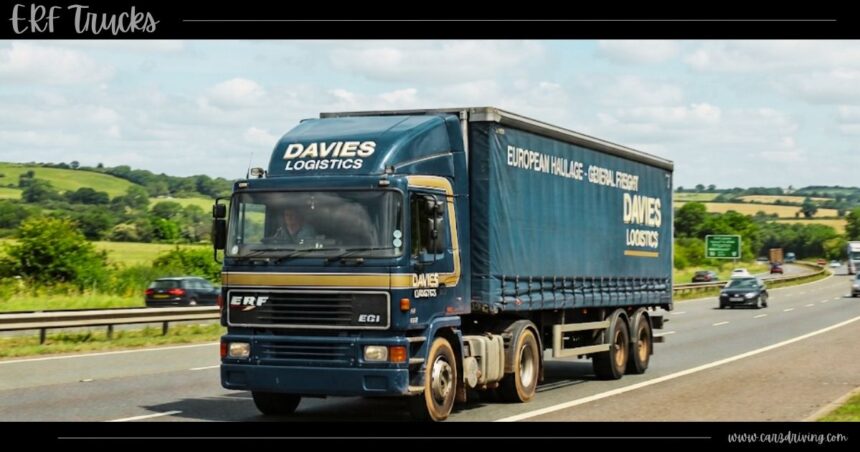
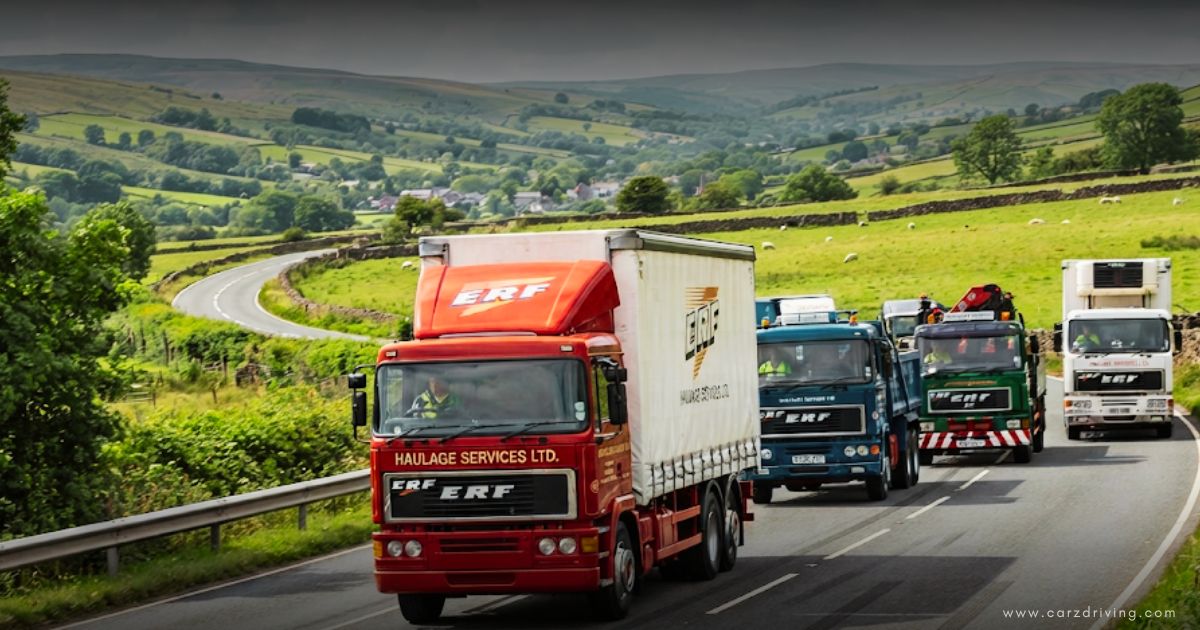
ERF bounced back from a brutal early-1980s recession, when daily production had fallen from 16 trucks a day to just 16 a week, and by 1986 the new E Series arrived with a sleek SP4 cab, proving instantly popular and helping register 3,740 trucks across the UK by 1988.
An agreement with Austrian manufacturer Steyr brought all-steel cab options to buyers, adding an aerodynamic touch to the range. Then in 1993, timed with the diamond jubilee and the slogan Driving the Future, ERF unveiled the EC Series after four years development and a £14 million investment, which became the company’s best-selling product line.
Change of Ownership: Western Star, MAN, and the End of an Era
In 1996, the Canadian-based Western Star Trucks Holdings paid £27.4 million for ownership of ERF Trucks once independent manufacturer, and the new partnership built a cab-over-engine model, the 7564, for Australia, quite separate from ERF’s earlier ties to the Austrian market, while Western Star also added EU models like the EM for municipal vehicles.
Then, in March 2000, German manufacturer MAN completed a MAN takeover, since ERF no longer fit the strategic picture of Daimler-Chrysler, which was chasing Freightliner, and that
same year ERF launched the ECS and ECX models, began building a unified site factory on ERF Way in Middlewich, Cheshire, and held a cavalcade called Coming Home Moving Home, gathering 200 Edwin Richard Foden trucks in August 2000.
Soon after, accounting discrepancies sparked controversy, and MAN sued Freightliner in 2002, winning a US$500 million settlement five years later; meanwhile, British ERF manufacturing stopped that same year, with production lines shifting to Salzburg and Nuremberg, Germany,
though ERF kept some badging identity through the Cummins ISMe engine, an alternative to the D20 unit, until tighter EU emissions standards made these trucks mechanically identical to standard MAN trucks, now simply rebadged MAN trucks such as the ECT, ECM, and ECL,
Each rolling off a single production line, closing out a proud 74-year British engineering legacy with the final ERF-badged truck made in 2007, just short of a 70th anniversary, though its limited success in some overseas markets never dimmed the pride behind the name.
FAQs
When was ERF Trucks founded?
Edwin Richard Foden left Foden Trucks after a disagreement with the board, and along with his son, Dennis, he founded ERF in 1933 to build his own diesel engines.
What does “ERF” stand for?
The name ERF simply uses the initials of its founder, Edwin Richard Foden, and it has stood for this company ever since.
What was ERF’s first truck?
The first ERF truck carried chassis number 63, badged C.I.4.4, fitted with a Gardner 4LW diesel engine and a cab built by coachbuilder Jennings.
Who owned ERF over the years?
For decades, ERF stayed family-led and independent, until Western Star Trucks Holdings bought it in 1996, before the MAN Group from Germany took over in 2000.
When did ERF stop making trucks?
Production ceased at the Middlewich, Cheshire, factory in 2002, and MAN built the last ERF-badged truck in 2007.