

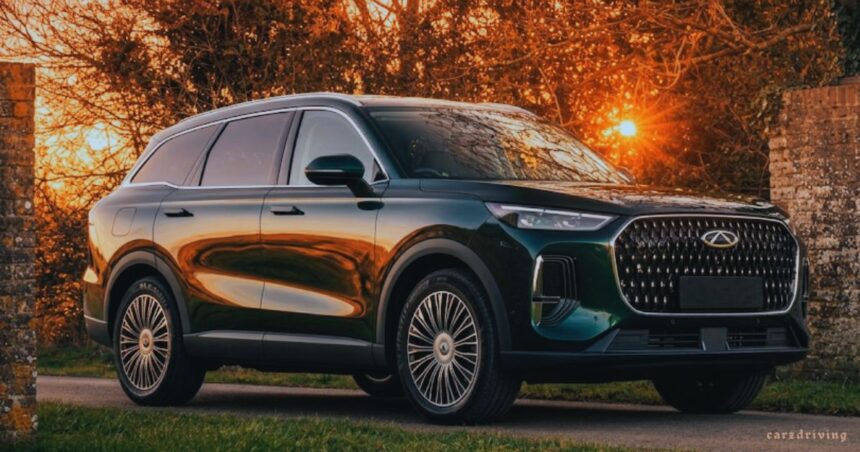
I spent a full week living with the Chery Tiggo 9, and I came away with strong opinions about almost every part of it. This isn’t a press-release rehash it’s what actually happens when you load the kids in, drive to the shops, and try to find a parking space for something this big. Let’s go heading by heading.
Chery Tiggo 9
The Chery Tiggo 9 measures 4.8m long, 1.9m wide and 1.7m high, which makes it noticeably bigger than its sibling, the Tiggo 8.
That puts it squarely against proper seven-seaters like the Peugeot 5008 and Skoda Kodiaq, and the size difference is obvious the moment you park next to either rivals.
Boot Space
Boot capacity sits at 300 litres with all seven seats in place far better than the Tiggo 8’s 117 rising to 819 litres with the third row folded and a huge 2,021 litres with back rows flat.
Here’s the catch: those rearmost seats are not built for adults, and even kids feel a bit short-changed on long trips back there. Getting in is tight, and there’s nothing graceful about getting in I’d genuinely call it a 5+2 rather than a true seven-seater.
With all seats up, boot space drops right down to 143 litres, which is roughly enough for a small shop and not much more, though once you fold things flat the 2,021 litres figure puts it on par with the most important rivals, even if it’s not quite class-leading.
Day-to-day, the cabin storage saves the day. There’s a cooled wireless charging pad for your smartphone, multiple USB ports spread across all three rows, and sensibly sized door bins and cubbies that swallow water bottles, snacks and all the clutter a family generates. It’s a car that understands what families actually carry, even if the back row asks a lot of anyone over ten years old.
Engine
Under the bonnet sits the Chery Super Hybrid system, a clever plug-in hybrid powertrain built around a 1.5-litre, four-cylinder, turbocharged petrol engine paired with an electric motor on each axle.
Combined, this CSH setup using twin electric motors and a three-speed, dedicated hybrid transmission produces a combined output of 422bhp and 428lb ft of torque, which is a huge amount of power for a 2.3-tonne family SUV.
That power translates into a 0-62mph sprint of just 5.4 seconds, genuinely quicker than a Honda Civic Type R, even though the top speed is capped at 112mph in the UK (the WLTP-tested car can apparently hit 180mph where the law allows).
The standout part of the package, though, is the 228kg 34kWh battery. It delivers a real EV-only range of 91 miles, with a total range approaching 650 miles once you add fuel from the 70-litre tank.
Even allowing for some real-world shrinkage, that’s enough for an EV-only commute all week and a proper weekend adventure without ever needing the petrol engine, and the electric-only driving range feels genuinely meaningful and achievable for most owners, not just a number on a brochure its temperament stays calmer than the spec sheet’s hot-hatch territory numbers suggest.
Battery & Charging
Charging is where this PHEV pulls ahead of rivals like the Volkswagen Tayron. DC charging tops out at 71kw (versus the Tayron’s 50kW), giving a 30 to 80 per cent top-up in just 18 mins, while it’s also rapid charge compatible, which is rare for a PHEV.
AC charging is limited to 6.6kW, meaning a full charge from empty takes around five hours on a typical home wallbox, though I only ever saw 7.0kW in practice.
The system never lets the battery drop below 13 per cent, presumably to protect battery life, so top-ups feel quicker than the maths suggests. There’s also Vehicle-to-load (V2L) capability built in, letting you power external equipment when parked handy for camping or a worksite.
Design & Exterior
I’ll be honest: the design of this SUV is the least interesting part of owning one. Strip away the Infiniti-esque badge and you’re left with one of those anonymous SUVs you’d see in a car insurance ad not ugly, just safe. It’s classically proportioned, with very few risks taken, which actually makes sense for new brands with no design heritage to lean on.
Chery clearly decided the looks shouldn’t distract from the tech and equipment on offer, and the interior follows the same playbook.
There’s a scarcity of buttons and an abundance of screen, with nothing flashy about the architecture every decision favours functionality over flair. It genuinely looks like the modern car cabin an AI would generate if you asked it to imagine one, for better or worse.
Cabin Quality
Spend real time inside the cabin and it feels properly upmarket, thanks to soft-touch materials in the right places and a restrained, conservative design that avoids gimmickry.
Build quality feels solid overall, though the materials inside the glovebox and central armrest cubby let the side down with cheap-looking, easily marked plastic that scratches if you’re not careful. The driving position is genuinely good, helped by generous electric adjustment for both seat and steering wheel.
Comfort
The second row is where this car shines: it’s properly spacious, with sliding seats, reclining seats, heating, ventilation and independent climate controls for rear passengers.
The third row tells a different story it’s compromised, fine for children up to 10-years old but tough for adults, with tight knee room and a seating position that’s too high for comfort.
My 5ft 3.5in tester brushed his hair on the roof with his knees bent awkwardly, even with the center bench pushed forward; the Mazda CX-80 still beats it on third-row space.
Interior
Look closer at the finishing and you’ll spot some scratchy-looking plastics, but the overall feel stays premium. The seats are noticeably squishier than typical European cars, the screens are bright and crisp, and charging points plus storage options are everywhere, with thick carpets underfoot.
It’s not Bentley or BMW money, but you’ll feel warm, cool, entertained and comfortable within minutes. As for the seven-seater claim, those back seats stay genuinely tight you need flexible hip joints to climb past the tilted second row, and short legs once you’re in.
At 5ft 8in, with my driving seat in its preferred position, I simply couldn’t fit; treat them as occasional pews for little ‘uns only.
Equipment & Trim Levels
Chery keeps things refreshingly simple with one trim, no options, and only paint colour left to choose I genuinely couldn’t find a box left unticked. This SUV rides on 20-inch wheels and gets leather front seats that are heated, ventilated, massaged and electrically adjustable, with the second row also heated and ventilated.
A 14-speaker Sony stereo includes speakers built into the front headrests, paired with a 15.6-inch central touch screen running CarPlay and Android Auto, plus a 10.25-inch digital instrument cluster and 19 driver assistance systems (ADAS) useful in theory, though you’ll likely switch most off.
Cameras cover every angle, there’s a 1.3m panoramic roof with a sun blind, laminated glass for extra refinement, a 50W wireless phone charging pad, plenty of USB ports, and even V2L capability so you can run a coffee machine or hair dryer off the car.
For UK buyers, this is Chery’s most expensive model yet, benefiting from European fine tuning validated and calibrated specifically for local road conditions through the brand’s German-based research and development base, despite our appalling roads.
The marketing strategy stays admirably straightforward: one model (Summit), one powertrain, one trim level, and a Summit spec that’s genuinely fully loaded with luxury kit usually reserved for top-spec trims and options lists elsewhere.
Against rivals like the Skoda Kodiaq, Peugeot 5008 Hybrid, Hyundai Santa Fe Plug-in Hybrid and Kia Sorento PHEV, the Chery Tiggo 9 trades on value and equipment rather than brand heritage or dynamic mastery.
There’s no Euro NCAP rating published yet, though the related Chery Tiggo 7 and Chery Tiggo 8 both hold five-star ratings after reassessment. Pricing at £43k looks like genuinely good value, backed by a seven-year, 100,000-mile vehicle warranty that offers real reassurance even if the UK dealer network is still expanding and currently sparsely distributed, leaving Chery with real work to do on brand awareness and desirability.
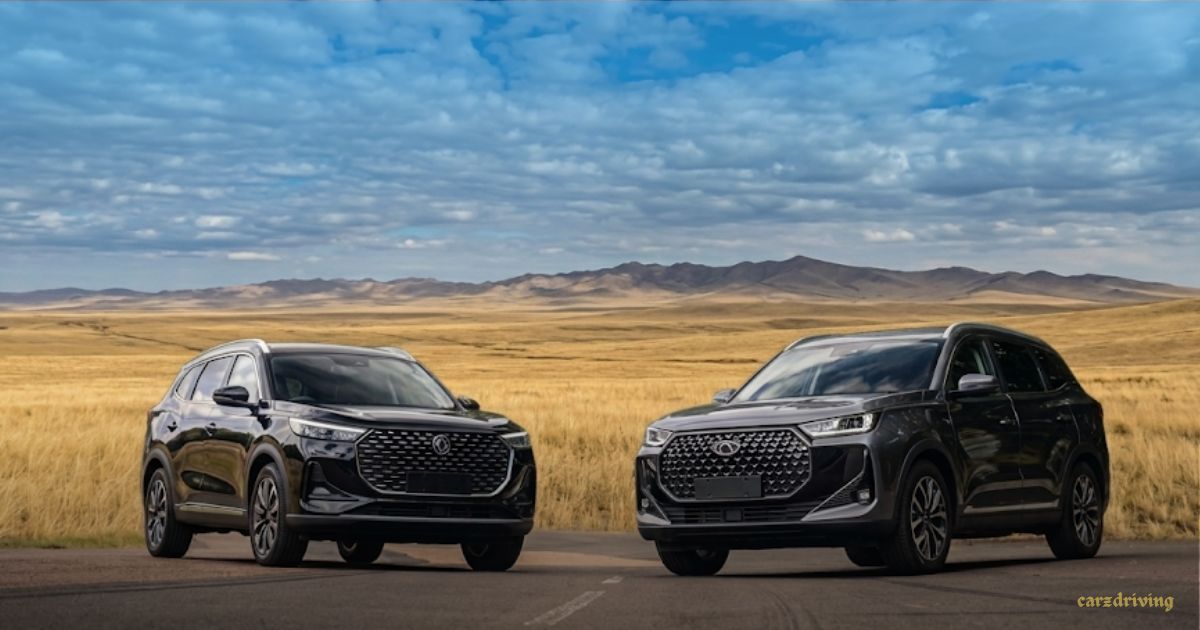
Driving Experience
On the road, the steering offers little feedback and a slightly springy, elasticated self-centring sensation that feels odd at first it’s a quirk you quickly adapt to rather than a dealbreaker.
The suspension behaves well on decent road surfaces, where the car floats along serenely with wind noise and road noise well suppressed, letting the stereo shine.
Hit a potholed stretch, though, and it clunks over cracks rather than smoothing them out; body control stays fine at cruise but the damping gets ragged once you push harder.
There are drive modes for every mood Eco, Normal, Sport, Snow, Sand and Off-Road though the throttle feels a touch too eager in Sport. More useful are the buttons locking the battery into EV mode or triggering recharge, since the system otherwise decides itself when to favour pure EV running versus calling on the engine, which can drive the front wheels directly when needed.
Around town, the ride turns gently floating and relaxing on unbroken Tarmac but gets fidgety over imperfections, not helped by 20-inch wheels wrapped in big tyres with a generous sidewall at least they’re Michelins, tuned for efficiency rather than handling 422bhp.
The light steering stays accurate if short on feedback, and once you’ve recalibrated for its size, placing the car becomes easy; you can weight it up in the settings, though a treacly resistance lingers around the straight ahead regardless.
Chery wisely avoided a quick steering rack for this 2.3-tonne SUV, which doesn’t love being thrown into corners body roll is noticeable, and it lumbers around bends at a fair lick before the tyres give up grip.
It stays composed in the dry, but wet weather challenges the stability control and torque distribution between the two electric motors, and switching off ESC reveals the car swapping between understeer and oversteer on a constant radius curve.
The hybrid powertrain itself integrates smoothly, with no clonks, knocks or loud noises under normal use.
Electric drive handles brisk acceleration comfortably up to motorway speeds, with the engine stepping in when you really want it though the three-speed gearbox occasionally leaves the engine out of its power band, and I noticed slight overrun if you ask for full power then change your mind, producing brief unwanted acceleration.
Driven sensibly, the electric-only range genuinely impresses: I used just 50 per cent of the battery to cover 40 miles including some dual carriageway, with the system never dropping below 13% the trip computer showed 40-45mpg, though frustratingly it only logs the last 31 miles.
Performance Figures & Real-World Numbers
Chery never tested this car on a drag strip, so there’s no official confirmation of that Type R-smoking 0-62mph claim. Still, my right foot (and my buttocks) can confirm it feels properly rapid, even in EV-only mode floor the throttle and it behaves like a powerful, pure-EV SUV, with only a faint hum from the engine reminding you it’s there. It pulls hard from a standstill and keeps you pinned in your seat.
Over a few hours, I couldn’t fully verify that 91-mile EV-only range claim, but on a mixed route I saw figures slightly better than the combined 40.9mpg rating.
Is it as fast as a Civic Type R? Genuinely, yes. Is it as satisfying? No there’s a strange surge when you lift off the throttle after gunning it, a reminder that this chassis wasn’t built for that kind of driving. Keep things docile and it becomes a properly stress-free way to travel instead.
Braking
The braking force itself feels strong enough, but there’s a slightly odd grabbiness in the final few mph before the standstill. During your first journeys, your foot needs time to learn to modulate properly, so it’s worth warning passengers not to hold piping hot drinks early on.
That said, the overall braking feel deserves real praise. The transition between regenerative brakes and friction brakes feels far smoother and less unnatural than you get from many mainstream manufacturers. The only blemish is a grabby feel while manoeuvring at slow speeds, which slightly spoils the copybook.
Easy to operate the screen?
Like a Tesla, the lack of physical buttons means you’ll spend real time digging through submenus just to adjust mirrors or change drive mode.
Over time you build muscle memory and grow familiar with the layout, but it remains genuinely dangerous to be jabbing at a screen while driving. The display itself stays crisp, responsive and bright, and the head-up display lets you set climate, nav and infotainment once, then keep your eyes on the road.
Full-screen Apple CarPlay looks excellent and brings total familiarity to the interface, but you’ll still dip in and out of the native system to change settings. It’s not unique to this car, but it stays unavoidably annoying, much like the ADAS systems that you’ll want to switch off as soon as you find where they’re buried.
Any kit missing?
Honestly, no. Beyond purely superfluous materials and finishes think extended carbonfibre trim or contrasting stitching every genuine comfort and convenience is covered here. Offering just one trim level, with no options list and only paint colour to pick, feels like a genuine relief.
In a world that drowns buyers in choice, the SUV stays refreshingly straightforward, and that simplicity becomes its own kind of luxury.
Verdict
Chery Tiggo 9 isn’t a car for car-enthusiasts chasing sharp driving dynamics, or for anyone who cares deeply which badge sits on their driveway. It’s not exciting or different in any dramatic way, but it stays laser focused on what family car customers actually want, and that focus pays off.
The exterior and interior design feel a little phoned in, yet the content of the car at £43,105 feels genuinely extraordinary the performance, efficiency, EV-only range and sheer pile of luxurious options make it eye-opening and refreshingly simple to understand.
Yes, the steering, brakes and ride quality could all use another coat of polish, but driven smoothly and safely, it becomes a quiet, comfortable way to travel. It won’t tug at anyone’s enthusiast heartstrings, and not many cars in this class do that’s rather the point.
It still makes a strong, rational case for itself: it’s spacious, well equipped and impressively refined, with a plug-in hybrid system that delivers genuinely useful electric range.
It’s far from perfect, lacks a clear brand identity, and the third row stays an occasional-use solution at best.
But if you can forgive those compromises in exchange for the price and specification on offer, there’s plenty here worth recommending even if, for my money, it still feels a touch unfinished and unpolished in the driving department, especially given how much rapid acceleration it’s hiding underneath.