

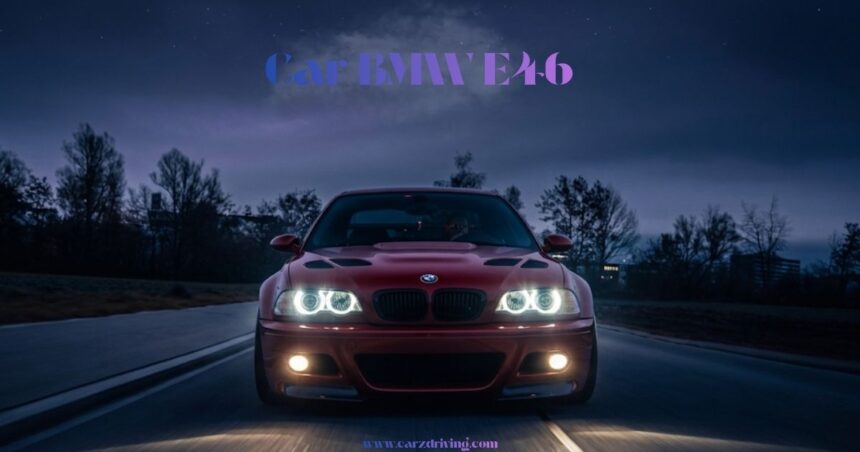
The Car BMW E46 3 Series remains one of the most sophisticated and well-rounded cars the Bavarian manufacturer ever produced, building brilliantly on everything the E36 delivered before it.
When BMW set out to overhaul its volume seller, the engineering team faced a genuine challenge the new car could not creep into the dimensions of the larger 5 Series E39, yet it still needed to stand as a credible, contemporary rival to the incoming Rover 75. The result carried real panache, and the market noticed immediately.
Chris Bangle and Ian Cameron kicked off development back in 1993, teaming up with Erik Goplen of DesignworksUSA, a BMW-owned consultancy, to shape the car’s exterior design marking the first time a foreigner held creative control over a BMW’s styling.
By 1996, the team had locked in the finalising designs, and Bangle already known for his sharp work on the Fiat Coupe would later spark infamy among BMW loyalists with his polarising E65 7 Series and E60 5 Series.
Meanwhile, Ian Cameron moved on to become pivotal in shaping the L322-generation Range Rover, proving just how much talent surrounded this project.
Car BMW E46
Under the skin, the E46 arrived 23mm taller and 60mm wider in front track than its predecessor, and the body delivered a remarkable 70 per cent improvement in torsional stiffness over the E36 layout it inherited.
Engineers constructed key suspension components, including the control arms for the rear ‘C’-arm setup, from aluminium to keep weight in check.
On the powertrain side, BMW silenced the rumours and kept the beloved straight-six, dismissing both V6 and V8 trials after concluding that the straight-six offered superior smoothness and operation wherever packaging allowed a decision that defined the E46’s character entirely.
The M47 four-cylinder diesel and the muscular six-cylinder 3.0-litre M57 gave BMW a serious foothold in the executive oil-burners segment, helping the brand capture far greater market share than the slow-selling E30 324d had ever managed.
Even the entry-level 316i came loaded with air conditioning and ASC+T traction control, dismantling the old notion of a spartan, twitchy BMW once and for all.
Production spread across three German factories plus South Africa, and CKD kits reached China, Mexico, Russia, Indonesia, and Malaysia to meet the surging global demand for saloon, Coupe, Touring, Compact, and Convertible body styles released between 1997 and 2000.
Priced on a par with the Porsche Boxster S, the E46 M3 came out swinging, genuinely challenging the much pricier 911 and the fearsome Audi RS4 without breaking a sweat.
The M division took the 3.2-litre straight-six and re-engineered it substantially, extracting 343bhp at 7900rpm and 269lb ft at 4900rpm, sending power to the rear wheels through a Getrag six-speed gearbox and a GKN-developed variable-lock limited-slip diff.
Every system you’d want came as standard ABS, switchable Dynamic Stability Control, Cornering Brake Control, and Traction Control all made the cut, while the quad exhausts produced that iconic grunty idle that Autocar famously described as turning into a serrated wail at the top of the rev range.
A decade after the Golf GTI rewrote the rules and proved a hot hatch could match a roadster for driver involvement, BMW introduced the original M3 in 1986 as a pure homologation tool to win Touring Car races few expected it to launch an entirely new genre.
The E36 M3 of ’93 drew criticism for feeling more like a marketing exercise, carrying accusations of being unwieldy and overweight, but the E46 arrived with a clear mission to fix every one of those shortcomings.
With wheelarches flared wide, a commanding front spoiler, aluminium used extensively across the bonnet and brake calipers, and a leather-clad interior dripping in standard equipment, the E46 M3 presented itself as the original M3 finally grown up and ready to be taken seriously.
Autocar’s test car pushed past the official 155mph limit and touched 160mph with ease, and a limiter-delete option on the CSL version reportedly unlocked a theoretical 170mph top speed.
The SMG paddle-shift divided buyers sharply those who wanted a true driver’s car consistently preferred the manual gearbox, though condition and history always matter more than transmission choice when shopping today.
Current market trends show Coupés commanding roughly a 10% price premium over Convertibles, the CS sitting around 20% above the standard car, and the full-fat CSL sitting in an entirely different financial conversation with VANOS health, head-gasket condition, and rear axle carrier panel integrity forming the three most crucial checkpoints any serious buyer should cover first.
The S54 Engine
The S54 straight-six stands as one of the greatest naturally aspirated engines ever bolted into a road car, and every rev it pulls proves that point without argument.
BMW’s M Division knew the S50 block from the previous M3 had reached the edge of its potential, so engineers carried out a careful 44mm overbore and gave the unit redesigned pistons, rods, and a stronger, lighter crankshaft, topping it all off with a genuinely super-brainy new engine management system that transformed throttle response entirely.
The result carried a new iconic nametag and produced 343bhp from just 3.2 litres an astounding specific output that put 62mph away in around 5.0 seconds, matching 911 performance figures that genuinely shocked the segment at the time.
Individual throttle bodies served as the M trademark solution for delivering ultra-quick and precise throttle response, giving the S54 an organic soul that no rival turbocharged unit of the era could honestly replicate.
At low revs the engine felt sweet but never brutal torque sat at just 269lb ft yet that figure barely mattered because every driver’s instinct screamed to rev the thing harder and harder toward the horizon.
Any twitch of the pedal sent the car surging forward with the raw energy of an unbound spring, building through sweet harmony in the mid ranges before hitting an enthralling power chord as the needle swept toward the 8,000rpm redline in a state of absolute frenzy.
The SMG a single-clutch automated manual unit with flappy-paddle shift offered buyers an alternative to the proper manual gearbox, though the cheapo plastic paddles left many feeling short-changed in a car of this calibre.
A rocker switch cycled through six modes of shift character, ranging from a lazy slow thunk all the way to a neck-snapping vicious bang, and the SMG II update introduced 11 modes and even a launch control function to sharpen things further.
The M Division also confirmed no four-door M3 would follow, and while a single Touring prototype existed behind closed doors, the project never progressed leaving the coupe and convertible body styles to carry the E46 M3 story forward from 2000 and beyond.
The M3 CSL
BMW’s M Division created the M3 CSL as a statement of intent, stripping the already exceptional standard M3 back to its fighting weight and pushing every performance parameter to an extreme that the regular car simply could not touch.
The engine received a thorough going-over, with a saucepan-sized inlet in the front airdam feeding cold air into a carbonfibre resonating airbox beneath the bonnet, which in turn supplied a new manifold fitted with reprofiled cams operating revised valves delivering a vivid extra surge of urge above 6,200rpm and an even fiercer dash for the redline.
The result pushed output to a scorching 360bhp still from 3.2 litres, still with no turbo and that musical instrument airbox contributed a snarl to die for that made the standard car sound polite by comparison.
Weight fell by a significant 10 per cent, achieved through a carbon fibre roof, a lighter front bumper, a plastic boot lid, glass thinner than before, and an interior stripped of its centre console, door trims, and soundproofing the CSL also deleted no a/c, no stereo, and replaced comfort seats with raw manual bucket seats that meant business.
The suspension dropped lower with stiffer rates, a sharper steering rack replaced the standard unit, bigger wheels went on at all four corners, and stronger brakes gave drivers the confidence to exploit every one of those extra horses.
On paper the power increase amounted to just five per cent, but the transformation in feel, sound, and commitment required to drive the CSL at its limit placed it in an entirely different category from the car it started as.
The CSL arrived SMG-only, which divided opinion sharply and revived memories of the debate around the sacred CSL nameplate a badge last seen on the legendary Batmobile of 1972 and later brought back for a third time with 2022’s M4 CSL.
Tyres biased for hot tracks with an almost tokenistic tread pattern made the car a genuine handful in wet, cool, or damp conditions, and its tendency to tramline aggressively on a camber meant commitment and the right conditions were non-negotiable.
But push it hard in its element, and the CSL delivered sharper, grippier, more alert, more decisive responses than anything the standard M3 could offer chassis feedback more than compensated for the ever-so-slightly numb steering, and every minute of the engineers’ effort was,
Without question, amply repaid with an experience that ranks among the greatest M experiences ever produced approximately c1395 units built across BL95 LHD and BL96 RHD codes confirmed just how rare and special each one truly was.
Handling & Dynamics
The E46 M3 delivered grip levels that genuinely impressed even experienced performance car drivers, though traction at the rear occasionally reminded you just how much power the S54 was trying to put through those back tyres.
A clever limited-slip differential kept everything tidy right up to and beyond the limit, rewarding skilled drivers with a car that felt beautifully behaved on circuit something that made it genuinely great for playing on a track without ever feeling truly savage or unpredictable.
The dynamics as a complete package sat firmly 911-adjacent in degree, even if the character differed completely given the fundamental difference of having the engine at opposite ends of each car.
On real roads, particularly on surfaces that were bumpy or damp, the steering could feel numb and gluey as though the car was deliberately holding back from the conversation and slowly eroding your confidence in its front end.
It left many drivers, myself included, feeling flummoxed in situations where you wanted the wheel to talk back clearly and honestly about what the front tyres were doing beneath you.
At road speeds, however, the brakes proved absolutely terrific, though committed hard users on track grumbled they lacked the solid feel needed under repeated heavy stops a genuine irony given that the steering felt more track-friendly while the brakes performed better on the road.
Despite those criticisms, the E46 M3 remained a truly fabulous car practical enough for everyday use, with a proper 3 Series layout offering four seats, a usable boot, and a cabin built from beautiful, long-lasting materials that retained their dignity with impressive grace even a full quarter-century after the car left the factory.
The SMG’s rocker switch and six modes gave drivers options, ranging from a gentle slow thunk to an aggressive vicious bang, adding a layer of adaptability that the standard manual gearbox simply could not match on pure versatility.
Whether you chose to daily the car or save it for weekends, the E46 M3 always rewarded the driver who took the time to understand it a quality that explains why values remain so satisfying decades later.
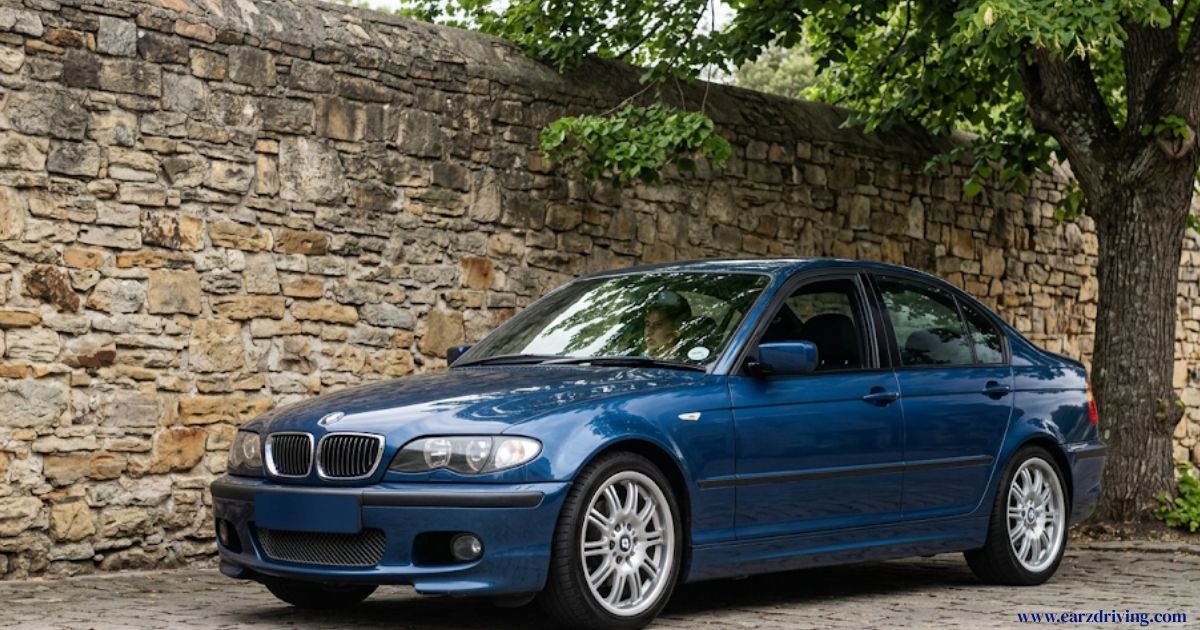
BMW E46 M3 On the Road
Buying an E46 M3 today requires patience, knowledge, and a willingness to walk away from cars that look good on the surface but hide serious problems underneath time and neglect have not been kind to poorly maintained examples.
The complex BMW/Siemens MSS54 engine-management system generally proves trouble-free when serviced correctly, but the VANOS variable cam timing mechanism suffers badly with age, and a rattling unit demands an immediate rapid service to determine whether you’re dealing with hardened seals, loose bolts, or the far more serious issue of stripped splines capable of wrecking the entire motor.
A noticeable drop in power relative to what the car should produce always points to the need for a full overhaul, and a proper diagnostic test confirms the extent of the problem quickly and accurately.
A misfire or pinking sensation when accelerating gently uphill at around 2000rpm raises an immediate red flag for head-gasket failure a fault that becomes increasingly common beyond 80-100k miles and demands serious budget allocation before purchase.
The SMG gearchange mechanism frequently suffers from pump wear, and sourcing a rebuilt pump on an exchange basis costs close to £1000, while a brand-new BMW item runs to more than twice the price a cost that catches many buyers off guard.
Even routine servicing at good independents carries real expense, with an Inspection 1 service running to £500-plus and a full Inspection 2 pushing past £650-plus without breaking a sweat.
Modifications appear on the vast majority of surviving examples, so always investigate what work has been carried out and whether the car has suffered track abuse that accelerates wear across every system.
ECU upgrades, engine tuning, blueprinting, suspension and chassis upgrades, brake upgrades including full AP Racing kits, alternative wheels, and various body mods all appear regularly in classified listings some add genuine value while others mask neglect beneath a performance-focused exterior.
The rear suspension incorporates M3-only links with steel balljoints that place far greater stress on the E46 shell than its original designers anticipated, and cracking in this area demands inspection and repair by an experienced specialist before you commit to any purchase overlooking it represents one of the costliest mistakes any E46 M3 buyer can make.
Known Issues
The E46 M3’s engine is a highly stressed unit that demands scrupulous maintenance, and any history gap should raise immediate concern VANOS variable cam timing faults manifest as a persistent rattling that signals the need for urgent overhaul before serious damage occurs.
Head-gasket failure shows up as a misfire or pinking under light acceleration, typically surfacing between 80,000 and 100,000 miles and carrying a repair budget of approximately £1500 to address properly.
An early recall addressed conrod bearing weakness on affected cars, but always confirm the work appears in the documented history before handing over any money.
The forged-aluminium lower wishbones are M3-only components that share their bearings and bushes with nothing else in the BMW range, meaning replacement costs sit noticeably higher than standard 3 Series parts inspect them carefully for wear during any pre-purchase check. Standard 18in alloys came on every car, with 19in items listed as optional and fitted as standard on the CSL diamond-cut rims look spectacular but carry substantial refurbishment costs when kerbed, so check carefully.
The brakes handle road use comfortably and remain fully upgradable for serious track work, while the six-speed manual gearbox proves genuinely strong in normal use it’s the SMG clutchless sequential shift that causes headaches, with slow changes and occasional apparent loss of fourth as pump wear progresses.
Inside, focus attention on the driver’s outer bolster, which suffers accelerated wear and typically requires a skilled trimmer to refurbish or replace a straightforward job for the right specialist. Nappa leather looks and feels exceptional when properly maintained but begins to crack once it dries out without regular conditioning, so dry or neglected hides suggest a car that missed routine care across its life.
Damp wreaks genuine havoc on the electrics of cars stored outside moist air condenses inside looms and modules, causing faults across multiple systems simultaneously so always confirm the full history,
test everything that should work, and on Convertible examples inspect the folding top carefully for damage, check carpets for hidden damp, verify smooth operation of the hood mechanism, and factor in the cost of a replacement Sonnenland hood at approximately £1000 if the original shows its age.
History
The E46 M3 story begins properly in 1997 when BMW introduced the fourth-generation 3 Series as a four-door saloon, laying the platform that would eventually underpin one of the greatest performance cars of its era.
By 1998, Double VANOS the full name being Variable Nockenwellen Steuerung arrived across all six-cylinder models to optimise both inlet and exhaust valve timing, while February brought the new 2.0-litre diesel 320d carrying the now-infamous M47 engine, and November saw the Coupe Ci debut in 320, 323, and 328 specifications.
The following year, 1999, delivered the entry-level 316i with its 1895cc unit in March, the Touring estate variant in May, the potent 330d diesel in September, and a tantalising M3 preview at the Frankfurt Motor Show that sent enthusiasts into a genuine frenzy of anticipation.
The year 2000 proved transformational the Compact E46/5 launched on the wider platform with Steptronic shift options added to ZF automatics, the full M3 went on sale in Germany in October, convertible confirmation followed in November, and full Convertible production began in December.
February 2001 brought right-hand-drive M3 sales to the UK market, with the Convertible following in March/April at a slightly slower 0-60mph time of 5.1 secs due to its additional weight, and autumn saw the announcement of the legendary GTR racer built for the American Le Mans Series carrying a 460bhp 3997cc V8 engine a car that went on to win outright.
February 2002 saw the M3 GTR reach customers in road form with a 380bhp dry-sump alloy V8, carbonfibre roof, spoilers, and a towering rear wing, with just 10 examples built and three initially ‘sold’ for €250,000 before being returned to BMW the same year also delivered SMG II with its 11 modes and headline-grabbing launch control function.
May 2003 marked the arrival of the legendary M3 CSL, shedding 110kg through carbonfibre, GRP panels, and thinner glass, pushing output to 360bhp with a faster semi-auto gearchange, bigger brakes, and sharper steering and suspension approximately c1395 units produced split across BL95 LHD and BL96 RHD build codes.
2004 brought the UK-only M3 Silverstone cosmetic special, limited to just 50 examples, while 2005 introduced the M3 Coupé Sport CS/ZCP pack applying CSL wheels, steering, and suspension to the base M3 at a more accessible price point.
Production of the Coupé ended in May 2006, the Soft-top followed in August 2006, and with that the E46 M3 chapter closed leaving behind 55,506 Coupé examples and 29,633 Convertibles across a six-year production run that cemented its place in BMW history permanently.
BMW E46 M3 Price Guide
The E46 M3 has firmly entered collector zone territory, with enthusiasts driving values upward on the cleanest, most original surviving examples particularly those with full service history, evidence of being garaged, and proof of a genuinely cherished ownership story.
A standard M3 Coupé in Show condition commands around £20,000, while a solid Average driver sits at approximately £10,000, and a rough Restoration project starts from about £5,000 though the gap between a neglected car and a properly sorted one can swallow budgets faster than most buyers anticipate.
The CSL occupies its own financial universe entirely, with Show examples reaching £75,000, Average cars sitting around £45,000, and even Restoration projects commanding £25,000 figures that reflect just how rare and desirable the limited-production variant has become among serious collectors.
Coupés carry a price premium of roughly 10% over equivalent Convertibles, and while most buyers understandably prefer a manual gearbox over SMG, honest condition and documented history carry far more weight in determining true value than transmission choice alone.
The CS that halfway house between the standard car and the full CSL currently sits approximately 20% above the standard model, making it an increasingly appealing entry point for buyers who want elevated CSL-adjacent performance without paying the full rare variant premium.
All prices quoted reflect figures correct at date of original publication, and the broader market trajectory suggests that the finest examples will only continue appreciating as the E46 M3’s status among future classics solidifies further with each passing year.
The Owner’s View
Peter Brewin describes himself as someone with petrol firmly in his DNA, having made the considered decision to sell both his beloved TR6 and his M635CSi in order to fund the purchase of this particular M3 a car he has now owned for eleven years without a single moment of regret.
He spent 15 months searching for exactly the right example, rejecting anything that didn’t meet his exacting standards, before finally locating a car with a single previous owner, a complete full BMW history, and a remarkable average of just 2500 miles a year covered by a wealthy collector who clearly pampered it and specified virtually every available option from the factory.
The car has since accompanied Peter to the Revival, the Le Mans Classic, and on extended touring trips through France always driven only when conditions are genuinely perfect for it.
The dedication to preservation runs so deep that even the original wiper blades remain fitted and essentially unused, representing the kind of original parts integrity that separates a true collector piece from a merely well-maintained classic.
The only mechanical intervention the car has needed across Peter’s ownership amounts to a single diff seal replacement a testament to how thoroughly the previous owner cherished and garaged the car through its early life and maintained impressively low mileage throughout.
His closing words carry real conviction: the thought of parting with this M3 presents what he describes as a genuine challenge the kind of emotional connection that only the very best driver’s cars ever manage to create with their owners.
Rivals
The Audi RS4 of 2000-01 presented perhaps the most compelling straight-line threat to the E46 M3, deploying a twin-turbocharged 2.7-litre turbo V6 producing a substantial 376bhp through an intelligent 4WD system in a practical 5-door estate body that made the BMW look almost frivolous by comparison.
Just 6030 examples were ever built, making surviving cars genuinely scarce and keeping prices pricey relative to their age current values sit between £18,000 and £25,000 for honest examples, against an original £46,500 new price in 2001, and the car covers 0-60mph in 4.7 secs while being officially limited to 155mph.
The RS4 clearly wins in a straight line and returns 16-25mpg depending on how enthusiastically you use that V6, but the M3 consistently proves more fun through the twisties where rear-wheel drive and a more direct connection rewards the committed driver.
Mercedes-Benz took an entirely different approach with the CLK55, with AMG concluding that the only credible answer to the M3 involved dropping a naturally aspirated 5.5-litre V8 under the bonnet, pairing it with a five-speed paddle-shift auto transmission and dialling in a noticeably firmer set-up to sharpen responses.
Approximately c15,000 examples were built between 2001 and 07, giving the CLK55 far greater rarity than its relatively accessible current pricing suggests today’s market values range from just £7,000 to £15,000, a remarkable bargain given the car’s original £57,000 asking price as a Coupé in 2002.
Both the RS4 and the CLK55 represent genuinely compelling alternatives to the M3, offering different but legitimate answers to the same performance brief the RS4 for those who prioritise straight-line speed and all-weather 4WD security, the CLK55 for drivers who simply want the theatre of a big V8 without the BMW premium, and the M3 for anyone who places pure handling, driver involvement, and that screaming straight-six above all other considerations.
Classic & Sports Car Verdict
The E46 M3 looks absolutely at its best in standard M3 form, with those wide fat arches squatting over the signature 18in alloys that do occasionally fall victim to being kerbed on tighter roads a minor frustration on an otherwise visually stunning package.
Enthusiasts wasted little time in pushing prices firmly into collector zone territory, particularly for the genuinely rare CSL variant, and the half-way-house CS has begun following that same upward trajectory as buyers recognise its elevated position in the E46 M3 hierarchy.
If at all possible, buy a car with a complete full service history, clear evidence of having been garaged throughout its life, and genuine proof of having been cherished by owners who understood what they had because neglect on an E46 M3 is never a minor inconvenience, it is always costly to rectify properly.
The FOR column fills quickly: great handling that rewards commitment, a glorious noise from that straight-six that no modern turbocharged unit replicates, fabulous performance that still embarrasses newer machinery, and a car that remains genuinely usable every day without drama or excessive fragility.
Values on the best examples continue appreciating meaningfully, adding a financial dimension to what already represents a deeply emotionally satisfying ownership proposition for anyone with genuine classic sensibilities.
The AGAINST column is shorter but demands honest acknowledgement: rear end cracking on the shell is costly to address properly, engine issues accumulate with age on neglected cars,
and the sheer number of examples that have been modified and abused on track means every buyer must inspect any uprated car carefully and with professional assistance before signing anything overlooking these points during a purchase makes the classic sports car dream turn sour faster than almost any other buying mistake in this price bracket.
BMW E46 M3 Specifications
The Car BMW E46 M3 carried a 3245cc dohc 24-valve six-cylinder unit built around an iron-block with an alloy-head, fed by sequential multi-point injection and producing between 343bhp at 7900rpm in standard tune and 360bhp at 7900rpm in full CSL specification torque figures spanning 269lb ft at 4900rpm through to 273lb ft at 4300rpm depending on state of tune.
Power reached the road exclusively through the rear wheels via a Getrag six-speed manual as standard, with approximately 50% of all cars including every single CSL leaving the factory fitted with the optional SMG sequential semi-automatic transmission instead.
The front suspension used classic MacPherson struts, the rear employed a sophisticated multi-link setup with coil springs and anti-roll bars front and rear, while power-assisted rack and pinion steering needed 3.2 turns lock-lock in standard form, dropping to a sharper 3 turns on CSL and CS variants.
Ventilated discs measured 325mm at the front and 326mm at the rear with a servo-assisted setup on standard cars, growing to 348mm at the front on CSL and CS models that needed the additional stopping power their elevated performance demanded.
The body measured 4492mm in length, 1947mm in width, and 1372mm in height, riding on a 2725mm wheelbase built from a steel monocoque construction that prioritised rigidity without excessive weight penalty.
Overall weight ranged from 1385kg to 1655kg depending on specification and body style, translating to 0-60mph times spanning 4.5 secs to 5.1 secs, a top speed range of 155mph to 170mph depending on limiter settings, and real-world fuel economy of between 15mpg and 30mpg with 55,506 Coupé and 29,633 Convertible examples produced between 2000 and 2006 representing the complete technical data picture of one of BMW’s finest ever performance car chapters.
FAQs of Car BMW E46
What makes the car BMW E46 so special among performance cars?
Its legendary straight-six engine, razor-sharp handling, and visceral driving experience make it genuinely timeless.
Is the BMW E46 M3 still a reliable daily driver today?
Yes with proper maintenance and full service history, it remains a practical yet thrilling everyday performance machine.
What are the most critical issues to check when buying a BMW E46 M3?
Always inspect VANOS timing, head-gasket condition, and rear axle carrier panel integrity before committing.
How do current values of the car BMW E46 compare across variants?
Standard Coupés start near £10,000, while the legendary CSL commands up to a breathtaking £75,000.
How does the BMW E46 M3 compete against rivals like the Audi RS4 and Mercedes CLK55?
It wins on pure driver involvement, handling precision, and that unforgettable screaming straight-six no rival could honestly replicate.