

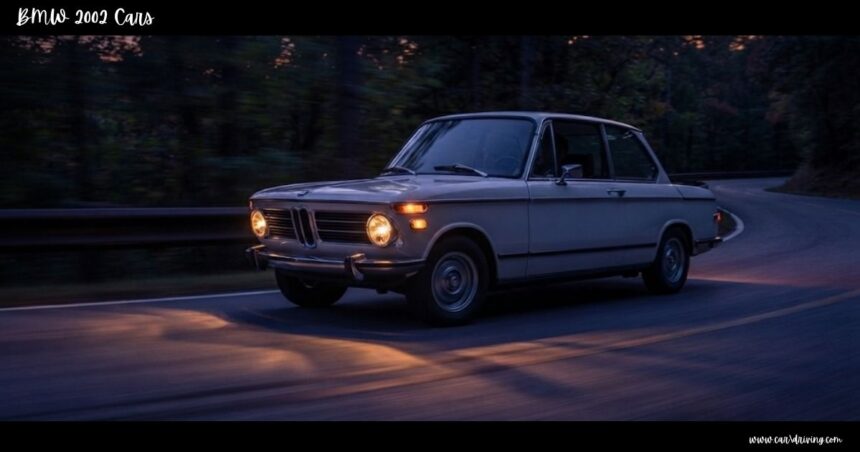
I still remember the first time a friend let me sit behind the wheel of his BMW 2002 Cars. It felt tiny, honest, and alive in a way that modern cars rarely do.
That memory is what pulled me back into researching this little car properly, and it explains why I wanted to write this piece from my own angle rather than just repeating what every other guide says.
The story of the ’02 range really begins with the 1600-2, a car BMW rolled out on May 7 1966, marking the brand’s 50th anniversary and growing straight out of the 1600 saloon platform known as Neue Klasse.
Early buyers loved the 1600ti with its twin-carbed setup, but the US market wanted more punch, and strict emissions regulations meant BMW had to think bigger, so engineers dropped a 2-litre unit into the shell and created the car we now call the 2002.
By 1967 the groundwork was set, and through 1968 the 2002ti arrived as a taste of things to come.
Then came the real showstopper. The 2002tii, launched in 1971 and sold in the UK from 1973, used Kügelfischer fuel injection to squeeze out 130bhp, a figure that let this small two-door saloon embarrass cars costing far more.
Its pace could still worry a hot hatch today, and demand grew so fast that BMW was shifting 60,000 units a year by 1972.
Around the same period, square rear lights replaced the old design, and the Touring version brought a practical hatchback body built on the 1602, 1802, and 2002, going head-to-head with the Volvo P1800 until 1974.
Money-wise, this was never a bargain basement car once the performance models hit their stride, but BMW still kept an entry-level option alive through the 1502, which used a low-compression version of the 1.6 M10 engine all the way to 1977.
Along the way, the 1800 engine filled the gap in the range, the 2002 Turbo became Europe’s first turbocharged production road car in 1973 though only in left-hand drive, and by 1974 sales hit an incredible 111,239 units.
That figure alone tells you how much reputation this stylish, well-engineered, compact sporting saloon built for BMW before the 3-Series took over in 1975, offering rear-wheel drive handling and performance variants like the tii that turned an ordinary family car into one of the great sports cars of its era across Europe.
Which BMW 2002 Cars to Buy
Looking back at how this car came together still impresses me. BMW took the best bits of the Neue Klasse and squeezed them into a smaller, cheaper package, and that thinking gave birth to the 1600-2 back in 1966, a genuine two-door saloon running a 96bhp tune of the M10 engine. The trouble was, BMW wanted real traction in the US, and the sole engine choice limited how far the car could travel commercially, since the punchier twin-carb 1600ti engine simply wasn’t homologated for sale Stateside.
The fix came from an unlikely source: the 1991cc engine from the 2000CS Coupe was already approved, so fitting it into the lighter, smaller lighter body produced one of the finest sporting saloons of the ’60s, the 2002.
Add the fuel-injected tii into the mix and you get a car that turned into a huge success, especially once it landed in the USA and reshaped how American buyers saw small BMW saloons.
At the very top of the range sits the 2002 Turbo, one of the earliest turbocharged performance cars ever built, using a big KKK turbocharger to add real power over the tii, alongside wider wheels, upgraded brakes, and flared arches to match the extra grunt.
My advice, based on chasing down a few examples myself, is to treat rust spots as the real story here, because even though this guide leans toward the naturally aspirated cars, most of that rust knowledge still applies directly to the Turbo.
On the softer side, the Touring added everyday practicality, while the Baur convertibles delivered proper open-air motoring, and both now come with their own ownership challenges plus a healthy following among collectors chasing that rarer 1600 saloon-based charm.
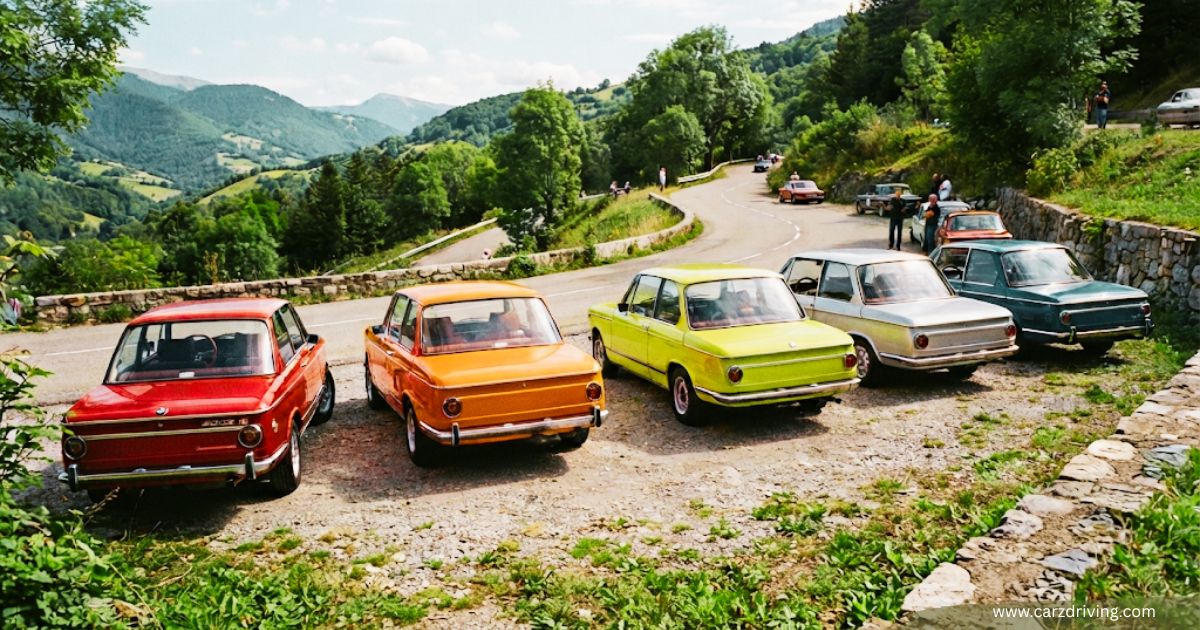
Bodywork
If there’s one lesson every BMW 2002 owner learns the hard way, it’s that corrosion never sleeps. These cars are now well past 50 years old, and the honest truth is that a rusty shell can turn a cheap purchase into a prohibitively expensive project.
The biggest killer tends to start around the box sections beneath the radiator, often made worse by a leaking radiator, and it spreads fast toward the headlights, where the curved metalwork is genuinely tricky to repair without real skill.
Move further along the car and you’ll find trouble at the inner wing, where the A-pillar meets the sill, an area that traps moisture and rots from the inside out long before it shows on the surface. Blocked drainage near the bulkhead and heater box causes rot that can become terminal given how important that structural component is to the car’s integrity.
I always tell people to check the front chassis rails carefully too, since many owners jack the car up there without proper care, weakening the underside over time and stressing the rear subframe, driveshafts, and inner wheelarch housings that carry real load, especially on the Turbo and tii.
Pop the boot lid on any saloon and look hard at the suspension turrets, spare wheel well, and inner wings, since a rear-driven car depends entirely on that back-end strength staying solid.
The hatchback Touring shares most saloon parts for repairs, but its tailgate must stay rust-free, because replacing one is both pricey and difficult. Watch, too, for rust prone panels along the bonnet, doors, and edges showing surface corrosion.
Thankfully, the BMW fanbase has kept demand alive for repair panels, meaning almost every panel is repairable or fully replaceable through new panels if you know where to look.
That said, plenty of cars on the market today carry older restorations built during years of low values, so non-original parts and patching corrosion instead of proper repair are common, and a car that looks shiny up top can hide serious problems underneath.
Key hot-spots worth checking include the rear spring boxes, outer arches, inner sills, outer sills, especially near the four jacking points, plus the front inner wings, lower outer front panels, front floors, boot floors, inner front wing box sections, and lower A-post areas.
If a car has been rusted badly in these zones, walk away unless you’re ready to restore a genuine restored car from scratch, and always check the indicators housing too, since it rots quietly for years before anyone notices.
Engine and Transmission
BMW built the M10 engine in 1.6, 1.8, and 2-litre sizes, and this four-pot engine with its iron block and alloy head has proven itself as one of the toughest units of the ’70s powerplant era.
Done properly, these engines regularly clear 100,000 miles before needing a rebuild, and most trouble traces back to neglected maintenance rather than any design flaw, with cylinder head cracking being the classic failure people warn you about.
That cracking usually starts when corrosion-inhibiting antifreeze hasn’t been used correctly, or when oil changes and coolant flushes get skipped, letting the water passages get clogged until the head warps under heat. Watch the temperature gauge climb gradually on a test drive, and treat any sudden spike as a warning sign. Distributor bearings wear out eventually, though many owners now fit an electronic ignition upgrade from the aftermarket to simplify things, and experts at places like BMW Classic and Jaymic in the UK recommend servicing every 5000 miles, more often for city driving.
Carburetted cars need their in-line fuel filter changed at least once a year, and rough idling on a single-carb engine often points to a worn throttle body spindle needing precise machine work.
The fuel-injected tii brings its own quirks too, since its Kugelfischer fuel injection system is delicate, and a failed timer relay or dead cold-start injector causes stubborn cold start problems; a blown fuel pump fuse can even kill the instrument cluster at the same time, causing overfuelling or hot starting trouble if ignored.
On the transmission side, a rattling differential at low speeds rarely spells disaster, and a simple fluid flush often quiets things down, while clanking on take-off usually means a worn differential mounting.
A loose gear linkage shows up as sloppy gearlever movement, fixed cheaply with new bushes, and though BMW never fitted a five-speed gearbox at the factory, swapping in a five-speed close-ratio gearbox from the E21 3-Series using a shortened prop shaft is a well-known upgrade that boosts cruising ability and drivability without hurting reliability, whether you’re running a manual gearbox or auto gearbox.
Rebuilds, if you ever need one, benefit from specialist servicing, and after 20 years in this hobby I’d say a well-kept engine with no blue smoke from the exhaust, no worn valve stem seals, and clean synchromesh through second gear and third gear downshifts is worth paying extra for.
Timeline
BMW’s 02 family timeline reads almost like a masterclass in steady improvement. It opens in 1966 with the BMW 1600-2, an entry-level two-door body riding on a shorter wheelbase with a shorter boot, powered by the 1573cc M10 four-cylinder SOHC engine making 84bhp.
1967 brought the sportier 1600Ti, a twin-carburettor car with a high-compression engine producing 104bhp, though it lasted only a year once the 2002 landed in 1968 with a 1990cc engine and 99bhp, aimed squarely at the American market.
That same year, the 2002Ti arrived with similar upgrades to 118bhp, and by 1969 buyers could choose a three-speed automatic transmission alongside the standard single-carb setup, while the true flagship, the 2002tii, brought 130bhp and Kugelfischer mechanical fuel injection in 1971. That year also delivered a mid-life facelift with a two-piece instrument cluster, wraparound bumpers, and a new 1802, a 1766cc 89bhp model bridging the gap, plus the three-door hatchback Touring, sold as 1602, 1802, 2002, and 2002Ti variants.
1973 brought another facelifted look with square tail-lights and black plastic front grille strips, plus the big reveal at the Frankfurt Motor Show: the 168bhp 2002 Turbo, though the global fuel crisis limited it to just ten months on sale.
By 1974, the economy model 1502 appeared with a detuned 75bhp engine, while Continental Europe and the USA kept buying steadily until 1975, when most standard 2002s ended production, followed by the 1502 itself leaving showrooms in 1976 and officially withdrawn by 1977.
Total output across the whole run reached roughly 826,000 cars, with close to 340,000 being standard 2002 models, a genuinely staggering number for what started as a Neue Klasse side project featuring Michelotti-styled styling, improved seats, and a range that eventually gave way to the E28 3-Series and later the 1.8-litre and 2002tii derivatives BMW fans still chase today.
Steering, Suspension and Brakes
Driving an original 2002 tells you a lot about how BMW engineers thought back then. Steering that feels overly heavy or worryingly light at speed often means a previous owner fiddled with the steering box chasing modern steering feel, and since springs and shocks are simple enough to swap yourself, a springs and shocks kit from Spax with optional lowering springs gives the car a sportier stance without much fuss.
Brakes hold up well too, though callipers can seize from extreme cold or simple disuse, and the tii’s twin-servo setup plus its brake servos need regular use to stay reliable, so fresh brake hoses or braided stainless steel lines are smart upgrades once the original five decade-old rubber gives out.
Interior and Electrics
Step inside and the interior stays refreshingly simple, but check that blower fans, gauge illumination, and other small electrical components still work, since German cars of this age can be stubborn to fix electrically once electronic interference creeps in among the electronic toys.
A well-sorted cabin still feels well-made and practical for day-to-day use, and most exterior parts remain available if you’re willing to search continental Europe or the US for the widest selection.
As for buying one today, plenty of owners argue the E30 3 Series gets called the driver’s choice among compact classic BMW models, yet anyone who has spent real time in an 02 insists these fun cars feel far more modern than their age suggests.
It’s honestly a bit of a mystery why the 02 stays rarer than a 316i in the classic scene, which makes it a genuine left-field classic for a daily-driver or weekend toy, even though most surviving cars now arrive as American imports given their appetite for rust in LHD form within an unsaturated market.
Performance and Specs
Price varies hugely across the ‘BMW 2002 cars family. A superb manual 2002 can top £30,000, with autos going for roughly half that, while a top 2002Tii reaches about £45,000; an excellent rather than concours example runs £20,000-25,000, a solid daily-driver sits around £8000-12,000, and a comparable Ti commands £12,000-18,000, with scruffy project cars available for a four-figure sum.
The 1802, 1602, and 1502 trail behind in condition-adjusted price, topping out near £22,000-25,000 for a stunner, £10,000-12,000 for a good one, and £6000-8000 for something with rough edges.
A tidy Touring hatchback fetches £12,000-20,000, while 2002 Turbos range from £30,000 for a usable example to over £100,000 for a highly original, immaculate restoration.
On paper, the 1968 model BMW 2002 ran a 1991cc, four-cylinder, SOHC engine with a single Solex carburettor, producing 113bhp at 5800rpm and 116lb ft of torque at 3000rpm, paired to a four-speed manual manual gearbox, reaching 0-60mph in 11.3secs, a top speed of 108mph, and fuel consumption of 25.4mpg.
Dimensions came in at a wheelbase of 2500mm, length of 4230mm, width of 1590mm, height of 1410mm, and weight of 940kg, figures that still explain why this two-litre 2002 feels so light and eager compared with the larger engine cars sold today, and why the whole BMW 2002 story still earns its roaring success reputation in the classifieds and among enthusiasts hunting parts decades later.
FAQs
What makes the BMW 2002 so special among classic cars?
The BMW 2002 combines a torquey M10 engine with light rear-wheel drive handling, making it a true legendary compact sporting saloon.
How fast is a BMW 2002tii?
The 2002tii uses Kügelfischer fuel injection to produce 130bhp, hitting 0-60mph quickly enough to worry a modern hot hatch.
Is rust a big problem in BMW 2002 cars?
Yes, corrosion is the biggest killer, especially around the sills, inner wings, boot floor, and front chassis rails.
What is a fair price for a good BMW 2002?
A solid daily-driver 2002 typically costs £8000-12,000, while a concours example can exceed £30,000.
How reliable is the BMW 2002 engine?
With proper maintenance, the M10 engine easily reaches 100,000 miles, earning its reputation as a genuinely durable classic powerplant.