

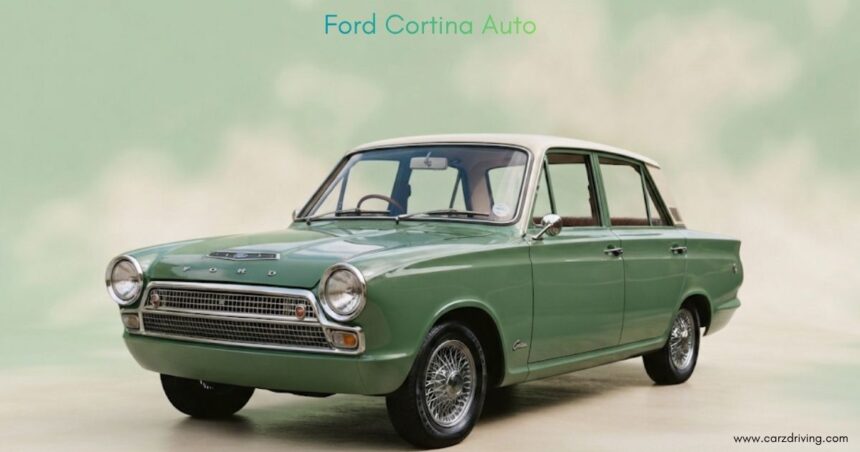
My first ride in a Ford Cortina Auto happened in 1962, the same year Ford of Britain rolled the very first one out of the factory gates. Back then, the car was built as a simple family car and a solid fleet car, and everyday drivers loved its affordability and practicality.
Owners also liked the low maintenance it needed, and that helped push it straight into the heart of the UK market.
Behind the scenes, engineers worked on the car under the codename Project Archbishop, and that hidden project gave birth to a lightweight body with a spacious interior.
The team fitted efficient engines, including the famous Kent engine, into the very first Mk1, which stood out for its minimalist design. Years later the Mk5 carried the name Cortina 80, and by then Ford had refined the car many times over to match new customer expectations.
Every new generation grew a little in size, performance, and comfort, and you can see this clearly if you line up a Mk2 from 1966 next to a car from 1970.
That Mk2 brought a modern design, while the Mk3, sold through 1976, took on an American-inspired Coke-bottle shape. The later Mk4 cars, built into 1982, added real refinement, and that is exactly why the Cortina became Britain’s best-selling car.
Ford unveiled the car on September 21, and back then it carried a price tag of £573 for the standard 1200 saloon, sold in standard guise.
It turned into an instant bestseller, and across its whole 20-year career the factory built 4.3 million examples. Once produced, the last Cortina was assembled in July 1982, and Ford succeeded it with the Sierra, whose entry-level model was priced at £4,515, far higher than the original.
Ford Cortina Auto
That success created its own name in the trade, the Cortina class, and Ford held onto market leadership in Britain for years after that.
The Escort, launched in 1968, ran alongside the Cortina in parallel success, and together they kept Ford on top for 25 years. Across those years, four generations of Cortina each sold more than a million examples, cementing its place in British motoring history.
Some people still call the Cortina a figure of fun, yet the rarer models have become truly collectable among fans today. This conventionally engineered car first went on sale in September 1962 as a medium-sized machine built to beat BMC’s Mini on price. Ford kept the classic rear-wheel drive setup and a three-box layout, then dressed the body with tail fins and back lights shaped like a peace symbol, giving the car a genuinely stylish design.
At launch, dealers called it the Consul Cortina, and it came with just one 1198cc engine, offered as a two-door or one of the four-door saloons.
The line-up soon grew to include a 1498cc version, a sporty GT, and a Cosworth-tuned 78bhp powerplant, plus the legendary Lotus Cortina that racing driver Jim Clark made famous.
I still keep an old buying guide on my shelf, and it shows how the Cortina shot straight to the top of the sales charts, with 1,013,391 units built worldwide in just four years.
Ford never sat still, adding a new fascia in 1963 and fitting Aeroflow ventilation in autumn 1964. The second-generation Cortina landed in October 1966 with a fresh reskin, a wider track, and a 1298cc engine sitting beside the older 1.5-litre units.
From September 1967, the 1.3-litre and 1.6-litre Crossflow engines took over, and that change gave rise to the striking Cortina 1600E, an executive express in every sense.
The Lotus name lived on too, continuing in Mk2 form after a midlife revamp, and by then Ford had built 1,024,869 examples of the Mk3, launched in October 1970.
The Blue Oval name still gets tossed around by fans today, and while many now chase sporting Escorts, the first two generations of Cortina remain much-loved and affordable classics.
Models
When you look at the Models Covered across the whole Cortina story, the range spans body styles like the 2dr, the 4dr Saloon, and the 5dr Estate. Ford built the MK 1 from 1962 to 1966, then moved on to the MK 2, sold between 1966 and 1970. That timeline rolled on through the MK 3, offered from 1970 to 1976, the MK 4, built until 1980, and the MK 5, which stayed in showrooms right up to 1982.
History
I love tracing the Cortina back to its roots in Dagenham, at the Dagenham plant in Essex, where the assembly line turned out the very first production car. Ford settled on the body style on September 21 1962, and buyers could already choose from a 1.2-litre engine in two-door saloons or four-door saloons.
Ford offered Standard and De Luxe specification, with a floor-mounted gearchange or a steering column gearchange, and the factory turned out 67,050 cars before that first year ended.
Things moved fast after that. In January 1963, Ford launched the 1.5-litre Cortina Super, then added a practical estate car in March, and by April the sporty Cortina GT, with its 78bhp engine, joined the range.
The Lotus-Cortina had already been shown off, packing a twin-overhead-camshaft engine rated at 105bhp, along with coil spring rear suspension and light-alloy body panels built for motorsport, and deliveries of this special car soon led to real racing successes that September.
The next few years brought steady change. 1964 models gained a fresh instrument panel, Borg Warner automatic transmission became optional, and by 1965 Ford introduced Aeroflow, its clever through-flow ventilation.
The Lotus car picked up new leaf-spring rear suspension around mid-1965, and by that summer, Ford had earned £250 million in export sales and built its millionth car.
October 1966 brought a whole new shape, the Mk II, riding on the same platform but wearing a new body style. The estate version followed in February 1967, and a fresh Lotus-Cortina arrived that March.
From October that year the range got up-rated again with cross-flow engines in 1.3-litre and 1.6-litre sizes, plus the plush 1600E, which mixed 1600GT performance with high-specification furnishing.
The 1969 models brought better manual transmissions, new facias, and reclining seats, and the Lotus car became known as the Cortina Twin-Cam.
By this point buyers could pick from 14 Cortina types, and the Mk II went on to outsell the original, passing one million units built. The Mk III arrived in October 1970, sitting on a 3.5in longer wheelbase and looking wider and lower than before.
Under the skin sat new Pinto overhead-camshaft engines, topped by a 98bhp 2.0-litre that gave a genuine 100mph top speed, though there was no Lotus derivative this time.
Ford fitted wishbone front suspension and coil spring rear suspension, and while the car shared its bones with the Taunus from Germany, it kept its own unique style.
Buyers could choose from four engines and five trim packs, along with a wide list of factory-fit options and accessories, including automatic transmission, cross-ply tyres, or radial ply tyres.
Ford simplified things in 1972, adding the C3 automatic transmission, then refreshed the design again in October 1973 with a smaller Pinto engine, new grille styling, and a new fascia, topped by the flagship 2000E.
The Value for Money package landed in October 1975, and a new Cortina 1300, built as an economy model, joined the range in February 1976. By summer 1976 the Mk III had become the best-selling Cortina yet.
The Mk IV took over in September 1976, wearing a sharper angular shape across both saloons and estate cars, with engines from 50bhp up to 1.3-litres and beyond.
The Cortina S replaced the old GT versions, while the plush Ghia trim sat at the top, and a V6 engine rated at 108bhp and 2.3-litre joined in October 1977 as the true flagship.
By then buyers had 20 derivatives to pick from, priced between £2,523 and £4,795, and 1977 saw the Mk IV rocket to the top of the charts, while 1979 brought its best year yet, with 193,784 units sold and 11.3 per cent of the whole UK market.
The Cortina 80 appeared in September 1979, and though few call it the Mk V officially, that nickname stuck among fans.
It brought a genuine style revision, with more glass area, a lightened shell, grille changes, fresh tail lamps, and updated skin panels. Engines ranged from 61bhp to 116bhp across five power units, with Base, L, GL, and Ghia equipment packs on both saloon and estate types.
Buyers could also add the S Sporting package or the tough Heavy Duty Pack, and in 1981 Ford rolled out two popular special editions, the Carousel and Crusader special editions, along with a facia upgrade in September 1981.
Finally, on July 22 1982, after 4.3 million cars had left the Dagenham plant, production ended and the Sierra replacement took over the showroom floor.
What You Get
Climb into an old Mk I or Mk II and you will find they feel smaller than you might expect, a bit like unwrapping Wagon Wheels from memory, since a modern Fiesta actually offers more interior space.
Still, the 109bhp Lotus Cortina can genuinely entertain, and the 1600E is a truly handsome machine to sit in. The Mk III shows its American influence through soft suspension and a lazy power delivery, with its 2.3-litre engine giving just 113bhp but plenty of torque.
Choose a Mk IV or, better still, a Mk V, and Cortinaphiles will tell you that you get closer to modern motoring, even if the Sierra that followed felt like a bigger leap forward.
Even so, the later cars stay spacious and good looking, wearing their boxy eighties fashion proudly, and at heart every one of them still offers no-nonsense family transport.
What to Look For
Any car this old faces corrosion once it passes twenty years old, and both the Mk I and Mk II were far less rustproofed than later cars.
Check the bonnet closely, because a crooked panel usually means either accident damaged history or corroded suspension mounts, showing up as front suspension mountings that have been patched.
Watch the chrome parts, especially light bezels and bumpers, since both suffer badly, and the alloy wheels on sportier cars also corrode.
The vinyl interiors found in most Cortinas suffer from cracking and fading, while even the plush velour trims on Ghia models have proven far from hardwearing. Honestly, the bodywork matters more than anything else, since engines can be repaired or replaced cheaply, but quality panels stay rare and valued.
The old 1.2 engine earned a bad name for gearbox seize ups, which threw the main bearings out of line and sent con rods straight through the block, though Ford mostly fixed this once the engine grew to 1.3-litres.
I always tell friends to watch out for fake versions of King Cortina, the Mk I Lotus Cortina, since more seem to turn up now than were ever built.
Check the chassis plates and registration details, and look for the bulge that hints at lowered suspension, plus proper reinforcement underneath.
A bona fide car will never be a four-door model wearing false Lotus badges, and anyone selling one should answer to Trading Standards, so if in doubt, ask the Lotus-Cortina Register for help.
Replacement Parts
Finding parts gets easier once you join a club, search the internet, and visit breaker’s yards for genuine Cortina spares. Over time you learn which interchangeable parts fit which model, and that knowledge keeps your Cortina running for years.
On the Road
Outside of the early Lotus cars and the 1600E, the Cortina never earned much of a name as a true driver’s car. Expect properly Spartan creature comforts if you drive one from the early Seventies, though the Mk III feels a touch plusher, even if it drives a little barge like, and an automatic version lets you simply waft along.
The later Mk IV and Mk V models, despite selling to the fleet purchasing crowd in huge numbers, feel built down to a price in anything below the Ghia versions, yet they stay surprisingly nimble thanks to their light weight, while the estate versions still work as honest workhorses that swallow cavernous loads, aside from the unloved Diesel engined cars.
Overall
For me, the Cortina offers a real snapshot of what life looked like for the ordinary British man from the late sixties through the early eighties.
It captures the values, the economic conditions, and the fashions of its time, and driving one today brings pure nostalgia. Watch the prices rise, and a good example can turn into both a smart investment and a rewarding ownership experience.
Bodywork
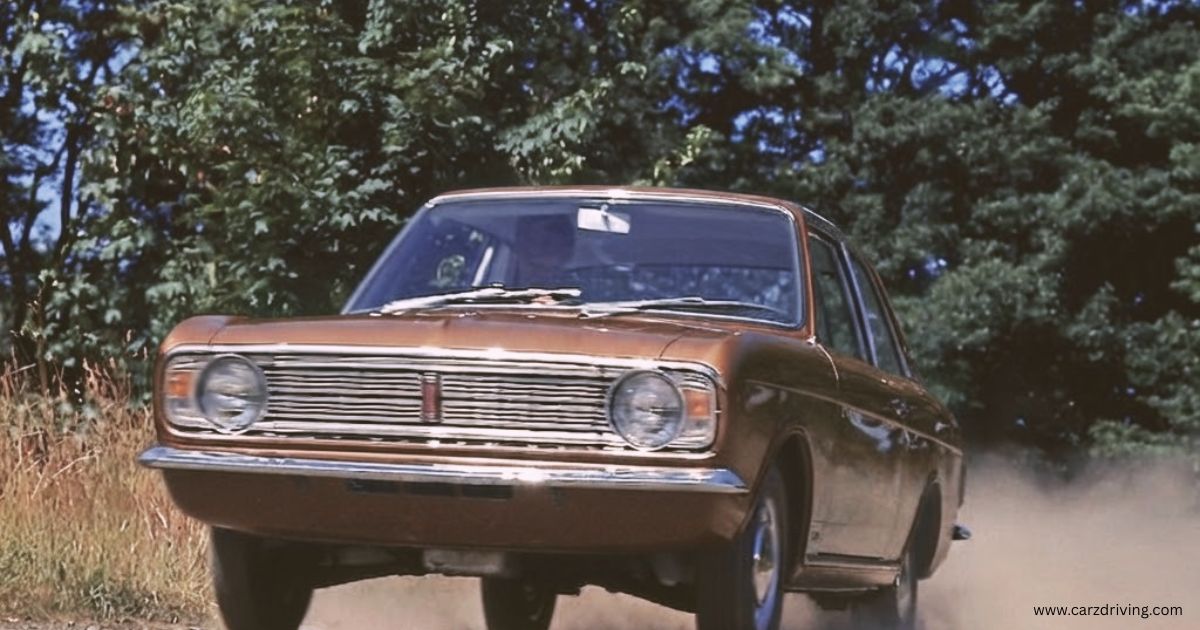
Rot remains the Cortina’s biggest enemy, and serious structural corrosion, combined with pricey panels, can leave a base-model Mk1 or Mk2 genuinely uneconomical to repair.
Rust can hide almost anywhere, so check the inner wings, strut tops, bulkhead, scuttle panel, A-pillars, sills, jacking points, floorpan, rear chassis rails, spring hangers, spare wheel well, and boot floor.
On a Mk1 GT or 1600E, confirm the factory-welded radius rod brackets sit under the rear floor, and that genuine 1600E cars still carry their Lotus-type strengthening plates and metal dashboard panel.
Look over the front valance, bonnet, wings, doors, rear wheelarches, and bootlid or tailgate, since replacement panels, whether secondhand or reproduction, can cost four-figure sums.
Sadly, base left-hand drive Cortinas still get cut up by specialists purely for restoration parts on other cars. Brightwork such as grilles, bumpers, and aluminium trim stays hard to find, though some pieces now come remade in stainless.
Most lighting can be sourced new or as reproduction, but genuine 1600E driving lamps stay rare, and Mk1 front indicators often fail because of their alloy housings. Earthing problems crop up often, so check the wiring carefully, since only cars built after 1968 came with a proper fusebox, and the loom needs to be in good shape to trust the electrics.
Engine and transmission
Early Mk1 and Mk2 cars ran the pre-Crossflow Kent engine in 1198cc, 1298cc, or 1498cc form, and this harsh engine usually needed to be rebuilt or replaced unless the car covered very low-mileage. From September 1967, the Kent Crossflow arrived in 1298cc or 1599cc form, an improvement, though it still rarely lasted past 60,000-70,000 miles without a rebuild.
Listen for rumbling from the bottom end, since tired bearings in the crankshaft bearings show up there first, and watch for piston slap and blue smoke from the exhaust, both signs of tired pistons, rings, and cylinder bores.
Breathing from the oil filler cap or dipstick usually points to wear, though a blocked breather can cause the same thing, and smoke at start-up often just means worn valve stem oil seals.
A rattling timing chain rarely causes harm unless it is severe enough to damage the alloy cover and drain the sump, while loud clacking can mean a scored camshaft or broken follower, both needing engine removal.
Fresh oil and correct valve clearances keep a healthy engine happy, though oil leaks from the rocker cover stay common, alongside coolant loss from rusted core plugs.
Poor running often traces back to the carburettor or ignition system, though a tired Crossflow engine will keep running regardless, even if a proper fix now costs a four-figure sum for a DIY rebuild.
Most cars used a four-speed manual gearbox, though a three-speed automatic gearbox was optional, and early cars ran a three-rail version while later Mk2s got the smoother single-rail Type 3 with its slicker shift.
Listen for rumbling bearings and crunching on gear changes, both signs of tired synchromesh. A worn three-rail gearbox tends to jump out of gear on the overrun, often from a bad selector fork or worn synchro hubs and baulk rings, while a Type 3 gearbox more often leaks from the back seal or rattles through a loose gear lever.
Some whining from the transmission stays normal, but growling points to a tired differential, so check for leaks around the rear axle leaks.
Propshaft vibrations usually come from worn universal joints, and left unchecked, they can cause real gearbox damage down the line.
Suspension, steering and brakes
Vague steering shows up often, usually from a tired steering box that needs adjustment every 12,000 miles, or from worn nylon idler bushes. Play in steering can also come from perished rubber steering links, worn steering arms, or corrosion around the mountings.
Knocking from the front usually means worn strut top mounts, and on later Mk2 cars the original bonded mounts are now obsolete, so most owners fit aftermarket roller tops.
Poor handling often means broken coil springs or tired shock absorbers, so check for uneven sitting, and remember that rear leaf springs tend to sag and rust while the dampers leak, though replacements stay easy to find.
Some early Mk1s ran drum brakes all round, but most surviving cars use front discs, so watch for rusty discs, seized calipers, and sticking wheel cylinders or leaking wheel cylinders, along with broken handbrake cables.
Rear drums need regular checks, since the self-adjusting cogs often suffer failure, and the umbrella handbrake mechanism can also give trouble. Finding drums for larger-engined Cortinas stays genuinely hard, and even matching shoes prove tricky to source and often turn out poor quality.
Interior and electrics
Because of poor survival rates and endless colour choices, lesser-model Cortinas prove harder to restore than top trims thanks to weak trim availability, so always check the interior condition closely before buying. Seats collapse with age, vinyl upholstery gets torn, and door cards get damaged, while carpets turn threadbare and headlinings start to droop.
Thankfully, most vinyl repair work stays possible, and reproduction parts like mats, parcel shelves, door rubbers, and seat covers have all been reproduced, even if they cost more today.
Watch for a cracked dashboard top or a damaged steering wheel, and remember that on sporting models, broken trim or missing trim, such as centre consoles and gauges, costs more since it fits the Lotus Cortina too.
The wooden cappings found in 1600Es often turn tarnished or cracked, though specialist restoration can bring them back, and Mk1 indicator stalks stay especially hard to track down.
Verdict
The Ford Cortina Auto kept everyday family car buyers and sales reps on the road for decades, and even the most basic versions offered an honest driving style, no-nonsense engineering, and real value for money.
Sadly, the Mk1 and Mk2 no longer offer that same edge in affordability, since soaring demand has pushed up asking prices across classic Fords.
Still, fans argue the ownership experience and simple maintenance make it worthwhile, and you would struggle to find a contemporary saloon or estate that offers better value for money today.
Even so, prices have actually dropped over the past 12 months, with sporting models seeing the steepest 10 per cent drop, a big deal on a tidy £60,000 Mk1 Lotus.
Basic lesser-models start from around an £1500 basket case, rise to about £4000 restoration projects, and reach roughly £10,000 excellent condition cars, while a matching Mk1 GT or 1600E starts near £20,000.
Two-door Cortinas cost around 25 per cent more than a four-door, though a left-hand drive import sells for half price compared with a UK car, which makes conversion genuinely tempting once you weigh up restoration costs.
A 1.3 Super costs the same to restore as a 1600E, so factor that into any deal, since factory-original and concours cars remain in strong demand, and prices can even double prices depending on desirability.
FAQs
When was the Ford Cortina Auto first launched?
Ford launched the Ford Cortina in September 1962 in Britain, and it quickly became a beloved best-selling car.
How many Ford Cortina models were made?
Ford built five generations, from the Mk1 to the Mk5, known as the Cortina 80, each improving on performance and comfort.
What should I check before buying a classic Cortina?
Always inspect the bodywork for corrosion, check the engine, suspension, and interior, since quality panels stay rare and valued.
Is the Ford Cortina Auto a good classic car investment?
Yes, a well-kept Cortina can be a smart investment, since rarer models like the Lotus Cortina are truly collectable today.
Why is the Ford Cortina called the UK’s best-selling car?
The Cortina topped sales charts for years, with over 4.3 million examples produced during its 20-year career.