

Getting your ford focus tyre pressure isn’t complicated once you know where to look, and after years of running my own Focus, I’ve learned that a two-minute check saves you money and stress down the road. Below is everything you need, broken down section by section, so you never have to guess again.
Ford Focus Tyre Pressure By Year of Manufacture
Every Ford Focus owner needs to know that tyre pressure changed with each manufacture year, so checking the right numbers matters.
Cars built between 2005-2010 used 205/55/R16 tyres and needed 33 PSI at the front and 30 PSI at the rear, while the front tyre size and rear tyre size stayed matched on most trims.
Models from 2011-2015 switched to 215/55/R16 H 93 tyres, running 30 PSI on both the front pressure and rear pressure sides, and this pattern continued through 2016-2020 with the same 205/55/R16 fitment.
The fourth-generation cars built in 2021-2023 moved to 215/50R17 tyres carrying a V 91 speed and load rating, and these need 33 PSI or 2.3 BAR.
Older models sit slightly lower at 2.1 BAR on the rear axle. Owners can always confirm their own tyre size and settings by checking the official chart printed inside the driver’s door.
What Tyre Pressure is Too Low?
Driving on underinflated tyres is never a good idea, and I always tell friends that anything below 28 PSI should be treated as a cause for concern. Low pressure also causes uneven contact with the tread, leading to excessive wear along the inside edges and outside edges of the rubber.
This kind of wear brings more rolling resistance, higher CO2 emissions, and faster tyre wear that hurts overall performance, safety, and fuel efficiency all at once.
My own habit is to do a weekly check before any long journey, top up the tyres straight away if the numbers look off, and read our tyre pressure guide to keep the recommended tyre pressure locked in and stay damage-free.
How Often Should You Check Tyre Pressure UK?
I check my tyres once a month without fail, and I always test them when the tyres are still cold tyres rather than right after driving. Doing a monthly check before long journeys or long trips gives you a far more accurate reading, since pressure shifts once the rubber starts to warm up on the motorway.
If you want more detail, our blog covers this topic in full. The simple rule is to check regularly, ideally waiting at least three hours after a drive before testing again, so the numbers you get are honest.
Reset The Tyre Pressure on a Ford Focus
First, check tyres for punctures and top them up if the threshold allowance has been crossed, since the light switches on once pressure falls 25% below normal, and a faulty sensor on the tyre pressure sensor could also be behind it.
To reset through the menu, use the steering wheel buttons to reach driver assist in the settings, then scroll down to tyre monitor and press the OK button.
As an alternative method, turn the ignition to the on position, then find the hazard warning light switch and press it 6 times in 5 seconds until you hear the horn.
The console will show quotes such as “train left front tyre”, so deflate that wheel until the horn sounds again, repeat the process on each wheel in turn, and wait for “training complete” to appear. Once that happens, simply re-inflate tyres to the correct number before replacing the valve cap.
What is The Ford Tyre Pressure Monitoring System?
The tyre pressure monitoring system, known as TPMS, relies on small sensors inside each wheel that send live numbers to the information display on your dashboard.
It isn’t a replacement for checking tyres by hand, but it does make it far easier to spot the moment you need to change tyres or simply add a little air.
Common Ford Focus Tyre Pressure Sensor Problems
A faulty pressure sensor is one of the most common issues, and it usually happens because the batteries inside run flat over time, meaning the whole part has to be replaced. Sometimes the control module and the sensors lose contact with each other, causing lost memory, which triggers a warning light on the dashboard even when your tyres are perfectly fine.
Fitting new tyres also means the sensors need reprogramming, so the system reads your car correctly again.
What Should My Tyre Pressures Be?
Working out the optimal tyre pressure for different vehicles can feel confusing, especially with so many tyre options on the market today. That’s exactly why Kwik Fit built a simple tool that tells you the exact recommended tyre pressure for your car in seconds.
Search By Vehicle Number Plate
Just enter your number plate, and the GB numberplate search tool will pull up the exact tyre size and pressure details for your car after a quick search.
If you’re carrying an additional load, always check your vehicle handbook for the correct laden pressure, and if the tyre size on screen doesn’t match what’s fitted, get in touch with your local Kwik Fit Centre.
How to Check Your Tyre Pressure
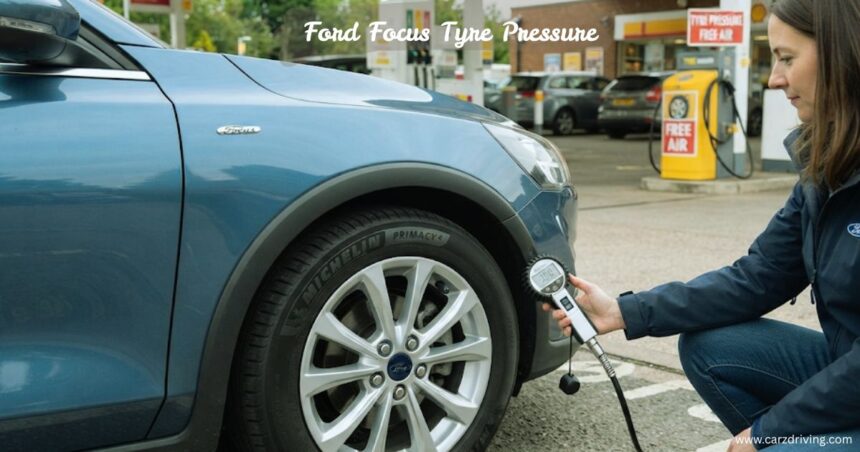
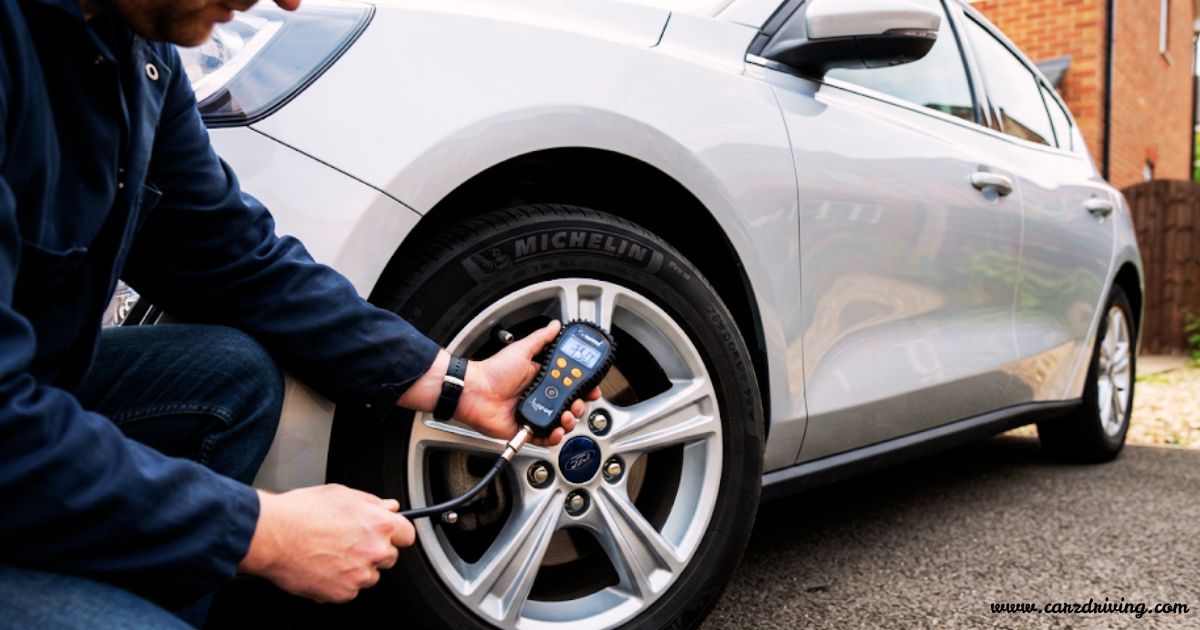
Grab an air compressor fitted with a proper pressure gauge, whether it’s analogue or digital, and push the compressor hose firmly onto the valve stem after removing the valve cap.
Within seconds you’ll get an immediate reading: an analogue tool shows it on a circular dial, while a digital one displays the figure in plain digits.
Over Inflated Tyres
Pumping in too much air is just as bad, since over inflated tyres shrink their contact patch with the road, causing a loss of traction and worse braking distances.
This also creates uneven wear across the central tread wear zone, which shortens the shorter tyre lifespan you would otherwise get from a properly inflated set.
Correct Tyre Pressures
Your car naturally loses about 2 PSI per month through normal air loss, and this happens faster during warm weather, so don’t be alarmed by small drops.
You’ll usually find the numbers printed on the driver’s door sill or inside the fuel tank flap, and your vehicle handbook or an online tyre pressure finder will confirm the exact figures for your model.
When carrying additional load, always switch to the correct loaded tyre pressure, and always test while the tyres are still cold tyres for an honest number.
Does Tyre Pressure Differ for Electric Vehicles?
Electric vehicles usually need slightly higher pressure than hybrid cars or petrol models, mostly because of the heavy batteries packed under the floor. Always stick to the manufacturer recommendation for your specific car, since underinflated tyres raise rolling resistance and quietly eat into your vehicle range.
Where Can I Find The Correct Tyre Pressures for My Vehicle?
Every Ford vehicle has a sticker placed inside the driver’s door frame, and the same information also sits inside the Owner’s Manual or behind the fuel filler flap. These numbers change depending on speed, temperature, load, and wheel size, so always match the figure to how you’re actually using the car.
Locating Your Tyre Pressure Information
The tyre pressure plate sits right on the door jamb, and if you can’t find your manual, you can always pull up a digital copy online instead. Should the sticker turn into a faded sticker or a worn sticker over the years, simply contact your Ford Dealer with your VIN number, and they will issue a replacement sticker that matches your car’s original tyre specification.
Understanding Your Tyre Pressure Sticker
On the label, you’ll spot the tyre size, the vehicle model, the front tyre pressure, and the rear tyre pressure, all lined up next to the correct unit of measurement.
The vehicle load icons split into two groups: the smaller one covering 1-3 people shows normal load, while the bigger icon for 4-5 people plus luggage shows maximum load.
You’ll also find the spare wheel size printed next to the spare wheel pressure, with a handy legend A-H explaining every letter on the sticker.
Pressure Measurements
Ford Focus Tyre Pressure can be shown in psi, bar, or kPa, and drivers across the UK, the US, Europe, Australia, and New Zealand all lean on different units depending on habit. As a rough guide, 32 psi equals about 2.2 bar or 220 kPa, since pounds per square inch and the metric scales are simply measuring the same thing in different ways.
Just remember that normal load pressures apply to everyday driving, while maximum load pressures are meant for towing or carrying extra weight in the boot.
FAQs
What is the correct Ford Focus tyre pressure?
Most Ford Focus models need between 30 PSI and 33 PSI, depending on tyre size and manufacture year.
Where can I find my Ford Focus tyre pressure sticker?
Check the driver’s door frame, the Owner’s Manual, or the fuel filler flap for the correct sticker.
How often should I check my Ford Focus tyre pressure?
Check cold tyres at least once a month and always before any long journey for an accurate reading.
What happens if my Ford Focus tyre pressure is too low?
Underinflated tyres cause harsher steering, reduced fuel economy, and a real risk of tyre blowouts on the road.
How do I reset the tyre pressure warning light on a Ford Focus?
Use the driver assist settings to reach tyre monitor, or follow the hazard warning light reset method for peace of mind.