
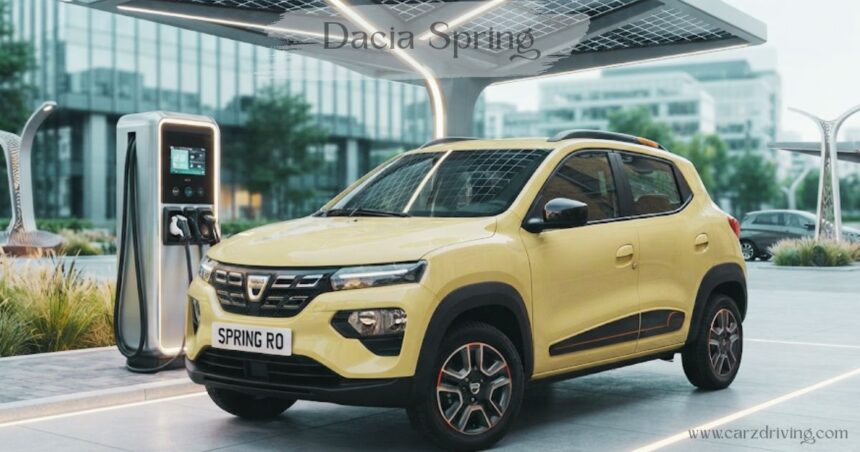
I still remember the first time I saw the new Dacia Spring parked outside a dealership in Manchester, and I honestly thought someone had made a pricing mistake.
The starting price genuinely undercuts almost everything else on the market, and after past few years of endless big topics of debate about when ordinary drivers would finally get affordable EVs.
Whether you call it the cheapest full EV, ignore the Citroen’s Ami quadricycle entirely, or just call it UK’s cheapest electric car, the numbers speak for themselves: £14,995 to start, and under £15,000 for most trims, which is hard to beat anywhere in the UK today.
Naturally, this raises a fair question should you rush out and buy one, or wait and compare it against the Fiat 500e, the Citroën ë-C3, or the Leapmotor T03? I’ve driven a few of these rivals myself, and I’ll admit the Spring isn’t perfect, but its value for money is genuinely hard to argue with.
Some critics call it a hairshirt option, stripped back and no-nonsense, but after the recent price cut, the all-electric Spring has become, without much room for disputed opinion, the cheapest new car and cheapest new cars you can buy, and its range starting price puts real pressure on small petrol cars that used to dominate this end of the car industry. Dacia clearly wanted the headlines, and it got them.
Performance, Range & Driving
Getting behind the wheel of the entry-level car, you immediately notice the 45hp motor doesn’t have much muscle, though for an extra £1,000 you can step up to 65hp, and paying a bit more again lands you in the Extreme equipment grade, which I tested over a wet weekend and actually enjoyed more than expected.
The official combined range sits at 140 miles, which trails behind small EVs offering 200 miles and larger cars pushing past 300 miles, though Dacia insists most Spring drivers only cover 23 miles a day, so the WLTP figure may matter less than it first appears depending on your individual usage requirements.
Charging tops out at 30kW DC charging speed, which is on the slower side for an EV, so plan accordingly if you’re relying on public chargers.
A few quirks stood out to me during everyday drive: the gear selector skips a proper park option entirely, getting back into neutral feels fiddly, and there’s still a steering column-mounted key slot and a manual handbrake, both of which feel a little anachronistic in something billed as an EV.
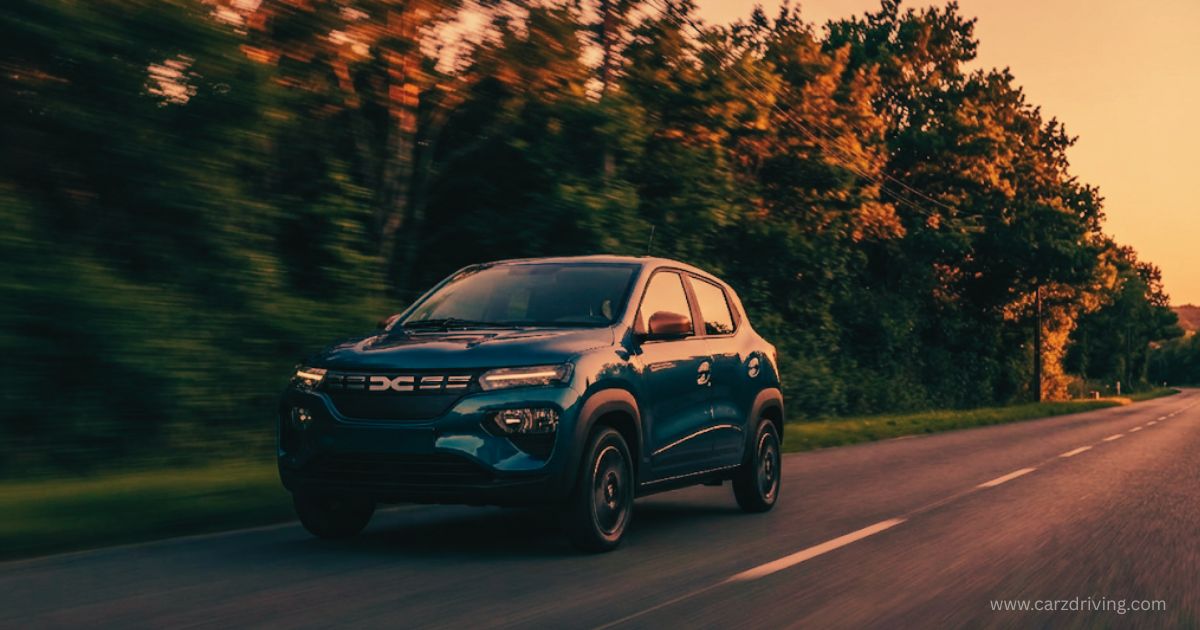
The steering itself is light and slowly geared, needing three full turns lock to lock, and while Dacia is proud of the tight turning circle for low-speed manoeuvring, I wouldn’t trust it much to corner confidently at higher speeds the car is tall and narrow, and you feel the body lean noticeably on a twisty road.
That said, the extra height gives a genuinely elevated driving position with a great view of the road, and despite being just 3.7 metres, it never feels cramped up front; the ride isn’t especially sophisticated, but the small wheels and a kerb weight under one tonne help comfort more than you’d expect, even if the cabin soundproofing could use work.
Design and Practicality
Inside, the interior trim is mostly hard plastics, which is exactly what you’d expect from a budget-focused model, yet the cabin doesn’t feel dull thanks to funky styling touches and white trim flashes.
Our test car came in Extreme spec, complete with copper-coloured air vent detailing, and while I liked the quirky details, the copper colour on the door mirrors didn’t quite land for me small gripe aside, the rear grille and lower front grille are actually clever stickers that are cheap and easy to replace if damaged.
Space in the back is where the city car roots show most clearly legroom is tight even behind an average-sized driver, and taller adults will likely feel their hair brushing the roof. Even so, the boot impressed me with its 308-litre capacity, beating several superminis despite a high lip you’ll need to lift bags over.
Verdict
After spending real time with it, my overall view lands firmly on the Positive side: great value for money, light weight, and better design than the price suggests, even if there are limitations and major flaws are thankfully few.
On the Negative side, restricted range and tight rear legroom remain the two things I’d flag to anyone cross-shopping against bigger car options offering greater battery range. Still, being several thousand pounds cheaper than the alternatives, it earns its reputation for remarkable value for money and I expect real-world success for it.
The Standard equipment list is generous for the money: a 7in driver display, Media Control smartphone link, a USB port, air conditioning, cruise control, a speed limiter, rear parking sensors, autonomous emergency braking, traffic sign recognition, a speed alert, lane change alert, lane keep assist, and driver attention warning all come as standard.
Under Engines, you can choose 45hp or 65hp; under Equipment grades, it’s Expression or Extreme; and Transmissions stick to a Single-speed automatic, with Electric power throughout the range.
Running Costs for a Dacia Spring
From my own budgeting, running one of these is refreshingly cheap: prices run from £14,995 up to £17,645 once you add creature comforts, and if you’ve got off-street parking with home charging, your daily costs shrink to almost negligible costs, since a full charge overnight on a small battery using an off-peak tariff costs very little.
Company car drivers benefit too Benefit In Kind taxation stays at 2 per cent for now, climbing slowly afterward, which still makes it the cheapest tax available for years, and it’s free in year one for road tax (VED) as well.
Because it’s such a simple car, servicing and maintenance costs stay low, and while Insurance for electric-car owners tends to run higher generally, the Spring’s no-frills nature keeps premiums reasonable compared with rivals. All told, this cheap electric car backs up its value for money claims once you look past the sticker price.
Cheapest Car in the UK
Dacia recently confirmed a fresh entry price cut of Dacia Spring, and it’s a big one: the entry level Expression Electric 70 now costs just £11,990 on-the-road, down from £15,990, while the Extreme Electric 100 drops from £16,990 to £12,990 genuine Bargain territory.
That pricing puts it ahead of the Leapmotor T03, which also saw an entry price cut to £12,990, and comfortably below Dacia’s own petrol-powered Sandero at £14,765, removing real barriers to new car ownership for buyers on a budget.
UK brand director Lina Ribeiro explained that production efficiencies and a focus on real value allowed Dacia to pass on the savings, calling it one of the smartest value choices on the road, whether electric or otherwise.
This price move follows a big update last year: a new 24.3kWh LFP battery, more powerful motors, uprated brakes, and retuned suspension. The Expression Electric 70 now makes 69bhp, hits 0-62mph in 12.3 seconds, and offers a claimed range of 140 miles, plus air conditioning, cruise control, and rear parking sensors as standard for less than £12k.
Step up to the 100, and power output rises to 99bhp (or 100PS in Euro speak), cutting the 0-62mph time down to 9.6 seconds.
This teeny EV also gains a 10.1in infotainment screen with wireless Apple CarPlay, Android Auto, a reversing camera, and subtle copper accents outside small touches that make the Extreme Electric 100 feel like real value at its price point.
FAQs
How much does the Dacia Spring cost?
The Dacia Spring starts at £11,990 on-the-road, making it the cheapest new car in the UK.
What is the range of the Dacia Spring?
The Dacia Spring offers a claimed range of 140 miles, ideal for daily city car use.
Is the Dacia Spring a good value EV?
Yes, thanks to its remarkable value for money, low running costs, and generous standard equipment.
How fast does the Dacia Spring charge?
It supports up to 30kW DC charging speed, which is modest but fine for typical home charging.
Is the Dacia Spring cheap to insure and maintain?
Yes, its no-frills nature keeps insurance, servicing, and maintenance costs refreshingly low.