

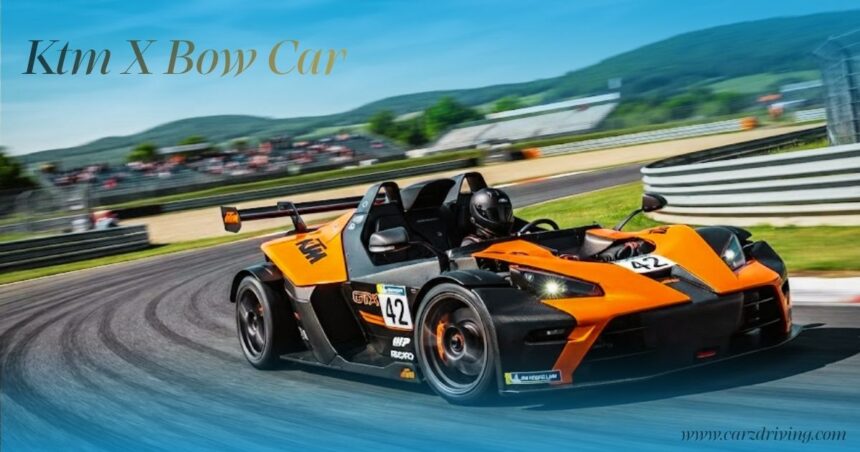
The KTM X Bow Car GT-XR feels like nothing else on the road, and I still remember the first time I saw one parked outside a track day paddock in Graz, Austria.
This isn’t a soft weekend cruiser; it’s a purebred race car wearing number plates, built by a small Austrian firm that clearly understands spatial awareness and precision.
Behind the scenes, this KTM X-BOW GT2 platform earned real victories and title wins on international racetracks long before it ever touched public roads, and that race-winning pedigree shows in every panel.
Engineers didn’t just borrow ideas; they tested concepts and innovations in a genuine motorsport environment before letting them near a showroom floor. That successful foundation is why the car delivers absolute performance instead of empty marketing talk.
The KTM X Bow Car GT-XR
KTM itself grew out of motorbikes, and that history explains why the brand chased untamed dynamics and radical design instead of playing it safe. This Focussed, lightweight machine was built for individualists who want pure enthusiasm woven into their everyday lives, not locked away for special occasions. It carries carbon-tubbed, mid-engined bones, a layout more common on a race car than a road-legal vehicle.
Under the skin sits a transverse engine paired with a DSG gearbox, a combination borrowed from Audi motor engineering and tuned for serious commitment. This high-performance car earned its EU type approval the hard way, proving itself as a genuine road-going four-wheeler among the road-going four-wheelers on sale today.
Owners who buy one aren’t chasing the track day crowd for attention; they want track focus built into a usable two-seat sports car.
Some testers call it mad, but nobody calls it boring. I’ll admit the ride can feel soft at times, and the suspension takes some getting used to, yet that’s part of the charm.
Compare it with anything built in Britain, and you’ll notice the Austrians approach speed differently less flash, more substance. Reviewers often mention carbon everywhere you look, plus a superlative looks factor that photographs never quite capture.
Even the smallest details, like number plates mounted on a chassis meant for trackday specials, remind you this car started life as a racer.
Despite the hardcore reputation, KTM insists the GT2 car stays genuinely comfortable enough for daily use, and I found that mostly true on longer drives.
It’s crazily fast in a straight line, yet composed enough that you won’t need a helmet or scarf just to nip to the shops, though you’ll want them on track. Call it impractical if you like Batman himself would probably approve of a machine numbered like the 300, sitting proudly under the KTM X-BOW GT-XR badge.
Pros & Cons
On paper, the Pros list reads like a dream: exceptionally capable, very fast, and remarkably efficient for something this quick. The Cons are just as honest a tough gearbox, over-light steering, and tricky brakes that need real leg strength.
Once you get past the drama, this base car turns into a genuinely well-sorted tool rather than something race-car twitchy.
Some critics argue the handling feels too safe, and honestly, I understand why after a few laps behind the wheel.
Others complain the entry-level version is simply not quick enough to match its looks, which is a fair point. Either way, nobody walks away disappointed by how planted and predictable this car remains.
Driving Experience
Climbing in for the first time takes real effort, and you’ll want to master the four-point harness before anything else.
My test car’s Sachs coilovers setup felt firm from the first bump, matched to a wheelbase of 2.85m that keeps everything planted.
Press the Audi starter button and the cabin fills with NVH, borrowed in spirit from the RS3, since the steel engine cradle sits bolted straight to the carbon fibre speaker box around you.
Grab the knurled aluminium gearlever, tap the electric handbrake button, and the DSG box slots smoothly into first gear. Revs settle fast, and the whole powertrain calms down once you’re actually rolling.
Visibility takes some getting used to, and even three inches of extra foam pad on the seat won’t fully solve it. From my low vantage point I couldn’t see the front wings, which felt tricky weaving through a busy paddock full of Formula 4 racers and their support crew. Watching E-scooters and quads dart around only added to the tension.
On narrow Austrian roads, I learned to line up the wiper with the white line to judge the car’s width. The low-mounted camera mirrors, including one for reverse parking, made this far easier than expected. Three-way adjustable dampers handle most bumps well, though sharp potholes and ridges still send a jolt up your spine.
That damping comes from genuine race-spec suspension with bush-free joints, borrowed almost directly from competition parts.
Expect plenty of road noise and wind noise on a long trans-European trip, enough that ear defenders aren’t a bad idea. Circuit driving is where this setup truly makes sense, not motorway cruising.
Throttle response feels a touch lazy at lower revs, but boost builds fast as the turbo spools past 3000rpm, pulling hard to the 7000rpm limiter.
The engine note hardens under load, and lifting off gives you a blow off noise worthy of a Group B car. It almost sounds like an S1 Quattro rally car is chasing you down, even with only five cylinders on board.
Official figures list 0-62mph in 3.4 seconds, verified under WLTP testing standards, with real pace that outguns most rivals from McLaren, Ferrari, or Lamborghini through the corners.
Normal mode shifts too early for my taste, Sport mode isn’t much sharper, and only Manual mode with the metal shift paddle feels properly connected. There’s still a small delay before each gear change lands.
Steering feels light and numb near centre, needing real cornering force before any feel arrives through your hands. KTM’s engineers are already reworking the EPAS system with switchable weights ahead of deliveries to customer cars. It’s a fair criticism, but one the factory clearly takes seriously.
Brakes offer zero servo assistance, so you need strong leg muscles and real pedal pressure for proper spirited driving. In return, you get direct braking distances and total confidence, since there’s almost no suspension slack to second-guess.
Turn in is immediate, agility feels sharp, and mechanical grip stays high through dry corners, though a sudden shower reveals limits in traction, quickly caught by the ESC.
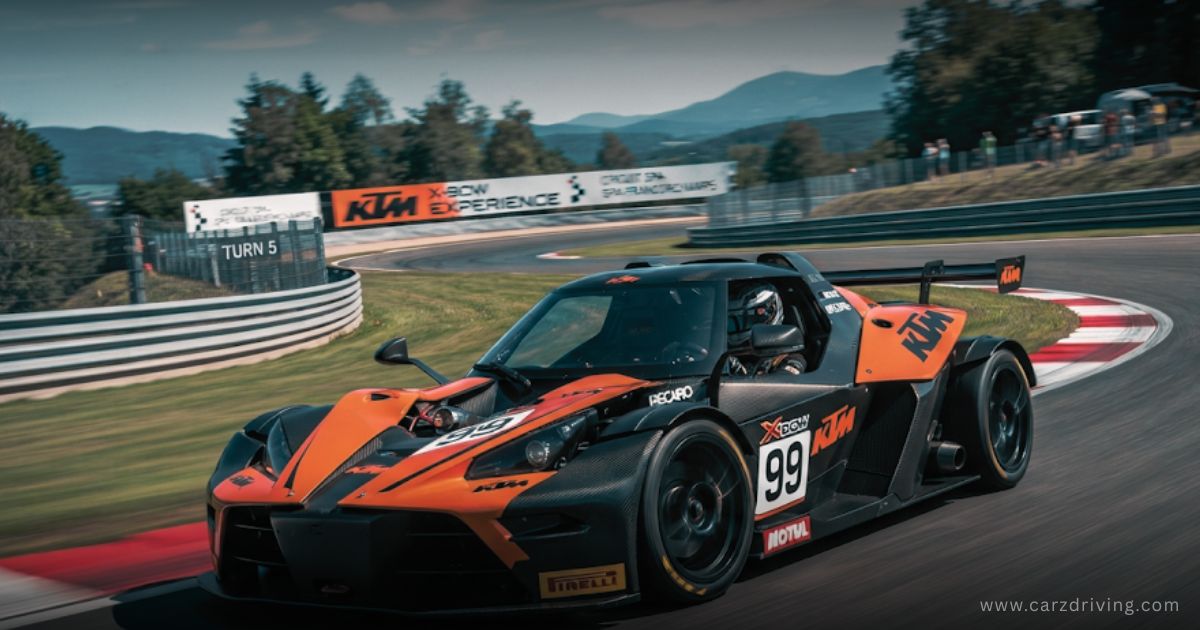
Following an ex-racing driver in an older X-Bow GT taught me plenty about chassis precision and the immediacy of response this car offers. There’s real theatre to a session on track, especially chasing a full GT2 car and feeling the ABS hold firm lap after lap. My own entry speed judgement was shaky, and I felt the nose run wide before gripping again.
Switching to manual near the removable steering wheel, I tried trailbraking into corners and felt the nose tuck in nicely.
A single 15-minute session left me shattered, yet the pit lane told a different story tyres and petrol barely touched. Riding shotgun with the GT2 pilot afterward, lapping times dropped even further, braking later with more speed through the bends and straights.
Compared with typical supercars, this car keeps pace through corners even if a light engine and impressive stability matter more than outright top-end pull.
It suits endurance racing and appeals to gentlemen drivers with more wallet than raw talent, since the chassis rewards smoothness over bravado. Even the softer base version, showing early understeer, hints at sharper hardcore X-Bows coming later.
There’s no real weather protection, so exposed body parts need proper kit before any serious drive. The entry car manages 0-60mph in 3.9 seconds using a milder 2.0-litre turbo borrowed from the Audi range, running in a mild state of tune at just 240bhp, though tuners have pushed that closer to 350bhp.
At 790kg, it’s heavier than expected despite generous carbon fibre use, and a fibreglass version exists for buyers chasing a lighter, cheaper build.
Interior
Don’t expect cupholders, armrests, or supple materials here — this cabin skips luxury entirely in favor of function.
Instead you get exposed carbon fibre everywhere, plus working climate control and a surprisingly good four-speaker stereo with a proper subwoofer. There’s no touchscreen infotainment system, since KTM ditched screens for a simple smartphone mount with wireless charging built in.
Controls come through rubberised buttons mounted on the F1-style steering wheel, next to a clear configurable digital display. A touch panel between the seats still works fine with gloved hands, which matters more than it sounds. None of this feels practical at first glance, and getting in demands genuine athleticism.
The carbon monocoque sits around knee height, so KTM fitted a fold-forward canopy that looks straight out of a jet fighter, or maybe a Nova kit car if you’re old enough to remember one.
I always sit on the wide sill first, then swing my legs over one at a time into the fixed bucket seat. Once settled, I adjust the pedal box and steering column to fit.
Legroom is genuinely decent, and headroom is almost comical KTM says their 6’10” tallest driver still fit fine wearing a helmet. Your passenger sits close beside you, closer than most cars allow. Storage lives in a 160 litre luggage compartment tucked under the engine cover, big enough for squishy bags or race overalls.
A smaller documents compartment between the seats holds papers, though I’d skip storing chocolate supplies there. Melted Boosts or Kit Kats turn that space into a mini Just Eat delivery vehicle, running warm from engine heat. It’s a funny quirk from a car built with such a carbon-tubbed race-focused mindset.
Even without frills, the cabin feels genuinely breathtaking, delivering real racecar feel rather than manufactured drama. There’s barely any soft furnishings to speak of, and minimal switchgear to fuss over.
With just two seats, no luggage space on some versions, and no windscreen on the open variant, you will get wet and have no change of clothes if caught in rain pack accordingly.
KTM built genuine comfort features for everyday use too, thanks to low weight, an economical engine, and large fuel capacity that supports long tours past 1,000 kilometres. Luggage fits into a 160-litre boot, and buyers can even order custom-fitted luggage made with outdoor brand Meindl. That combination makes long trips genuinely realistic, not just a marketing claim.
Electrically assisted power steering, tuned in a progressive way, makes winding streets feel effortless rather than exhausting.
An air-conditioned interior keeps things civilized, while the camera rear-view mirror system pairing a digital rear view mirror with a wide-angle parking camera — solves the poor visibility problem nicely. A built-in LED interior light rounds out the all-round view setup.
Your smartphone becomes the real control centre, held firmly by the Quadlock bracket on the centre console.
It charges through inductive charging or two extra USB-C connections, and pairs easily using Bluetooth pairing for calls and music through the sound system. It’s a smart, weight-saving solution that fits the whole philosophy of this car.
Verdict
KTM X Bow Car could use a touch more gearbox calibration and steering calibration, and honestly, opinions split hard on the brakes too. A Porsche 911 GT3 RS arguably makes more sense as a road toy or track toy, and it’s noticeably cheaper as well. None of that really matters to a typical GT-XR owner, since this was never about sensible choices.
At its core, this stays a racing car first, so packing weekend stuff into the boot for a trip with your better half isn’t really advisable.
Do that anyway, and you might end up sleeping in the spare room for a few nights afterward. Think of it instead as room for overalls and spare helmets, something you drive to the circuit rather than load onto a trailer.
You’ll likely arrive at the track on the same tyres and barely dented petrol tank, assuming your skills hold up under pressure.
The handling never feels as extreme as the looks promise, and even the base car version delivers real thrills. Pricing starts around £62k, while the full carbon version costs roughly twice the price, and both stay reasonable on fuel economy despite brutal insurance costs.
Call it a toy if you want, but it’s one that will genuinely reshape how your wallet works from now on. That said, few owners ever regret the trade.
FAQs
What is the KTM X-Bow GT-XR?
It’s a road-legal super sportscar built on KTM X-BOW GT2 racing DNA, blending carbon construction with pure motorsport performance.
How fast is the KTM X-Bow GT-XR?
It hits 0-62mph in just 3.4 seconds, reaching a top speed of 174mph thanks to its turbocharged Audi engine.
How much does the KTM X-Bow GT-XR cost?
Pricing starts at €284,900, plus country-specific taxes and import duties depending on where you live.
Is the KTM X-Bow GT-XR comfortable for everyday driving?
Yes despite its track focus, it stays surprisingly comfortable, with a 160-litre boot and long tours up to 1,000 kilometres.
What makes the KTM X-Bow GT-XR unique?
Its ultra-light carbon monocoque, jet fighter canopy, and AirCurtain system make it a genuinely fearless, READY TO RACE machine unlike anything else on the road.