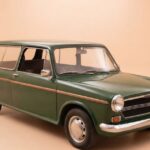

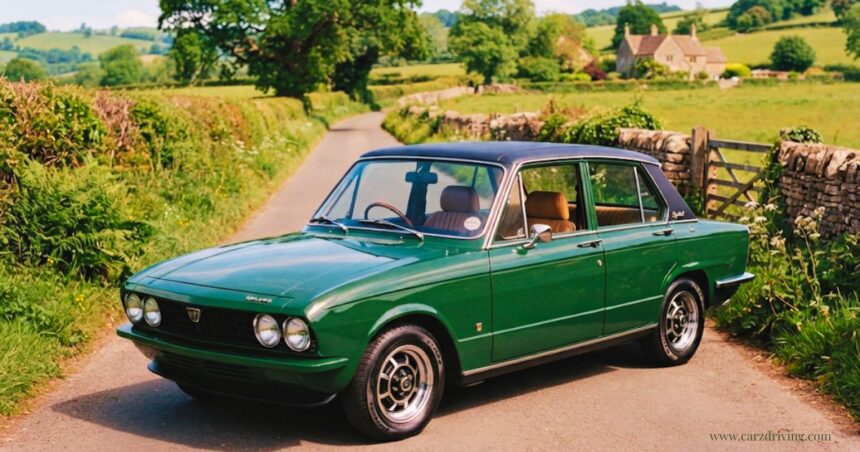
The Triumph Dolomite has an unusual origin story even by the standards of British Leyland. It traces its roots back to the front-wheel-drive Triumph 1300 of 1965, a car that was crying out for a bigger engine and a plusher cabin from the moment it launched.
That demand for a compact luxury express eventually spawned two parallel paths: the rear-wheel-drive Toledo of 1970, built on a shortened version of the 1300’s shell, and the longer-tailed front-wheel-drive 1500.
Triumph Dolomite
The Dolomite itself arrived by combining the Toledo’s rear-drive platform with the 1500’s longer body a genuine platform-engineering exercise rather than a clean-sheet design.
Power came from a slant-four overhead-camshaft engine that Triumph had originally developed for Saab, funded under an exclusivity deal that saw it debut in the Saab 99 before Triumph could use it themselves.
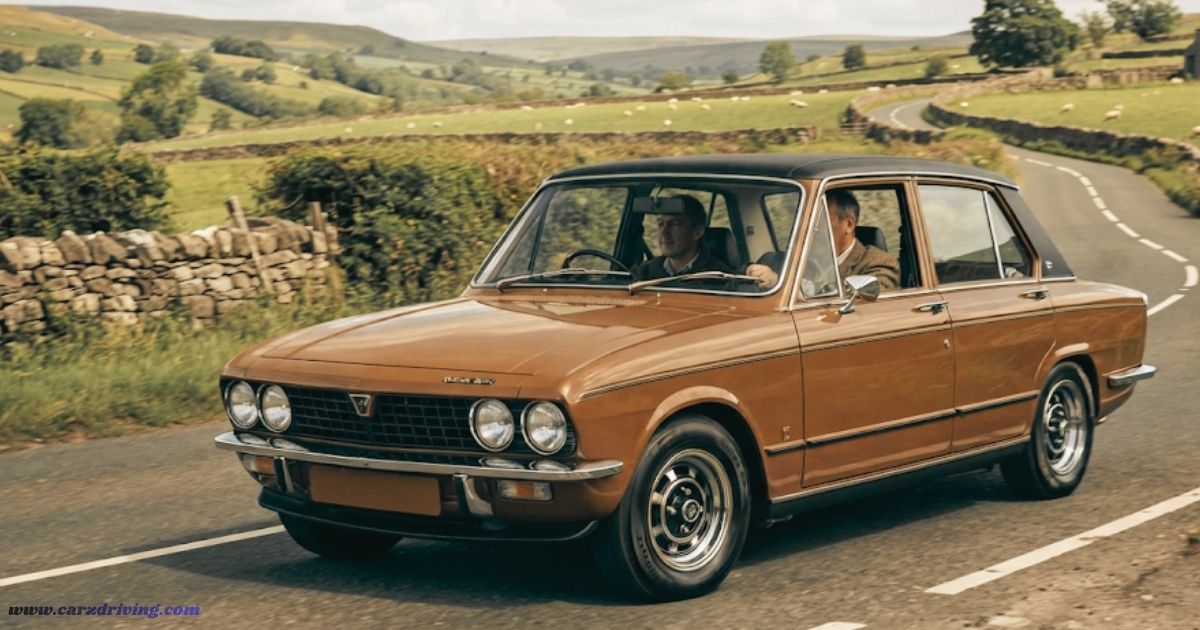
Styled by Giovanni Michelotti the same man responsible for cars ranging from Ferraris to Hino models the Dolomite combined handsome, well-proportioned looks with genuine driver appeal. Motor magazine’s 1972 road test praised its comfort and control layout as “an object lesson to all other manufacturers.”
The car was ready for launch in late 1970, but industrial disputes at the Canley and Speke plants delayed its introduction until 1971, forcing several magazines to sit on road tests they’d already completed.
Once it did arrive, though, the Dolomite’s 100mph potential and sporting handling won it a loyal following, with the press drawing favourable comparisons to BMW’s saloons ironic, given how the story would eventually play out.
The range-topping Dolomite Sprint followed in 1973, bringing a genuinely innovative 16-valve engine to a mainstream British saloon for the first time, plus alloy wheels as standard another UK production first.
History and Development Timeline
The story begins with the 1300 in October 1965, a front-wheel-drive car whose success prompted Triumph to explore larger-engined, higher-trim derivatives.
Cost pressures within the newly-formed British Leyland Motor Corporation (BLMC, from 1968) meant a full redesign wasn’t viable, so engineers under Spen King working to a project codenamed Manx II devised a rear-wheel-drive conversion of the existing shell, building on groundwork laid by the car’s original designer, Harry Webster, who had left the platform capable of driving either the front or rear wheels.
Alongside it came the longer-tailed, front-wheel-drive 1500, positioned as a more refined, higher-equipment model.
The Dolomite name revived from a pre-war Triumph was chosen during 1969–1970 for the new flagship, which combined the Toledo’s rear-drive underpinnings with the 1500’s longer body. First driven by the press in 1971, it didn’t reach full-scale production until industrial action at Canley and Speke had been resolved.
By late 1971, Triumph’s small-car range comprised three distinct but closely related models sharing a bodyshell: the short-tail, rear-drive Toledo; the long-tail, front-drive 1500; and the long-tail, rear-drive Dolomite.
In 1973, the front-wheel-drive 1500 was discontinued in favour of the 1500TC mechanically a Toledo underneath (live rear axle, four-speed manual) but wearing the longer 1500 body and its more luxurious trim.
It was a rare case of a manufacturer stepping back from front-wheel drive for cost and complexity reasons, but it helped establish a clearer hierarchy across the range.
June 1973 brought the Dolomite Sprint, developed with Coventry Climax engineer Harry Mundy. Its 16-valve cylinder head operated cleverly via a single overhead camshaft and rockers rather than a costlier twin-cam arrangement sat atop a new 1998cc version of the slant-four, initially tested beyond 150bhp but tuned to a production-friendly 127bhp.
The first 2,000 Sprints were finished in Mimosa Yellow. It launched with a 0–60mph time of 8.7 seconds and a 116mph top speed, wrapped in a wood-and-leather interior that stood apart from most sporting saloons of the era.
Sadly, the Sprint’s reputation took a hit as tales of 16-valve unreliability spread, a result of BLMC’s cost-cutting on internal components and a broader decline in build quality amid industrial unrest. Even so, the car’s glamour and a loyal following kept it in favour.
In 1975 coinciding with BL’s part-nationalisation the range was rationalised. The Dolomite 1300 replaced the ageing Toledo (which limped on until 1976), the 1500TC became the Dolomite 1500 (later 1500HL), and the original 1850 became the Dolomite 1850HL.
From this point, the line-up settled into four variants: Dolomite 1300, Dolomite 1500/1500HL, Dolomite 1850HL and Dolomite Sprint. The 1300 and basic 1500 retained the Toledo’s plainer square headlamps as a visual identifier.
A handful of unusual spin-offs emerged too: alloy-bodied Panther Rio (1850-based) and Especial (Sprint-based) variants, of which only 38 were built between 1975 and 1977.
Political and financial pressures within BL, including competition from the Princess and ADO77 programmes, saw SD2 cancelled in 1975.
A final special edition, the 1500SE (black paint, silver side-stripe, grey cloth trim, walnut dash), arrived in May 1979 with 2,500 built.
The Dolomite Sprint’s 16-valve engine, for all its early reliability troubles, was never developed further, and the Dolomite name faded along with much of Triumph’s identity territory increasingly ceded to BMW, which had by then perfected the compact sports-saloon formula Triumph pioneered.
Engine
The Dolomite’s engine range split into two distinct families. The 1300 and 1500 used the well-proven Herald/Spitfire-derived unit, whose main weakness was premature wear of the crankshaft’s thrust bearing.
On the 1500 in particular, sustained high-speed cruising put real strain on the three-bearing crank, and big-end bearing failures were a common complaint unless the desirable overdrive was fitted; a knock or thump from low in the engine is a sign a rebuild is due.
Heavy blue smoke on both units points to bore or piston wear some smoke on start-up is normal, given the absence of valve stem seals, but persistent smoke means more serious work is needed.
The 1850 and Sprint shared the OHC slant-four architecture, originally developed with Saab funding. The 1850 produced 91bhp; the Sprint’s 16-valve version, developed with Coventry Climax input, was good for 127bhp and was the first mass-production application of a 16-valve head on a British saloon.
These alloy-head engines generally last well 100,000 miles is achievable with regular oil changes but need frequent coolant changes, since overheating can blow the head gasket.
Both are also prone to water pump and jackshaft failure (also causing overheating), and the water pump must be correctly shimmed on installation.
In the UK specifically, the slant-four picked up a reputation for unreliability, largely traced to inferior casting materials and inconsistent maintenance rather than an inherent design flaw well-maintained examples hold up much better.
Transmission and Gearbox
The 1300/1500 and 1850 shared broadly similar gearboxes and rear axles, though the parts aren’t directly interchangeable between them. Cars built before March 1975 used a three-rail, Vitesse-derived gearbox prone to worn layshaft bearings, producing noise in every gear except top; listen for this in neutral too.
The later single-rail gearbox is tougher, but crunchy changes on both point to worn synchromesh. Rear axles can also turn noisy, particularly on the 1850.
The Sprint used a different, TR-derived gearbox and a stronger rear axle, with an optional and highly desirable limited-slip differential non-LSD examples are more common, and complete Sprint rear axles are now in short supply, commanding a premium when fitted with LSD.
This stronger driveline is one reason simply upgrading an 1850 to Sprint spec is more involved than it looks.
A three-speed Borg Warner automatic was offered across the 1500, 1850 and Sprint. It’s generally reliable and smooth-shifting, if a slightly odd match for the Sprint’s revvy character.
Cars fitted with overdrive make for noticeably more relaxed motorway driving and are worth seeking out, provided the unit is confirmed to work correctly.
Bodywork and Rust
Rust is the single biggest threat to a Dolomite’s survival, and cars built before 1976 are generally considered less rust-prone than later examples.
Specialists including Rimmer Bros and the Triumph Dolomite Club (TDC) stock a wide range of repair panels, which is itself a useful guide to the common trouble spots.
One of the trickiest areas to repair is where the windscreen pillar meets the bulkhead and inner wing under the bonnet.
Elsewhere up top, check the bonnet and wings (GRP replacements are available), around the windscreen for tell-tale bulges, the A-posts, door bottoms, rear wheelarches, the lower rear wings, the ventilation area above the rear screen, the trailing edge of the boot lid, and where fitted beneath any vinyl roof.
Underneath, inspect the chassis rails, especially where the front subframe attaches and around the rear mounts; the area beneath the battery is particularly vulnerable to combined water and battery-acid damage.
The inner wings, suspension turrets and the rear of the front panel are also worth close inspection. The headlamp surrounds and front panel can corrode badly, especially around and below the headlamps and near the front wings, and it’s worth checking for bubbling around the indicators and along the front valance.
As with any monocoque design, the sills are structurally critical check their full length, particularly where they meet the floorpan and around the jacking points.
Floorpans and the boot floor can also rot, though repair sections for all of these are available through the TDC. If the seller allows it, removing the rear seat backrest can reveal hidden corrosion on the inner wheelarches.
Suspension, Steering and Brakes
Steering should feel precise with almost no play. Woolliness can stem from a worn steering column bush (check for vertical movement in the wheel), the column linkage coupling and universal joint, or worn steering rack mounts as the rubber ages polyurethane replacements tighten things up at some cost to refinement. A little play in the wheel bearings is normal.
The suspension should be free of clonks. Failed dampers can make the car feel skittish over bumps, rear springs can sag with age (the Sprint runs lower as standard), and worn bushes bring
a loose, floaty feeling at speed again, polyurethane alternatives exist, though even fresh rubber bushes make a noticeable difference. The rear axle’s location depends on multiple rubber bushes that soften over time.
Brakes are adequate up to 1850 spec but are worked hard on the Sprint, so upgrades such as ventilated discs and higher-spec pads are a common and sensible fitment. Check around the master cylinder for leaks and corrosion.
Interior and Trim
The Dolomite was well appointed for its class, with plush seating and a wood dashboard as standard; the larger-engined cars and 1500HL models added wood door cappings too.
Top-spec cars used nylon cord trim, now scarce in good condition, while lower-spec vinyl has often survived rather better. Whether cloth or vinyl, seat material degrades with age, and carpets fade and wear, particularly on pre-1976 cars.
Wood trim can crack and fade with sun exposure, headlining can become grubby or torn, and the front parcel shelf is prone to collapsing. When checking a car, confirm the wood veneer matches throughout.
Values and Buying Verdict
The Triumph Dolomite is now a well-established classic, and while the Sprint delivers the most excitement, the 1850 offers strong performance and fine handling that belies the platform’s front-wheel-drive origins.
The smaller-engined cars shouldn’t be dismissed either the 1300 responds well to tuning, and while the 1500’s engine has known weaknesses, parts remain plentiful and it’s a straightforward unit to work on.
On price, a good 1300 currently sits around £3,000–£4,000, a good 1500 around £3,500–£4,500 (up to £7,000 for the best), and 1850s range from £4,000–£5,000 for a sound driver up to roughly £9,000 for a well-restored example at auction.
The Sprint sits apart, with top-end values roughly doubling over the past five years a car worth around £7,000 in 2017 would now fetch £13,000 or more, and low-mileage examples in exceptional condition can reach £18,000–£20,000 through a dealer. Even at that level, it remains inexpensive next to a contemporary hot Escort.
FAQs of Triumph Dolomite
What makes the Triumph Dolomite Sprint so special?
It was the first mainstream British saloon with a 16-valve engine and standard alloy wheels, hitting 0–60mph in 8.7 seconds.
Is the Triumph Dolomite reliable today?
With proper maintenance the alloy-head engines can reach 100,000 miles, though rust and water pump failures remain common weak points.
How much does a good Triumph Dolomite cost in 2025?
Prices range from £3,000 for a solid 1300 up to £18,000–£20,000 for a pristine Sprint in exceptional condition.
Where does the Triumph Dolomite rust the most?
Check the sills, rear wheelarches, windscreen pillar, and chassis rails near the front subframe the biggest threats to survival.
Why did the Triumph Dolomite lose out to BMW?
Despite pioneering the compact sports-saloon formula, industrial unrest and build-quality issues let BMW perfect the concept instead.