
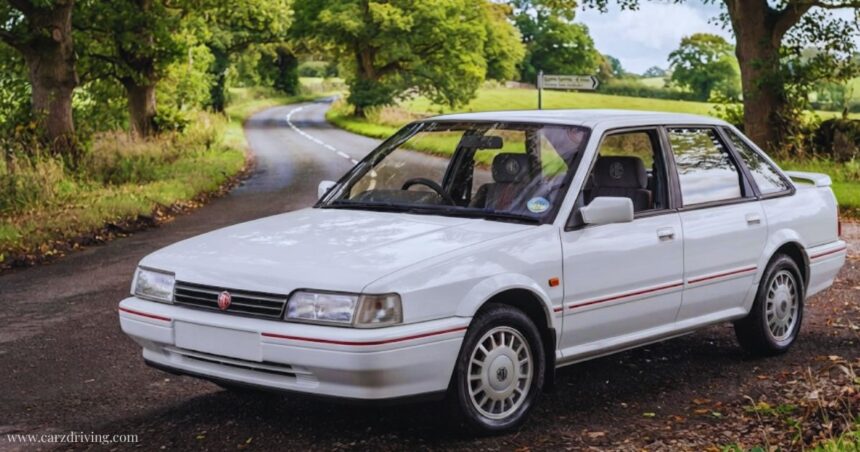
I still remember the first time I sat behind the wheel of an old MG Montego it had that unmistakable smell of British Leyland metal and vinyl, and I understood instantly why this car divides opinion.
The LM11, born from the LM10 Maestro, arrived in 1980s Britain wearing the badge of a company caught between poor management, underfunding, and workforce strife.
Austin Rover unveiled it at a glamorous press launch in the South of France, hoping to wash away the memory of a strike-free plant shut down despite topping the firm’s own quality tables a decision that sparked closure protests and a public furore.
It offered an impressive 18.4 cu ft boot area, ventilated brake discs, and suspension borrowed straight from its smaller sibling. Some called this badge engineering, others saw genuine engineering pride in a home-grown range that still had fight left in it, even as Honda influence loomed over ARG’s future.
What strikes me most, even now, is how the MG name survived at all. Leyland management had drained Abingdon of investment since 1968, yet public affection for the marque forced a rethink.
The result was a strange mishmash part sports car, part family saloon that included early prototype models like the B series engine, never destined for the MGB, and badge-only cousins such as the MG Metro 1300 and Maestro 1600.
Add in a touch of poor quality control, some steering and suspension carried over wholesale, and you get a car that was, in equal parts, celebrated and mocked a genuine British family workhorse that lasted a full decade, built on around 60% shared wheelbase components with fleet life firmly in mind since its April 1984 debut, despite the ongoing Austin Montego identity crisis and love of skis on long trips thanks to that folding rear seat.
Engine & Performance
Under the bonnet, the story gets genuinely exciting. The Montego Efi used a 2 litre engine with an alloy cylinder head, where the inlet ports sat paired rather than mixed with the exhaust ports a clever touch from Abingdon’s engineers.
Power reached 115 bhp at 5500rpm, fed by Lucas L type electronic fuel injection and an electronic ignition system, giving a top speed of 115 mph and a brisk 0-60 mph time of 8.9 seconds, well ahead of the 102 bhp normally aspirated engine it replaced.
Drive went through the Honda gearchange to the front wheels, a shift away from the Volkswagen unit fitted to its Maestro stablemate, using a 3.875:1 final drive rather than the Maestro’s own ratio.
The later 1994cc O-series an alloy-headed, overhead-cam B-series descendant from 1978 could be either naturally aspirated or turbocharged, and this fuel-injected engine delivered a smooth, linear output of 134lb ft torque at 2800rpm, making it feel deceptively fast without an obvious powerband.
Austin also built the S-Series to replace the tired R-Series, alongside older units like the 1.3-litre A-Series dating back to the 1950s, plus a 2.0-litre diesel built with Perkins.
The non-turbo 2.0i version managed 8.9 seconds to sixty, but the turbocharged 150bhp Montego EFi became the fastest road car ever to wear the MG badge, hitting 126mph and beating even the MGB GT V8 with a 7.3 seconds sprint remarkable given this was meant to be a family car with manual steering, built after the post-closure era at Abingdon.
Transmission & Gearbox
The gearbox story is a quiet highlight of the whole Montego saga, in my experience talking with owners at classic car shows. Where the Maestro relied on the VW 020 unit, ARG turned to a new development partner Honda for the Montego, fitting the Honda PG-1 five-speed gearbox, later simply called the Honda 5 speed gearbox. This replaced the older Volkswagen unit used on its Maestro stablemate, and the change was more than cosmetic.
Owners describe the shift as noticeably more polished and laid-back, less raucous and far less chuckable than the sportier Maestro feel underneath. That’s the interesting paradox of the Montego’s transmission refined enough for motorway cruising, yet still connected to a genuinely quick engine.
Dashboard & Electronics
Here’s where the Montego either wins your heart or loses your patience completely. Early cars used a talking digital dash, developed from the MG Maestro’s own Liquid Crystal Display setup, complete with voice synthesised warning announcements and a seat belt alert chime.
Roy Axe, the new design boss, inherited this digital dash concept, and enthusiasts joke there are only four in existence that still work properly.
Owners today still get a thumbs-up from strangers who remember the gimmick but back in 1984, plenty of buyers found the whole system gimmicky, complicated, and honestly irritating.
Built using early computer aided design (CAD) methods, the electronic dashboards proved brash and unreliable, with a digital readout that vanished in bright sunlight.
Little wonder Austin dropped the talking dash after roughly nine months, quietly bringing back simple, dependable analogue instruments by the end of 1984 launch year, restoring reliability to the humble Montego Efi and its announcement system for good, thanks in part to input from Bache himself as the outgoing successor to the design team, a story I love retelling to fellow enthusiasts.
Design, Styling & Interior Features
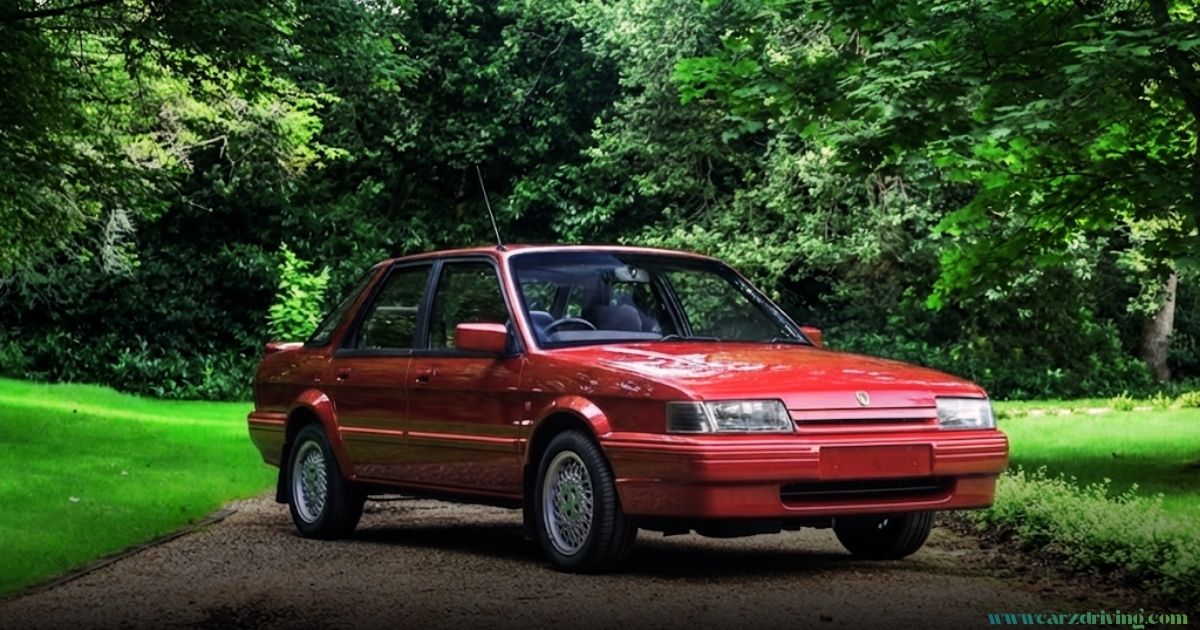
Visually, the Montego always looked like it was fighting an identity crisis, and I mean that with real affection. It borrowed its four-door saloon shape and Maestro hatch doors to save money,
forcing in extra rear pillars windows for the boot space to look right a compromise that designers Harris Mann, Roger Tucker, and Gordon Sked all wrestled with before Roy Axe
reshaped it into a genuinely sleek saloon with real aero-look appeal, moving it away from Beech’s Maestro roots toward something closer to the Ford Sierra and Vauxhall Cavalier in the Sierra/Cavalier class.
The Montego wore its own front spoiler, a boot mounted spoiler, cross spoke alloy wheels, and earlier Dunlop TD alloy wheels with low profile tyres, all sitting on suspension using a MacPherson strut setup rather than the Hydragas system found in the Princess and Ambassador.
Inside, buyers got red bias trim, red piping, MG motifs, and later just a single MG motif, plus central locking, a four speaker stereo, later a full 4 speaker sound system, radio cassette, and a tilt and slide glass sunroof with sliding shade genuine upmarket sports saloon territory for around £8,000.
The estate version deserves its own mention: a seven-seater with rear-facing seats, self-levelling rear suspension, and windscreen wipers tucked for aerodynamic benefit, giving real economy.
Later cosmetic changes brought dashboard switching tweaks, plain grey or grey carpeting replacing the old herringbone grey seating cloth, colour-keyed door mirrors, discreet 2.0i badging, and colour keyed seat belts, Even a puncture couldn’t ruin your day a blow out simply meant the tyre stayed put, no drama, no loss of steering control.
The Montego Turbo, meanwhile, wore its bluff-nosed, droopy-bottomed roots proudly, a Tucker notchback blend that somehow gained real Jean-Michel Jarre charisma and solid interior trim quality, despite the fifth designer taking over a production timeline already
squeezed by the British government’s reluctance to fund Austin, or Volvo-style thinking around the rear seat space and front-wheel drive packaging that made the Montego, the Maxi, and even the Austin 1800 feel like a genuine evolution in styling by April 1985.
MG Montego,Metro and Maestro
This is where the MG Montego story gets properly interesting, because it’s tangled up with the MG Metro, the Maestro, and the people who built and still drive them.
Back at Longbridge, John Cooper turned up with a 1982 Austin Mini Metro 1.3 HLS fitted with twin carburettors, a 997 Cooper cam, a free-flowing exhaust, and an oil cooler, delivering genuine Cooper S performance.
The factory-built Metro 1300 followed by May 1982, wearing decals, sitting on Wolfrace Sonic pepperpot alloys, and using a tuned 1275cc A-plus engine (sometimes still called the 998cc A-plus engine by older mechanics) with a low-drag rear-spoiler, or screen-surround, pushing output to 72bhp at 6000rpm and 73lb ft at 4000rpm, hitting 0-60mph 10.9 secs and top speed 103mph, aided by an SU HIF44 carburettor, a water-heated inlet manifold, and a performance exhaust.
I’ve sat in Nick Hunter’s Cinnabar Red 1983 MG Metro, admiring the David Bache dashboard with its New Romantic graphics, and honestly, the interior space utilisation rivals the old Austin 1800.
Still, at 50mph and 2500rpm, the steering load-up stays flat, body roll is nearly absent, and turn-in feels sharp thanks to great front-end grip and a four-speed gearbox that beats any early Volkswagen Polo rival, connecting back to designer David Bache styling roots and the Front Wheel Drive Register community that keeps these cars alive through the MG Car Club, guided by people like Tanya Field.
The Maestro took seven long years to reach dealerships, replacing the Allegro, the Marina, and the Maxi, styled by Ian Beech under engineering chief Spen King using early CAD/CAM, with MacPherson struts and a torsion beam borrowed from Volkswagen Polo thinking rather than
the old Issigonis gearbox-in-sump transmission, replaced by Dante Giacosa’s end-on layout and a VW five-speed manual gearbox, or VW 020 gearbox, the last steel-sprung Austin car since the A60s of 1969. S-series engine delays of 17 months forced Austin to fit the R-series
engine instead a 1598cc E engine hybrid fitted with twin Weber 40DCNF carbs on an eight-port manifold to reach 103bhp at 6000rpm and 100lb ft at 4000rpm, though this caused hot-starting problems from a non-crossflow cylinder head, plus carburettor icing and crankshaft failure from lost block rigidity.
Sitting in Norman Dawson’s Opaline Green 1983 MG 1600, with its performance air filters, you notice the R-series engine’s eager Italianate four-stroke song, revving cleanly past 3000rpm before mechanical sympathy calls time Norman himself spoke about the welding and 1998 rebuild memories, alongside fellow owner Paul Bott, an ARG technician who worked the line.
The cabin holds solid-state instruments, a digital speedo, vacuum-fluorescent displays, and a trip computer, cycling through voice-synthesis info narrated by Nicolette Mackenzie, whose tone reminds me of The Good Life’s Margo Leadbetter channelling a Speak & Spell genuinely part war games prop, part ZX Spectrum 48k.
Moving to Jeff Patterson’s Zircon Blue 1984 MG Montego EFi, the 101in wheelbase feels noticeably heavier than the 98.7in wheelbase Maestro, sharing suspension but not character.
Technical sheets list Bore & Stroke of 84.5mm by 89.0mm, 1944 cc displacement across 4 cylinders, an Overhead Camshaft, Lucas Electronic L type multipoint injection, a Dry plate clutch, 5 speed all-synchromesh gearbox, Independent front suspension, semi-independent
rear suspension with Coil springs, Alloy bolt-on wheels, Servo assisted brakes with ventilated disc front and drums rear, a Wheelbase 8’5.2″, Track front 4’10.5″, and Track rear 4’9.8″ numbers any motoring press reviewer of the day compared favourably against the Vauxhall Cavalier SRI.
The Montego never made waves outside the UK, though fleet cars loved the estate diesel for its economy on long motorways, right up until it dropped off the 1994 UK sales charts, with a strange afterlife of tiny sales success in Trinidad and Tobago through to 2000.
Blame the delays, the market timing, the management dramas, and honestly, some real industrial dramas at Cowley because had this British car industry effort launched around 1980
launch intended as the Princess replacement or Ital replacement, giving a real Ford Sierra head start, the Montego might never have earned its label as one of Britain’s could-have-been contenders, forever dated, sometimes misunderstood, sometimes fairly maligned.
Wrapping up my visit at Cowley, once home to V Building, T Building, press and tooling, and the modern MINI factory, I watched the shift change crowd pass our line of cars some smiling, some joking about fleet cars, most just remembering Longbridge’s glory days.
It’s a fitting way to end: this ARG MG family, built from Vanden Plas version thinking, prototype ambition, and the quiet, stubborn spirit of the British car industry that refused to let the MG models, the Metro, the Maestro, and the Montego disappear without a fight.
FAQs of MG Montego
What made the MG Montego special?
Its turbocharged 2.0i engine, Honda gearbox, and bold Austin Rover heritage made it a true hidden gem of British engineering.
How fast was the MG Montego Turbo?
The 150bhp turbo version hit 126mph, making it the fastest road car ever to wear the MG badge.
Why did the MG Montego have a talking dashboard?
Early models featured a digital dash with voice-synthesised alerts, a gimmicky but unforgettable touch of 1980s tech.
What engine options did the MG Montego offer?
Buyers could choose from the 2.0-litre O-series, S-series, A-series, or a Perkins diesel, giving real fleet-friendly versatility.
Is the MG Montego a rare classic today?
Yes it’s become a forgotten yet cherished piece of British Leyland history, kept alive by dedicated MG Car Club enthusiasts.