
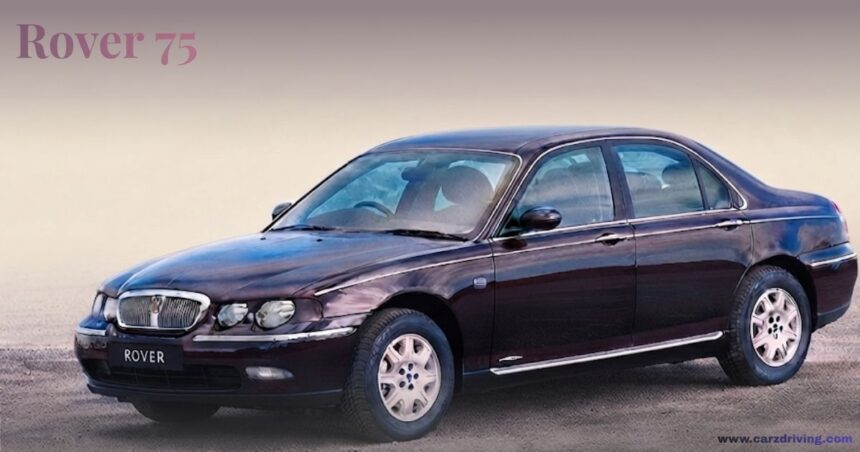
People often call the Rover 75 the last chance saloon from MG Rover, and once you drive one, you understand why it earns that title so well. I still remember flicking through old photos from 2001 and 2002, a time when this car felt like the best Rover model the brand had ever built.
I lost my father’s own Rover back in May 2005, and that memory still tugs at me whenever I see one on the road. The story behind this car is not simple, and its own troubled lifetime under BMW’s governance shaped every decision the engineers made.
Under the surface, the 75 hides an organisational fiasco that very few buyers ever noticed, because the finished car hid its scars so well.
A cost-cutting plan called Project Drive brought some cheapening to later models, yet the earlier cars kept their charm and their detailing intact. Blogs like DTW cover the 75 often, since its writers clearly hold a love-hate relationship with the car, much like I do myself.
If you search the UK market around 2004 or 2006, you will notice how the 75 built a good value name for itself, especially the 2.5 V6 Sterling trim badged as Connoisseur.
Every 75 came packed with smooth engines and comfort features that suited a wide target audience, from young professionals to older drivers who wanted real motorised transport with a bit of class.
The Rover 75 History
The 75 arrived in February 1999, and it stepped in to replace both the 600 Series and the 800 Series in one bold move. Rover launched this car to a wave of international acclaim, and reviewers of that decade praised its uncanny refinement compared with rivals from BMW.
Under the bonnet, the Rover K Series powered the entry cars with a four-cylinder engine, the same unit found in the little Lotus Elise and the MGF roadster.
That same four-cylinder engine also found a home in the Land Rover Freelander, proving how flexible the 1.8-litre unit really was, and Rover later used a 260bhp version.
Bigger cars used a V6 engine in 2.0-litre and 2.5-litre sizes, and Rover fitted a turbo diesel to give buyers a thriftier choice on longer trips.
The Tourer estate joined the range in summer 2001, and a new 1.8T engine replaced the thirstier six-cylinder unit soon after.
Rover gave the car a controversial facelift in early 2004, and a V8 engine followed right behind it, using a Mustang-sourced engine shared with the MG ZT 260.
An extended wheelbase limousine joined the lineup not long after that, showing how far Rover pushed this platform.
Cost pressure forced Rover to run its cost-cutting programme, known as Project Drive, and this stripped the walnut dashboard and other mechanical niceties from cars built after 2001 and 2002.
Writers at DTW often mention the Xpower SV and the odd little CityRover as side stories, far away from the main 75 and MG ZT twins that carried real quaint detailing across their cabins.
Even now, the wider marketplace treats these two siblings kindly, and enthusiasts of Saab and Lancia often argue that a clean end suits a good car better than a slow fade, unlike the shadow now cast over Citroën.
Standard trim levels stayed simple across the range, and that clarity helped the 75 win real trust from buyers who wanted honesty, not confusion, from a British brand.
What You Get
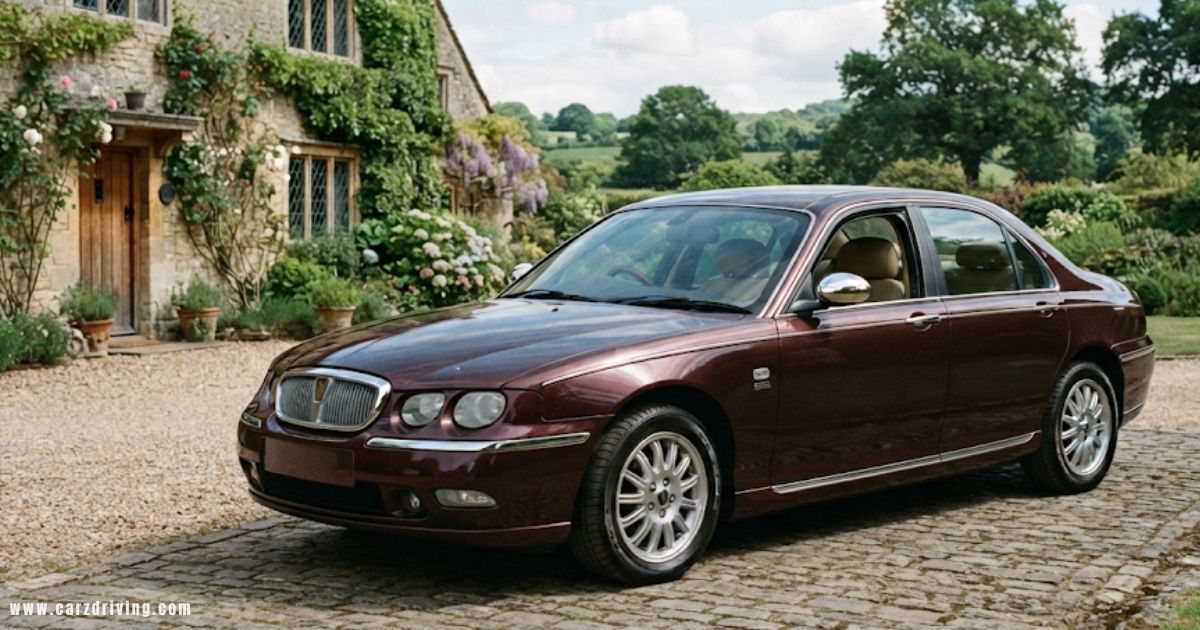
Sit inside a Rover 75 and you feel a real sense of occasion the moment you close the door. Designer Richard Woolley shaped the exterior length and stance and proportions of this car so it looked far classier than an Audi A4 or a BMW 3 Series parked next to it, and buyers who wanted more room often compared it against a BMW 5 Series or even an Audi A6.
As the man behind the pen, Richard Woolley earned real respect as a stylist among car fans. Rover built this car on a front wheel drive layout, and that gave real packaging advantages over the rear wheel drive cars sold by German rivals.
Open the door and the oval instruments greet you like little steam engine dials, looking almost as if they escaped straight out of an HG Wells story about time machines.
Trim choices ran from Classic through Club up to Connoisseur, and buyers who picked the topmost trim level got a personal line leather interior that felt genuinely special for the money.
Simpler cars, like an 1.8SE, skipped the satnav system and kept things DIYable, which suits owners who enjoy fixing their own car at home. Standard trim levels also brought ABS, powered front windows, a six-speaker stereo, and a fitted alarm across the whole range.
Engine choice mattered a lot too, and the BMW 2.0-litre Common Rail diesel, badged as CDT or 2.0 CDT, won over plenty of diesel doubters with figures like 116bhp.
Petrol fans preferred the smoother KV6 power unit, and its six-cylinder burble sounds closer to classic models from the 1940s and 1950s than anything from a modern diesel unit. Rivals like the Saab 9-3, the Alfa Romeo 156, and the Mercedes C-class could not match that warm, old-world character.
Fit 18in MG ZT wheels and run-flat tyres, like a friend of mine did, and the whole car gains a sharper look without hurting the ride too badly.
Even the humble wing mirrors carry a small badge that tells you this was once a 320d-rivalling machine built with real pride, right down to the standard equipment you get as a baseline.
On the Road
Slide behind the wheel and adjust the seat adjustment lever, and you quickly notice the thick window pillars and the tall scuttle ahead of you, though the view still feels friendly enough.
The orange oval instruments glow with a nice switch feel on start-up, and the K-Series engine hums along without any drama at all. That same eager feeling reminds me of a stripped-back Lotus Elise, and even though the entry engine only makes 120bhp, it never feels genuinely slow around town.
Early in a journey, the clutch action feels heavy and the gearchange feels a touch remote, and the slow steering gets worse thanks to an over-large wheel.
Push on through sweeping bends though, and the car surprises you, since the ride quality stays composed even after losing some pliancy from bigger wheels.
At low revs the engine feels a bit soft, yet the cabin stays rattle-free, and the seat soon fits like a well-loved glove. Try a few benchmark corners on a familiar road and you will see how well this 13-year-old car, styled back in the 1990s, handles itself with flat handling that stays planted, stable, and genuinely capable.
Body movement stays under control too, giving real neutrality through fast direction changes, which few drivers expect from a car this size.
Out on the motorway, the 75 settles into a natural 70mph cruise, matching the British car speed limit far better than any European car, which often needs 85mph before it calms down. Damping over an undulating stretch stays superb, and I once watched an Audi A4 bounce about in the next lane while my 75 stayed flat and quiet.
The engine finds its harmonic happy zone around 3200rpm, giving an effortless ride that feels genuinely soft-riding and classically-styled at the same time.
Inside that luxurious carriage, polished walnut trim sits next to soft leather, and the excellent chassis favours comfort and compliance over outright thrills. Think of it as a smaller Jaguar XJ for people who like calm driving rather than Type R Hondas or M Sport BMWs kind of thrills.
Pick the KV6 90 degree V6 engine, once fitted to the old Rover 825, and flick the car into sport mode, and pushing the accelerator pedal hard out of roundabouts rewards you with a proper V6 roar and strong torque through the mid-range.
Rover later used this same block to build the MG ZT 160 and the punchier MG ZT 190. On paper, the 1.8-litre models sprint from rest in about 10.9 seconds on the way to 121mph, while the diesel needs roughly 11.0 seconds to reach 120mph and still returns near 50mpg.
The bigger 2.5-litre V6 covers the same sprint in 8.2 seconds on the way to 137mph, and even the 1.8T feels lively enough for daily use, backed by a smooth automatic gearbox or a proper five-speed manual.
Choose the five-speed automatic and you miss out on a Steptronic style self-shifter, though the shift quality on the manual gearbox never feels bad, just not thrilling.
On a twisting country road, a BMW 3 Series or an Alfa 156 stays more fun, and a touch of wind noise creeps into the cabin at speed, yet a well-kept 75 stays close behind either rival, feeling every bit as much a genuine British car as its badge suggests, matching the poise you would expect from a proper BMW 320d rival, and the V8 flagship simply adds even more muscle on top of all that.
Reliability
Overall, the 75 counts as a reliable offering, even with its executive pretensions, and it earned strong love from mature customers who drove it gently over the years.
Compared with an Alfa Romeo 156 or a BMW 3 Series, a 75 usually leads a calmer life, so check the specification sheet against the first registration date, since some cars were pre-registered just to help boost early sales figures.
Cars left sitting for weeks can suffer water ingress and surface corrosion on the suspension parts, so always look underneath before you buy.
My own search for a good one led me to a third-hand car, a six-cylinder example bought from a small British car manufacturer, that many people wrongly expect to turn into an unreliable nightmare.
Rover once belonged in the shadow of BMW, yet plenty of these engines proved sturdy long after that partnership ended.
In truth, small things go wrong, like replacement bulbs for the brake light, side light, or headlight, or an interior switch that sticks after years of use. Mine even refused to start once, and needed a second turn of the ignition key before the failed to start moment passed.
I bought my own example from eBay, and though it looked rough outside, it turned out to be a genuine low-mileage, straight example hiding under years of grime.
Months of care made it oil-tight and coolant-tight again, and it now sits proudly serviced and maintained like a trusted friend rather than a tired old runner. Owners inside the online enthusiast community often share the same story, proving that patience with this car always pays off in the end.
Unique Sections
Buyers could choose between a 4 door saloon and a practical 5 door Tourer, with engines spanning 1.8, 2.0, 2.5, and even 4.6 litres of petrol, alongside a frugal 2.0 diesel. Trim badges ran from Classic SE through Connoisseur SE up to sporty Club SE, giving every buyer a clear pick to match their budget.
Parts stay cheap too, and a full clutch assembly costs around £230, while a replacement headlamp runs closer to £90. An alternator sits near £195, brake pads cost about £55 at the front and £50 at the back, and a starter motor lands around £185, all reasonable money for keeping a 75 Rover 1.8 running well.
Comfort deserves real attention too, since the driver’s seat may not suit everyone, especially anyone nursing an old back injury.
Fiddling with the lumbar support never quite balanced lower back support against mid-back support for me on long journeys, though the passenger seat somehow avoided the same wear, or simply felt better through luck.
Anyone with a spinal disposition issue should book a proper test drive in the broad front seats before buying, just to rule out this exact seating issue and check the overall seating support.
One owner told me his only real regret involved wanting manual gearchange control, since true manual V6 75s barely exist in this market.
His story ended with a replacement car waiting in the wings, closing the tale with a small riddle before he finally parted company with his old 75 after a long term test lasting almost a year.
On one memorable day, I drove a 75 back to back with a Citroën Xantia Activa over the same roads, and walked away with high praise for the Rover, since it beat every expectation I carried into that test.
Conclusion
After all this, I still see the Rover 75 as a proud British-built car riding on a genuine wave of goodwill, the kind that wins buyers with both head and heart.
It feels sophisticated, carries real presence, and still delivers that same sense of occasion it offered against its old rivals decades ago.
Even the 2.0-litre V6 automatics feel wonderfully smooth, and hunting through the used network for one still feels worthwhile after ten years or more on the road.
Find a good example and you get a premium feeling without paying premium money, though the best cars keep changing hands among people who already understand this rare excellence.
On today’s roads, it still holds its own, while a bad example can genuinely break your heart, so buy carefully and treat your car as an ultimate modern classic rather than just cheap transport.
Simply put, this remains an excellent car of an unfashionable type, built for a certain sort of person who values comfort over fashion.
Track down a well looked after, early-ish example with the right engine and right specification, and you end up with a genuinely lovely car to own and drive, one that stays refined for many years to come.
FAQs of Rover 75
Is the Rover 75 a reliable car?
Yes, the Rover 75 is a genuinely reliable classic, especially when well-maintained and gently driven over the years.
What engines does the Rover 75 come with?
The Rover 75 offers a range of petrol and diesel engines, including the smooth K-Series, punchy KV6, and frugal turbo diesel options.
Is the Rover 75 a good classic car to buy?
Absolutely the Rover 75 is an underrated British classic that rewards owners with comfort, character, and genuine driving pleasure.
How much does it cost to maintain a Rover 75?
Parts remain refreshingly affordable, with items like brake pads, an alternator, and a clutch assembly all reasonably priced.
What makes the Rover 75 special compared to rivals?
Its blend of walnut trim, leather interior, and a warm, old-world engine character gives the Rover 75 a timeless, heartfelt appeal few rivals match.