

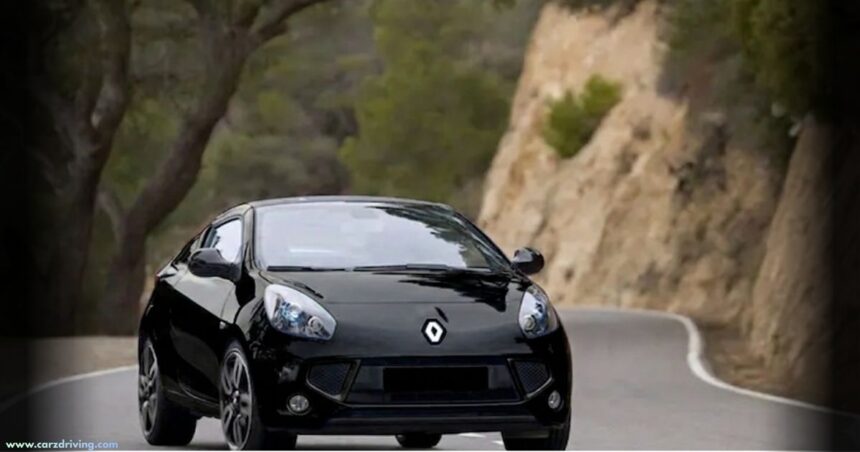
When Renault first revealed the Renault Wind, I genuinely did not know what to make of it. Was this a serious roadster-coupe or just another coupe-cabriolet dressed up for fashion-conscious sunseekers? Having spent time with it, I can tell you this car carries a surprising amount of depth beneath its skin.
The RenaultSport division developed the entire vehicle from the ground up, basing it on the previous generation Clio, which immediately tells you this is no ordinary variation on a theme.
Renault Wind
Most people assumed Renault built the Wind purely for style-focused buyers, and while that adopted audience absolutely exists, the car offers something far more interesting underneath.
The division behind it is the same one responsible for some of the most thrilling hot hatches in Europe, and that welcomed dimension comes through in how this car actually behaves on the road.
Britain took notice faster than anyone, buying RenaultSport products more than any other European nation, and the Wind went on sale here four months before the French even got it.
I introduced the car to people around me expecting indifferent reactions, and honestly, the golf-club car park produced exactly that raised eyebrows and a few quizzical looks that sent me straight into road test defensive mode.
But here is the thing: once you actually drive it, the Wind stops being hard to rate and starts making a genuine case for itself. It sits pretty in a segment where lighter, more driver-focused machines are probably best, yet it refuses to be ignored by anyone who appreciates what RenaultSport creation truly means.
The car was designed for a younger buyer with a sharp eye, yet its attitude and cuteness quietly win over even the most reluctant supporters.
The Roof System
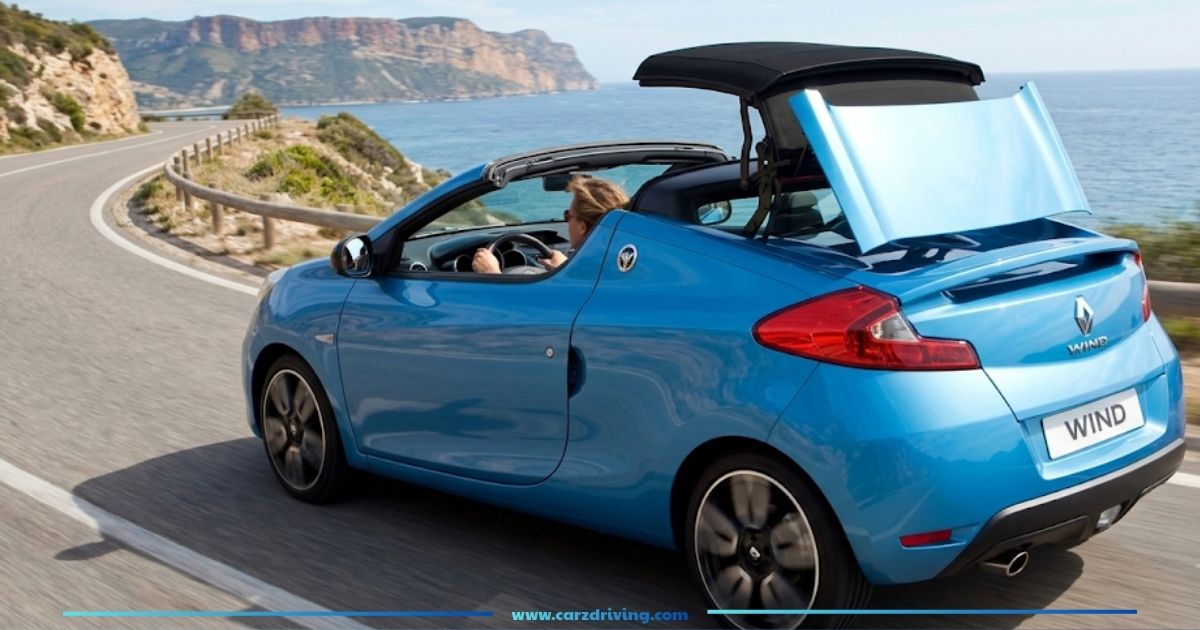
The roof on the Wind draws direct inspiration from the Ferrari 575 Superamerica and its legendary back-flip design, but Renault executed it in a far more practical and affordable way.
A targa panel sits hinged behind its rear edge, and when you release the handle and press the switch, it swivels back and comes to rest upside-down on the bootlid in just 12 seconds.
Unlike that Italian supercar, the Wind adds a secondary panel hinged at the very rear of the car, which rises and drops again to keep your roof tucked safely underneath, so your hair stays clean and protected from whatever the bootlid collected on the motorway.
The entire powered, automatic opening and closing process uses a remarkably simple mechanism that is cheaper, more reliable, and significantly lighter than most competing folding hardtop systems on the market.
The boot space remains unchanged whether the roof is up or down, which means you never have to plan ahead or leave bags at home just because you fancied some open-air motoring.
The whole system weighs just 21.8kg, and the suspension-tower triangulations inside the boot keep every litre of those 270 litres fully useable at all times.
I will admit that the left hand drive origins of the Wind become obvious the moment you reach up to twist the locking mechanism it takes real effort to pull and twist from the driver’s side, and it genuinely feels easier from the passenger seat.
As part of the automatic sequence, the side windows drop on their own, but closing the roof means you raise them separately, which becomes a bit of a chore after a while.
Still, the high rear design ensures the roof never eats into your luggage space, and while my golf clubs did not quite fit, the nifty removable system performed brilliantly during a recent dry spell without any fuss, making it one of the most genuinely clever hardtop solutions on any small car at this price point.
The car must remain stationary during the process, and release of the roof from the header rail remains your job before the automatic sequence begins a small price to pay for such a clever system.
Design & Styling
The Wind carries a tall tail that could easily look awkward on a small car, but Renault turned that potential weakness into one of its strongest visual statements.
Those rear buttresses create a genuine sports-car silhouette reminiscent of the Honda CRX Del Sol and even the original Lotus Europa, giving the car a muscular rear presence that most rivals in this segment simply cannot match.
The roof panel stays short thanks to the two-seater layout, and a structural bulkhead sits directly behind the seats, keeping everything tight and purposeful.
Up front, the mostly black, arch-filling 17in wheels wrapped in 40-profile tyres send clear hints that this machine means business, while the overall shape feels far more noticeable and modern than its compact dimensions suggest.
The in-yer-face cuteness of the design divides opinion, and an unscientific survey among the target audience in my village confirmed that enthusiasm can cool quickly once the price enters the conversation. However, those promising ingredients the sharp lines, the sculpted flanks, the racy buttresses combine to create something genuinely memorable on the road.
An ungainly bottom on a convertible is one of the easiest ways to kill a car’s appeal, yet the Wind avoids this trap entirely through clever proportion management.
The arch-filling rubber and the black wheel finish give it a purposeful stance, while the overall package feels far tighter than anything else in the front-drive sports-car adjacent segment.
Whether the design feels racy enough to silence critical target audience opinions remains debatable, but nobody who sees a Wind on the road ever walks away without turning back for a second look and that counts for a great deal.
Engines & Performance
The 1.6-litre unit producing 131bhp comes straight from the Twingo Renaultsport parts bin, and it loves to be pushed all the way to 7000rpm where that famous induction snarl really comes alive.
However, drop below 4500rpm and the engine loses interest in hauling the Wind’s 1173kg mass, particularly when a hill appears the lack of low-end pull makes overtaking feel like hard work unless you stay diligent with the five-speed manual gearbox.
The absence of a sixth gear also means motorways expose the engine’s buzzy nature at cruising speeds, and anyone wafting through traffic will find the flat torque curve quietly frustrating.
The 133bhp 1.6 litre VVT version rewards committed drivers with a chirpy rasp at big revs and genuine excitement when you keep it singing, but that thin on torque character means you pay a price the moment your pace drops and the gearbox demands more effort.
By contrast, the 1.2-litre turbo producing 99bhp also badged as the 1.2 TCe delivers a much flatter and more usable torque curve, feeling just as muscular as the bigger engine in the mid-ranges where everyday driving actually happens.
On tight twisty roads, the 1.2-litre turbo actually makes for a quicker Wind overall, despite its numbers looking less impressive on the specification sheet.
Fuel economy sits at a claimed 40.9 mpg, though real-world driving returns closer to 36.3 mpg under normal conditions, which remains reasonable for a car with this level of performance potential.
The 100bhp turbo option sees its enthusiasm droops slightly as the needle approaches the red-line, but below that point the engine delivers genuinely entertaining revs and enough poke to keep things interesting.
The 1.6 under real pressure produces exactly the kind of exciting, hard-working character you want from a car built by the people who understand performance better than almost anyone in the affordable sports-car segment you just need to keep those revs climbing and stay committed to extracting everything the engine has to offer.
Handling & Ride
From the moment you pull away, the Wind feels firm, taut, and impressively rigid through its body, which tells you immediately that RenaultSport treated this as a proper driver’s car rather than a fashion accessory.
The suspension runs noticeably stiff, yet the solid bodyshell prevents any structural shudder or crashy behaviour over rough surfaces, a balance that lesser convertibles rarely achieve. With the roof up, the car genuinely channels the Clio 182 in the way it combines grip, throttle-adjustable chuckability, and a sense of real driver involvement that makes every corner feel rewarding.
The electric power steering delivers credible weighting and stays accurate and pointy throughout, though it never truly communicates what the front end is doing in terms of adhesion, so you learn to trust the chassis rather than the helm.
One curious quirk involves frequent light pulses of ABS even when grip seems perfectly adequate, which keeps you slightly on edge but never undermines confidence in the car’s balance on the throttle.
Drop the roof and you notice a small rigidity loss not through windscreen shake on most surfaces, but through a springy, approximate quality in the steering that contrasts with the suspension’s otherwise taut control.
The Clio Mk2 RenaultSport rebody underneath gives the Wind a significant advantage over most front-drive rivals, and the connection to the Twingo RenaultSport chassis means it turns more eagerly than you expect from something in this coupe-cabriolet class.
The car stays virtually immune from shivering with the roof up, and even open it resists buffeting better than most, especially with the wind deflector fitted.
Sitting deep in the cockpit, you feel the damper settings working hard to keep everything sharp and composed, and a talented team of engineers clearly spent serious time finding the right spring rates to keep both ride quality supple and handling responses nimble far closer to an MX-5 or old Clio RS than the rest of the front-drive opposition would ever dare to venture.
The rear buttresses and thick screen pillars do restrict your rearward view significantly, pushing you toward the door mirrors for most manoeuvres, and at speed the buttresses create noticeable lean in aerodynamic behaviour that keeps the car feeling taut but honest.
Interior & Cabin
Stepping inside the Wind reveals a proper cockpit environment rather than the recycled Twingo or Clio interior that many expected, and the entirely new dashboard feels genuinely purposeful from the first moment.
The dials sit exactly where your eyes naturally fall, the seats hold you firmly in place during spirited driving, and the whole space carries a jaunty, simple ambience that suits the car’s character perfectly without feeling cheap or plush beyond its station.
Renault lowered the seat and dash significantly compared to most front-drive convertibles, so you sit upright but low, genuinely feeling like you occupy a proper roadster rather than a repurposed hatchback.
The heated sports seats with leather upholstery in the tested version added genuine comfort, and the deep cowling housing those dials looks handsome in isolation though the speedo numbers vanish into gloom when the sun hits at a certain angle, which sends the relationship between design and practicality into uncomfortable territory.
The sound system suffers from fiddly buttons that resist precise operation on the move, and a firm hit of suspension bump can accidentally switch it off entirely when you reach for the volume control.
Finding somewhere to store incidentals like a map, iPod, sunglasses, cap, or factor 30 proves genuinely difficult, as the cabin prioritises driving environment over everyday practicality in almost every decision.
The windscreen top rail stays slim enough to let the sun reach your face properly, which sounds trivial but matters enormously in an open car.
However, those thick rear buttresses create serious view restrictions at Y-junctions and low-speed manoeuvres, and at high speed they generate noticeable buffeting that the optional wind deflector only partially addresses.
On the positive side, the USB, iPod, and Bluetooth connectivity in upper trim levels keeps the cabin feeling modern, and the cosy, snug atmosphere with windows raised and roof lowered creates a genuinely enjoyable environment even if your left foot occasionally gets wedged in the foot well when working the clutch on longer journeys.
Trim Levels & Pricing
Renault structured the Wind range around three clear choices, starting with the entry model and rising through Dynamique and Dynamique S before reaching the limited Collection variant at the top.
The Collection edition brings leather seats, chrome trimmings, and a striking transparent-red instrument cowl that genuinely elevates the interior atmosphere, but Renault restricted production to just 200 examples worldwide, making it a genuine rarity.
The step between Dynamique and Dynamique S costs £900 and delivers 17in wheels, Bluetooth, a stronger sound system with USB and iPod connectivity replacing the basic aux-in, auto climate control instead of standard aircon, and a generally richer overall feel.
The launch edition came finished in leather with a gloss black roof and metallic paint, pushing the total cost to £17,700 once those options stacked up, which immediately invites direct comparison with the Mazda MX-5.
The base 1.2 TCe smaller engine version opens at £15,000, while the 1.6 version starts at £16,800 and includes sports seats, tinted windows, electrically adjusted mirrors, heated mirrors, remote central locking, and front fog lights as standard.
Once you reach that 1.6 version price point, the MX-5 looms directly alongside it in the showroom conversation, and the same £900 increment applies whether you are stepping up in engine or trim a straightforward pricing structure that at least makes the decision process simple even if the value question remains genuinely complex.
Competition
Renault addressed every obvious objection to existing small convertibles head-on when developing the Wind, systematically dismantling the case against soft tops, awkward adapted hatchbacks with pointless rear seats, and cramped boot situations that make folding roof promises feel hollow.
The hard-top solution doubles the MX-5 RC boot size for less money, the unique styling removes any association with lazy rebodied hatchbacks, and the front-drive opposition simply cannot match the Wind’s combination of genuine RenaultSport engineering and open-air usability.
Against the Peugeot 207 CC and Mini Convertible, the Wind feels sharper, more focused, and considerably more honest about what kind of car it actually wants to be.
The verdict from extended time behind the wheel is genuinely mixed but ultimately respectful this is a good effort that punches meaningfully above its compact dimensions and modest price point. However, if you can pack lighter and save that extra grand, the MX-5 RC remains the cleaner, more rewarding answer for anyone who prioritises driving engagement above all else.
The case closed argument against the Wind only truly applies at the upper end of its pricing, where the Mazda MX-5 makes the noisy, front-drive, small convertibles segment feel suddenly straightforward but below that threshold, the Wind makes a surprisingly compelling opposition-defying argument entirely on its own terms.
Unique Sections
The Geneva Car Show brought a genuinely exciting development when Renault pulled the covers off a hot version Gordini edition of the Wind, complete with larger bigger wheels and the iconic Gordini paintwork featuring bold twin white stripes running the length of the car.
The interior baubles Renault described sounded genuinely trendy and exciting, but the company stayed remarkably cagey about any details regarding price, performance, or engine size, leaving enthusiasts to speculate freely about what this hotter variant might deliver dynamically.
As a piece of showroom theatre the Gordini Wind worked brilliantly, and it suggested that Renault understood exactly which direction the car needed to travel to truly excite the market.
The Wind occupies a fascinating position as a car clearly designed for drivers who struggle to afford it at the new price point, echoing the spirit of the legendary Citroen DS in that particular bittersweet way.
Young women and style-conscious urban buyers represent the obvious target, yet the financial reality means many in that audience will encounter the Wind as a used purchase rather than a showroom decision.
If Renault could have sold it as an instant two years old proposition at reduced cost, the success story would look very different because the car itself clearly has the talent and the resources of genuine RenaultSport engineering behind it, and it deserves a wider audience than its new price tag currently allows.
Specifications
The Renault Wind runs a 1598cc in-line 4-cylinder petrol engine producing 131bhp and 133bhp depending on state of tune, with peak power arriving at 6750rpm and maximum torque of 118lb ft and 160Nm at 4400rpm.
The five-speed manual front-wheel drive setup delivers a 0-60 time of 9.2sec and a top speed of 125mph equivalent to 200kmh while the weight sits at 1173kg, which places it heavier than an MX-5 despite its compact proportions.
Fuel economy reaches a claimed 40.9mpg with real-world testing returning 36.3mpg, and CO2 emissions measure 160g/km placing it comfortably within Euro V emissions standards.
The body measures 3833mm in length, 1689mm in width, and 1381mm in height, with a wheelbase of 2368mm keeping the proportions tight and responsive.
Suspension uses a MacPherson strut arrangement at the front paired with a torsion beam rear, balancing cost efficiency with the handling precision that RenaultSport demanded throughout development.
Boot capacity reaches 270 litres regardless of roof position, the insurance group sits at 18E, the warranty covers 3 years or 60,000 miles, and service intervals run to every 12,000 miles or 2 years at a cost of £199 making the overall ownership proposition more straightforward than the car’s niche positioning might initially suggest.