

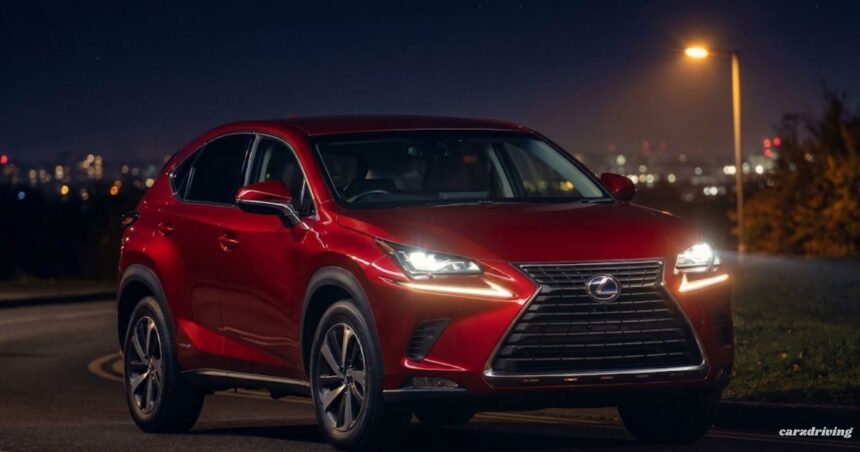
Lexus NX 300h built something different when it shaped the first generation NX, a premium mid-sized SUV that refused to copy the usual crowd. Buyers chasing a used car in this class often hear the same old advice from magazines: pick diesel, pick German, and move on.
But the NX, sold between 2017 and 2021, runs on petrol, electric power and a clever hybrid powertrain instead, and that single choice changes the whole ownership story.
I drove an F Sport version myself, and the low-guilt factor hit me almost instantly. As one of those Greenies who worries about the planet, and admittedly about what my neighbours think every time I start the engine compared to their diesel-powered rivals,
I noticed the difference under the bonnet right away. A 2.5 litre petrol engine pairs with an electric motor and a battery pack, cutting carbon emissions and sulphide emissions at low speeds, and around city streets the car stays smooth and genuinely nippy whenever I press the accelerator through fast-moving traffic.
Lexus NX 300h
I later tested a Lexus NX300h Premier through snow, rivers and mud like something from the Dakar rally, and the driving experience mostly matched the bold appearance.
Running on fuel, specifically the petrol-electric hybrid kind, it returned a fuel economy combined figure of 54.3 mpg, backed by striking looks, a luxurious cabin, and a slightly revvy transmission under acceleration, though real-life fuel economy never quite hits the official figures.
Every SUV size, compact, medium or large, now has a queue of buyers, and Lexus answered with the RX SUV before finally entering the medium-sized SUV sector with this dramatic entrance.
Design, Engineering & What You Get
Sit behind the dash and you immediately notice the contrasting angles and swage lines, with details stacked into a design that owes nothing to a Range Rover Evoque, a BMW, or an Audi.
The cockpit skips the usual flowing shapes for something more modern, built from sharp angles, wood and metal, and it shows real confidence from a car maker finally backing its own instincts. From 2018, the old 7-inch centre-dash infotainment screen got replaced with a far better 10.3-inch monitor, fitted as standard across the whole range.
There’s no bulky center transmission tunnel like most rivals carry, so the rear bench can genuinely seat three adults, and headroom only suffers slightly if you choose the panoramic glass roof.
The rear seats even recline for longer journeys, and a center armrest with pop-out cup holders sits ready, while seatbacks get deep pockets, the doors hold proper bottle holders, and centre vents keep things comfortable, though USB ports and 12v sockets for multi-media devices are oddly missing.
Material quality stands out too, with stitched leather and door cards finished in Shimamoku wood inlays on higher trims.
The powered tailgate opens onto a 475-litre luggage capacity, smaller than some rivals because the hybrid system stores its batteries beneath the floor, though the loading area still stretches to 1,520-litres with seats folded.
My test car added dual-zone climate controls, leather seats, electric folding door mirrors, and both front parking sensors and rear parking sensors, alongside generous boot room.
The Star Wars-style full-color screen slides from the engine start sequence and wowed the kids, though asking it to navigate anywhere proved frustrating: the touchpad interface made changing the destination harder than expected, and even after switching off the SatNav, the directions kept talking, which felt genuinely frustrating.
Mechanically, the 4-cylinder, 2.5-litre petrol engine links to a battery and electric motor for better efficiency, with a touch of electric-only running available.
Lexus calls its gearbox the Electronic Continuously Variable Transmission, or E-CVT, and every trim above entry level adds e-Four all-wheel drive through a second electric motor sending torque to the rear wheels.
The exterior carries dramatic styling that needs 18-inch alloys, or big wheels, to look properly balanced, and inside, the interior feels properly luxurious, especially in Premier spec with heated seats, a top quality stereo, and a sharp head-up display.
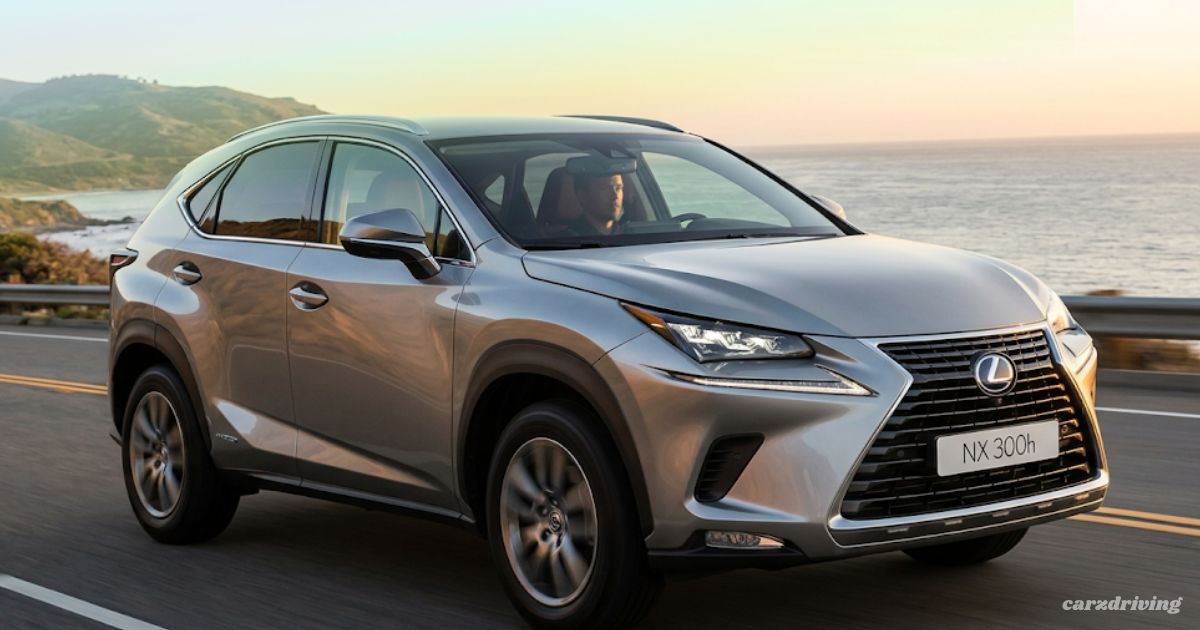
Driving Experience
The 2.5-litre petrol, electric hybrid engine produces a combined output of 195bhp, sent through the E-CVT auto gearbox, and for town use it feels close to perfect.
During the 2018–2021 model years, this crossover stood alone in how smoothly it melted into traffic. That buttery-soft acceleration makes routine errands and school runs feel remarkably peaceful and upscale.
Push beyond town limits, though, and the belt-driven transmission struggles to keep up: the gearshift stays smooth at low speed but loses composure once rapid progress matters, with the throttle triggering rising revs without matching forward motion.
Looking at the sales figures, most NX buyers seem happy to live with that small irritation, and few seem bothered by the over-firm ride either, something the brand tried fixing without much luck. The AVS, or Adaptive Variable Suspension system, only appears on the pricier F Sport Premier Pack variant, with no option to add it elsewhere.
At higher speed, this racy-looking car can feel oddly sluggish and heavy, with noticeable jarring over bumpy surfaces and more road noise and wind noise on the motorway than I expected from a premium badge, though it still suits 4-wheel drive duties at a festival parking field better than most rivals manage on the open road.
Body control genuinely impressed me, and handling stays sharp, helped by steering that feels direct and consistent.
The car remains comfortable, and the ride holds up well generally, though large wheels and stiff suspension, built to control body roll, can turn brittle over rough road surfaces.
Brakes on most hybrid cars feel artificial because the braking sensation blends mechanical braking with regenerative braking, yet the NX manages this combination better than several rivals.
During one test week, I drove through a ford, a flooded road, then tackled a muddy driving circuit on a farm that was properly wet and muddy, before snow arrived too.
Most cars I test that year couldn’t handle deep water, lacked traction in the mud, or simply wouldn’t move in the snow, yet this proved that hybrids and electric vehicles can cope with flooded roads without drama.
Nobody should expect it to scale a mountain, but for the average driver, it earns its place as a genuine soft-roader, never marketed as a hardcore off-roader, riding on standard-grip tyres with only mild extra grip, mostly front-wheel drive with backup support from the rear axle, and all-season tyres would make it even more capable.
The Continuously Variable Transmission, badged here as the E-CVT abbreviation, remains my biggest complaint, since engine noise rises sharply under acceleration without matching speed gains.
Toyota and Lexus have leaned on this setup for years, while BMW prefers automatic transmissions in its own hybrid powertrain for a more direct response, and Lexus could learn something there.
Selecting Sport through the gear selector or the driving mode control dial, which also offers Eco and Normal, doesn’t fully fix things, and manually working through six gears manually, without steering wheel-mounted paddles, brings only brake regeneration as a real benefit, visible on the instrument cluster switching between Charge, Eco and Power mode to show a rev counter instead.
EV mode exists too, though realistically the car covers only a few hundred yards on battery power alone before the engine kicks back in.
The mouse pad controller running the infomedia system has improved over time but still trails an iDrive-style rotary dial for ease of use, and entering a postcode into the satnav system proved oddly impossible during my test, with the information screens in the cluster adding unnecessary complexity.
Fuel Consumption
The hybrid system posts a NEDC CO2 figure of 121g/km, comfortably beating diesel-powered rivals from the same era, which matters directly for Benefit-in-Kind tax payments.
A 40% tax payer could save more than £1,000 a year compared with an equivalent black pump rival, and the NEDC combined cycle fuel consumption figure of 55.4mpg sits close to competitors, though running costs stay lower thanks to cheaper green pump fuel.
Insurance sits in insurance group 32E, while performance numbers show 0-62 MPH in 9.2 seconds and a top speed of 112 MPH, alongside a combined fuel consumption figure of 54.3 mpg.
Officially, the official combined fuel economy splits into an extra-urban figure of 55.4mpg and an urban figure of 53.3mpg, barely different from one another on paper.
My own real-life average across a full week landed at 31.1mpg, with the best result of 39.4mpg only appearing under very gently driving conditions.
Hybrids are tuned to flatter the NEDC cycle, so this gap from real life driving never surprised me, even though 31.1mpg still felt disappointing for a large SUV carrying a 2.5-litre petrol engine plus the extra weight of a battery and electric motor, neither of which helps much across long motorway journeys.
Most rivals still offer diesels, but the NX skips that entirely, which limits its appeal across the UK and Europe, even as overall sales numbers stay healthy.
Models
The 5-door SUV lineup centers on the NX 300h, badged with its 2.5 petrol, electric, hybrid setup, and buyers can pick from Sport, Premium, F SPORT, or the range-topping Takumi trim.
History
Premium mid-sized SUVs often blur together, but the Lexus NX, especially in its first generation form sold across the UK between 2018 and 2021, stands apart. Lexus built its name proving luxury saloons didn’t need to be German, and it pioneered hybrid power long before most rivals trusted anything beyond diesel, so when it finally entered the premium mid-sized SUV sector in 2014 with the NX model, a unique approach felt inevitable.
The looks alone create a distinctive design within the segment, making rivals like the Range Rover Evoque look almost ordinary, and even the Audi Q5 or Mercedes GLC feel comparatively plain.
The technology under the bonnet set it apart too, skipping the black pump entirely in favour of petrol/electric hybrid power, though without Plug-in technology included.
This package worked well commercially, with the brand seeing this NX account for roughly 30% of global sales, outselling the cheaper CT200h hatch by three to one.
Even with that success, the Japanese maker knew plenty of buyers still hadn’t heard of this car, especially as newer premium mid-sized SUVs like the BMW X3 third generation and the Volvo XC60 second generation entered the fight.
That pushed Lexus toward a mid-term update for the 2018 model year, sharpening looks, infotainment, safety provision and ride quality, a formula that carried the second generation model all the way to 2021.
What to Look For
Most Lexus NX owners report few complaints, which fits the brand’s reputation for reliability and strong dealer service.
A handful mentioned drivetrain vibrations and interior rattles, typically appearing on NX 300h models between 1,200rpm and 1,400rpm, worth checking on any test drive.
One owner described reversing into snow only to see an AWD malfunction warning with 2WD engaged showing on the dash, sliding straight into a ditch without 4WD support.
Other isolated issues included an audio display problem, a car pulling to the right, and one navigation system fault, though nothing widespread enough to worry most buyers.
Replacement Parts
Pricing on a 2018 NX 300h, Ex Vat, stays reasonable for routine maintenance: an air filter costs around £10, while an oil filter sits between £8 and £10. A set of front brake pads runs about £102, and brake discs land somewhere between £48 and £67.
Wiper blades cost roughly £10, and a replacement wing mirror glass comes to about £16. Bigger jobs cost more, though, with a water pump reaching £718.
A wheel bearing and hub together cost around £217, rounding out the typical parts budget owners should expect over time.
Price, Equipment and Model Range
The Lexus NX 300h Premier carries a price tag of £42,995, sitting at the top of the range with generous equipment included throughout. Below that sit the S, SE, Luxury, and F Sport trims, with the S starting at a far more accessible £29,495.
Every trim adds all-wheel drive except the entry-level S, which sticks with front-wheel drive only. At the time of testing, the only powertrain choice remained the petrol-electric hybrid, though a petrol turbo option had just been announced for the lineup.
No diesel ever joined the range, which matters because both the UK and Europe still raise air quality issues around diesel engines, even within this competitive segment.
FAQs of Lexus NX 300h
Is the Lexus NX 300h a good hybrid SUV to buy?
Yes, the NX 300h offers a smooth, refined hybrid powertrain with striking looks and a luxurious cabin, making it a strong choice for city driving.
What is the fuel economy of the Lexus NX 300h?
The NX 300h returns an official combined fuel economy of 54.3 mpg, though real-life fuel economy often lands closer to 31.1mpg.
Does the Lexus NX 300h come with all-wheel drive?
Most trims include e-Four all-wheel drive, except the entry-level S model, which sticks to front-wheel drive only.
Is the Lexus NX 300h reliable?
Most Lexus NX owners report few issues, reflecting the brand’s strong reputation for reliability and excellent dealer service.
How much does a Lexus NX 300h cost?
Prices range from £29,495 for the entry-level S to £42,995 for the top Premier trim, with the F Sport priced at £40,640.