

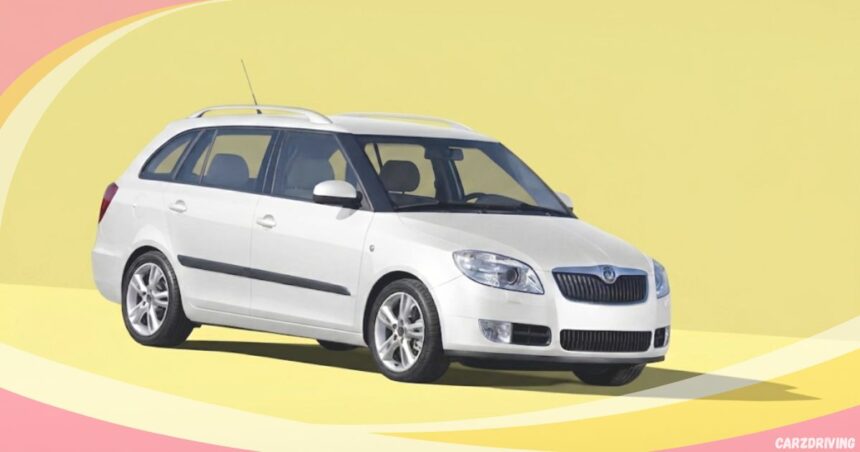
I have spent a fair bit of time around small wagons, and the Fabia station wagon keeps coming up in conversations with people who want space without buying into the SUV hype.
So I decided to walk through its whole story, generation by generation, the way I’d explain it to a friend shopping for one. Let’s get into it.
SKODA Fabia Combi (2000-2007)
Origins and Platform
The story really begins at the Frankfurt Motor Show in 1999, where Skoda first showed the Fabia to the world.
That Fabia rode on the same platform as the Seat Ibiza and the Volkswagen Polo Mk IV, which already tells you it had solid bones under the body.
A year later, the Czech carmaker rolled out a station-wagon version and gave it a name that stuck: Combi.
That word wasn’t invented by Skoda though it was already common across East European countries as a label for body-shapes built for cargo, and the Czech brand had used it before on the old Feliceia lineup, back when Volkswagen Group hadn’t yet bought the company.
Design and Styling
Style-wise, this Fabia leaned into a Czech-cubism style look, full of angular forms around the headlights and grille, paired with an arched roofline that felt genuinely modern for its time, following the design trends sweeping through the automotive industry.
One detail I always point out to people: unlike the Seat Ibiza Vario, this wagon got an arched tailgate, which is a small but distinctive touch.
Interior
Step inside and you’d find the same curved dashboard carried over from the hatchback, with only the air vents keeping any rectangular elements on board.
The instrument cluster was refreshingly simple to read, with separate dials for speedometer and tachometer, plus top-mounted gauges for fuel level and coolant temperature.
Front seats offered basic adjustments, nothing fancy, but the split-folding bench in back did the real work, stretching cargo room from 530 liters (18.7 cu-ft) all the way to 1395 liters (49.2 cu-ft) when folded down.
Engines
Under the hood, buyers could pick from four gasoline engines and five diesel engines, every single one mated to a 5-speed gearbox. The lineup ran from a 1.2L 12V 5MT rated at 65 HP, up through a 1.4L 16V offered in both 100 HP and 75 HP tunes, topping out with a 2.0L good for 115 HP. On the diesel side, you had a 1.4L TDI in 80 HP and 70 HP forms, a 1.9L SDI at 64 HP, and a stronger 1.9L TDI pushing 101 HP.
Base Engine Specs
Looking closer at that base 1.2L 12V 5MT (65 HP) engine, it ran 4 cylinders in an L4 layout with a Displacement of 1198 cm3 (73 ci). Power landed at 47 KW at 5400 RPM, which converts to 64 HP or 63 BHP depending how you measure it, while Torque came in at 83 lb-ft (113 Nm) at 3000 RPM. It used a Multipoint Injection Fuel System running standard Gasoline, with a Fuel capacity of 11.9 gallons (45.0 L). Performance wasn’t quick by any stretch — Top Speed sat at 101 mph (163 km/h), and Acceleration from 0-62 Mph took 16.3 s. It sent power through Front Wheel Drive via that 5-Speed manual Gearbox, stopping with Ventilated Discs up front and Drums in back, riding on 165/70 R14T Tires.
Dimensions and Efficiency
As for Dimensions, this generation measured 166.2 in (4221 mm) Length, 64.8 in (1646 mm) Width, and 57.2 in (1453 mm) Height, with a Front/rear Track of 56.69/55.9 in (1,440/1,420 mm) and a Wheelbase of 96.9 in (2461 mm). Ground Clearance measured 6.5 in (165 mm), Cargo Volume stood at 15 cuFT (425 L), and Aerodynamics (Cd) came in at 0.3. On the scales, Unladen Weight registered 2579 lbs (1170 kg), with a Gross Weight Limit of 3549 lbs (1610 kg). Fuel-wise, under NEDC testing, City driving returned 30.5 mpg US (7.7 L/100Km), Highway hit 46.1 mpg US (5.1 L/100Km), and Combined averaged 39.2 mpg US (6 L/100Km), with CO2 Emissions rated at 142 g/km.
SKODA Fabia Combi (2008-2014)
Why the Update Happened
This refresh landed right in the middle of the world financial crisis, which honestly makes the timing impressive.
Skoda had no choice but to update the Fabia lineup anyway, because Euro 5 emission standards were set to kick in by January 2009, and the station-wagon still wearing the combi badge needed to keep delivering that sweet spot between car length, trunk space, and price that made it such a smart pick for young families.
Exterior Changes
The facelifted model brought new headlights with a swept-back design, and if you sprang for the upper trim levels, you got proper xenon headlights too.
The grille design picked up fresh vertical slats and a chromed bar holding the green Skoda badge, while the wagon body got extended rear quarter panels compared to the hatchback, plus a roof-spoiler mounted right on the liftgate.
Interior and Practicality
Inside, Skoda reworked the dials with new lettering and dropped in a new sound system on the center stack.
The basic layout stayed familiar two seats up front, a split-folding bench in the back but trunk size grew from 480 liters (16.9 cu-ft) to 1226 liters (43.3 cu-ft) with the seats down, beating most hatchbacks on raw space.
Engines and Transmissions
Under the bonnet, the older 1.4-liter and 1.6-liter engines gave way to a fresh 1.2-liter turbocharged unit built specifically to meet Euro 5 rules, and Skoda swapped the old 6-speed automatic gearbox from Aisin for a new 7-speed automatic dual-clutch unit sourced from Volkswagen Group.
The gasoline engines spanned 1.2L 5MT FWD in 60 HP and 70 HP, a turbocharged 1.2L TSI in 105 HP and 86 HP, a 1.4L 16V at 80 HP, and a 1.6L 16V at 105 HP. Diesel engines included a 1.2L TDI at 75 HP, 1.4L TDI options at 70 HP and 80 HP, 1.6L TDI spread across 105 HP, 75 HP, and 90 HP, plus a bigger 1.9L TDI at 105 HP.
SKODA Fabia Combi (2014-2018)
Launch and Sales Success
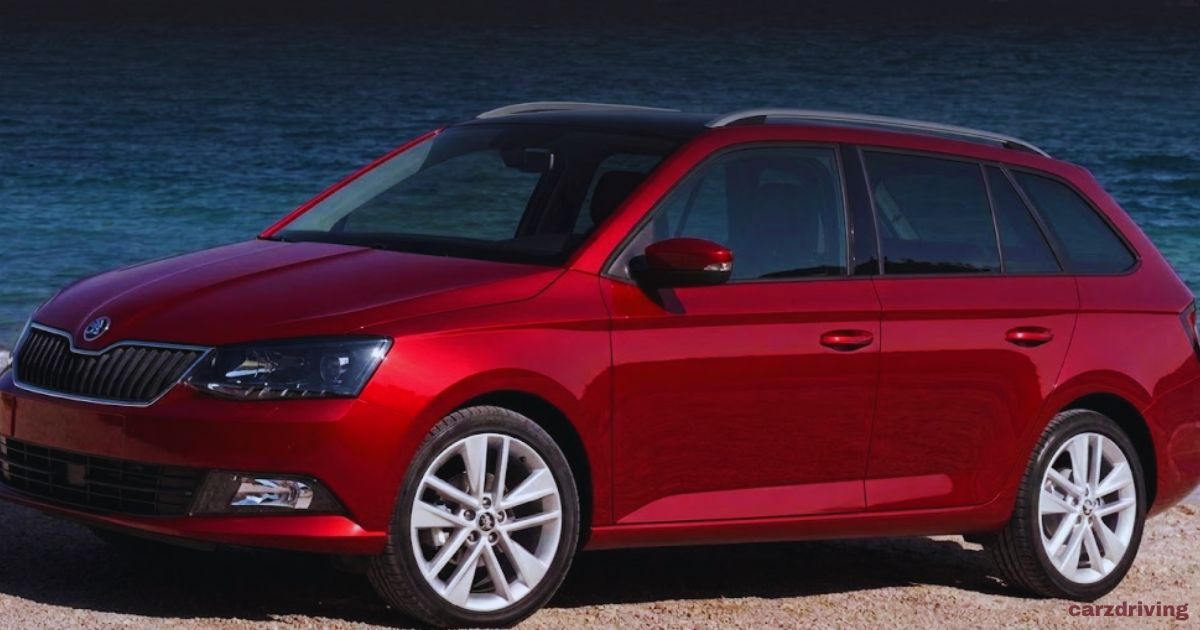
The third generation of the Skoda Fabia Combi arrived just weeks behind its Skoda Fabia hatchback sibling, and it quickly became the most popular wagon in its segment among Czech buyers.
By the time this generation rolled out, the Czech car-maker had already delivered over 1.1 million units to customers between September 2000 and August 31st 2014 a genuinely strong run for a small-class vehicle.
Cargo Space and Practical Appeal
Cargo room had grown too, climbing from 425 liters (15 cu-ft) on the first generation to 530 liters (18.7 cu-ft) here, putting it well ahead of most rivals in the compact class.
That spacious trunk-space, combined with a small-segment price range, made it a genuine favorite among people working in sales departments who needed to haul gear daily.
Fuel-efficient diesel versions rounded out a lineup built for buyers who valued practicality.
Design and Dimensions
Visually, this 2014 Fabia Combi wore a much more angular design, with sharp lines running over the headlights, side panels, and back toward the tailgate and taillights. Compared to its predecessor, it grew longer by 10 mm (0.4 inch), wider by 90 mm (3.5 inch), and sat lower by 31 mm (1.2 inch). The front grille kept the familiar vertical slats design shared across the Skoda range.
Interior and Tech
Inside, there was room for five adults, though limited legroom affected rear occupants since the wheelbase measured only 2.47 m (97.2 inch).
Buyers could option an infotainment system supporting Apple CarPlay and Android Auto connectivity, a nice touch for a car at this price point.
Engines
Under the engine bay, the lineup mixed diesel engines and gasoline engines ranging from 75 hp to 110 hp, available with manual or DSG dual-clutch automatic gearboxes.
The gasoline range included a 1.0L MPI 5MT FWD at 75 HP and 95 HP, a 1.2L TSI at 90 HP, 6MT versions at 110 HP, and a DSG option also at 110 HP. Diesel choices covered a 1.4L TDI at 105 HP and 90 HP.
Skoda Fabia Combi (2018-2021) A Sharper Fabia Station Wagon
Overview and Positioning
Skoda gave the third generation Fabia a proper update in 2018, refreshing the station wagon still called the Combi alongside the rest of the range.
This facelift brought sharper styling, fresh LED lighting, more assistance tech, and cleaner 1.0-liter three-cylinder engines, keeping the small wagon practical, efficient, and surprisingly upscale for its class.
Skoda unveiled it in Geneva in early 2018, with sales starting in the second half of the year. As the long-roof version of the third-generation Fabia, it targeted shoppers who wanted supermini running costs without giving up cargo flexibility.
This small-sized estate vehicle sat below the Octavia in the lineup but still delivered family-friendly space and genuine long-haul capabilities, backed by enough onboard features to keep passengers happy, with an engine lineup built mostly around fuel-efficient powerhouses.
Front-End Styling
Up front, the Fabia Combi picked up a wider, more polished look thanks to a reworked grille and bumper frame sitting between slimmer headlights, their outlines sharpening the car’s expression.
For the first time on a Fabia, LED headlights became available, joined by redesigned fog lights. Aluminum-accent cues and tighter panel surfacing gave a cleaner airflow impression and a more mature stance, all while staying true to Skoda’s cubist design language.
Profile and Rear Styling
In profile, the proportions leaned hard into practicality over flashy appearance the long roof stretched into a raked-forward tail to maximize the load bay while keeping overhangs tidy.
Creased lines along the doors and slightly flared wheel arches added a mature attitude, and buyers could choose steel wheels or alloy wheels depending on trim.
At the rear, you’d notice a neater tailgate and sharper lamp graphics, with LED rear lights available for the first time and cleaner bumper surfacing that looked broader and more stable.
A sculpted rear bumper kept a low loading lip, and the straight roof edge created a nice tall opening for loading bulky items.
Interior and Infotainment
Inside, the dashboard got fresh trim strips, a redesigned instrument cluster, and noticeably tighter fit-and-finish.
The 6.5-inch Swing infotainment system supported Skoda Connect services, and higher trims could be optioned with the Amundsen navigation unit featuring Online Traffic Information.
SmartLink+ tied together Apple CarPlay, Android Auto, MirrorLink, and SmartGate, and overall materials quality improved alongside better sound-deadening materials.
Comfort and Cargo
Despite being a small car, Skoda clearly aimed for a genuinely comfortable car here front seats got broad cushions suited to long trips, and in back, the 60/40 split-folding bench seat fit three adults, even if legroom remained modest. Folded flat, trunk space grew to 1,150 liters (40.6 cu-ft).
Engines and Safety Tech
Engine choices spanned gasoline engines from 75 PS (74 hp) to 110 PS (109 hp), the top unit pairable with a seven-speed DSG dual-clutch.
Front-wheel drive came standard, and newly available assistance tech including Blind Spot Detection, Rear Traffic Alert, and Light Assist added real confidence behind the wheel.
The lineup itself listed a 1.0L MPI 5MT FWD at 75 HP, a 1.0L TSI offered in 5MT at 95 HP, 6MT at 110 HP, and 7AT also at 110 HP.
2016 Skoda Fabia Wagon
Why It’s Overlooked
Here’s where I get a bit more personal, because I genuinely think this generation gets overlooked. If you’re shopping for a small SUV in 2016, do yourself a favor and test-drive the Skoda Fabia Wagon before signing anything.
The Czech brand’s little station wagon is honestly more practical, more family-friendly, and more frugal than most compact SUVs on the market and it undercuts plenty of them on price too.
That hasn’t translated into big sales though; Skoda moved only 484 examples of the Fabia in the first six months of 2016, a tiny number next to what top city cars sell in just four weeks, and that figure lumps together both hatchbacks and wagons.
Pricing and Performance
Pricing starts the range at $17,140 plus on-road costs for the entry-level manual model, while the dual-clutch automatic (DSG) version I tested starts from $21,440.
That jump buys you more power too. The 81TSI with DSG transmission uses the same 1.2-litre turbocharged four-cylinder petrol unit, but through the seven-speed auto it makes 81kW of power and 175Nm of torque, compared to 66kW on the five-speed manual 66TSI model.
Fuel use stays miserly at a claimed 4.8 litres per 100 kilometres regardless of which gearbox you pick, though over my week of mixed highway and urban driving I averaged 7.7L/100km.
As for competitors, there’s nothing else quite like a light, city-sized station wagon, so people cross-shop it against things like the Honda Jazz or the whole high-riding hatch brigade of small SUVs think Ford EcoSport, Holden Trax, Honda HR-V, Mazda CX-3, Mitsubishi ASX, Renault Captur, even Skoda’s own Yeti.
Cargo Space and Storage
What really sets the Fabia Wagon apart from those rivals is boot space. With 505 litres of cargo capacity, it beats plenty of cars from the medium segment, sitting just one litre behind a Mazda 6 wagon despite that car stretching 608 millimetres longer nose to tail.
Even the best small SUV for cargo, the Honda HR-V, only manages 437L. Up front you get a small centre armrest and cup-holders, though they’re a touch small good luck fitting anything bigger than a Tall rather than a Venti sized coffee in there.
Storage elsewhere impresses, with front door pockets holding handy removable trash bins and tidy mesh pockets on the seat uprights. The front seats offer solid adjustment including height adjust for the driver, and a leather-lined steering wheel alongside a metal-look dash finish lift the cabin ambience, even though hard plastic surfaces dominate elsewhere, including the rear door armrests.
Infotainment and Safety
Infotainment runs through a 6.5-inch touchscreen with Bluetooth phone and audio streaming, USB, auxiliary, and SD card slots, six speakers, plus Apple CarPlay and Android Auto connectivity through the SmartLink mirroring system.
Safety kit covers most bases too forward collision warning with emergency braking, an electronic differential lock for cleaner exits out of corners, Multi-Collision brake to stop you sliding into other traffic after an accident, full airbags (dual front, side, full-length curtain), tyre pressure monitoring, cruise control with speed limiter, daytime running lights, rear fog lights, and rear parking sensors.
It skips a proper rear-view camera though, relying instead on an optical display of rear sensors on the centre screen. The side mirrors are heated, a small detail I appreciated on chilly mornings.
My test car wore the Sport pack for an extra $1200, adding LED daytime running lights, fatigue detection, 17-inch alloy wheels, and sports suspension lowered by 15 millimetres.
Driving Impressions
While the case for this standard car is mostly pragmatic, it genuinely drives better than nearly every small SUV I’ve tried, partly thanks to that Sport pack.
The lower center of gravity makes it feel lithe and lively through corners around town, with far less wobbliness than you’d get from higher-riding cars you do sit lower in traffic, but it never feels like you’re buried in the weeds.
The ride carries a slight firmness that feels assured on the open road, helped along by the optional 17-inch alloy wheels fitted to my car. It handled smaller bumps nicely, and even though the suspension can feel rigid over a sharp-edged bump, it recovers well and glides over large speedhumps with ease.
At highway speed it settles right down, which makes it a comfortable pick for commuters, though it gets a bit noisy at high-speeds, especially on course chip roads.
Engine Behavior and Ownership Costs
That 81TSI engine of fabia station wagon is a genuinely spirited powerplant with strong throttle response and plenty of torque for everyday driving, and the DSG transmission backs it up with smooth shifts and reliable gear selection.
Around town though, it can be a touch annoying you’ll need to adjust your driving style a little, because stomping the accelerator can leave it sluggish off the line before the turbo kicks in and throws you back in your seat.
I also noticed some wheelspin from a standing start under hard throttle, along with a touch of torque-steer tugging the steering wheel sideways. Even so, it handles corners confidently, with strong front-end grip and nicely weighted steering.
On the ownership side, Skoda’s six-year capped-price service campaign should ease buyer nerves, with maintenance due every 12 months or 15,000km, costing roughly $409 per visit across that 72-month, 90,000km stretch.
A three-year unlimited kilometre warranty comes standard, extendable to five years for an extra $999. All told, this Fabia Wagon stands as a smart alternative to the small SUVs filling up Aussie neighbourhoods, and I’d genuinely encourage more buyers to consider this clever little station wagon over the high-rider crowd.
FAQs of Fabia Station Wagon
What is the cargo capacity of the Fabia Station Wagon?
Cargo space grew from 425 liters in the first generation to over 1,395 liters with seats folded, beating most small SUVs.
Is the Fabia Station Wagon better than a small SUV?
Yes, it offers more practical cargo room, better fuel efficiency, and lower center of gravity handling than most compact SUVs.
What engines power the Fabia Station Wagon?
It ranges from frugal 1.0L MPI and 1.2L TSI petrol engines to efficient 1.4L and 1.9L TDI diesel options across generations.
How much does a Fabia Station Wagon cost?
Pricing starts around $17,140 for the manual model, with the DSG automatic version starting near $21,440.
Does the Fabia Station Wagon have modern infotainment features?
Yes, later generations include a 6.5-inch touchscreen with Apple CarPlay, Android Auto, and Skoda Connect support.