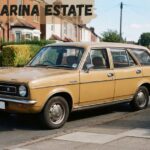

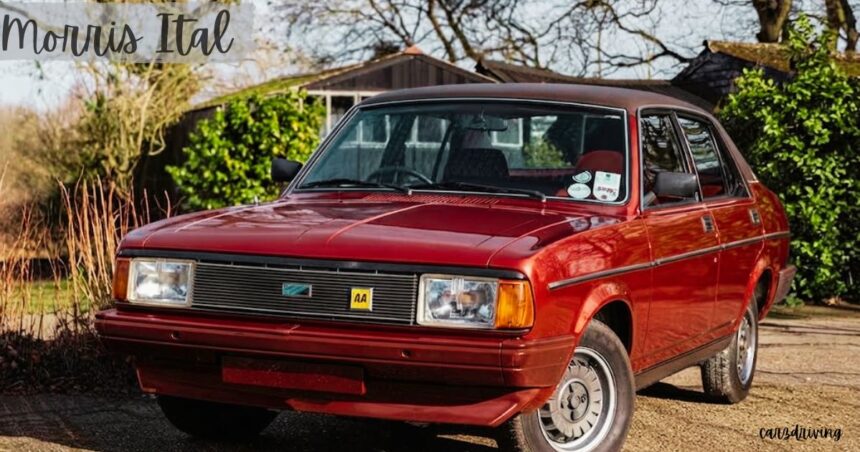
British Leyland built the Morris Ital as the first all-new product that came from an ambitious team, though in truth it grew out of an older car rather than a fresh sheet of paper.
The slogan “beauty with brains” sounded bold, but the car’s roots went back to the Morris Marina, styled by Roy Haynes with Coupé shells that Motor magazine praised for low weight and torsional stiffness.
Even with BMC’s earlier transverse front-drive thinking behind it, engineers chose rear-wheel drive and an in-line engine, a layout many called retrograde compared with the ’60s.
That choice paid off with fleet buyers, who cared more about durability and low maintenance costs than fashion, much like buyers of the Ford Escort.
Engine mounts and sound insulation helped the perky A-series and torquey engines feel modern by 1971, while a heated inlet manifold and a swing-needle SU carb cut emissions. A new all-synchro gearbox, built inside a £7m factory at Longbridge, came with an automatic option and a two-piece propshaft with centre mounting for a smooth transmission.
The rear end borrowed leaf-sprung live-axle parts shared with the Toledo, using angled telescopic dampers, while a clever wiper column stalk and hot/cold air temperature control felt advanced for the time.
Out of £45m spent on production design, the Morris Minor front suspension stayed in place with rubber mountings, uprated trunnions, and balljoints, though axle tramp under hard acceleration drew criticism.
Despite wind noise and engine noise staying low, press criticism grew across 13 years of production, even as vans and pick-ups rolled out and Marinas reached Australia, New Zealand, and South Africa with E-series 1500 and 1750 engines, plus a 2600 six-cylinder.
The Ital itself gets little respect in British motor industry history, even while nostalgia and rose-tinted spectacles turned many other BL cars and BL-era cars into loved classics. Born from the need to squeeze one more good run out of the ageing Marina during the 1970s, it suffered from an image problem as competition raced ahead and Ford and Vauxhall left it behind. With no budget for a proper new Morris brand model, British Leyland’s answer looked like mascara and rouge, an attempt to make mutton pass for lamb.
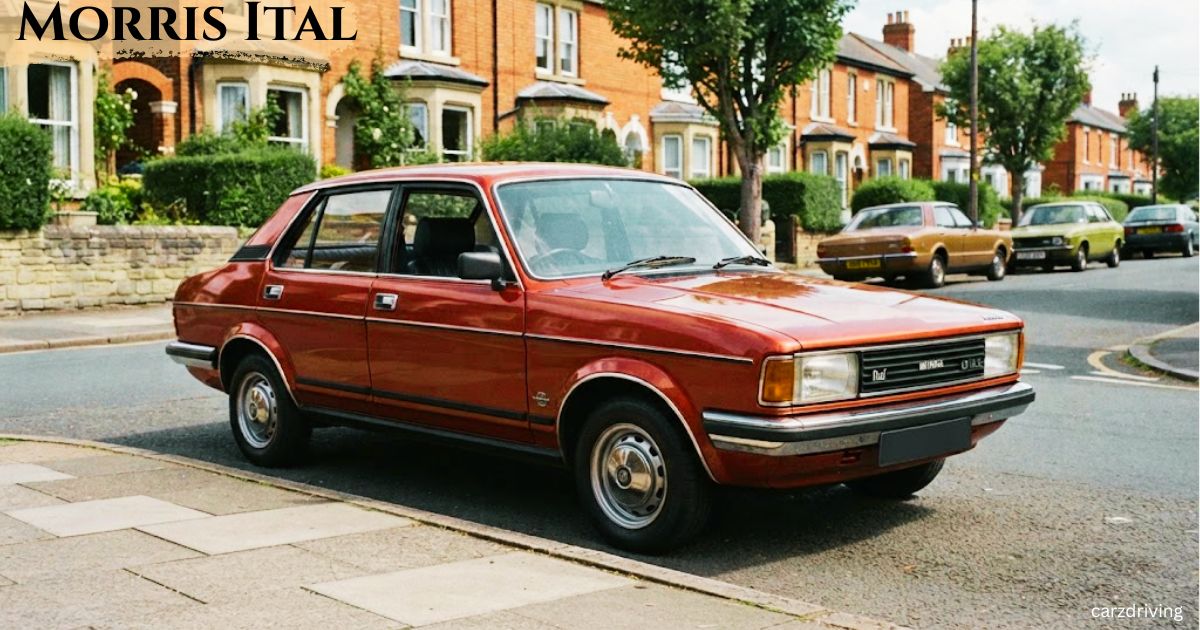
Sadly, the budget only allowed a cursory facelift, and the clunky, rectangular lights and grill sat oddly on dated bodywork shaped by poor decision making. Build quality stayed disappointing, and by 1984, when it left the production line, the Ital felt outdated and antiquated rather than competent. It marked an ignoble end for the Morris brand, and few survived, making rare examples genuinely desirable today.
Still, this common knowledge feels harsh, since the Ital was really a victim of circumstance shaped by twenty years of mismanagement rather than negativity for its own sake. It deserves positivity instead, especially once you look past the derision and mockery that followed it from launch. Let’s replace abuse with a fairer look at why the Ital still earns a spot in the marketplace of classic buy motoring.
The Marina actually did its job reasonably well as a no-frills fleet offering, even though its chassis leaned on Minor engineering from the 1940s and kept lever-arm dampers long after Ford and Vauxhall had moved on.
It filled a gap that front-drive fluid-suspended cars could not, since fleet managers in the 1970s wanted something simple and spacious. In corporate terms, the Marina was always meant as a stop-gap ahead of the mid-range competitor that became the Maestro and Montego.
By Series 2 in 1978, the press still called it disappointing, so with the Maestro and Montego still following years later, British Leyland chose a facelift. The chassis finally dropped the old lever-arm dampers, gained improved A-series engines, and received a restyled nose and tail designed in-house.
An italian design house, Italdesign, took on the production design, and British Leyland used this tenuous link to suggest that Giugiaro shaped the car’s looks, which is how it earned the name Ital.
In truth, the Ital was technically far better car than the old Marina, and had it launched back in 1971, it might have rivalled the Cortina with ease. Landing instead in 1980, it felt dated even on day one, and it languished in the marketplace for only three years before the Maestro and Montego replaced it. Even so, its pricing, comfortable cabin, and range-leading pace kept it selling steadily among loyal competitors’ customers right up to the end.
Morris Ital Engine
The A-series engine ran through the whole production run of the Ital, moving to A+ spec, while the B-series stepped aside in 1978 for the newer overhead-cam O-series.
My own experience with these simple, honest units taught me to check for oil breathing, smoke, rattles, and knocks, since wear shows up fast if owners skip servicing. The TC stands out with its unique “between the carbs” air filter, a detail that makes it easy to spot compared with the MGB-derived motors used elsewhere.
Suspension
Front suspension on the Ital stayed genuinely effective, and steering should feel light and precise rather than heavy. If it does feel heavy, the trunnions usually just need greasing rather than full replacement. Luckily, parts for this system are still easily found, which keeps ownership simple.
Rust
Rust remains the biggest enemy of any classic Morris cars, and the rear spring hangers count as a safety-critical area where corrosion hides quietly. Any buyer should check every known rot spots before handing over cash. Always assess past repairs carefully, since poor welding often hides worse problems underneath.
Gearbox
Borrowed from a Triumph unit, the manual gearbox performed well, though weak synchros and layshaft noise are worth listening for during a test drive. The Borg-Warner automatic option, by contrast, gets rebuilt without much trouble. Overall, this effective setup holds up better than critics ever gave it credit for.
Seats
Vinyl seats tend to split with age, while later velour and cloth options simply wear thin over time. Used trim was once plentiful, but broken cars are now scarce, so missing bits can be genuinely hard to find. Anyone restoring an Ital should grab spare trim whenever it appears.
Rarity Value
According to How Many Left, only 24 Itals remain on UK roads today, meaning you would almost certainly own the sole example in your car park or even your county. That makes it rarer than an Aston Martin Cygnet, yet quite a lot less revolting to look at. Owning one today feels like guarding a genuine piece of forgotten motoring history.
Historical Importance
The last car ever to wear the Morris badge carries real sadness, much like the final Concorde flight or the extinction of the dodo. The Metro van kept using Morris branding for a brief period afterward, but the Ital stands as the last proper model to hold the name before it entered the history books. Only a cold-hearted cynic could feel nothing driving one today.
Economy
The 1.3 A-series engine offered decent fuel-efficient running for its era, though true frugality seekers should look toward Portugal, where a 1.5 litre diesel engine version of the Ital existed. That unit, built on the older B-series, produced a modest 37bhp and a top speed of 70mph. Sadly, the UK never received this diesel variant.
Setting the Record Straight
Many people repeat the tired old adage that the Ital is the only car named after Ital Design, a claim so shaky that it barely appears in their own historical literature.
The real truth is far better: the design engineering happened almost entirely done in-house, since the original brief to Ital Design produced such a dog’s breakfast of a result. BL eventually handed production duties to Pressed Steel Fisher in Cowley instead, a gem of wisdom worth sharing next time someone corners you in a supermarket car park.
Pedigree
Cars generally improve the longer they stay in production, much like Porsche models, and the Marina ran from 1971 until the last Ital left the production line in 1984, covering 13 years of steady refinement.
By the end, Itals received genuinely improved suspension, proving the theory held some truth. The story continued even after UK production stopped, since the tooling was sold to China, where the Huandu CAC6430 appeared in indeterminate quantities right up until 1999.
Buy British
Designed in Longbridge, Birmingham, and originally engineered and built in Cowley, the Ital moved production to the Longbridge plant in 1982 to free up space for the Montego.
Despite the name and its link to Ital Design, almost no genuine Italian influence shaped the finished car. It stayed as British as a pork pie floating in a pint of warm John Smiths.
Speed Machine
A 1981 TV advert claimed the Ital “overtakes” faster than a Mercedes 200, complete with footage of a rather cack-handed pass. That car likely used the punchier 2.0 O-series engine rather than the humble 1.3, and eagle-eyed viewers also spotted a Maserati Merak in the background. Being rear wheel drive, much like a rally car, only added to the fun of the claim.
Practicality
Even without a true replacement for the Marina Coupe, the saloon, estate, van, and pickup variants carried the Ital touch into battle against Cortinas and Cavaliers on the fleet circuit. Comfortable seating for 5, together with generous load space, made it a genuinely sensible choice for any family motor. This practicality quietly outweighed its poor reputation for years.
Bond Car
An Ital makes a brief appearance in the 1983 Bond film Octopussy, glimpsed outside Sothebys as it passes a much grander Mercedes 600 limo. It never becomes the star of the show, but its presence still counts. Spotting it remains a fun challenge for dedicated fans.
Rooting for the Underdog
Everyone loves an underdog, and few cars sit lower in the food chain than the Morris Ital, derided by the press and mocked by the public from day one, never once earning a fond recollection.
Yet the ageing Marina, already tired long before the Montego replacement existed, left Morris’s parent company with no budget or resources to do better.
Given these difficult circumstances, the Ital deserves more credit, since it kept the beleaguered BL afloat for four years, selling 175,276 examples and proving that a car need not be cutting edge or glamorous to do a difficult job well.
FAQs
When did Morris Leyland stop making the Ital?
Production ended in 1984, closing out 13 years of the Marina and Ital lineage.
Was the Ital built in the UK or Italy?
Despite its name, the Ital was British, engineered and built in Cowley and later Longbridge.
What replaced the Ital?
The Maestro and Montego took over once the mid-range competitor finally reached the marketplace.
Was the Morris Ital reliable?
Its simple, honest A-series and B-series engines were generally effective, though rust remained a real concern.
How many Morris Itals were sold in total?
Alongside the Marina, the lineup sold 175,276 examples in just four years, keeping BL afloat.