


I remember sitting in my car on a cold morning, wiping the inside of the glass with my sleeve because I did not yet know how to stop car from fogging up, and I could not see the road ahead.
That misty layer on the windscreen is more than a small nuisance; it is a real safety risk because it cuts your vision and makes driving harder than it should be, and every driver knows how much a foggy interior window can slow down a simple morning drive.
Most people think car fogging only happens in colder months, but I have seen the same frustrating issue show up during humid weather too, especially after spilled drinks, wet clothing, or wet shoes get left inside the cabin.
The reason your windows turn misty comes down to simple science. Warm air and moist air sit inside the cabin, and when that warm, humid air touches the cooler glass of your windscreen, the temperature difference forces water vapour to turn into tiny droplets, which is what we call condensation.
Breathing, moisture condensing off wet coats, and even a leftover coffee can push humidity levels up fast, and once the temperature differential between the inside and the outside is big enough, fog builds up on every one of your car windows in minutes.
This comprehensive guide is my honest, from-experience answer to that problem. I will walk you through ventilation tricks, how your air conditioning system actually pulls moisture out of the air, and small hacks that keep the cabin crystal clear on foggy winter mornings.
By the time you finish reading, you will know how proper airflow circulation, a working air conditioning unit, and a few anti-fog products and habits around maintenance advice can stop that fog from ever building up on your glass surfaces again, keeping full visibility and real safety every time you sit in your vehicle and the glass no longer blocks view of the road.
Why Do Car Windows Fog Up?
Every driver asks the same question sooner or later, and honestly, the answer is simpler than most people expect. Temperature contrast is usually the biggest culprit behind foggy car windows: a warm car interior sitting against a cold glass surface, or a chilled interior on a sticky, humid day, both create the same result.
Ventilation issues make this worse, because if your air-conditioning systems are pulling in cold outside air, moist outside air, or a rush of warm moist air, they can struggle to manage humidity properly, and that pushes condensation straight onto the glass.
Running the air con correctly matters more than people think, since the gap between the cabin and the outside temperature decides how fast that glass turns misty.
Moisture builds up from more places than people realise. Humidity and moisture rise sharply when wet conditions like rain or snow get tracked into the car on wet clothes or on a wet umbrella, and this excess humidity sits in the cabin air until it finds a cold windows surface to land on.
Every time you breathe, you release breath vapor into the cabin, and that moisture starts to moisture condense the moment the air near the cold outside panes drops in temperature, and it condenses into visible water droplets almost instantly.
Even everyday habits play their part in these temperature variations and temperature changes. Cooking smells, drinking hot beverages, or carrying takeaway food with steam rising from it all add weather-related moisture into a small, closed space, and that raises foggy conditions fast.
If your passengers climb in with damp clothes after a walk through the snow or the rain, the whole cabin fills with moist air that clings to every window until the glass finally shows that familiar visible fog.
How to Stop Car From Fogging Up
The very first thing I always do is a proper window cleaning session, because dirty glass fogs up faster than clean glass, especially on humid days.
Wipe every pane with a good glass cleaner and a microfibre cloth, or a stack of microfibre cloths for a bigger job, working through the dirt, dirt debris, grime, residue, and oils left behind by hands and old cleaning products, then finish with straight lines instead of circular motions so you get a streak-free result without any streaks on the side windows, the windshield, or rear screen.
This simple bit of condensation prevention works even in warmer environments, since a cleaner cabin temperature setting has less dirt to trap moisture against.
Next comes the air conditioning step, which surprises a lot of drivers because they assume it only works in summer. Running your AC system for 5-10 minutes before you set off, even on cold days, pulls moisture removal out of the cabin and stops condensation formation before it starts, and my mechanics friend at Autopartspro always says this pre-conditioning habit saves more time than scraping ice ever will.
Switch the setting to fresh air mode rather than recirculating humid air, so dry outside air and simple fresh air replace the trapped moisture, aim the airflow at the windscreen through the defrost setting, the defrost option, or defog mode, and let the warm dry air clear the glass from the front side windows outward.
Most modern dashboards even show demisting settings built specifically for this job, following the same idea as a car’s manufacturer’s instructions for the climate controls.
If the glass still steams up, a good anti-fog product, or even a small car dehumidifier left on the seat, applied to clean, dry glass surfaces creates a thin protective layer and a light film that resists fog build-up and moisture trap problems, and if you would rather try a DIY solution, mixing white vinegar with water in a spray bottle and buffing it in works just as well.
Cracking the windows slightly improves air circulation even in cold weather, letting trapped indoor humidity escape while dry air enters, and placing silica gel packets under the seats or in the door pockets helps soak up leftover humidity levels long after you park.
Do not forget the small habits that stop the problem returning. Pull wet items such as umbrellas, coats, or sports equipment out of the boot the moment you get home instead of
leaving them to dry inside, check that your cabin filter is not clogged since a blocked one hurts airflow efficiency and traps moisture in the ventilation system (a quick cabin filter replacement sorts this out fast), and inspect the door seals and window rubbers for damage,
because a weak blower motor, poor heating, or a low heat setting left on low setting for too long will not stop the air from saturating air in a cabin that never gets the chance to finish dehumidifying, even with dehumidifying air running and the open windows cracked slightly through winter and every season of recirculation turned off.
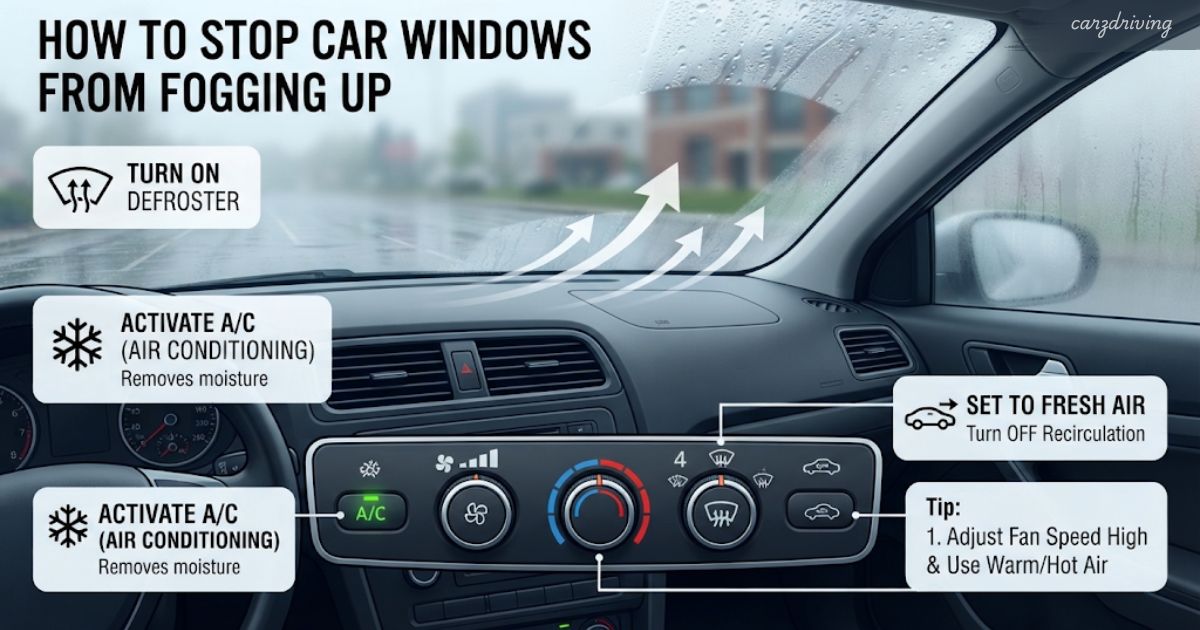
How to Prevent Car Windows from Fogging Up
Prevention beats a rushed scrape every single time, and it starts before you even open the car door. Park in a garage or any sheltered spot you can find, because a temperature-stable environment stops the sharp swings that cause windows to mist over in the first place, and always dry off wet shoes or damp items before you climb in rather than after.
Checking your weather strips for gaps keeps stray cold air out and helps with real interior warming once you warm up car heating on a frosty morning.
Small routines around the cabin make a real difference too. Never leave wet coats, umbrellas, or towels sitting on the seats, since anything damp adds moisture straight into the cabin atmosphere and speeds up moisture entering vehicle spaces you cannot easily dry, and keeping windows clean stops dirt and grime from giving that moisture something to cling to.
For longer-term moisture reduction, I like using moisture-absorbing products such as a small dehumidifier or a simple moisture-absorbing pouch tucked under a seat, and applying a commercial anti-fog solution or anti-fog treatment to the glass gives it a real barrier against condensation.
Getting your car to a comfortable temperature before you drive off, checking the seals on the doors, and drying outer clothing before you sit down all add up, so that demisting windscreen panes on dark winter mornings and clearing window fogging on any cold driving day takes far less effort.
Troubleshooting Persistent Fogging
Sometimes fog keeps coming back no matter what you try, and that is when you need to look deeper. You should address fogging the moment it appears, because reduced visibility brings real safety risks, and if the glass mists up even in dry conditions, that usually points to damaged seals or leaks somewhere in the cabin rather than normal humidity.
Persistent fogging paired with unusual smells is a warning sign worth taking seriously, since it can mean coolant leaks or trouble with the engine cooling components and the wider heating system.
I always tell people to build seasonal maintenance into their routine: check the cabin filters before wet seasons begin, make sure the blower motor and airflow systems are working properly, and look over the car vents and ventilation issues before winter sets in properly.
If none of that solves it, treat the car like a small detective case. Search for interior moisture sources such as spills or a slow leak after a rainy day, check for an air conditioning pipe leaks problem, and confirm the airflow through every vent is even, because catching excessive moisture and these small issues early keeps persistent fogging from turning into a bigger repair bill later on.
Tools and Parts Required
Keeping the right kit in the boot makes every fogging problem faster to fix. Stock up on anti-fog spray, wipes, a bottle of Rain-X anti-fog product, some silica gel packets for extra moisture absorption, and a spare cabin filter ready for replacement when the old one wears out.
On the tools side, a good squeegee or window cleaner, a set of microfibre cleaning cloths, a soft-bristled brush, and a small vacuum cleaner cover most jobs around the cabin. I also keep a roll of paper towels and a few dehumidifier sachets in the glovebox, since they take up almost no space but save real time on a foggy morning.
Safety precautions
Never try to clear misty glass while the wheels are still turning; driving blind for even a second is not worth it, so pull over safely first before touching a single window. Make sure the ventilation system is not blocked, since blocked air vents only make fogging problems worse and slow down every fix you try.
Keep your cleaning materials within easy reach but properly secured, because loose bottles turn into projectiles the moment you brake hard. Take the extra minute to fully clear fogging from every pane before cleaning windscreen glass and driving off after any sudden stops or a quick roadside stop.
Common mistakes to avoid
I have made a few of these mistakes myself, so I know how easy they are to fall into. Using recirculated air feels natural, but it just keeps humid air trapped inside the cabin, and blasting hot air straight onto cold windows can cause thermal stress that is strong enough to crack windscreen glass if you are not careful.
Always raise the heat slowly. Gradually increase temperature instead of jumping straight to full blast, switch to fresh air mode rather than recirculation the moment you notice condensation, and never rub harsh chemicals or abrasive materials across the windows, since these can strip glass coatings and damage window tints over time.
If persistent fogging keeps returning despite every temperature change you try, do not ignore it. A coolant leak or damaged seals rarely fix themselves, so book a professional diagnosis rather than fighting the same fog every single morning, since clearing fogging yourself only goes so far when the real cause sits deeper in the system.
Related Maintenance you Can Do
While you are already dealing with foggy glass, a few extra jobs are worth doing in the same sitting. Swap out the air filter for better air quality, check and clean the air vents and ducts, and look over the windscreen wipers to make sure they still clear water properly.
Getting your air conditioning system service done and wiping down interior surfaces that tend to hold onto moisture rounds out the job nicely, and these small maintenance tasks work together to build a drier environment and a more comfortable driving environment while quietly improving overall vehicle performance.
One thing our technical specialists mentioned that stuck with me is that leather interiors tend to fog up less than fabric upholstery, since leather does not soak up and release moisture absorb the way cloth materials do.
Managing Foggy Windows When Rainy
Wet weather brings its own version of this problem, and I have learned to handle it differently on rainy days. Keep the windshield wipers working properly so build up on the outside glass does not add to the mess inside, and turn on the defroster as soon as rain starts to keep the windshield clean on both sides.
Checking your HVAC system matters just as much here, since a healthy heating system helps circulate dry air through the cabin and keeps moisture levels from climbing while you drive through a storm, letting the glass moisture disperse far faster than it would on its own.
Keeping Your Windows Clear Without Using Heat
Not everyone wants to run the heater constantly, whether it is about energy conservation or just personal preference, and there are still ways to manage things without it. Moisture absorbers like silica gel work well in closed spaces such as a car cabin, quietly pulling out dampness before it ever reaches the glass.
Good hygiene habits help too. Ask passengers to dry off their shoes and coats before stepping in, since a little care at the door goes a long way toward avoid heating car glass unnecessarily on a short trip.
Final Thoughts and Maintenance
Clear glass is not just about comfort; it is about real safety on the road, and once you know how to stop car from fogging up, a well-maintained vehicle with effective ventilation systems makes every driving conditions situation easier to handle.
Building regular maintenance checks into your routine, from the filters to the wider HVAC system, keeps moisture control working the way it should, and a few simple proactive measures count as real maintenance even when nothing seems wrong yet.
When persistent issues keep coming back no matter what you try, it is worth calling professionals; places like Bartlett Automotive offer comprehensive services, advice, and repair work that gets to the real cause instead of masking it.
A little proactive maintenance now means safer drives, comfortable drives, and truly car windows clear through every winter and every professional service visit pays for itself in the fog-free visibility you get back.
FAQs
Why does my car fog up so fast in winter?
Cold outside temperatures meet your warm interior, causing instant condensation from breathing and wet clothing.
What’s the quickest way to stop car fogging up while driving?
Switch on your air conditioning in fresh air mode and aim it straight at the windscreen for instant clear visibility.
Can a dirty cabin filter really cause foggy windows?
Yes, a clogged cabin filter blocks proper airflow and quietly turns into a moisture trap inside your vehicle.
Is it dangerous or even illegal to drive with foggy windows?
Absolutely, reduced visibility from fogged up glass is both dangerous and illegal under UK driving law.
How can I prevent my car windows from fogging up before I even start driving?
Keep windows clean, remove damp items, and use anti-fog products to stop condensation before it ever forms.