

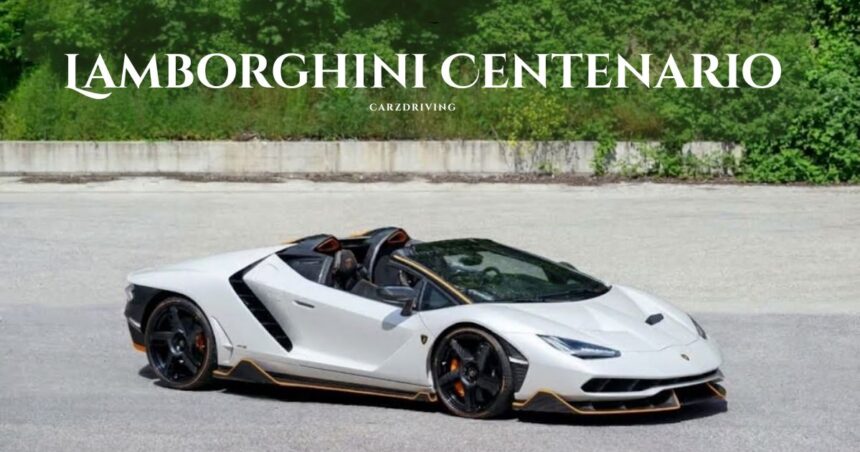
The Lamborghini Centenario arrived in 2016 to celebrate the 100th birthday of Ferruccio Lamborghini, the founder of the brand. The name means Hundred in English, and the automaker picked it on purpose. Many fans call it a supercar, but it also acts as a rolling testbed for the next generation of hypercars.
Lambo planned just 40 units, split into 20 coupes and 20 convertibles. The automaker sold every one at six-figure prices before the unveiling in front of the media, and the £1.7m tag shows how exclusive the car feels. CEO Stephan Winkelmann could have added new paints and fresh wheels and moved on, but he wanted to honor Ferruccio with real new features.
Some critics say Lamborghini built it to extract money from customers and call it an overpriced Aventador. Still, I think the full story is more interesting than that one claim.
Lamborghini Centenario Design and Aerodynamics
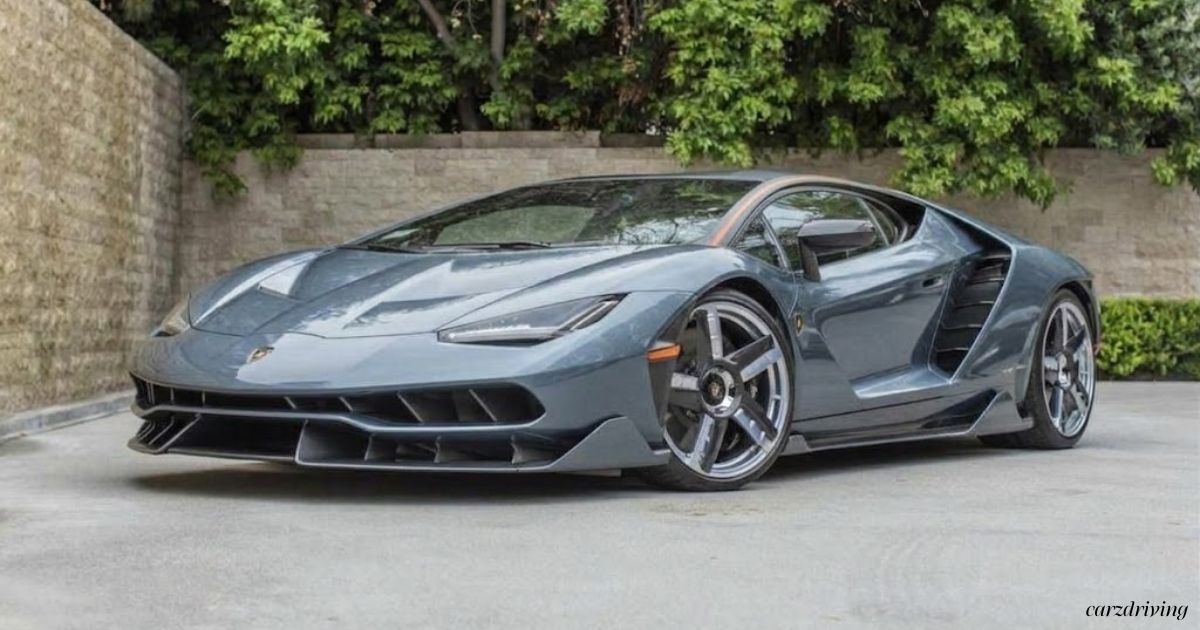
The 2016 Centenario shares its underpinnings with the Aventador, yet the front fascia looks brand new. The low-slung nose carries angular headlights with LED daytime running lights, and a wide air intake in a bow-tie shape with vertical slats sits between them.
Up front, a new apron and a twin-deck splitter add downforce and push airflow along the sideblades, so the aero starts working before the air even reaches the doors.
From the side profile, the car keeps its aggressive stance. Vents ahead of the wheels build air curtains around the bodywork and cut drag resistance. Lamborghini also reshaped the side sills and added aerodynamic slats to lower the ground effect. The five-spoke alloy wheels measure 20 inches at the front and 21 inches on the rear axle, and I think the wheel design is one of the best parts of the car.
The rear steals the show for me. The active rear wing lifts and tilts to raise downforce by 180%, and it extends 150mm to deliver 227kg of downforce at 174mph. The bumper holds three exhausts, a first for the Italian brand, and the triple exhaust looks great even if it could look wilder.
Below the exhausts, the rear diffuser with six vertical slats looks huge. One reviewer calls it the MOAD, short for Mother of all Diffusers, and he says even a Le Mans racer would struggle to match it. Race cars rarely carry one this big, and the diffuser looks best in yellow or orange.
Exposed rear tires add even more width and make you stare. The same reviewer jokes that the car looks like a cheese grater, yet he still loves the back more than any other special edition apart from the Sesto Elemento. That mix of love and mockery sums up the unique styling well.
Engine and Performance
Under the engine cover sits a 6.5-litre V12 that idles at 850rpm and redlines at 8600rpm. One source lists 760bhp, which is 20bhp more than the Aventador SV, along with 507 torques. Lamborghini also quotes 770 PS, or 759 hp, for the V12 engines in both the Centenario coupe and the Centenario Roadster, with 20 units of each.
A seven-speed automatic single-clutch gearbox sends the power output to the road. The car sprints from 0–62mph in 2.8 seconds, and American buyers see the same sprint as 0 to 60 Mph. It reaches 186mph in 23.5 seconds and keeps pulling to a top speed of 217 Mph, while Pirelli P Zero Corsa tyres measuring 255/30 ZR20 and 355/25 ZR21 hold it all on the tarmac.
Not everyone cheers, though. One critic points out that the same engine in the Aventador makes 750 Horsepower, while he lists the Centenario at 795 Horsepower, a 45 Horsepower gain. He sees nearly identical performance figures, a modified body, and exclusivity for 2 million dollars. He adds that a Porsche 918, which now costs about a million dollars, would beat it, so he laughs at the Hypercar label.
Interior and Infotainment
Inside the Centenario coupe, you spot some Aventador parts, but Lamborghini tuned the Alcantara-covered dashboard with contrasting stitching and the digital instrument panel.
High-bolstered sports seats hug you, and a narrow center console with carbon fiber trims holds the ignition, the transmission buttons, and controls for windows, suspension, and comfort features. With 40 being made, owners enjoy deep personalisation, and the carbon-fibre-clad interior feels worthy of a £1.7m interior.
A 10.1-inch touchscreen sits in the centre console, and this portrait screen runs a bespoke infotainment system with angular graphics. Telemetry logs lap times, gear selection, throttle inputs, and braking points, and the development team and the head of R&D, Maurizio Reggiani, review that data after each run.
You lift the fighter-jet safety flap, press the start/stop button, and the V12 wakes with a deeper base tone. The V12 soundtrack builds as you roll away, and I never get tired of that moment. A critic still argues the cabin is an Aventador with extra Alcantara and a plaque, and he feels the modified body and exclusivity do not justify 2 million dollars.
Conclusion
The Centenario divides opinion. Critics call it an overpriced Aventador and question paying 2 million dollars over the Standard Aventador, though even they praise the motive, the wild design, and the V12.
Its depth of capabilities shows the future direction of Lambo, one of the last purveyors of hypercar madness. As a rolling testbed for the next-generation Aventador, it closes the Winkelmann era and a century of desirable cars. It also fires the starting gun on the next generation, with leading-edge technology and a bright future.
Rear-Wheel Steering, Aero Tech and the Nardo Test Drive
Most limited runs from Lamborghini lean on drama, but the Lamborghini Centenario feels different. Plenty of limited series cars skip real technical change, yet Stephan Winkelmann presented this one last before he moved to quattro GmbH, and ex-Ferrari F1 team boss Stefano Domenicali took over.
I see it as a birthday present and an automotive baton, a technical demonstrator for Lambo’s future direction, after years of drop-the-mic motor show moments and a bold marketing strategy.
The car is the first Lamborghini with rear-wheel steering, which the brand also calls an all-wheel steering system.
The RWS boosts maneuverability below 45mph and adds stability at higher speeds, and it changes the wheelbase on paper by 1,200mm. The car weighs 1,520kg, which is 55kg lighter than the Aventador, thanks to carbon-fibre, materials science, and clever aerodynamic developments.
The rear wing and the front and rear aero work as a team, while magnetorheological dampers keep adjusting the ride. The 10.1-inch portrait screen records telemetry and driving data, so the connected car idea is real. Nothing about the way it logs your driving feels like a gimmick.
Lamborghini then gave a few people access to the Nardo test facility, and visitors passed through tight security screening. One reviewer received the UK’s invitation, because the brand wanted his feedback before first deliveries. The VW group uses the site for extreme speed, and the 200mph zone matters here because the Centenario has a vmax above 217mph.
Test driver Mario Fasanetto led the group around the test track in an SV. That car carried an early iteration of the RWS, and it convinced the board the idea deserved more work. Drivers who start in the Aventador work hard just to keep up, but the SV with RWS builds confidence and predictability, and it gives a good hypercar context before you try the Centenario.
In Corsa mode on the first flying lap, the car hits 172mph at the 100m braking point for turn one. Then a high-speed left-hander tightens to a late apex, so the driver sheds speed and drops three gears. The 16 corner handling circuit stretches 6.2km, and you can feel mild understeer if you push too deep into a tight corner.
Sport mode cares less about lap records and more about fun. The remapped gearbox shifts fast without the SV’s ferocity, and the brakes feel spectacular. The brake pedal could feel a little firmer, but that is personal taste, and a £2m hypercar that makes you grin like this still earns respect.
FAQs
Is the Centenario a hybrid?
No, the Centenario is not a hybrid. A mighty 6.5-litre V12 keeps it powered the old-school way. Fans who worry about electric help can relax.
Is the Centenario really exclusive?
Yes, the Centenario is truly exclusive. With 40 being made, the lucky owners shape their cars through deep personalisation and own a slice of Lamborghini history. Lamborghini wanted feedback from a privileged few before first deliveries began at the end of the year.
Why did Lamborghini build the Centenario?
Lamborghini built this supercar to celebrate the 100th birthday of its founder, Ferruccio Lamborghini.
How many Lamborghini Centenario cars exist?
Only 40 units exist, split into 20 coupes and 20 convertibles.
What makes the Centenario different from the Aventador?
It is the first Lamborghini with rear-wheel steering, and at 1,520kg it is 55kg lighter than the Aventador.