

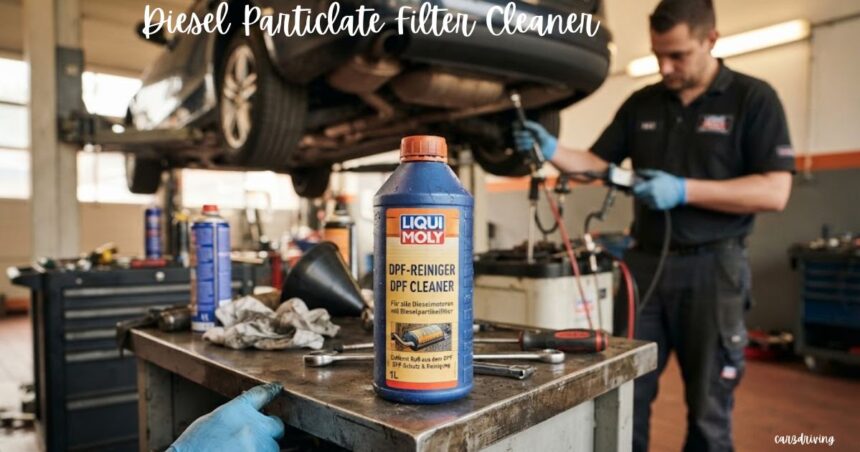
If you own a diesel car, the diesel particulate filter in your exhaust system matters more than you might think, and a diesel particulate filter cleaner can help keep it clear, because soot and particulate matter cause respiratory problems and cardiovascular diseases.
Cars manufactured after 2009 follow Euro 5 emissions standards, and the DPF aims for an 80% cut in particle emissions, so far less soot reaches the atmosphere. These diesel-fuel cars have carried the filter for almost two decades, but it has a finite capacity, so it must regenerate as the soot gets burned off, or blockages and a breakdown follow. In my experience, a blocked DPF turns a small job into big repair costs, and road patrols attend many such cars.
Anyone who has tampered with the filter pushes harmful emissions and exhaust emissions up, so maintain it, because maintaining it costs far less than fixing it.
What is a DPF (Diesel Particulate Filter)?
Unlike petrol engines, diesel engines use compression-ignition, and that makes a sooty by-product full of invisible particles and harmful particles. The diesel particulate filter, or DPF, works like one of the soot traps you hear about, catching the soot so untreated exhaust fumes never reach the atmosphere.
That is why older diesel vehicles blew black smoke and black exhaust fumes, especially when accelerating. The European Union passed legislation in 2009 to cut CO2 emissions, so EU rules under Euro 5 made the filter a mandatory component on all new diesel cars, since health problems and environmental problems come from harmful emissions.
Because the filter has a finite capacity, the regeneration process lets it regenerate as the soot is burned off.
How Do DPFs Work?
Inside a DPF you find a honeycomb made of silicon carbide, and the unfiltered diesel exhaust fumes travel through its channels. The porous walls of this catalytic honeycomb structure trap solid harmful particles, while the filtered gaseous components leave as vapour and drift into the atmosphere. A cake layer of soot grows on those walls, so once the diesel particulate filter is full, the porous material clogs, and blockages and breakdowns follow.
DPF Regeneration
Regeneration is the self-cleaning process that keeps your DPF healthy, and it needs a high temperature to turn excess soot into finer ash particles that the exhaust system then expelled, leaving only ash behind.
Each manufacturer builds in two types: passive regeneration on motorways and fast A-roads, and active regeneration when the car takes over. The filter must be emptied when it is full of soot, and as the exhaust temperature rises the soot is burnt off, leaving a tiny ash residue. If the cycle stops, faults show up, a warning light appears, performance drops, and a blockage forms, so maintain it.
Passive Regeneration
Passive regeneration happens at higher speeds when the engine runs at higher revs, and the exhaust temperature climbs enough to cleanly burn off the excess soot in the filter.
Manufacturers suggest a 30 to 50 minute run at a consistent speed above 40mph, ideally on an A-road, holding sustained speed for at least 30 minutes every few hundred miles. Motorway drivers do this naturally on long motorway journeys, so they rarely meet DPF blockages.
Active Regeneration
When passive regeneration cannot happen, the ECU, short for Electronic Control Unit, runs its engine control software and starts active regeneration once the filter hits a predetermined limit of about 45%, injecting extra fuel to raise the exhaust temperature and burn the excess soot.
This happens every 300 miles or so and takes 5 to 10 minutes, and you will spot symptoms like cooling fans running, increased idle speed or faster engine idle speed, an engine note change where the engine sounds different, and increased fuel consumption, which is really a slight increase in fuel consumption.
You may also smell a hot acrid smell, and see the deactivation of automatic Stop/Start, so your Stop/Start doesn’t work. A journey too short interrupts the regeneration cycle and leaves the filter partially blocked with the warning light on, but 10 minutes above 40mph usually finishes the job.
DPF Warning Light
An orange light on the dashboard, usually a piped box with dots inside, tells you the DPF is blocked or clogged with soot, and the symbol changes by manufacturer, so check your handbook.
A partially blocked filter often clears if you drive 10 minutes above 40mph and finish an active regeneration cycle, yet a slow, stop/start pattern, common in urban driving, means you may need a new driving style. Ignore the light and it turns red, performance deteriorates, and the car drops into restricted performance mode, while the engine management light may join in if there is a fault in the DPF or the differential pressure sensor, which reports the DPF status.
Only a short time separates a partial block from a full one, and then a dealer or garage must do a manual regeneration or a forced filter regeneration, because normal regeneration at speed no longer works. In extreme cases you must replace the filter, which costs at least £1000 plus labour, so act early and avoid costly repairs.
Causes of DPF Blockage
Poor servicing and going past the service interval also hurt, while a well-maintained DPF can pass 100000 miles and last the life of the vehicle. Use the right type of oil, meaning low-SAPS or low ash engine oil, because the wrong type of engine oil or wrong specification brings premature DPF blockage, and your handbook tells you which is correct.
A problem in the fuel system or EGR, short for Exhaust Gas Recirculation, makes excess soot, and low-quality fuel and performance modifications add to it. A low fuel level, below a quarter of a tank, makes the car save fuel and avoid DPF regeneration, which blocks active regeneration.
If your car uses Eolys, a low level in the tank of that additive stops the process, other additives can clog the filter, and a warning light or a diagnostic trouble code in the engine management system stops it too.
Diesel Particulate Filter Cleaners
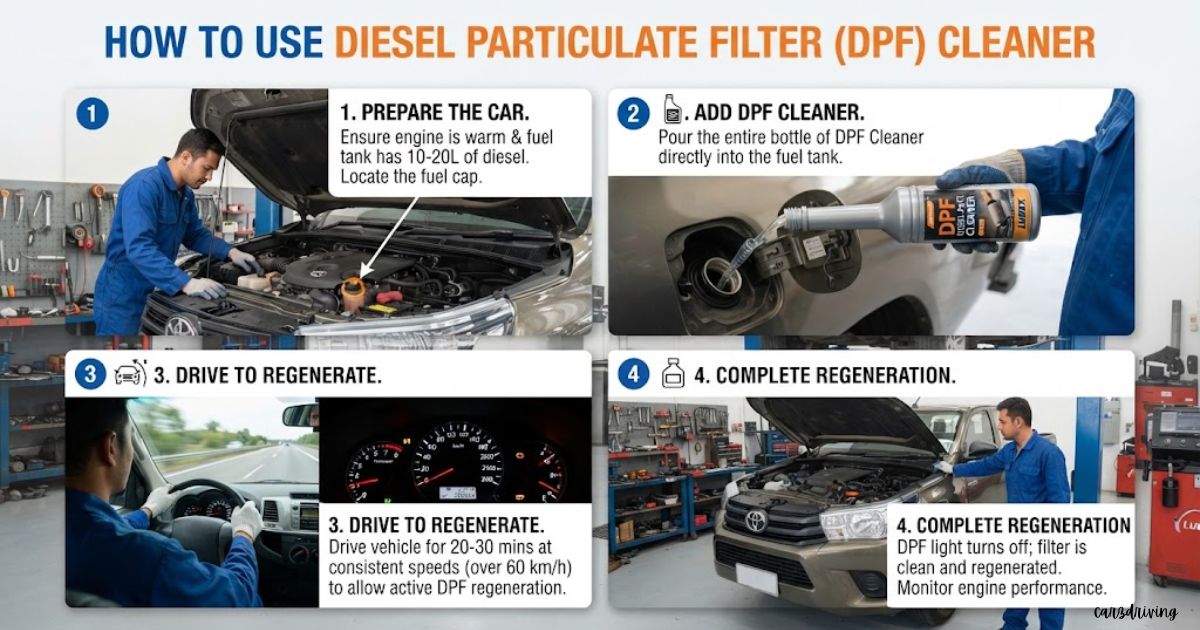
DPF cleaners may help stop soot build-up and blockages, but the best help for your exhaust system is inbuilt DPF regeneration, which you encourage with long trips that hold engine revs between 2000 and 3000rpm for 30 minutes.
If the warning light stays on, turns red, or additional DPF lights appear, act fast, because more damage turns an inexpensive fix into an expensive one, with limp-home mode. The unit is professionally inspected, cleaned after removal of the unit with specialist equipment, and tested, and this route is 90-95% effective compared with a replacement unit, so it solves DPF issues and lowers exhaust emissions. Check the handbook first, because each car behaves a little differently.
DPF Additives
Most DPF units sit close to the engine where the exhaust hottest, so passive regeneration works well. Some diesel vehicles use EOLYS fuel treatment instead: a separate tank, called the additive tank, holds Eolys fluid that gets mixed with fuel in the fuel tank.
This fuel additive lowers temperature, meaning the ignition temperature of soot particles, so regeneration works even when the exhaust runs cooler. The fluid reservoir lasts about 70000 miles, and then refilling or replacing it costs around £200 for fluid and labour, so heed the warning light or the DPF gets blocked fast. AdBlue does not touch the DPF, but you should keep it topped up to avoid other trouble.
DPF Removal, Legality & MOT
Removal of the DPF is illegal and counts as an offence, and a missing DPF on cars ends in a fail at the MOT test, because the DPF check began in February 2014, or simply 2014. The penalty fine reaches £1000 for cars and £2500 for light goods vehicles.
Anyone who has the filter cut out of the exhaust and the engine management software reprogrammed has modified the vehicle, which breaks the Road vehicles (Construction and Use) Regulations, European emissions regulations, and emissions standards, and it can invalidate insurance cover since it makes the car illegal for road use.
A leftover warning light, like any of the dashboard warning lights, also causes a failure, so get the filter repaired instead.
Ash Residue & DPF Lifespan
Every regeneration process leaves a small amount of ash residue that a diesel particulate filter cleaner cannot fully remove, and that ash builds up in the pores of the walls of the DPF until the filter blocks.
Because of this, the unit needs to be replaced every 50000 to 80000 miles, and the ash cannot be removed unless the DPF is sent away for specialist cleaning. Used correctly, though, a DPF can pass 100000 miles, so smart driving pays off.
A long drive often makes it extinguish, so the fault gets rectified without help, but if it stays on, take the car to a garage. An amber DPF light is advisory, so never ignore it for extended periods, while red warning lights need immediate attention and mean stop the car. Treat all dashboard warning lights with care.
FAQs
What does a diesel particulate filter cleaner actually do?
A DPF cleaner helps stop soot build-up and blockages, but your car’s inbuilt DPF regeneration does most of the real work.
How do I know my DPF is blocked?
An orange light on the dashboard, often a piped box with dots, warns that your DPF is clogged with soot.
Can I clear a blocked DPF by driving?
Yes, a 10 minutes run above 40mph often finishes the active regeneration cycle and switches off the warning light.
How much does a professional DPF clean cost?
A professional DPF clean costs about £188.30, while forced regeneration at a garage runs from £100 to £250.
Is it legal to remove my DPF to avoid repair bills?
No, removal of the DPF is illegal, fails the MOT test, and risks a penalty fine of up to £1000 for cars.