
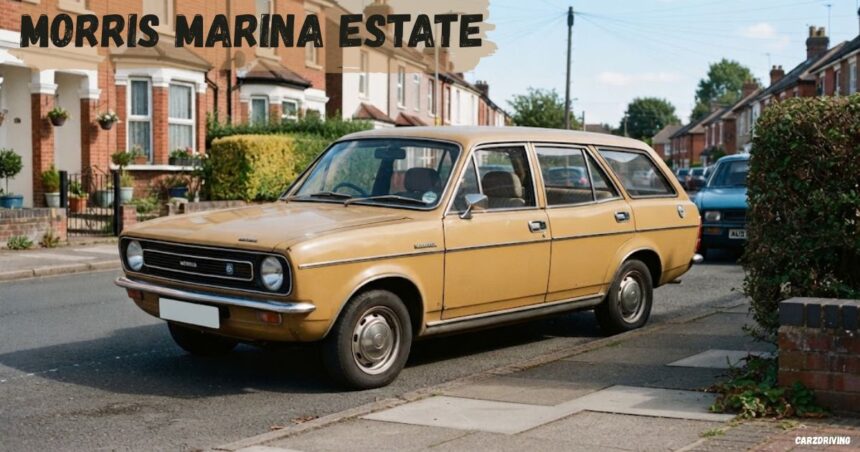
I still remember the first time I saw a Morris Marina Estate parked outside a neighbour’s house, and it left a mark on me the way a Saturday afternoon treat does for an eight-year-old boy. Back in 1979, when the Morris Marina Series III rolled out with 1300, 1700, and 1700 L trims, it wasn’t flashy, but it felt solid, a bit like something out of a cosy sitcom rather than a glossy showroom advert.
That car, once the most expensive Marina in its class before the launch of the pricier Morris Marina 1700 HL Estate, sat in a strange spot: not the original car everyone talked about, yet not forgettable either, especially after the disappearance of the Triumph 2500 S Estate left BL without a poshest estate car to sell.
My own memory of family motoring involves a car much like the one owned by a friend’s father, registered CNG 453T, a 1.3-litre series three model bought from Mann Egerton in Norwich.
It rolled up looking bright and new, and even though motoring press critics called the whole range a pig in a wig for lacking technical sophistication, none of that mattered to a kid excited about a shiny new family car replacing something corroded, like an old M-reg Simca 1301 Special.
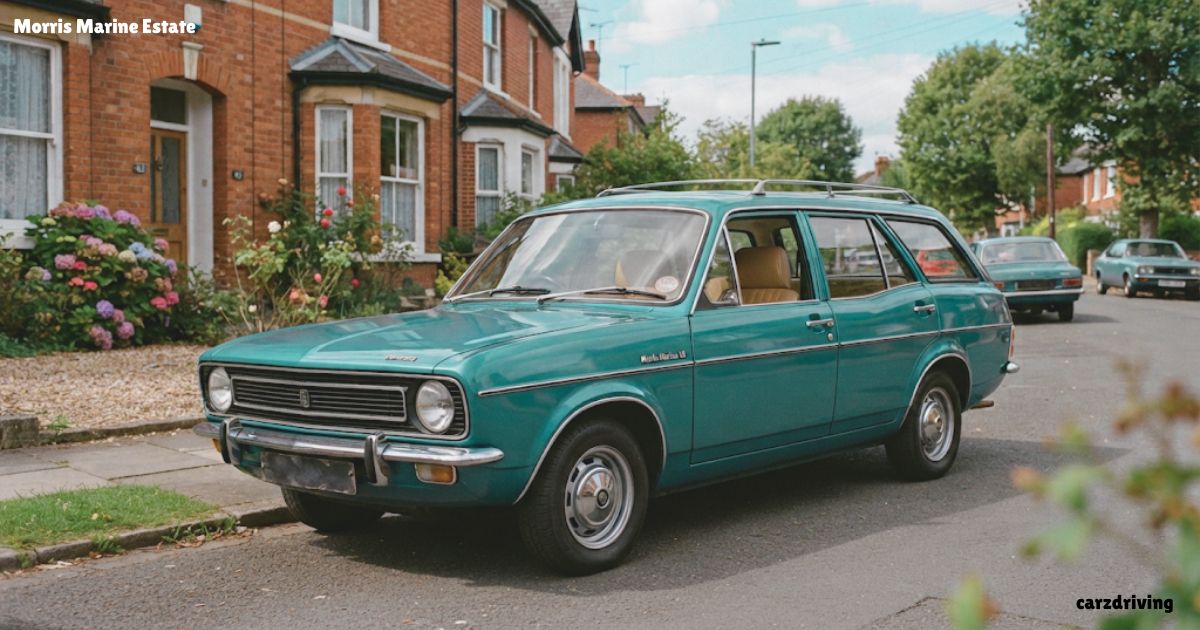
Years later, I found myself drawn to a 1977 Marina Estate finished in Brooklands Green, a colour that beats Sandglow or Damask Red for sheer charm, the kind of colour scheme a deputy headmaster or a character from Grange Hill would have proudly driven.
That car has probably gone to the crusher by now, but its story, and the story of BL’s three estate models, still says a lot about peak Morris Marina in its later years.
The blend of ordinary family transport and a touch of workplace pride made these cars memorable long after the eight years since their original car’s debut had passed. It’s this mix of practicality and personality that keeps me writing about the Morris Marina to this day.
The Lap of Luxury
The Marina 1700 HL Estate was BL’s answer to buyers wanting a touch of class without leaving the family fold, and it packed in real luxuries rather than just promises. You got tinted glass, black pillars, a triple coachline, and special wheel covers with rim embellishers, all giving the car a genuinely stylish look that surprised people expecting something plain. Inside, the 1700 HL
saloon’s equipment list carried over in full, meaning lavish instrumentation, a rev counter, a gaitered handbrake lever, and even a floor console with a clock built in, small fripperies that felt like real treats to a motoring hedonist.
Comfort ran deep too, with velour-faced seats, headrests, a fully carpeted loadspace, and bright sill tread strips borrowed from the HL saloon, though the vinyl roof didn’t make the cut. As standard equipment, every owner got rear mud flaps and a rear wash/wipe, both genuinely useful for anyone using the car as intended.
Buyers could add metallic paint, a laminated windscreen, or automatic transmission as options, letting each owner tailor the car slightly, even if the copy-writer’s enthusiasm sounded like one lunchtime sherry too many.
Still, this was a variant of the everyday Morris Marina, not a luxury saloon underneath the trim. The antiquated suspension and unassisted steering remained, and anyone who had traded down from a Triumph 2500 S Estate would have noticed the difference immediately. Few made that swap, but for those who did, the badge and the standard fittings offered some compensation for what the chassis lacked.
A Niche Left Empty?
For a long time, BL avoided putting an estate at the top of the Marina tree, even while Ford proved the idea worked with the Ford Cortina Mk3 2000E Estate back in 1974, later followed by Ghia-badged Cortina estates. It’s tempting to think the eventual top of the line Marina 1700 HL Estate in 1979 came from Michael Edwardes, the boss of BL, a genuine family man with a soft spot for luxury estates.
He reportedly used a Triumph 2500 S estate as his first company car in 1977, and later tried out a prototype Rover SD1 Estate that sadly never reached production.
That link remains speculation, nothing more, but it fits the pattern of how the range-topping Marina finally arrived. Whatever the real reason, the Marina estate family had waited a while for its moment at the top, and when it came, it filled a genuine gap left by rivals from Ford.
Ancestry
The Marina Estate story starts back in 1972, when the very first version arrived with the 1.8-litre engine and Super trim, sitting just below the twin-carb 1.8 TC Saloon and Coupé models in price.
When the Marina 2 range appeared in 1975, the Product Planners again offered only one estate, still built around the 1.8 Special engine with Super trim, while saloon buyers enjoyed extra choice through the 1.8 Special and the 1.8 HL, which replaced the old 1.8 TC saloon.
A cheaper option followed in 1976, when a 1.3 estate with entry-level Deluxe trim filled an obvious hole in the line-up, giving buyers on a budget a genuine estate car.
By the time the Series III models landed in 1978, powered by the O-Series 1700cc engines in place of the old 1800 B-Series, the estate range had grown to three choices, and the 1700 HL joining in 1979 made it four.
Descendants
The badge changed again in June 1980, when the Morris Marina became the Morris Ital, keeping the same spread of four estates but renamed 1.3 L, 1.7 L, 1.7 HL, and 1.7 HLS. October brought something bigger, a 2.0-litre Ital 2.0 HLS, offered as both saloon and estate, though only 1000 were built between 1980-82, including 500 estates, every one fitted with automatic transmission.
This Ital 2.0 HLS Estate stood as the ultimate estate and a genuinely superior estate compared to everything that came before it.
Production of the 2.0-litre model stopped in 1982, but the wider Ital estate production carried on into 1984, even after Ital saloons gave way to the Austin Montego that spring; the Montego Estates themselves didn’t appear until October 1984.
That gap meant most of the final Itals built were estates, now rejigged into 1.3 SL, 1.7 SL, and 1.7 SLX, a leaner estate offer trimmed from five to three.
Across the whole run from 1972-84, buyers always got 58 cubic feet, or 1640 litres, of loadspace with the rear seat folded, beating the old Triumph 2000 and 2500 estates at just 50 cubic feet, proof that this long-running design never skimped on space.
Overseas
Away from Britain, the Morris Marina 1700 HL Estate barely travelled at all, staying largely UK only, not even reaching the Republic of Ireland’s price lists. New Zealand came closest, offering a similar car under the Morris 1700 name once the Marina badge dropped there for the Series III models, and the specification lined up closely with the British Morris Marina 1700 HL Estate. Wider export efforts stayed thin too, since Australia and South Africa built Marinas without ever adding an estate, missing the chance for something like a six cylinder Marina 2600 wagon.
In North America, sold as the Austin Marina between 1972-78 and later to Canada only, no wagon ever joined the Sedans and Coupes, unlike Chrysler’s rebadged Hillman Avenger Estate, sold as the Plymouth Cricket Wagon. Across mainland Europe and Scandinavia, the Morris Marina appeared only briefly during the Series 1 cars era as a 1.8 Super estate, reaching Belgium and Norway but never Germany, France, or Italy.
Sales stayed disappointing, and by 1976 the estate had vanished from those continental markets, leaving Malta and Ireland as rare pockets where diesel powered Marina estates stayed popular, while the rest of the southern hemisphere and 1970s overseas buyers mostly had to settle for the Allegro instead, and even that had patchy availability.
Survivors
Built at Cowley, the Morris Marina, including the 1700 HL Estate, faced tough trading conditions by late 1979 and into 1980, forcing a 10% price cut just to shift stocks ahead of the Morris Ital’s launch.
With the Maxi and Princess also struggling and exports turning moribund, total output at Cowley dropped to just 105,000 cars for 1980, half the figure of the early ’70s and half of what MINI Plant Oxford now builds on the same former site, around 200,000 cars annually.
Given the 1700 HL estate only lasted one year, some 45 years ago, and estates generally live a hard life, finding surviving examples today is a genuine challenge. Certain shades, like the striking Snapdragon Yellow, are especially rare among the few 1979/80 cars left, making any colour match a real find for collectors chasing this aging Marina.
Morris Marina Estate Unique Details
Growing up, the Morris Marina Estate never felt like anything special, yet it beat almost every rival except the Ford Cortina to become one of Britain’s most common sights on the road, thanks to its simple design goal of serving families and corporate-fleet buyers.
British Leyland’s front-wheel-drive Austin cars cost more to buy and run, so they lost out in the fleet/hire market, while the Marina’s front-engined arrangement and rear wheel layout matched Ford Escort and Ford Cortina thinking closely enough to win over the same fleet buyers market, even as the blue oval stayed dominant. That popularity never shook off the wishy-washy work-horse label, no matter how many units left the factory.
A two-door fastback Marina, sharing doors with its saloon sibling, could have rivalled the Ford Capri, but cost cutting ruled that out, just as it forced BL to reuse old Morris Minor chassis components and a tired suspension system rather than build something new.
That dodgy suspension left the tail-end loose on bumpy roads, and BL engineers even reversed the windscreen wipers on purpose after noticing they lifted when parked upright, choosing a quick fix over a proper one. Add in heavy rust, corrosion, and oxidization around the jacking points, and it’s easy to see why many cars, including one my own family knew well, went to the scrap heap within just three years.
Trim mattered too, and a Super De Luxe, sitting as the fourth trim level in the Marina 2 hierarchy above De Luxe and below Specia, offered a cigar lighter, a dipping rear-view mirror, and reclining front seats trimmed in Sorrel-coloured knit-backed expanded vinyl with patterned panels.
The flashier flagship versions, the two-door GT and four-door HL, stayed rare, much like a Ford Cortina Ghia Mk. IV or a Vauxhall Cavalier 2000 GLS Mk. I, so most drivers experienced the Marina Super’s centre console, optional radio, and Super wheel trims instead, feeling like they’d reached the top of the corporate ladder.
Despite the jokes, a whole million cars sold across 13 years, or 20 years counting the thinly disguised re-badged Morris Ital, and today’s owners treat this bit of automotive heritage as genuinely straightforward and easy-to-service transport, proving that new generations can still enjoy the sales success BL once earned, jokes about British Leyland’s image and old Piano Jokes aside.
FAQs
When was the Morris Marina 1700 HL Estate launched?
The Morris Marina 1700 HL Estate joined the range in late 1979, becoming the most expensive Marina in the lineup.
How much load space did the Morris Marina offer?
Every Marina and Ital estate offered 58 cubic feet, or 1640 litres, of load space with the rear seat folded.
Was the Morris Marina sold outside the UK?
The Morris Marina 1700 HL Estate stayed largely UK only, though New Zealand offered a similar car badged as the Morris 1700.
What replaced the Morris Marina Estate?
In June 1980, the Morris Marina was revamped into the Morris Ital, continuing the estate range under new badging.
Are Morris Marina Estates rare to find today?
Yes, surviving examples are genuinely rare, making any well-kept 1979/80 1700 HL Estate a true nostalgic find for collectors.