
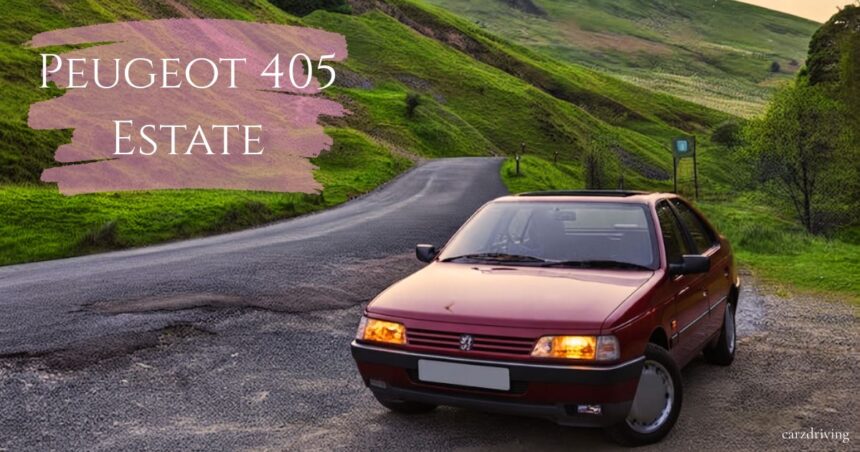
The Peugeot 405 estate began as the D60 project, and the French manufacturer built it to replace the Peugeot 305 and the Talbot Alpine/Solara. It arrived as a mid-size car with front-wheel drive, and it followed the well-loved Peugeot 505. It won European Car of The Year in 1987, so it started life with plenty of praise.
The estate shares its floorpan with the Citroen BX, but it skips the Hydropneumatic suspension. It uses the XU-series engines in both petrol and diesel form, and the XUD turbodiesel won fans just as the black pump grew popular. That light and efficient platform, a superb chassis and reliable mechanicals gave the car a strong base.
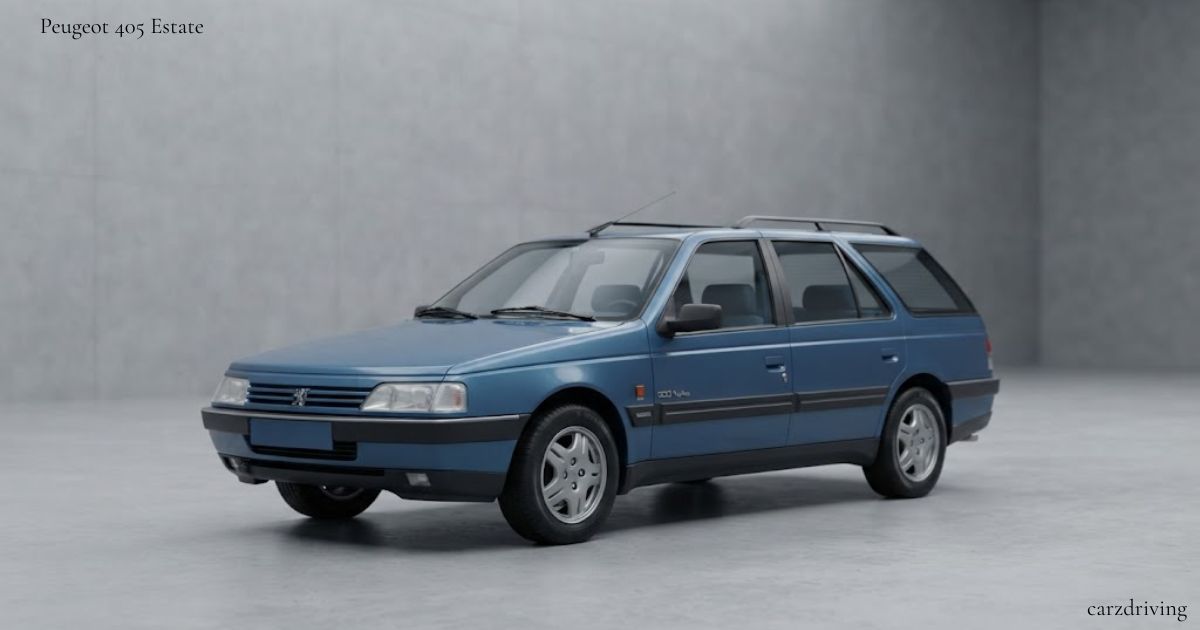
Pininfarina, an Italian design house, drew the exterior, and Paul Bracq shaped the interior. Some people say the styling looks close to the Alfa Romeo 164 and the Peugeot 605, yet it still looks sharp beside the Austin Montego and the Fiat Regata. Drivers of the Ford Sierra and the Vauxhall Cavalier suddenly had a serious rival to think about.
Group tests showed the car beating its rivals, much as the Peugeot 205 had done before it. A wide model range covered the family car market and the company-car markets, so company car buyers and fleet managers liked it. Some owners complained about interior build quality and unassisted steering, but few stayed unhappy for long.
Peugeot started assembling the car at Ryton near Coventry, alongside the 309, and that gave it a Built in Britain image. The move opened up the fleet market and lifted its UK market share. The saloon stayed on sale for eight years until 1996, when the Peugeot 406 took over, and the estate carried on until 1997. Today some people still call it an old clonker, while enthusiasts see a classic car.
Models
Buyers of the Saloon and the Estate could pick petrol engines in 1.4, 1.6, 1.8, 1.9 and 2.0 sizes, plus a 2.0 16v. Diesel fans chose the 1.9 diesel or the 1.8 turbo diesel. The line-up ran from the basic Style to the Executive, so nearly everyone found a fit.
Trim names came thick and fast, including GE, GL, GLx4, GLD, GLDT, GLX, GLXDT, GR, GRi, GRD and GRDT. Others included LX, LXD, LXD Turbo, SRi, SRDT, STi, STDT, GTXi and GTXDT. The list went on with Style D, Style DT, Quasar, Quasar D, Quasar DT, Executive D Turbo and Le Mans.
The SRi used a 1.9-litre engine with 125bhp, and it reached 120mph with a 0-60mph time of 9.1 seconds. The Mi 16 went further with 135mph and 7.8 seconds, while the Mi 16×4 added four-wheel drive to the mix. Both felt sweet-driving, with supple suspension, limited roll, good body control and communicative steering, a bit like a bigger 205 GTI.
History
The launch in Britain came in January 1988 with 1.6 and 1.9-litre carburettor engines, plus an injected 1.9. The performance model, the Mi 16, followed six months later, and Estates arrived in October 1988. The Mi 16×4, with four-wheel drive, appeared in late 1989, which rounded out the 1988 and 1989 range.
Diesel cars joined the range from the start, and the 405 became the best-selling diesel saloon in Britain for years. Buyers could choose a 1.9-litre normally aspirated engine or, from August 1988, a 1.8-litre turbocharged one. The Executive gained a 1.8 D-Turbo in early 1995, and the Quasar models followed in June.
Peugeot announced a facelift in August 1990 with new trim levels and a nicer dashboard, just ahead of the sales rush. The 1991 update brought only minor tweaks, but the 1992 revamp changed far more. It added a new dashboard to end the creaks and groans, a folding rear seat, and catalysed two-litre petrol engines in place of the 1.9s.
The interior changed again, and the boot’s opening dropped lower, so the enlarged boot opening matched rivals like the Cavalier. Better suspension improved the ride too. Peugeot made power steering standard in March 1994, then added air conditioning (except on the entry-level Style) and remote central locking, and it fitted a driver’s airbag in August 1994.
The 406 saloon replaced the 405 in February 1996, and the 406 estates arrived in February 1997, so the Estates kept going until 1997. By then Peugeot had built 2.4 million cars. Production carried on elsewhere for decades.
Iran Khodro built the car next to the Hillman Hunter-based Paykan saloon until 2022. It also made the Pars, Roa and Samand from the same base, plus a rear-wheel-drive version. Factories in France, England, Zimbabwe, Taiwan, Chile, Indonesia, Malaysia, Argentina, Egypt, Iran, Poland and Azerbaijan (where production still runs) helped the total pass five million over 37 years.
Peugeot 405 Estate on the Road
The 405 was always the driver’s favourite in the Mondeo class, and only the Nissan Primera, another excellent handler, came close. If you need a family car but fear a boring rep-mobile, this one proves you wrong. Among its contemporary rivals and so many ordinary cars, it stands out.
The view out is fantastic, and the driver’s seat feels uncommonly comfortable. The car is not fast, but it stays willing and revvy, and it feels lovely to drive. It glides effortlessly along B-roads and turns in beautifully, and the delicious steering tells you what the front wheels are doing.
With half-decent tyres, you can lean on it and enjoy its near-neutral balance and lightness on its toes. The handling rewards a gentle, confident hand. You also get all that fun with a big boot behind you.
What You Get
You get attractive looks, a well-designed interior and a hard-wearing interior that survives family life. You also get frugal engines, especially the diesels, and the roomy estates handle well. The huge choice of models can confuse you, and the lower-order cars lack kit, so aim for the highest specification you can afford.
What to Look For
Some problematic engines cause trouble, mainly the 1.6 and the 1.9-litre carburettor units, so watch for hot starting problems and ask whether the owner changed the cambelts on time. Listen for noisy gearboxes, rumbling driveshafts and faulty power steering pumps as well. Try unassisted steering before you buy, because heavy steering makes parking hard, and power assistance only became standard in 1994.
Early cars had poor build quality, with rattles and misaligned trim. Test all the electric gadgets, including the windows and the sunroof. Check that the air-conditioning blows cold, or expensive repairs may follow.
Replacement Parts
These prices come from a petrol 1995 SRI, they exclude VAT, and they date from the 1990s. A new clutch costs nearly £165, a full exhaust without the catalyst costs just over £150, and brake pads cost about £38 a set. An alternator costs around £160, a starter motor roughly £180, a headlamp up to £100, and a radiator about £200.
Overall
Peugeot 405 Estate car is worthy of savings, and the diesels show real longevity and excellent economy. These oil-burners also feel refined, which puts them among the smoothest of their type. With a huge number sold, you should not struggle to find a good one.
FAQs
Which Peugeot 405 Estate engines are the best?
The diesels and the 1.9-litre engine in the SRI give you frugal engines or lively power, depending on your taste.
Does the Peugeot 405 Estate have air conditioning?
Yes, Peugeot added air conditioning in 1994 to most trims, though the entry-level Style missed out.
Are Peugeot 405 Estate parts expensive to replace?
No, a clutch costs nearly £165, an alternator about £160 and brake pads around £38, based on old 1995 prices.
Who designed the Peugeot 405 Estate?
Pininfarina drew the exterior, and Paul Bracq shaped the interior, which gives the car its attractive looks.
Why do enthusiasts love the Peugeot 405 Estate?
Fans love its excellent handler reputation, uncommonly comfortable seats and classic car charm, which make every drive feel lovely to drive.