
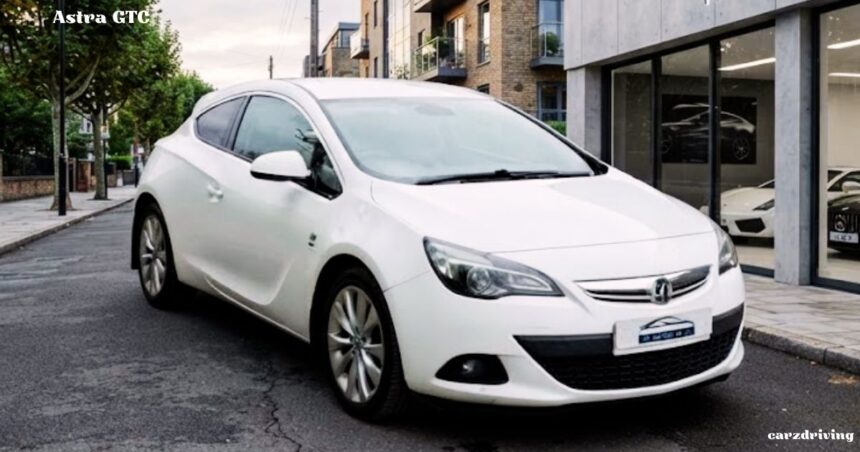
I still remember the first time I parked an Astra GTC next to a VW Scirocco and watched people walk past the German car to look at mine instead. Vauxhall built this coupe with couture styling wrapped around blue-collar underpinnings, and it shows the moment you open the doorhandles and notice they came straight from the five-door Astra.
The MK4 body ran until 2015, when the K-series design replaced the J-series, but the GTC held its own against the Hyundai Veloret… sorry, Hyundai Veloster, right up to the end.
Vauxhall borrowed the front suspension from the Insignia VXR and built it on the Delta platform shared with regular Astras, yet the finished car feels like its own thing. With the three-door Ford Focus gone from UK showrooms, Vauxhall spotted a gap and filled it, selling close to 20,000 a year in the UK alone.
This Astra earns its style honestly: it looks sleek, it looks Clean, and it stays perfectly proportioned from every angle, giving a genuine coupe look to a practical Astra five-door underneath.
Owning one gives you that feel-good sensation the moment you sit behind the wheel, and I’ve watched potential buyers change their minds about a hot hatch after one test drive in the Astra VXR.
Park it on your driveway and you’ll understand why the hatch shape never bothered anyone once Vauxhall gave the three-door its own design language in 2011. It stays affordable, it still feels special, and it competes wheel-to-wheel with rivals that cost a lot more money.
Models
Vauxhall kept the lineup simple, and that’s part of why the 3-door Coupe made sense as a daily car for so many buyers. Models Covered included 1.4 and 1.6 petrol engines alongside a 2.0 unit, plus 1.7 and 2.0 CDTi diesel options for anyone chasing better fuel economy. Trim levels ranged from Sport through SRi and Limited Edition, topping out with the fire-breathing VXR.
I always tell people shopping for one of these that the trim matters almost as much as the engine choice. A base Sport feels perfectly fine around town, but stepping up to SRi changes how the cabin feels every single day. The Limited Edition and VXR sit at the top for buyers who want the badge to match the performance underneath.
History
Vauxhall carries real performance heritage, and it goes back further than most people realise. The Prince Henry from 1911 started things off, and later came the fire-breathing Firenza cars of the Seventies, the Chevette HSR rallycars of the Eighties, and the super saloon known as the Lotus Carlton. None of those cars carried the Griffin badge into daily commuting the way sporting motorists wanted, and that gap stayed open for decades.
Then in 1990, Vauxhall launched the Calibra, an affordable compact coupe built on ordinary underpinnings that still felt super-stylish and sensibly practical. It stood apart from humble Astras and Cavaliers while staying close enough in price to remain easy to run. Oddly, nobody replaced the Calibra, and Calibra’s appeal sat unmatched until late 2011, when the GTC finally arrived to fill that space.
The car landed on the UK market just as interest in compact coupes picked up again, with the MINI Coupe, the Hyundai Veloster, the Renault Megane Coupe, the Peugeot RCZ, and the tough Volkswagen Scirocco all fighting for the same buyers.
None of them would have worried much if Vauxhall had simply dressed up a three-door version of the ordinary Astra family hatch, the way the old Astra Sport Hatch and earlier Astra coupe models had tried and failed to do.
This time felt different, because the Grand Touring Coupe shared not one body panel with the standard J-series MK4 Astra, running wider and longer and lower, with athletic looking proportions and a HiPerStrut suspension system that made it feel genuinely sportier to drive.
A 280PS hot hatch variant joined the range in 2012, giving buyers a proper flagship to aim for. Vauxhall then slotted in a petrol turbo 1.6 with 200PS to bridge the gap between everyday models and that flagship. When the MK5 K-series Astra range launched in 2015 without a Coupe/3-door body style, Vauxhall kept the GTC running in conventional form for another year, and the VXR stayed in showrooms right through to the end of the decade.
What You Get
Step up to this car expecting a smaller cabin than the five-door Hatch, and you’ll be pleasantly surprised. The longer wheelbase and extended wheelbase design free up genuine room for rear seat passengers and their luggage, and the MK4 5-door Hatch actually gives up 30-litres larger boot space to this three-door coupe. Stylist Mark Adams reshaped the exterior so it shares almost nothing with the regular five-door beyond the roof ariel and door handles, adding a wider track, a lower stance, and larger wheels.
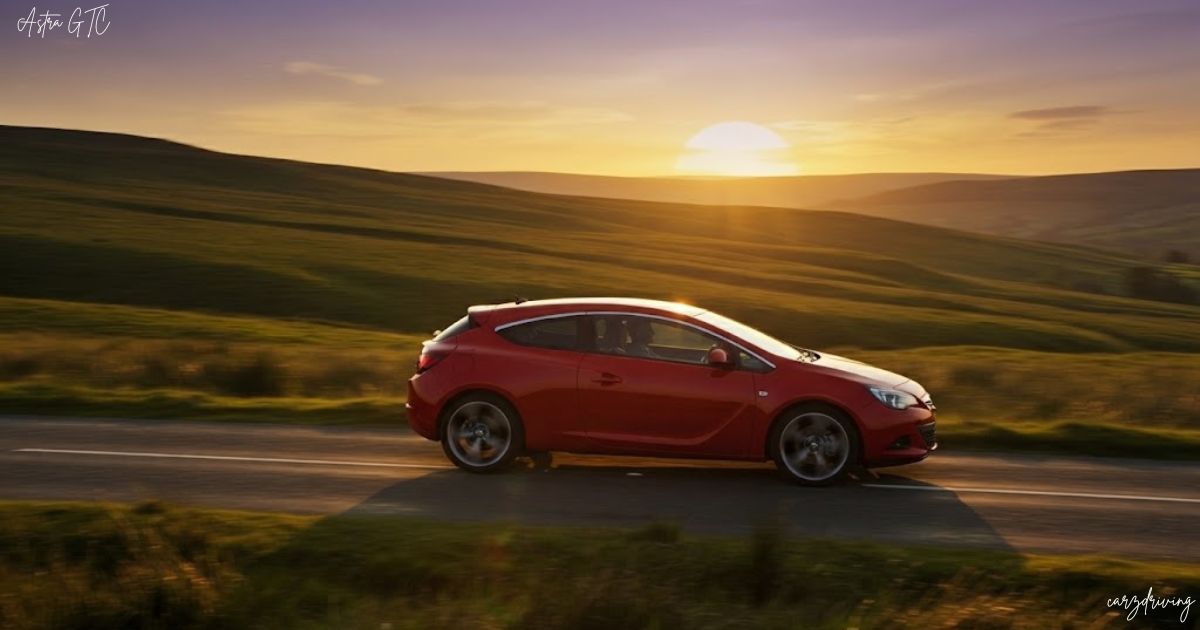
Look along the side and you’ll spot three distinct curves working together: the Vauxhall blade sweeping up from the rocker, a second crisp line running through the door along the waist, and a third tracing the roof profile back to the rear spoiler.
Up front, a centreline crease sits between eagle-eye-style headlamps with wing-shaped daytime running light graphics, while high tech LED lighting stayed optional on the rear lamps, echoing the same stretched wing motif. Lift the tailgate and you’ll find 380-litres of boot space, growing to 1165-litres of total volume once you fold the rear bench, a full 20% bigger than most rivals from the fourth generation Astra J-series.
Climb inside through the huge doors, which feel necessary given the coupe body shape, though they can be awkward when tightly parked. The layout borrows heavily from the MK4 pre-2015 Astra Hatch, dressed up with faux aluminium inserts across the centre console, air vents, and doors, and the chrome-edged instruments sit in deep-set binnacles that work well.
The cabin design feels sporty rather than flashy, the solid design puts occupants low for a proper coupe feel, and even with a smaller rear screen limiting rearward visibility and a restrictive view out, the rear seats stay genuinely spacious, giving you a practical interior and a truly roomy interior across two adults on longer journeys, all wrapped in solid British build quality with a height adjustable driver’s seat and a reach and rake-adjustable wheel.
What You Pay
Pricing stays spec-dependent, so it pays to think carefully before you sign anything. Sport covers the basics well, but SRi costs £1,225 extra and swaps in fatter bolstered items for the flat plain seats, which most owners tell me is money well spent.
Ask your dealer to fill in a form with up-to-date information, since priced keenly models move quickly and the engines here run genuinely fuel-efficient, especially the preferable diesel.
What to Look for In Astra GTC
Buying a used GTC means checking a few things carefully before you hand over any cash. Owners report a reasonable quality record overall, though some cars develop cabin rattles, and the aerodynamic skirt catches on kerbs more often than you’d expect.
Watch out for thrashed company hacks and ex-hire fleet vehicles, confirm the car has been serviced on schedule, and check that the mileage on the service record stamp matches the odometer.
Ask the seller directly about any accident damage, since many cars get de-fleeted early once they’ve been in a prang and repaired. Check the interior and look under the bonnet for overspray or kinks in the under-bonnet flitch plates, especially on cars sold through mainstream brand hatch models channels. The engines hold up as tough units with few problems, so use worn out brake pads and discs, or a weak car battery, as fair points for negotiation on price.
Replacement Parts
Keeping one of these running doesn’t need to break the bank if you shop around sensibly. Take the 2012 GTC 1.4 as an example: an oil filter runs £4-£9, an air filter costs £9-£19, and a wiper blade sits around £8, all figures quoted excl. VAT. Front brake pads cost between £30-£61 for a set, while rears run £16-£40.
Front brake discs land around £60-£103, and rear discs cost £43-£120 for the base 1.4-litre petrol model. A radiator sits in the £135-£176 range, a headlamp costs £116-£130, and a water pump runs £44-£94. A replacement thermostat finishes the list at around £54-£66, which keeps most repair bills manageable.
What Is It Like to Drive?
Plenty of drivers approach this car with low expectations, expecting something as dull as those frumpy five-door hatchbacks that came before it. Earlier Astra coupe models never bothered to feel exciting, and a glance at the badge work and under the bonnet suggests the same story here, but that assumption turns out completely wrong.
Every engine outside the potent 2.0-litre petrol turbo in the flagship VXR version matches the standard pre-2015 MK4 ordinary Astra, yet Vauxhall poured its engineering effort and investment into driving satisfaction instead, through sharper steering, a wider track, and a completely different suspension set-up.
That combination created the most engaging driver’s car Vauxhall built during the 2010-2015 era, beaten only by other Griffin brand models with the same HiPerStrut suspension system, since only the Insignia VXR turns into corners sharply with this much power down.
I honestly didn’t expect an Astra to beat a Megane Renaultsport or a Focus ST for reward behind the wheel, but this one manages it, and you don’t even need a FlexRide-equipped model to enjoy the ride and handling balance, tuned carefully for rough British roads.
Owners of a FlexRide adaptive damping system get a Tour setting for comfort or a Sport mode that stiffens the stiff chassis, adds steering weight, sharpens throttle response, and swaps the instrument backlighting from white to a heartbeat-pulsing red, all switchable through the on-board configuration menu.
Buyers chasing real excitement look toward the 280bhp VXR, sitting at the top of the range with a high performance version capable of 155mph.
Step down and the 16v 1.6-litre petrol Turbo offers 180PS, and even with a torque figure of 230Nm that trails obvious rivals, it still covers sixty from rest in 7.8s on the way to 138mph, with a genuinely rorty engine note to match.
Most buyers pick something calmer, whether that’s the 1.4-litre petrol Turbo units making 120PS or 140PS and reaching sixty in 9.0s, or diesel power through 1.7 or 2.0-litre CDTi diesel power, offered in 110PS or 130PS, with the 165PS 2.0-litre unit adding 350Nm of torque and feeling the most potent variant of the mainstream range, and every one of them drives through a six-speed
manual gearbox, with an auto gearbox option on the 1.4-litre petrol Turbo 140PS and 2.0 CDTi diesel models, though the engines can feel a touch clattery in the upper reaches of the rev range, the turbocharged 1.6 doesn’t feel quite punchy enough, and the 1.7-litre versions feel more silken but still show some top-end boom, all while remaining responsive and agile even during
an ordinary everyday commute, without any torque steer or steering corruption getting in the way, better than a Focus in almost every situation.
Overall
Plenty of shoppers looking at this segment skip straight past buying into an Astra GTC, chasing the MINI Coupe fun, the Volkswagen Scirocco quality, or the Peugeot RCZ style instead. That’s genuinely a mistake, because this car leaves its direct predecessors far behind and stops being just a three-door Astra Hatch in a dress.
I’d call it the best handling car in its class, the most practical choice, and probably the most affordable option too, and it manages to look great while doing all of that.
Sure, the interior could be more exciting, and some of the lower-order engines unremarkable feel a bit flat compared to the flagship, but plenty of obvious rivals share that same weakness.
If you can look past the desirable badge on rivals and give this mainstream-branded affordable compact coupe model a proper chance, it won’t let you down. Across the whole 2010-2015 period, this stands out as a genuine performance car for the everyday, and the GTC unlikely to disappoint anyone who actually takes it for a drive.
FAQs
Is the Astra GTC a good coupe to buy used?
Yes, the Astra GTC has a reasonable quality record and stays a genuinely affordable compact coupe worth owning.
What engines does the Astra GTC offer?
Choices range from 1.4 and 1.6 petrol turbos to 1.7 and 2.0 CDTi diesel units, plus the fiery 280bhp VXR.
How practical is the Astra GTC inside?
Despite its coupe body shape, it hides a genuinely roomy interior with a 380-litres boot and space for two adults.
Is the Astra GTC fun to drive?
Thanks to the HiPerStrut suspension system, it delivers real driving satisfaction and an engaging driver’s car feel.
What should I check before buying an Astra GTC?
Always inspect for accident damage, cabin rattles, and worn brake pads before agreeing on negotiation on price.