

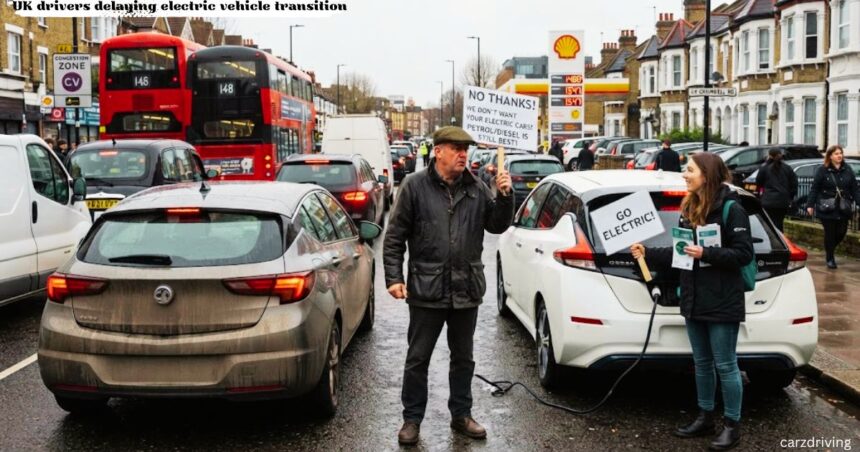
I’ve been following the story of UK drivers delaying electric vehicle transition in Britain for a while now, and one thing keeps standing out the public mood doesn’t match the political noise around it. Ministers talk about “difficult decisions” on green targets, yet ordinary drivers seem far less spooked by electric motoring than the headlines suggest.
When you actually sit with the numbers from recent surveys, a different picture forms: people aren’t rejecting EVs, they’re just cautious, practical, and waiting for the right moment. Let’s walk through what the latest data actually shows.
YouGov Polling on EV Transition Pace
When YouGov ran its polling on behalf of ChargeUK, the results caught a lot of people off guard, and even Andy Burnham couldn’t ignore what the numbers were saying. Most Brits don’t actually want the EV transition slowed down only 37 per cent feel that way, while 34 per cent think the pace about right, 19 per cent want things sped up, and 11 per cent simply did not know.
Break it down by party and the picture gets sharper: Labour voters from the 2024 election are split, with 21 per cent backing a slowdown against 27 per cent who’d rather speed up things, and the biggest chunk, 41 per cent, happy with the current pace.
Green Party supporters are the most enthusiastic, at 46 per cent wanting a faster shift and 30 per cent content with steady progress, while Liberal Democrat voters aren’t far off, with 68 per cent backing the same pace or quicker (39 per cent and 25 per cent respectively).
Age plays a bigger role here than most people assume. Younger drivers, those between 18 to 24 year olds, are the most eager for faster transport electrification at 36 per cent, and that enthusiasm fades with every age bracket 25 to 49 year olds sit at 21 per cent, 50 to 64 year olds at 14 per cent, and the 65 and overs trail behind at 11 per cent.
This matters politically because a Labour government that leans toward diluting ZEV mandate rules risks losing younger voters exactly when it needs them most. ChargeUK has been blunt about the stakes, warning against any dilution of the ZEV mandate the Zero Emission Vehicle Mandate that sets EV sales quotas for automakers and gives the charging industry the confidence to keep pouring money into infrastructure investment.
The organisation also points to fresh numbers showing that bringing public charging prices down below petrol costs, and making public EV charging genuinely affordable, could lift EV demand by 48 per cent, and Department for Transport figures confirm that eight per cent of UK adults already drive a battery electric vehicle.
Jarrod Birch, ChargeUK’s head of policy and public affairs, put it plainly: the public wants cheaper driving and cleaner driving, and delivering an ironclad ZEV Mandate would be a genuine voter-backed win, cutting reliance on foreign oil while adding to the four and a half million drivers already enjoying electric driving’s savings. Perran Moon, the Labour MP for Camborne and Redruth and chair of the Electric Vehicle APPG (All-Party Parliamentary Group),
went further, accusing the government of listening to legacy manufacturers while ignoring the EV supply chain from UK lithium mining and UK battery production to the UK charge point operators who are investing billions.
He also flagged an irony rarely discussed: 77 per cent of cars manufactured in the UK are actually exported, meaning they aren’t even covered by the domestic rules, and the real motive behind the lobbying of Government, he argues, is delaying the banning of new petrol and diesel vehicles by 2030 a manifesto commitment that shouldn’t be quietly dropped. There’s also a political risks angle nobody in Westminster seems keen to admit out loud.
Two-Car Households and Usage Habits
I’ve spoken to a few EV owners myself, and the two-car family pattern rings true from personal experience it’s exactly what Zenith’s EVXperience Report found.
The survey, which questioned nearly 2,800 of Zenith’s EV customers, discovered that 51% still keep a second vehicle running on petrol/diesel, and a striking 73% have no plans to go fully electric anytime soon. This isn’t stubbornness so much as insurance against uncertainty around longer trips.
Look at how people actually use their EV drivers habits day to day: 50% stick to short trips of up to 30 miles, while only 18% venture out for 60 miles plus.
Over 26% admitted they’re simply not confident tackling longer trips, and when asked why, 36% blamed unreliable public charging and 34% pointed to plain old range anxiety. It’s a fair concern nobody wants to gamble a family trip on finding a working charger.
What this really tells us is that the emotional side of driving an electric vehicle hasn’t caught up with the technical side. The EVX2 data, gathered by the UK’s leading independent leasing company, suggests that until charging infrastructure feels as reliable as a petrol station, many households will keep one foot in each camp.
The EV transition here isn’t stalling because people dislike EVs it’s stalling because backup plans still feel necessary.
Larger EV Models Increasing in Popularity
Something interesting is happening with the type of EV people actually want. Among the 26 car models in the sample, the most commonly owned EV models were the electric SUVs, and they stood out, with the Kia e-Niro, Audi E-tron, and Cupra Born all landing in the top five proof that drivers are chasing large family-sized models rather than small city runabouts. It makes sense: families weighing up going electric want space, not compromise.
Tesla still holds the title of preferred brand overall, but there’s a decline in drivers choosing Tesla vehicles, and that’s worth paying attention to. It signals a growing willingness among buyers to look past the obvious choice and try something new.
With the expanding range of available electric vehicle options now on the market, shoppers finally have room to explore different brands instead of settling for whatever’s most talked about. This shift away from the petrol or diesel vehicle mindset, one model at a time, is exactly what encourages drivers to switch to electric vehicles and might do more for adoption than any government scheme.
AA EV Readiness Index Overall Score and Trends
The AA’s numbers tell a cautiously optimistic story. The overall readiness score climbed to 53.8 in Q1 2026 covering December, January, and February up from 48.8 in Q4 2025 and 47.5 in Q3 2025. That’s genuine movement in a market that’s felt sluggish for a while.
The quarterly Index tracks eight indicators that shape drivers’ readiness to make the switch, rolling them into one Readiness Rating meant to reflect how practical and attractive EV ownership feels for motorists right now. This improvement comes down to better affordability and steady progress chipping away at long-standing consumer barriers.
Still, the AA isn’t popping champagne just yet. It warns that mixed messages from government policy, paired with lingering weakness in EV demand, could threaten the health of the used EV market for both fleets and manufacturers who depend on strong new EV sales to keep the whole system moving.
Falling Used EV Prices
Here’s the headline number that jumped out at me: used EVs were 10% cheaper than comparable internal combustion engine vehicles during the quarter, dipping below petrol cars for the first time since the Index launched back in September 2025. That’s a meaningful psychological shift for anyone sitting on the fence.
A lot of this comes down to lower-priced vehicles flooding in through ex-fleet supply, giving cautious motorists a genuine entry point into switching to electric without the premium price tag. It’s the kind of value shift that tends to convert sceptics faster than any advertising campaign could.
But there’s a catch worth flagging. The AA cautions that rapid depreciation is a real headache for fleets and manufacturers, since they rely on solid residual values to keep new vehicle sales and leasing models viable if the Readiness Rating keeps climbing on the back of falling used EV market prices alone, it could actually undercut the industry that’s meant to benefit.
UK Drivers Delaying Electric Vehicle Transition
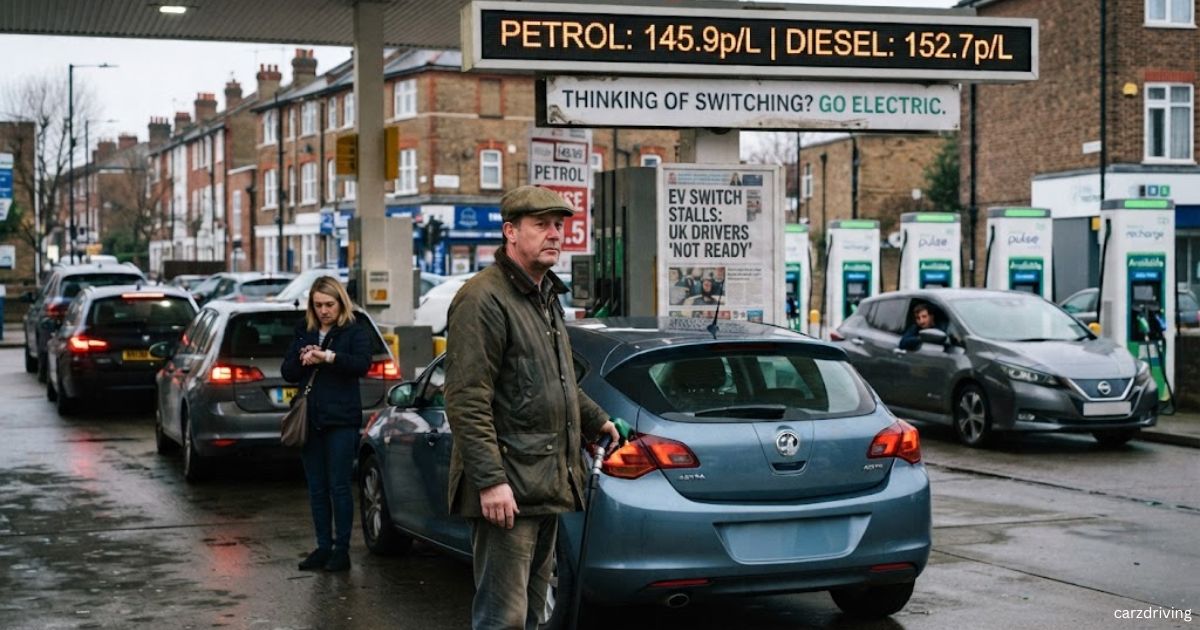
This is where the real story behind UK drivers delaying electric vehicle transition lives, in my view. Polling from over 12,000 AA members found that just 3% feel confident about buying a used EV, only 22% feel confident they’d know how to charge one, and 30% admit to feeling less confident driving an EV than a regular petrol or diesel car.
Add in that 55% say uncertainty around future taxes like eVED might put them off buying a new or used EV altogether, and it’s clear that confidence gap is doing more damage than price ever could.
Even the basics of EV costs and general consumer understanding of running expenses aren’t landing. Only 14% of drivers believe EV running costs genuinely beat petrol or diesel, despite plenty of evidence that home charging and maintenance are usually far cheaper in practice.
AA president Edmund King OBE summed up the tension well: conditions for switching to electric cars and buying used electric cars are improving thanks to cheaper used EVs, but the market remains fragile, and if prices fall too fast it becomes unsustainable for the manufacturers who fund most new electric cars in the first place.
He also pointed to something bigger on the horizon spiralling petrol and diesel prices tied to the situation in Iran weren’t captured in the Q1 Index, but could become an unexpected incentive to go electric as high fuel costs bite.
For now, though, keeping momentum going means clearer long-term policy signals from government and better informed choice tools for drivers, so people can decide when or whether to switch without feeling like they’re driving blind through a market that’s only just beginning to mature past its early adopters.
FAQs
Why are UK drivers delaying the electric vehicle transition?
Most drivers aren’t rejecting EVs they’re held back by a confidence gap around charging, costs, and long trips.
Do most UK drivers actually want to slow down the EV transition?
No, only 37% want it slowed, while the rest support the current pace or want it sped up.
Why do many EV owners still keep a petrol or diesel car?
Around 51% keep a second petrol/diesel vehicle as backup against range anxiety on longer journeys.
Are used EVs becoming cheaper than petrol cars in the UK?
Yes, used EVs are now 10% cheaper than comparable petrol cars, a first for the market.
What worries UK drivers most about switching to electric?
Uncertainty over future taxes, charging reliability, and unclear running costs keeps many drivers hesitant.