
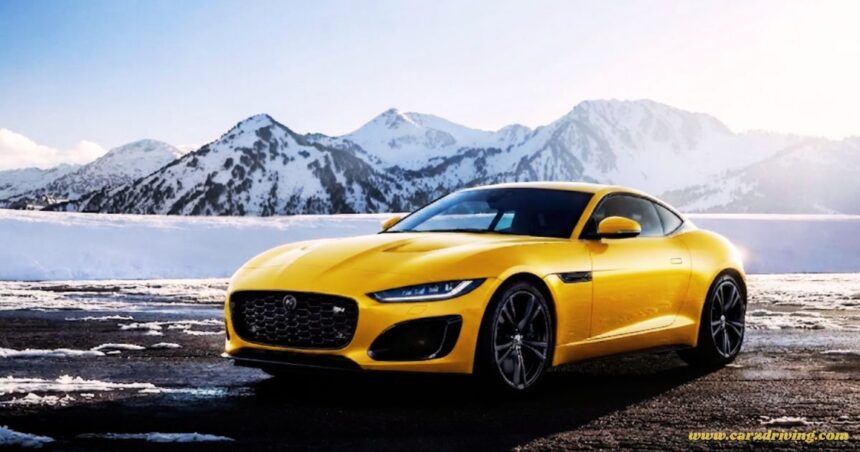
I remember the first time I saw a Jaguar F Type R Coupe parked outside a café, and it was deeply satisfying just to look at it. This British brand has a knack for building cars that turn heads, and this one traces its roots back to the XJ-S, a car that proved Jaguar could blend comfort with speed.
The styling of the F-Type is an aesthetic success from every angle, achingly pretty in a way few modern cars manage, and it comes from the Callum-era of design when the marque trusted its own instincts. Add four-wheel drive, or AWD as Jaguar likes to badge it, to the mix and you get a car that grips the road like one of the big cats the brand is named after.
Jaguar F Type R
The F-Type R sits above the standard model as the version enthusiasts actually want, shaking off any label of being a wannabe E-type and instead carving its own place in Jaguar’s sports car line. It belongs among the most desirable cars money can buy, thanks to a petrol engine that gives the R form its brutish side and plenty of drama on demand.
Anyone who has driven the Jaguar F-Type R 75 knows this is no gimmick; it is a critical success in every sense, a rear-wheel-drive monster that quickly became the brand’s unofficial flagship and a genuine modern classic.
Jaguar’s heritage runs through every panel, echoing the 3.0 supercharged S models that came before while nodding to the E-type Series 1 that started it all. Even as EVs take over showrooms, the F-Type stands as proof that a British sports car with electronically controlled systems can still deliver honest handling.
It looks beautiful parked still, yet stays planted even in slippery driving conditions, thanks to a chassis that never fell into a soft-edged design trap. This reboot of Jaguar’s sports car story deserves the attention it gets, and after sampling its performance potential, it is easy to see why the Jaguar F-Type R Coupe sits at the top of the range.
At a Glance
In short, the V8 Jaguar is great to drive but expensive when new, and that sums up the whole story. On the Pros side, you get muscular styling and an engine note that stops traffic.
On the Cons side, the interior feels a touch dated next to newer rivals. Still, the Glorious V8 engine makes up for most of it, and the whole package has aged well.
What’s New?
Go back to 1948 and the XK120 and you find the same gravitas that still surrounds Jaguar sports cars today. To mark 75 years of that history, Jaguar rolled out the R 75 editions, later known simply as F-Type 75, before production ended on the whole line.
These send-off cars kept the same animal character without any major mechanical changes, though buyers did get a few styling tweaks such as blacked-out badges and 20-inch wheels.
While Jaguar shifted attention toward the XF and the four-door GT shape, and toward high-tech EVs, this remained a proper sports car to the end. As a used car today, these run-out models hold real appeal, coming with full leather trim as standard.
Jaguar has also stopped the XE, and by May 2024 the brand had confirmed its shift to becoming a pure electric brand, with EVs taking over from 2025 onward. Even so, the F-Type remains a modern classic that will be missed.
What Are the Specs?
Under the bonnet sits a 5.0-litre supercharged petrol engine, and this V8 unit only adds about 80kg over the four-cylinder F-Type, so it never feels nose-heavy.
The standard F-Type with the 3.0 V6 Supercharged engine gives 380Ps and manages 0-60mph in 4.0 seconds, while sipping fuel at around 27mpg. Step up to the R and its twin scroll supercharger wakes up 550Ps and 700Nm, sent through an eight-speed ZF auto gearbox that also appears as the eight-speed auto box on lesser models.
The ZP Edition pushes things further still, with 567hp and 503bhp depending on the tune, dropping 0-62mph to 3.9 seconds or even 3.5 seconds on the quickest AWD model, and pushing on toward the 60 mark without any drama.
This supercharged V8 engine shows real economy is not the point, at 25mpg to 30mpg on a gentle day, with 239g/km CO2 reminding you why collectors love it while newer rules push toward E-fuel and cleaner options by 2050.
The transmission hardware and adaptive suspension work with the chassis to keep the car composed, while the two-wheel-drive model stays lighter than its AWD sibling.
A bonnet bulge hints at the 5.0 V8 underneath, and a fixed spoiler at the back helps stability past 186mph, with the fastest cars touching a 186mph maximum.
Inside, the extended leather interior pairs with a Meridian sound system for long trips, and even small details, like a ride height dropped by 10mm, show how much engineering went into keeping this V8 planted.
How Does It Drive?
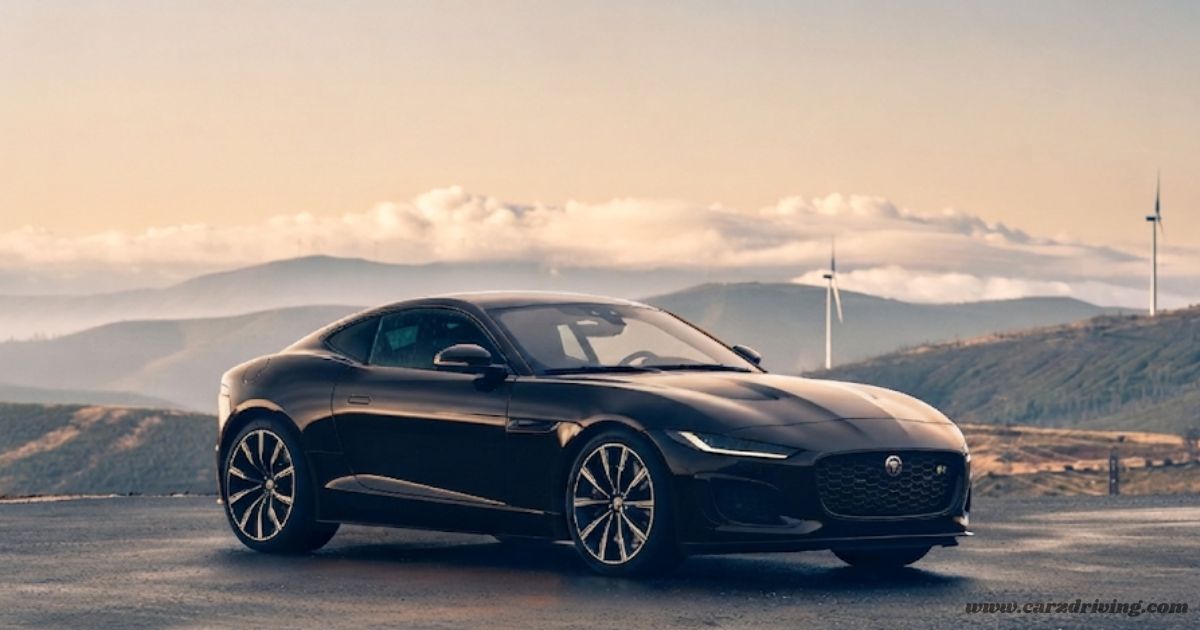
Flick the exhaust switch to Active Exhaust mode and the car barks with real torque on tap, thanks to a rigid body shell that keeps everything tight.
Select Dynamic Mode and the throttle sharpens instantly, though a stab of wheelspin off the line reminds you this is a serious machine, not a toy. The aluminium body shell blends a sports car-GT blend feel, with plug welds holding everything together like it should last decades, and the result is an entertaining sports car at every speed.
Power reaches the front wheels through a system that once used a simple hydraulic PAS system, though later chassis changes brought sharper responses that hold their own against a Porsche 911 through fast cornering.
Look behind and you will spot the quad slash tail pipes poking out beneath the boot spoiler, both hinting at how agile this car feels down twisting back roads. The ZF gearbox snaps off gear changes almost before your foot leaves the throttle pedal, and the engine noise alone is worth the price of admission.
This is brutish performance delivered in a way that feels almost Quattro-like when all four wheels dig in, yet the steering stays light enough for daily driving. Engineers spent real time on damper settings, tyre equipment, springs, and the rear axle, all to make the car confidence-inspiring even when pushed hard — you could fill a wing of the British Library with notes on how much tuning went into it.
Drivers who prefer three pedals can still use the manual paddle shift, while up to 608Nm flows through a centre differential that splits drive front to back. The ride setup stays firm without punishing your spine, the switchgear falls easily to hand, and steering turn-in feels sharper than most rivals thanks to an electronically controlled clutch managing grip.
Push too hard and the traction control light flickers, but body control stays composed throughout. A performance exhaust system pairs with fade-free brakes, stiff anti-roll bars, and smart stability control to keep everything in check, and that deep V8 sound never gets old. All of this comes together in a rear-biased four-wheel-drive system that launches off the line with a landing speed feel more suited to a runway than a road.
What About the Interior?
Slide inside and this feels less like a stripped-out GT and more like a proper cockpit, with dials set low for a sporty driving position. Whether you pick the coupe or the cabriolet version, the materials feel good under your fingers, and the buttons have a satisfying click.
The Pivi Pro system runs the infotainment, though some drivers miss the old analogue setup for the instruments.
Practicality is not bad for a sports car there is room for weekend bags, a few pockets dotted around, and a boot that swallows more than you’d expect, even fitting a set of golf clubs.
The exterior promises a two-seat layout, and the interior does not disappoint, with enough space for two adults to sit in comfort. A 10.0-inch touchscreen sits front and centre, and the performance seats hold you tight through corners without feeling like a straightjacket.
Before You Buy
New, prices started around £65,000 for entry cars, climbing close to £85,000, or the full list price of £107,155 for a loaded R model, with some rare delivery-mile examples still showing up near £67,355 in the collector world. Today, the classifieds show good used cars from about £25,000, which is a real benchmark for anyone chasing that badge.
New GSR2 safety regulations pushed Jaguar to tweak certain features late in the car’s life, but the heritage on offer here still beats plenty of rivals.
Cars like the Lexus LC500 and the BMW M4 both offer superstar looks and drama of their own, and the Porsche 911 remains the obvious yardstick for supercar performance at this money. Even the four-cylinder version holds its own if you cannot stretch to a V8.
Verdict
Looking back at its history, the Jaguar F Type R brought pure joy to anyone who drove one, even if it was slightly flawed in small ways.
The overall driving experience stays hard to beat, wrapped in what many call Callum’s design masterpiece. This is a proper Jaguar through and through, and with the V8 full chat, the whole thing is a chef’s kiss for fans of proper petrol sports cars.
Now that we have reached the end of the road for this generation, buying one feels like a smart investment, since it stays thoroughly loveable as a future modern classic packed with real charm.
FAQs of Jaguar F Type R
What makes the Jaguar F-Type R such a desirable car?
Its glorious V8 engine, muscular styling, and brutish performance make it a true modern classic that’s hard not to love.
How fast is the Jaguar F-Type R from 0-60mph?
The AWD model hits 0-60mph in around 3.5 seconds, delivering pure drama every time.
Is the Jaguar F-Type R good to drive on twisting back roads?
Yes, its agile handling and rear-biased four-wheel-drive system make it a truly entertaining sports car.
What’s a fair price for a used Jaguar F-Type R today?
Good examples start around £25,000, a solid benchmark for such supercar performance.
Does the Jaguar F-Type R still feel special as a modern classic?
Absolutely its V8 sound, heritage, and charm make it genuinely loveable even today.