
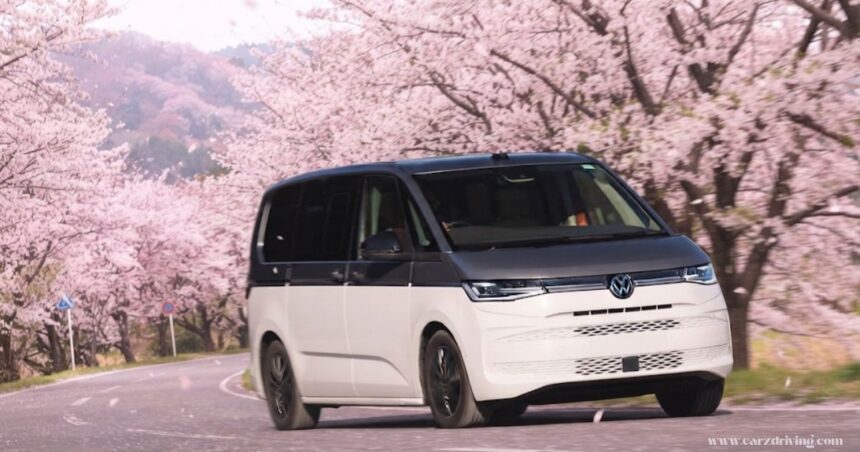
VW Multivan built by Volkswagen Commercial Vehicles but riding on the same MQB architecture and car-based platform that underpins the wider VW Group, this is one of those rare beasts that blurs the line between a purpose-built people carrier and a genuine hybrid family car.
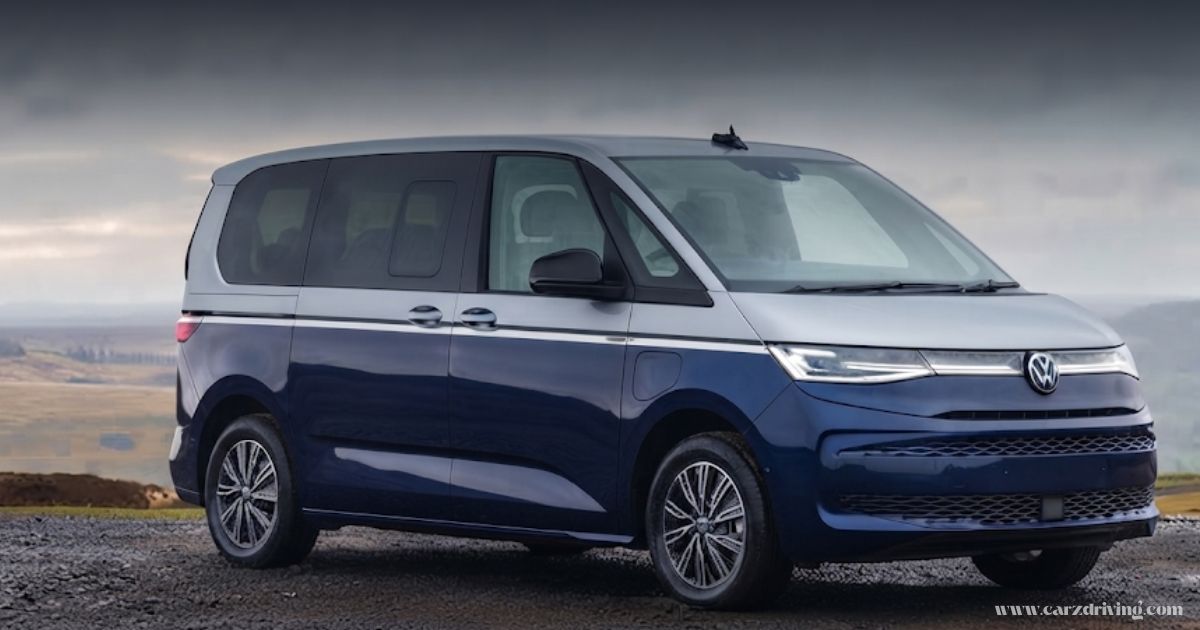
It carries seven seats as standard, comes in two lengths, and can be ordered in an exotic range of colours, including two-tone shades and a chrome beltline option that nods to its cultish Microbus heritage.
Under the bonnet, buyers get a choice of petrol, diesel, or one of two plug-in hybrid powertrains a 1.4-litre petrol engine paired with a 114bhp e-motor and 13kWh battery for 215bhp and up to 31 miles of electric range, or a punchier setup for longer runs.
We spent weeks testing it, including a proper Christmas getaway road trip to Cornwall (basically VW van heaven), and came away impressed by the exterior design, which manages to look aero-optimised and safety-optimised without losing its boxy charm.
It’s no surprise the Volkswagen Multivan won Best Seven-Seater at the 2024 Parkers New Car Awards the interior details, clever packaging, generous luggage room, and thoughtful luxuries make it feel genuinely pragmatic rather than showy, easily outclassing rival SUVs and standing apart from its VW car counterparts like the Caravelle as one of the best MPVs and the ultimate executive shuttle for anyone chasing real creature comforts in the new car market.
What’s new?
VW currently sells three vehicles shaped like this one, so it’s worth knowing where the Volkswagen Multivan fits. The new Volkswagen Transporter now rides on the Ford Transit Custom platform, and it can spawn a Caravelle variant, while the ID.Buzz leans hard into the retro card but falls short on genuine interior intelligence.
Since 2022, the Multivan has quietly stepped away from van underpinnings entirely and adopted the MQB platform, which makes it noticeably quieter inside and it now underpins the latest VW California camper, worth reading about in a separate VW California review.
Both Standard lengths and Long lengths are offered, with the longer version adding useful luggage space thanks to its extended rear end, and both get sliding rear side doors with optional power assistance.
We’ve clocked over 1,200 miles in the plug-in hybrid version during summer 2024, plus a full long-term test, and it’s fair to say ultra-practical Volkswagen engineering runs right through it.
Standard kit includes an automatic gearbox, a high-tech dashboard, and a genuinely clever seven-seater interior, with individual seat units running along a rail system across the five rear-most chairs for endlessly flexible layouts a level of people-carrying practicality the electric MPV simply can’t match.
Its nearest new-generation rival, the Mercedes-Benz V-Class, sits at a steep price, while the Peugeot Traveller, Vauxhall Vivaro Life, and even big SUVs like the Skoda Kodiaq all fall short on outright space.
Despite its boxy shape, the Multivan still draws admiring glances, and among three similarly sized MPVs in VW’s current lineup, it avoids the EV-related challenges and unflexible interior that hold the campervan-adjacent ID.Buzz back.
Should I buy a VW Multivan?
If you need room for seven people, genuine interior space, and flexible seating that adapts to real life, the Volkswagen Multivan is worth serious consideration it drives with proper car-like handling and modern technology, and as a plug-in hybrid seven-seater it asks for zero compromise.
Yes, it looks van-shaped, and yes, the VW infotainment system has its quirks, but neither is a dealbreaker once you’re behind the wheel enjoying this well-conceived upgrade over almost anything else in its class.
The only genuine rival, the Mercedes-Benz V-Class (essentially a posh Mercedes Vito van), can’t quite match the Multivan’s exceptional interior flexibility, and its efficient plug-in hybrid setup remains unique in the large people-carrier class.
Between the comfortable ride, the sheer practicality, and pricing that’s a cut above the van-based opposition, it’s simply a better family car than most large SUVs if you want an EV instead, that’s what the ID. Buzz is for.
At a glance
Neat to drive and genuinely flexible interior-friendly, the Multivan earns its badge as one of the best seven-seaters on sale today. The DSG auto gearbox can feel a touch lazy in traffic, and long-time VW owners will recognise the usual VW infotainment gripes, but neither undoes the overall package. It remains an easy car to live with day to day, warts and all.
Verdict
If you’re shopping for a new model in this big bus category, start here the interior flexibility beats everything else in the sector. The Mercedes V-Class still wins on maximum luxe, but the Multivan drives better than the van-based alternatives stacked against it. For most families, it’s simply the smarter buy.
What are the specs?
Engine choice comes down to petrol, diesel, or plug-in hybrid, though every version shares the same DSG auto transmission. The diesel makes 148bhp and 266lb ft from its 2.0-litre TDI, helped along by twin-dosing tech and a realistic shot at 40mpg, while the 2.0-litre TSI petrol offers 201bhp and 236lb ft both default to front-wheel drive, with 4Motion all-wheel drive available.
The standout is the eHybrid, combining a 1.5-litre petrol engine, an e-motor, and a 19.7kWh battery pack for an 8.9sec 0-62mph sprint and around 55 miles of engine-off performance.
Body styles split into Standard forms and Long forms, the latter stretched 200mm behind the rear axle for extra boot space while still seating seven seats. Even the shorter version measures 5m long, though a sub-2m height means overhead restrictors shouldn’t be an issue either way.
How does it drive?
This big beast feels tighter on the road than its Caravelle predecessor, thanks to a stiffer body structure, reworked suspension, larger bushings, aluminium components, and forged alloy wheels that trim unsprung mass by 45kg.
The driving position sits lower and more car-like, facing a digital instrument cluster and a 10.0 inches infotainment screen, plus a shift-by-wire DSG toggle and optional head-up display.
Fewer rattles, fewer shimmies, and better-absorbed bumps make the cabin feel calmer, while sharper steering delivers more direct feel, cleaner turn-in, and reduced understeer.
Dynamic Chassis Control is optional, but the non-adjustable suspension works just fine without the odd resonance some urban surfaces bring out.
The petrol sounds thirsty and a little reedy thanks to its fossil-fuel habit, the diesel sounds gravelly but nets 40s-ish mpg, and the eHybrid rounds it off nicely, cruising comfortably with a welcome dose of e-motor assistance and genuine EV-like calm a 25% less lean figure over the old model sums up the improvement.
Interior, technology and safety
This cabin is real evolution rather than revolution, though a Caravelle owner might notice a step back here and there even so, it sits close to Mercedes V-Class levels of ambition.
All chairs are now individual chairs, roughly 25 per cent lighter at just 23-29kg each, making them far easier to remove than the old 90kg rear bench, sliding freely along three rails for real versatility, with an electrical connection even allowing heated seats in the back.
The transforming table now slides right up front to double as a center console, though the middle row seats no longer swivel, so building a mobile lounge takes a bit more effort despite the weight reduction.
Squeezing into the back row stays a bit of a scramble, and although headroom matches the old car despite a roofline that’s 43mm lower, skinnier windows make it feel tighter a 1.8m2 panoramic roof helps brighten things up.
The digi-dials read clearly, but the infotainment still carries familiar touch-sensitive frustrations typical of VW Group products, just four USB C ports feels stingy for a family car, and while the power-sliding doors and power-opening tailgate now respond to a foot-waggle, it’s easy to trigger the door closing process by accident while wrestling a child seat.
What different versions are available?
Buyers choose between Life and Style trims, each available on Standard wheelbase or Long wheelbase bodies.
Life covers the essentials with 16-inch wheels, digital instruments, adaptive cruise control, all-round parking sensors, a reversing camera, and keyless start. Style adds larger alloys, navigation, matrix LED headlights, three-zone climate control, heated front seats, a powered tailgate, and electric rear sliding doors.
How much does it cost to lease or buy?
Pricing starts around £50,638 for a Life spec with the TDI diesel engine, while the Long version adds roughly £1500, and the plug-in hybrid Multivan eHybrid begins at £55,360.
A typical PCP agreement runs about £300 per month on a three-year deal for a base-spec TDI. Compared with the Mercedes V-Class or the Ford Tourneo Custom which only offers diesel power and costs £5k higher the Multivan looks like genuinely good value.
How does VW’s Multivan cope on a long-distance roadtrip?
Our 276-mile journey on VW’s Multivan was almost entirely spent on motorways, and thanks to light steering and well-weighted pedals, the miles passed easily despite some road noise creeping in at speed enough to prompt conference calls from passengers who compared the cabin to a spaceship,
praising the armchair-like seating, individual climate controls, USB ports on every row, and a height adjustable centre console complete with cupholders and fold out tables, even if the persistent rattling got a bit tiresome.
It’s a calmer cabin than the ID.Buzz overall, though the hybrid engine burns through its stored electricity fast, suiting town dwellers better than genuine long-distance journeys where hauling weighty batteries dents efficiency we still managed a solid 40.1mpg.
A further 300 miles around Cornwall revealed just how loved VW’s vans are there, with Caddys, Californias, and Caravelles everywhere, and the Multivan pulled plenty of attention of its own.
The sliding doors made parking easy, though the electric tailgate demands care to avoid an accident with anything parked too close behind.
Our five hours journey home stretched into seven hours, but between an audiobook, a picnic, and the handy sliding centre console, nobody minded across 850 miles total, it stayed comfortable, spacious, and thoroughly practical for both two-legged passengers and four-legged passengers alike,
including Dudley our Golden Labrador, who enjoyed 469 litres of boot room behind the third row, 1,844 litres (or 1,850 litres with the panoramic glass roof) behind the second row, and a huge 3,672 litres as a two-seater once we removed two of the seven seats using the simple red tab and folding seats trick.
FAQs of VW Multivan
Is the VW Multivan a good family car?
Yes its seven-seater layout, flexible individual seats, and spacious interior make it one of the best MPVs for real family life.
How much electric range does the VW Multivan eHybrid offer?
The plug-in hybrid eHybrid delivers up to around 55 miles of engine-off electric range from its 19.7kWh battery.
What is the boot space in the VW Multivan?
It offers 469 litres behind the third row, 1,844 litres behind the second row, and up to 3,672 litres with seats removed.
Is the VW Multivan better than the Mercedes V-Class?
The Multivan can’t quite match the V-Class on outright luxury, but it wins on interior flexibility and everyday value.
What engines are available in the VW Multivan?
Buyers can choose petrol, diesel (TDI), or the standout plug-in hybrid eHybrid powertrain, all paired with a DSG automatic.