
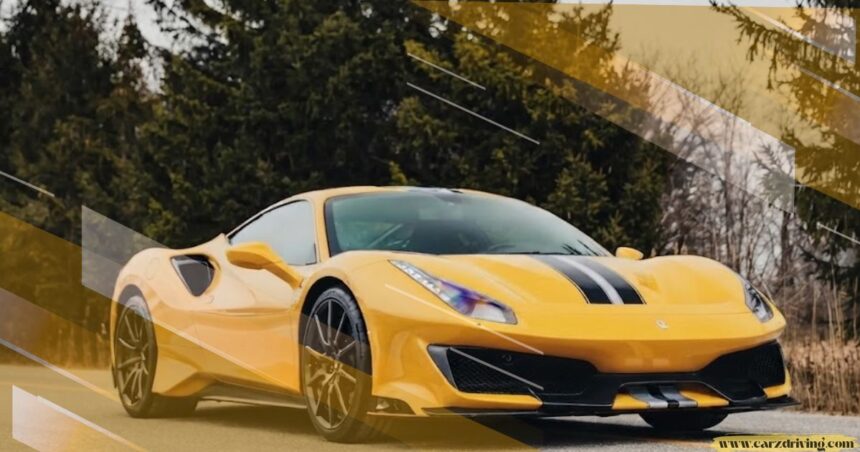
Every time I think about the Ferrari 488 Pista, my mind drifts back to the workshops of Maranello, where this road-going beast first took shape in 2018. This car did not appear out of nowhere; it stands on the shoulders of true hero cars like the Challenge Stradale, the F430 Scuderia, and the unforgettable 458 Speciale.
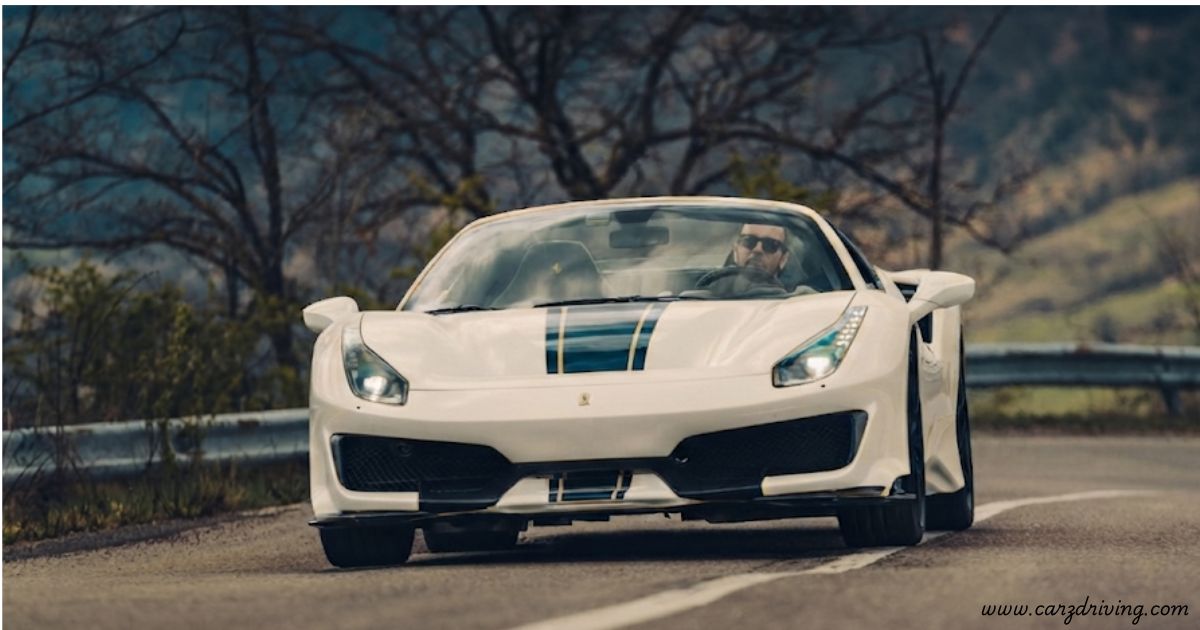
The Ferrari 488 Pista
Each of these predecessors pushed the boundaries of what a special series sports car could achieve, and the 488 Pista simply continues that bloodline with a titanic leap in raw ability.
The name itself carries weight, since track in Italian captures exactly what this V8 supercar was built for. Ferrari borrowed heavily from the 488 Challenge and 488 GTE racing programs, applying real technological transfer from the track to the road, and that heritage in motor sports runs through every panel of the 488 Challenge car.
I have watched generations of Ferrari owners talk about the thrill of feeling that connection to racing DNA the moment they sit behind the wheel.
Go back to 2003 and you find the 360 Challenge Stradale, the car that started this whole V8 Special Series story, and from there the line of track-ready machines never stopped evolving.
When I finally saw a camouflaged 488 Pista prototype completing laps on an empty circuit, its flanks already hinted at serious aerodynamic intent, long before anyone confirmed the performance numbers.
Testing this car is not only about world’s circuits; it also means hours spent stuck in traffic and winding along hillside routes, just to understand how it behaves away from the track.
I remember chasing that evo feeling of absolute control, wondering whether the V8 engine could really shrug off turbo lag the way rivals like Porsche, BMW, and their AMG V8 never quite managed.
With the 488 GTB as its starting point, the 488 Pista answers that question without needing quotation marks to soften the claim, delivering pure adrenaline on both roads and racetracks alike.
Engine, Transmission & Performance
Under the skin, the 488 Pista hides the F154CD twin-turbo V8, built from 50% new parts shared directly with the Challenge car. Ferrari’s engineers squeezed out 711bhp at an eye-watering 8,000rpm, backed by serious torque, making this the most powerful V8 the company had ever built for a road car. That 488 GTB’s engine was already impressive, but this major overhaul turned it into something else entirely.
The heart of the car measures 3902cc, and it earned the title of International Engine of the Year in both 2016 and 2017, a genuine electrifying achievement for a turbo engine. Compared to the GTB’s engine, this power increase of 49bhp marked the largest leap ever seen in a Ferrari special series car, beating the previous record by 11bhp and finally silencing any doubt about being free of lag.
Every gear change relies on a seven-speed twin-clutch gearbox, using a shotgun gearshift strategy that makes upshift and downshift movements feel instant, with shift times faster than any human reflex. Watch the shift lights flare near the red-line, and you hear the revving climb until the gearbox grabs new cogs without hesitation. This 488 engine simply refuses to feel tired, staying madly accelerative all the way through the rev range.
Ferrari didn’t stop at the motor either; the all-new exhaust system produces a genuinely hair-raising song, while the chassis electronics keep everything composed under such brutal contempt for grip limits.
Braking gets serious treatment too, with powerful discs and a servo tuned for confidence in the braking zones, and the whole package still feels like a pinnacle supercar rather than a lab experiment.
With 710bhp on tap, 90kg less weight than the standard 488 GTB, and 50 more horses compared to its sibling, this Ferrari transmission and engine combination sends serious revs, real power, strong grips, and proper aerodynamics-backed stability straight to the tarmac, all without a trace of that dreaded lag.
That relentless engine power comes from 568lb ft of torque working alongside a proper V8 engine, and few engines anywhere match this level of drama, making it a true benchmark for the class.
Technical Highlights
Pop the engine cover and you find fresh valve gear, revised cams, reworked cylinder heads, lighter titanium rods, and new pistons, all part of serious weight reduction work.
Every one of the turbochargers now carries its own electronic speed sensor, feeding a smarter electronics package that Ferrari calls the Ferrari Dynamic Enhancer, or FDE, working alongside stability control through the CT Off phase of the Manettino switch.
The result is a car 90kg lighter than a loaded 488 GTB, dropping to a claimed 1,280kg dry, with 18kg saved from the engine alone.
A further 9.7kg disappears thanks to the inconel exhaust system, which also makes the cabin 8db louder, while another 6kg comes off through a redesigned cooling system.
That cooling system reshapes the nose, tilting the radiators back so hot air escapes through the floor rather than along the car’s flanks. The holes on the sides no longer feed the engine directly; instead they now serve larger intercoolers, positioned higher, with air intakes moved onto the rear deck in front of the wing.
Aerodynamically, the whole shape owes a debt to the same team behind Ferrari’s GT3 and GTE-spec racers, and that motor-sports experience shows in every curve.
The F1-inspired front S-Duct forces air tightly over the front bumpers and along the bodyshell, while the plain S-Duct shape and the front diffusers work together to guide air cleanly beneath the nose before it reaches the underbody tunnels.
Extensive work on the underbody and rear diffuser boosts downforce without punishing everyday driving, and underbody vortex generators, a taller rear blown spoiler, and a double kink borrowed from the 488 GTE all combine for stronger air extraction and real downforce generation.
None of this happened by accident; the whole dynamic development process aimed squarely at faster lap times and quicker standing starts.
Ferrari’s team studied the centre of gravity carefully, concentrating weight-sensitive areas away from the middle of the car, and fitted an all-new Side Slip Control System to sharpen responsiveness and agility. The braking system received real attention too, alongside the bespoke Michelin Sport Cup 2 tyre developed with tyre partners at Michelin.
Materials matter just as much as shape here; ultralight materials such as carbon-fibre appear across the rear spoiler, rear bumpers, and even optional 20″ carbon-fibre wheel rims, while Lexan replaces glass in the rear window to save further weight.
Every one of these lightweight options on the GTB platform pushes the compression ratio and the redesigned intake system to work harder, feeding a completely reworked air intake and intercooler layouts first proven on the 488 Challenge cars.
Sitting in the cockpit, you can feel that this front-to-rear obsession with the diffuser and every aerodynamic performance detail was never just for show, since the car can be powerslided with a genuine safety net built in through the electronics.
Driving Experience
Climb inside and the simplified trim makes its intentions clear right away, with no glovebox, no radio, and a snug bucket seat held by an optional four-point harness. The 488’s cockpit wraps around you in alcantara, complete with fabric door pulls, and squeezing the right paddle before the throttle confirms this car means business from the very first bend.
Despite that focus, the ride stays composed enough for everyday transport, thanks to a slightly firmer spring rate, recalibrated damping, and firmer springs that never punish you with harsh harshness.
Ask for full bore acceleration and the engine’s colossal outputs arrive with a pitch tone that rises toward the red-line, the digital speedo climbing into three figures almost before you register it, like watching a video game play out in real life.
That kind of acceleration demands genuine self restraint on public road surfaces, since traction breaks loose in second gear, third gear, and sometimes even fourth gear on hot sticky tarmac. Even so, the throttle response stays sharp and honest, never once betraying the inertia you might expect from such a ferocious amount of power.
Every one of the shift lights flickers and every gearbox change happens through a rhythm that feels closer to F1 driver-levels of skill than typical road driving, yet the steering, balance, and handling stay friendly and balanced the entire time.
The chassis genuinely communicates, cajoles, and coaches you toward confidence, while the electronic systems, including side-slip control and FDE, allow real slide and high jinks without punishing small mistakes. Squeeze the brakes, feel that reassuring pedal feel, and trust the race car solidity underfoot even when the rear tyres are working right at the edge of grip.
On the motorway, the car feels almost restful, since heavier steering calms things down through high-speed curves, while carbon fibre wheels cut unsprung weight and smooth out the road noise on long journeys.
The V8’s sound shifts easily from a soft hum to an epic noise, with barely any turbo whine or wastegate hiss disturbing the louder tone that reminds you of the 458 Speciale’s naturally aspirated screamer.
Switch into race mode and the whole car sharpens into an exploitable drive, proving that this GTB-based track weapon, fitted with Michelin Cup 2 tyre rubber, still carries genuine emotive qualities alongside its blistering pace.
Even after all that drama, every gearchange still leaves you free to just feel the car, sitting in that snug cockpit, tapping the paddle or resting a foot near the brake, fully aware of what this machine can do.
Interior and Rivals
Step inside of ferrari 488 pista and the cabin drops every superfluous elements, leaving a pure racing feel built from lightweight technical materials like carbon-fibre and Alcantara.
That kind of meticulous crafting and sophistication shows in small details, from contrasting hand-stitching and tread plates to heel rests finished in triangular pattern aluminium, alongside beautifully sculpted door panels that match the Ferrari cockpits signature look.
On price, the closest rivals and toughest competition come from familiar names. Porsche GT2 RS, especially with the Weissach Pack, matches similar power and speed figures, making for a genuinely close fight.
Lamborghini Huracan Performante brings plenty of noise but never feels quite as sophisticated, while McLaren’s 720S is the only rival from Woking for now, at least until a proper track-focused version arrives to challenge the Pista directly.
FAQs of Ferrari 488 Pista
What makes the Ferrari 488 Pista different from the 488 GTB?
The 488 Pista is 90kg lighter, packs 711bhp, and adds real track-bred aerodynamics the standard 488 GTB doesn’t have.
How much horsepower does the Ferrari 488 Pista have?
It produces 711bhp from a twin-turbo V8, making it the most powerful V8 Ferrari has built for the road.
Is the Ferrari 488 Pista good for everyday driving?
Yes despite its ferocious performance, the ride stays composed enough for genuine everyday transport.
What does “Pista” mean and why is it significant?
“Pista” means track in Italian, reflecting the car’s deep racing heritage and motor sports DNA.
Who are the Ferrari 488 Pista’s main rivals?
Its toughest rivals are the Porsche GT2 RS and Lamborghini Huracan Performante, with McLaren’s 720S close behind.