

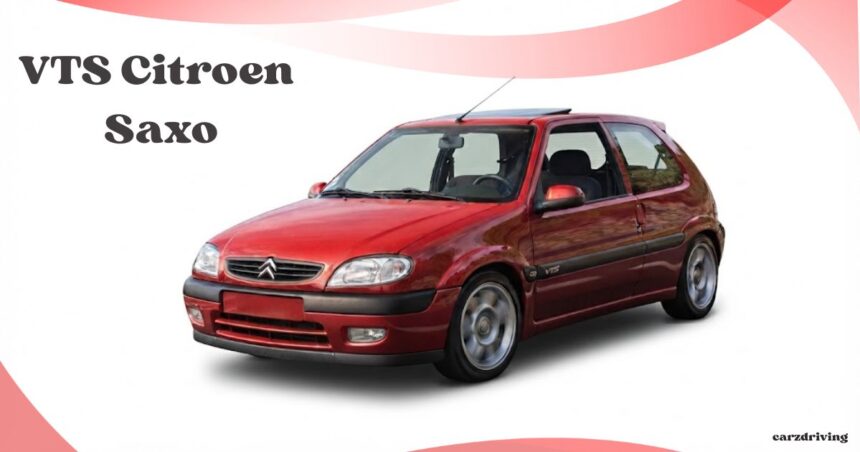
I still remember the first time a friend let me sit in his VTS Citroen Saxo, and I understood right away why people talk about this car with so much love. Citroën built this little machine to give normal drivers real driving pleasure without a huge price tag, and that idea still feels fresh today.
The car wore a simple badge, yet everyone on the street knew what it meant the moment they heard the engine, and owners still call it a genuinely reliable little runabout.
Back in 1998, Citroën gave the Saxo lineup a fresh look, and buyers could pick between a three-door version built for fun and a five-door version made for the family-oriented version of daily life.
Some of these Hot versions later ended up forgotten in police impound lots, which sounds strange now that the Saxo supermini has become one of the modern classics every fan wants to own. The car earned a name among the Max Power brigade for being loud, cheeky, and full of energy, yet it stayed affordable enough for young drivers to actually buy one.
What makes the Saxo VTS special is how it behaves like a proper go-kart on the road, even though people call it a simple city car.
Citroën built this French sports car to sit inside the world of compact sports cars, and it gave real accessible performance to anyone chasing fun behind the wheel. After thirty years, the model still pulls in new driving enthusiasts, and marking its anniversary shows how desirable and tricky to find, a good one has become; getting hold of a clean example today takes real patience.
Origins & History of VTS Citroen Saxo
The story of this hot hatch starts earlier than most people think, with the AX back in 1986. Citroën used that small car to build its name inside the sporty city car segment, and the AX Sport and AX GTi earned respect for their sharp handling and excellent power-to-weight ratio. When February 1996 arrived, the Saxo stepped in as the entry-level model for the brand, taking over duties from the older AX. The Saxo VTR showed up that same year with a 1.6-liter, 8-valve engine that pushed out 90 hp, carrying the sporty legacy forward.
Soon after, engineers built the true successor using the TU5J4 engine, a 16-valve unit good for 120 hp, and this became the heart of the real VTS. Italian designer Donato Coco shaped most of the Saxo, but the sporty variant landed in the hands of a young talent named Gilles Vidal, who designed the VTS body kit as his very first project.
He gave the car neat fender flares blended into the rocker panels, along with widened bumpers that flowed smoothly around the rear fenders, stretching from the wheel arch to the door cutout and tucking under the side protective trim.
By 1997, Citroën pushed a lineup update across the whole sporty family, bringing back the old 16v badge once worn by the ZX.
This change made the VTS designation available on more trims, so the 120-horsepower version stayed the holy grail while buyers who liked the sporty look and refined chassis but wanted lighter accessible engines could still join the customer base chasing aesthetic dynamism and everyday performance.
The VTS range grew to include a 90-horsepower 1.6i, badge shared with the VTR, plus a 100-horsepower option and a gentler 75-horsepower 1.4i. Production continued until June 2003 at the Aulnay-sous-Bois factory before the car stepped aside for the C2, closing a strong seven-year run.
It helps to remember that the Saxo itself was a badge-engineered cousin of the Peugeot 106, both resting on the Citroen AX platform. The 1998 facelifted version pushed sales slightly higher than the year before, and the car kept selling well until yearly volumes dipped below 100,000 units, and the market slowed near 2003, right as its successor arrived to take over.
1998/1999 Facelift
1999 brought a major facelift that changed the whole front end, adding almond-shaped headlights, a domed hood, and a bigger grille with large chevrons stamped across it. The VTS felt modernized, yet it never lost its playful character.
The 1998 model had already softened the look with curved lines instead of the older angular headlights seen on the 1996 model, and the wider opening in the grille gave the front a smiling face, framed by a larger double-chevron badge and chromed badge trim.
On the three-door version, Citroen brought back the Saxo name under the VTS badge and kept it strictly tied to gasoline engines, including a proper sportier version for keen drivers. Around back, the roof-spoiler sat on top of the tailgate, showing the car’s clear motorsport commitment. Inside the cabin, the biggest shift came from a new steering wheel with a three-spoke design and a built-in airbag, replacing the older two-spoke design from the non-facelifted version.
The rest of the dashboard design stayed familiar, with rounded lines and triangular-shaped vents, while the 120 hp VTR version received sharp white-dials instruments to match its sporty spirit, all put together by a carmaker that understood its buyers well.
Engine & Performance Specs
Look closely at a Saxo VTS and you will spot the 16V badge stamped on the rear fenders, sitting near the chrome exhaust tip and the special alloy wheels that hint at its hidden talent. Under the bonnet sits the famous TU5J4 engine, producing a full 120 hp at a screaming 6,600 rpm, with the redline stretching out to 7,300 rpm.
A tight 5-speed transmission with a shorter final drive ratio sends that power down, and because the whole car weighs only 935 kg, it reaches a top speed of 205 km/h and covers 0-100 km/h in well under 30 seconds.
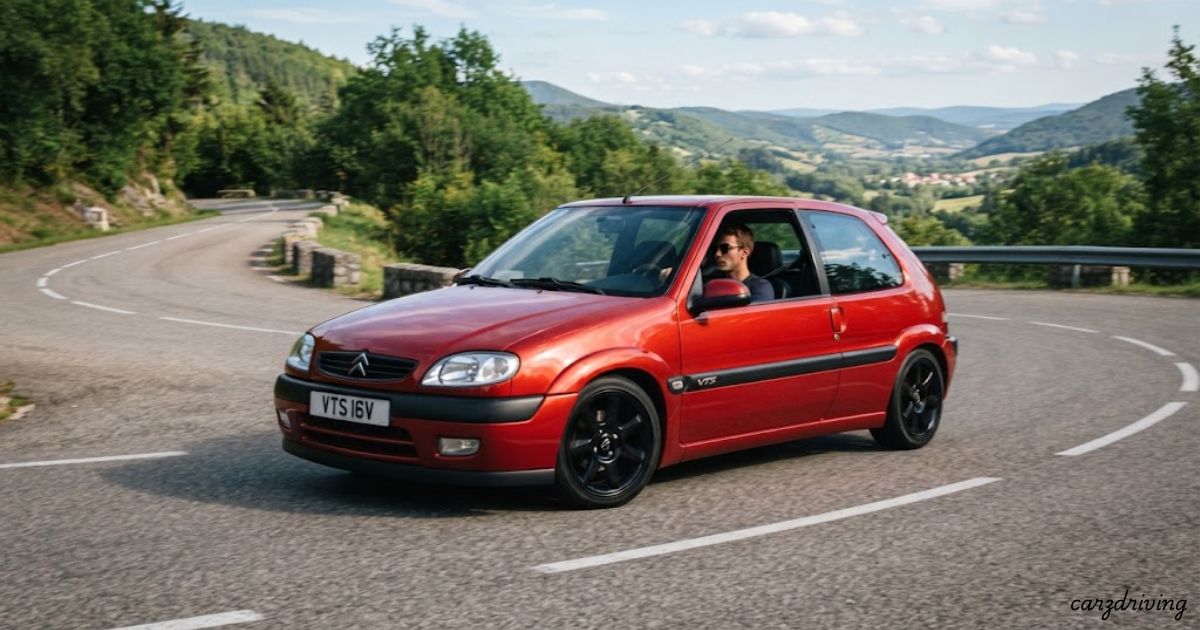
The real magic sits in the chassis. The front end turns in with surgical precision, the power steering feels perfectly tuned, and the rear end stays playful on winding roads, always ready to add a bit more driving pleasure the moment you push harder.
Ventilated front discs finish off a setup built for drivers who care about feel more than raw numbers. The French carmaker actually offered three engines across the range: a gentle 1.4-liter gasoline unit at the bottom, and the punchy 1.6-liter at the top that turned this super-mini car into a genuine hot-hatch.
Compare the two hot Saxos and the gap becomes obvious on a tight B-road. The VTS used its 16-valve 1.6-litre engine to hold a 29bhp advantage over the VTR’s eight-valve unit, much like how the Mk2 Volkswagen Golf GTI built a name on enjoyable steer despite its own power deficit.
Early VTR cars made just 89bhp, yet at only 900kg, the car still ran 0-62mph in 10.0sec, compared with the VTS at 7.8sec, and it topped out around 116mph, which still feels quick in something this small.
Motorsport & Racing Pedigree
The moment the Saxo VTS hit dealer floors, it proved itself in real competition, backing up everything drivers felt on the open market. It handled rallying, rallycross, circuit racing, and even ice racing with ease, and word spread fast that Citroën had built something genuinely effective, accessible, and a truly versatile machine.
Citroën Sport built an entire racing ecosystem around this little car, running the Saxo Cup, Saxo Challenge, Saxo Rallycross, and Saxo Glace, each series with its own rules designed to bring new talent into racing. Every series demanded the production engine, which proved the Saxo VTS chassis was a real weapon on its own merit, not just a marketing trick.
This whole competitive framework became a training ground for a full generation of drivers. Names like Patrick Henry, Yoann Bonato, Marc Amourette, and Pierre Llorach all built their early careers racing this competition car, treating it almost like a school for sports driving.
In 2001, Sébastien Loeb and Daniel Elena won the Junior WRC World Champions title driving a Saxo Super 1600, cementing the car’s place in rally history.
Legacy Today
Today, the Saxo VTS stands as a proper collector’s item, and well-preserved examples grow rare and harder to find every year. Enthusiasts across France will drive long distances just to check a car listed in good condition, and its name still shows up on entry lists for local regional rallies, a clear sign of its lasting longevity in grassroots motorsports.
Marking its 30th anniversary, Citroën pays quiet tribute to a car that captured the full brand spirit: creative, accessible, and genuinely efficient. In the end, this small car never settled for being ordinary.
Condition & Rust Warnings
Anyone shopping for a Saxo today needs open eyes, because even at its relative youth, this model can hide real bodywork woes and stubborn mechanical gremlins that quietly ruin the ownership experience. Remember, this was always a cheap, cheerful, and charming car by its original billing, never a luxury product built to last forever.
Ignore the dubious decals and garish bodykits stuck on top, and check the foundation underneath to judge the true value of any VT. Rust almost always shows up eventually, so grab a torch and inspect the bodyshell properly before buying.
Repro panels are getting harder to source, and rising rarity means you can no longer walk into a scrapyard and pull an inner-wing section off a spare shell.
Still, the online forums remain a great road toward parts and advice, and specialists like D Whitworth Vehicle Fabrication in Lincolnshire now build high-quality replacements for the VTS and VTR’s most common weak spots.
Pricing & Market Value
This increasing rarity keeps pushing rising prices higher every season, and both the VTS Citroen Saxo and VTR will likely stop being affordable before long. Just like other French hot hatches such as the Peugeot 205 GTi and Renault Clio Williams, which now enjoy full collector status, these late-1990s descendants look set to follow the same path upward. If you want one, the moment to act now has already arrived.
Only a small handful of clean cars sit for sale at any given time, and years of hidden rust, wild early-noughties tuner trends, and exuberant young drivers pushed plenty toward endangerment.
Finding truly untouched examples feels close to impossible, since so many became extinct through neglect or heavy modification, and a solid car now often costs upwards of £3500.
FAQs
What makes the VTS Citroën Saxo so special among classic hot hatches?
Its go-kart handling, punchy 16-valve engine, and honest driving pleasure make it a true French sports car icon that still warms enthusiasts’ hearts.
How much horsepower does the Saxo VTS produce?
The TU5J4 engine delivers a lively 120 hp, giving this compact sports car real accessible performance.
Is the Citroën Saxo VTS a good collector’s car today?
Yes, it’s fast becoming a cherished modern classic, and finding a clean, rust-free collector’s item feels like discovering a hidden treasure.
What racing achievements is the Saxo VTS known for?
It fueled the Junior WRC dreams of Sébastien Loeb, proving its motorsport pedigree through the legendary Saxo Cup and rally series.
What should buyers watch out for when purchasing a VTS Saxo?
Always check for hidden rust, bodywork wear, and mechanical issues, since patience is the price of owning this beloved hot hatch.