

Steering repair becomes urgent the moment your car stops following your hands. I have watched plenty of Tucson drivers shrug off small changes, and I have watched those small changes grow into big bills. This guide walks you through the warning signs, the likely causes, and your smartest next steps in plain words.
What Does a Steering System Actually Do?
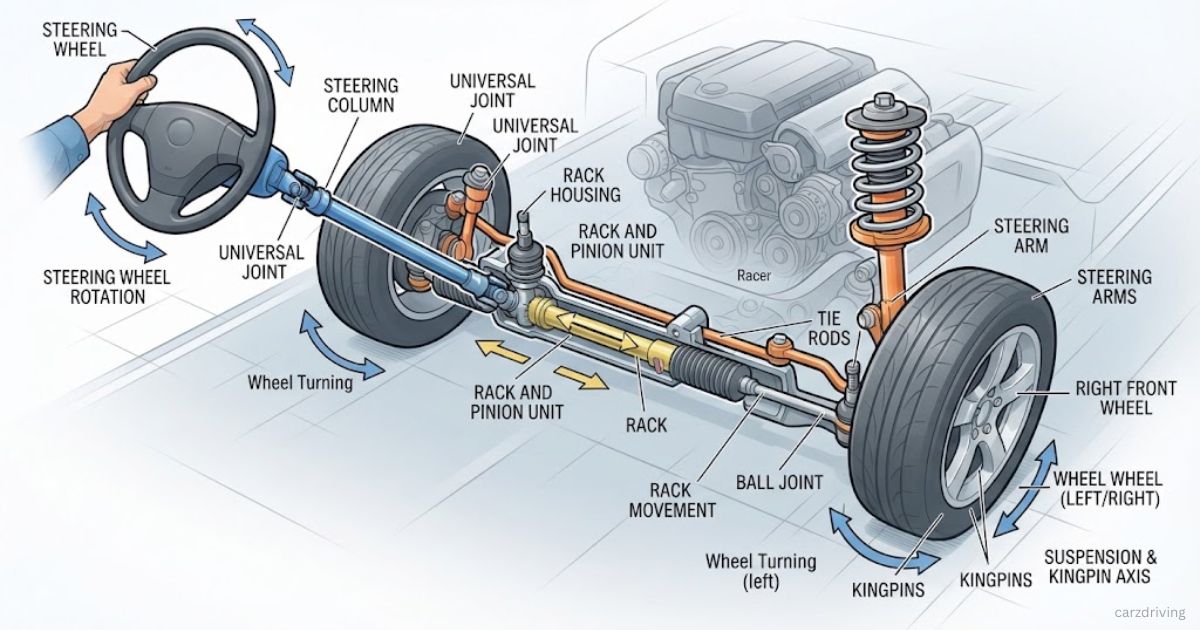
Your steering system turns small hand movements into precise wheel movement. It links the steering wheel to the front wheels through the steering column and a rack and pinion unit. Together with the suspension system, it gives you vehicle control and keeps rubber planted on the road.
The steering rack is a toothed bar that the pinion gear slides side to side, while many trucks and older cars use a steering gearbox instead. Either design relies on ball-and-socket joints, linkages, gears, and hydraulic components that carry your steering input to the road. The manual components among them wear out slowly, which hides the problem from you.
How Do I Know When My Steering Needs Attention?
Your car tells you through feel long before it tells you through lights. Loose steering, unresponsive steering, and a steering wheel vibration at speed top the list. Spot any of these, and book steering and suspension services soon.
Last spring a neighbor told me his car felt floaty on Grant Road, and he blamed the pavement. A quick check showed play in the steering linkage, and that play explained his loose steering wheel and his poor steering control. A warning light often arrives late, so trust your hands before the dashboard.
Why Does My Wheel Shake At Highway Speeds?
A shaking wheel at highway speeds usually points to unbalanced tires, bad alignment, or worn tie rods. Failing wheel bearings can cause the same shake. Any vibrations or shaking deserve a quick look, because the cause rarely fixes itself.
Tire balance costs the least to fix, so a good tech checks it first and then checks alignment specifications. If the shake stays, the tech inspects tie rod ends and sway bar links for slop. The control arm assembly and sway bar bushings come next, since loose bushings let the whole corner flutter.
What Do Clunking and Whining Noises Mean?
A clunking noise over bumps usually means worn ball joints or tired bushings, while a whining noise when turning points to the power steering pump. A knocking noise often means something loose under the car. Treat any strange noises as a request for an inspection.
Squeaking noises often come from dry rubber bushings, and the desert air dries rubber faster than most places. Noises when turning may also come from CV joints, especially on front-wheel-drive cars and some rear-wheel-drive models with independent rear suspension. I once heard a clicking sound in a parking lot, and it turned out to be a torn CV axle boot.
Why Does My Car Pull to One Side?
A car that keeps pulling to one side usually needs wheel alignment or has uneven tire pressure. If your car pulls to the left on a flat, straight road, check all four tires first. Book alignment services when the pressure matches and the drift stays.
Match your tire pressure to the sticker on the driver’s door jamb, not the maximum number on the tire sidewall. During an alignment check, the tech compares wheel geometry against manufacturer specifications and corrects any angle that has drifted. Many shops pair the visit with an oil change, and a car that tracks straight also improves your fuel efficiency.
What Can My Tires Tell Me About Steering Trouble?
Uneven tire wear tells you the rubber no longer meets the road flat. Premature tire wear and irregular tire wear both point to bad alignment or worn parts. Read your tread monthly, because tires record problems long before the car feels odd.
Try the penny test: place a penny upside down in the tread, and if you can see all of Lincoln’s head, the tread sits below 2/32 inch, the minimum most states use. Wear on one edge suggests alignment trouble, while cupped patches suggest tired shocks. Good tire care includes tire rotation, and a tire inspection at every service shows trouble early.
Why Does My Car Bounce After Bumps?
Excessive bouncing means your shocks and struts have lost their grip on the springs. A healthy damper settles the car after one rebound. A worn one lets the body bob, and tire contact with the road surface suffers.
Most cars use a MacPherson strut up front, so a worn strut assembly shows itself when you press down hard on a front corner and let go. If the body bounces more than once or twice, expect reduced damping ability. Worn shocks also cause nose diving when braking and reduced tire contact, and together they create increased stopping distance.
Why Does My Car Sit Low or Jerk When I Speed Up?
A vehicle sitting low on one side usually has sagging springs or a broken spring. These parts, whether coil springs or leaf springs, hold the vehicle frame at the right height, so the car leans when one gives up. Park it and call a shop, because the lean shifts weight onto parts that cannot handle it.
Jerking during acceleration often traces back to bushings that let metal arms knock against the body. Control arms hold each wheel in place, and newer cars use multiple control arms to steady the car. The arms rarely wear out, but the suspension bushings around them dry and tear.
How Does a Failing Suspension Change The Way My Car Handles?
Unstable handling, poor handling, and unpredictable vehicle response all mean something between the road and your hands has worn out. A rough ride or bumpy ride often joins them. Notice these feelings early, because they rarely fade on their own.
Excessive play in a joint adds steering instability at speed, because the wheel can wander before the car reacts. Steering and suspension share the load, so trouble in one system quickly stresses the other. The brake system reacts too, since a bouncing wheel brakes poorly.
How Does Tucson Weather Hurt My Steering And Suspension?
The Tucson climate speeds up component wear more than mild weather does. High temperatures bake rubber, and UV exposure cracks seals. Southern Arizona drivers often need checkups sooner than a generic schedule suggests.
Monsoon season runs from June 15 to September 30, and monsoon conditions bring flooded dips, loose gravel, and fresh potholes. Tucson roads and other rough roads hit each joint again and again, while uneven road surfaces keep your suspension busy absorbing shock. That punishment adds component deterioration to your steering and suspension components, and worn steering pieces stress hydraulic seals.
Is It Safe to Drive With a Failing Steering Part?
No, you should not keep driving on a failing steering part. A joint can let go without warning, and that causes sudden steering loss. The risk of loss of control grows with speed, so stop and call a shop.
Mechanics use the phrase catastrophic failure for a part that breaks outright, and I have seen the aftermath of one snapped joint. Parts also fail in a domino effect, where one weak link pushes extra work onto its neighbors. These cascading failures turn a small fix into expensive overhauls.
What Happens During a Steering Inspection?
A good shop begins with a comprehensive inspection and follows it with a test drive evaluation. The tech checks every joint, rod, and fluid level, then lists what needs work. You should receive a written estimate before anyone touches a wrench.
Ask for a suspension and steering inspection that includes a suspension system inspection and a steering system inspection with measured results. The visual inspection comes first, the physical inspection follows on a lift, and a brake system evaluation rules out look-alike symptoms. Good shops also run diagnostics on the power steering system before they recommend parts.
What Can I Check At Home Before I Call a Shop?
Park on level ground and look at the front of your car from a few steps back. Check that the body sits level and that no fluid drips under the engine bay. Then turn the wheel with the engine running and listen for groans.
Next, run your hand across each tire’s tread, because sharp edges feel like saw teeth when alignment drifts. Drive a quiet street with the radio off, and note when the sound shows up, since a clue like “only on left turns” helps the tech a lot. Write your notes on your phone, and hand them to the service advisor at drop-off.
Does My Newer Car Still Need Steering Checks?
Yes, newer cars still need checks, even though many use electric power steering instead of a pump and fluid. Electric systems remove fluid leaks, but they keep the same joints, rods, and bushings. Those parts still wear on Tucson pavement.
Sensors in these systems can set a dashboard message when something drifts out of range. A message like that deserves a scan with a proper tool, not a guess at the cause. I would rather pay for a short scan than replace a part that never broke.
How Much Does Steering Repair Cost, And Is It Worth It?
Prices vary by car, so ask for a repair estimate before you agree to any suspension work or steering services. A tie rod end replacement usually costs far less than rack and pinion repair. Early fixes pay off, because waiting leads to costly repairs.
I tell friends to compare one ball joint replacement with a set of tires that wore out early. Control arm replacement, sway bar link replacement, and wheel bearing replacement each cost less when the shop catches worn components alone. A power steering pump replacement or a CV axle replacement costs more after neglected damage spreads.
Which Parts Do Shops Replace Most Often?
Most suspension repair and steering repair visits involve a short list of parts. A single suspension service often covers shock and strut replacement, shock absorber replacement, and coil spring replacement. Older cars may need leaf spring replacement or bushing replacement as well.
On the steering side, techs replace a leaking power steering hose and drain the old fluid. Your owner’s manual lists when power steering fluid replacement falls due. A car with low power steering fluid often whines, so find the leak before you top it off.