

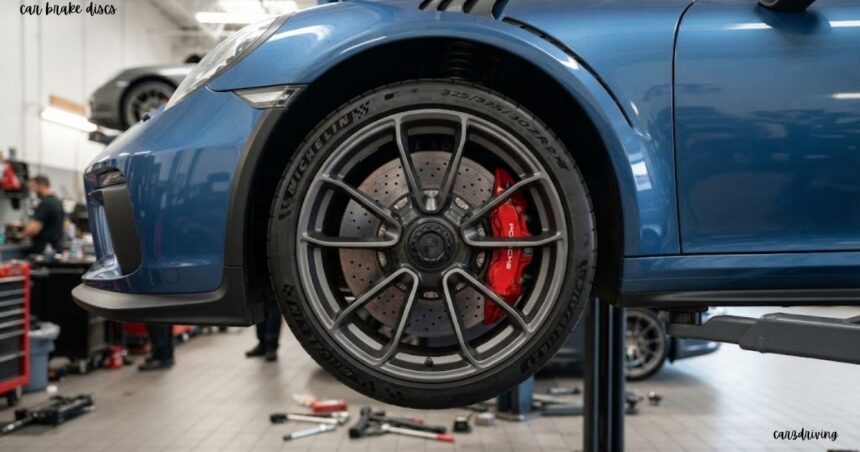
Every car owner should understand how their car brake discs actually work before the braking system fails them on the road. Press the brake pedal, and hydraulic pressure pushes the brake pads into contact with the rotating disc, creating friction that slows the wheel’s rotation and turns kinetic energy into heat.
These circular metal disks, usually cast from cast iron and built solid, vented, vented and drilled, or vented and drilled and grooved, are mounted on the wheel hub and rotate with the wheels behind your alloy wheels or steel wheels, giving the driver true stopping power and controlled deceleration in almost any driving conditions.
I have watched mechanics at Standish Service Station in Standish explain why modern vehicles favour discs over old drum systems, since this spinning brake disc copes far better with heavy braking and repeated braking without losing grip.
This essential part of the vehicle allows a driver to slow down and stop vehicle safely, giving safe stopping and consistent performance, no matter how often you go braking with brand new pads fitted.
Choosing the Right Car Brake Discs
Picking the right disc is trickier than most drivers think, and getting it wrong is one of the most common mistakes I see, since brake discs rank among the most incorrectly purchased part for any car. You need to check the diameter, thickness, mounting details, and how many holes are used to mount disc onto the wheel, plus whether you need front discs or rear discs, because these differ in size and specification.
Several factors decide the correct part: the VIN, or chassis number sequence, sometimes reveals it in the first 3 letters or the last 6, 7, or 8 characters, while a brake system code matters most for German vehicle brands, and a sports pack or other factory upgrades can change which correct brake disc replacements fit your model of vehicle.
The original manufacturer brand can also shift between countries, since a vehicle built abroad and later sold in the UK may carry a different braking system, and you must factor in whether the car has ABS or rear drums, both of which affect compatibility and balanced braking performance, helping you avoid uneven wear and keep consistent braking and safe braking across every journey.
How Long Do Brake Discs Last?
Most discs are engineered to survive around 50,000 miles, but their true service life depends heavily on driving style, road conditions, and vehicle load, so regular checks matter for spotting wear, corrosion, or warping before damage spreads to related components, protecting consistent braking performance overall.
Heat is the number one enemy in extreme conditions and everyday driving around Standish, because repeated hard braking and overheating push the disc surface toward critical temperatures near 650°C, which can change the metal structure and stop it from dispersing heat, leaving the metal brittle and prone to cracking.
Poor driving behaviour, such as sudden stops, riding brakes downhill, or braking late with hard braking, will generate heat fast and accelerates wear, causing distortion and surface cracking over time, while improper bedding-in of new pads pushed into heavy use too soon can transfer material unevenly onto the disc, creating thickness variation and an uneven braking surface instead of discs bedded in gently over the first 200 miles, avoiding harsh braking and letting them cool fully between braking events.
Brake calliper faults that leave pads dragging cause constant friction and heat build-up, and even a little rust or dirt on the hub can throw the disc off-centre, bringing on vibration and irregular wear; incorrect installation, with wheel bolts that are over-tightened or under-tightened, or where torque settings are ignored, can distort disc shape or misalign it, harming braking feel and shortening disc longevity.
Always fit parts that match the manufacturer’s specification for the sake of safety, and if you are ever unsure, book a brake check or service so a technician can inspect brake discs and pads properly.
Signs Your Brake Discs Need Replacing
Worn discs and damaged brake discs rarely fail without warning, and I always tell drivers to trust their senses because braking efficiency drops long before a full breakdown; watch for vibrations, juddering, squeaking, or grinding noises, plus a vehicle pulling to one side, since these often point to uneven wear or warped discs and threaten safe driving conditions.
A qualified mechanic can give an accurate diagnosis of whether brake discs needs replacement, and the common symptoms of failing discs include noisy brakes, squealing brakes, a car that takes longer to slow vehicle down, a car vibrates feeling through the brake pedal, and visible damage on face of disc.
Because discs wear gradually, the early warning signs are easy to miss until stopping safely becomes genuinely difficult, and at Standish Service Station in Standish we have seen plenty of cars arrive with brake disc symptoms left far too long, from vibration and pulsing under braking to pulsing through brake pedal felt strongest when braking from speed, which usually means a warped brake disc or uneven disc thickness.
Listen too for squealing, screeching, or grinding sounds, since a high-pitched squeal can point to grooved discs, especially soon after new pads fitted, while grinding suggests advanced wear or heat-related damage; check through the wheel spokes for visible damage on the disc surface, such as blue spots, fine cracks, or uneven colouring caused by overheating and excessive stress.
A burning smell, or sharper acrid smell, after stopping often points to overheating pads or a brake calliper sticking, keeping the pad pressed against disc long after you release the pedal, so never ignore these warning signs, because the braking system is a complex interconnected setup where underlying issues quickly cause wider damage to pads and callipers and hurt overall braking performance.
A thorough inspection from trained technicians is always worth booking, and our other guides on Brake Pads and the Braking System Explained cover the rest of the picture.
Replacing Brake Discs Correctly
Good workshops always fit brake discs replaced in pairs to keep even braking performance across the same axle, and I recommend swapping brake pads at the same time to maximise efficiency and reduce premature wear. Getting correct installation right, alongside genuinely compatible components, is the simplest way to protect long-term braking reliability for years to come.
Complete Your Brake Maintenance
A full braking system check should never stop at the discs alone; look at the brake fluid and brake calipers too, since every part of the wider car brakes system works together for safe consistent braking. Sticking with quality parts from trusted names like Bosch, Brembo, Textar, Moprod, DON, and Quinton Hazell gives genuinely dependable performance mile after mile.
What Comes in a Brake Disc Set?
Most discs come sold in pairs, so an order of 1 set brings 2 discs unless stated otherwise, though a few performance vehicles need parts made specifically for the left side or right side, and these are sold as singles, sometimes because they are simply too heavy to pack together for shipping purposes.
Selling in pairs exists mainly for safety reasons, keeping brake performance evenly distributed, and I always suggest you change brake pads at the same time, because uneven pad wear on the old pads can spoil how the new discs perform.
Main Types of Brake Disc
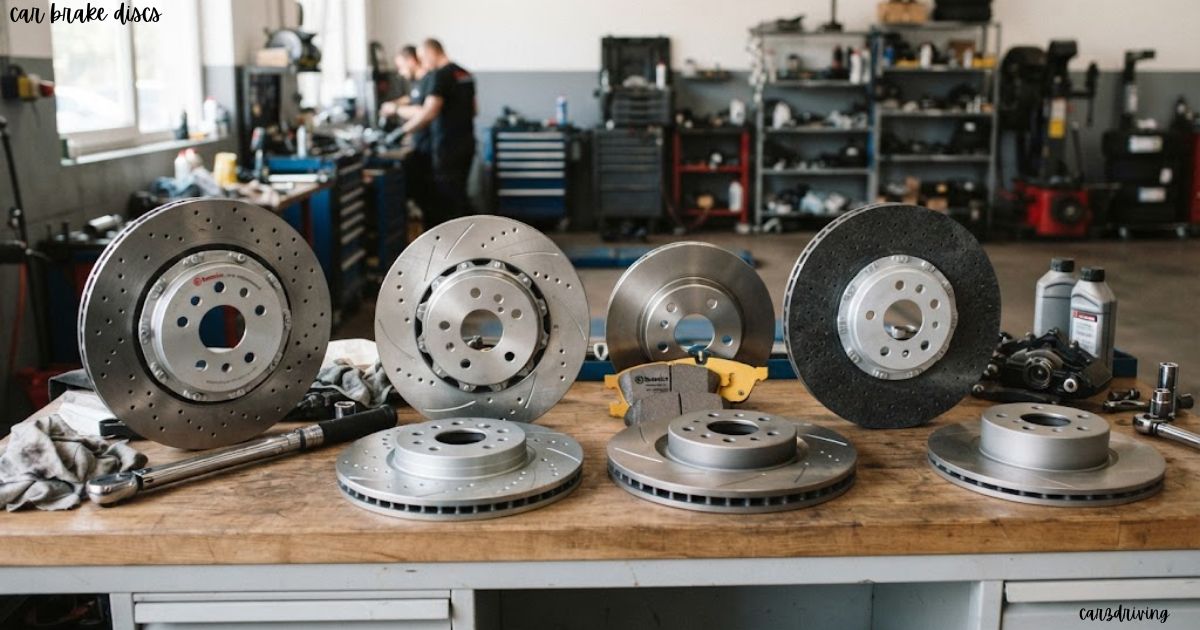
Manufacturers pick the exact brake disc type for each car based on its design and performance requirements, matching expected heat levels and braking force, and both front brake discs and rear brake discs must meet the required specifications set for that model.
The most common split is between solid and vented discs: a single slab of cast iron usually sits at the rear of vehicle, where lower braking force is needed, while vented types add internal vanes and air channels that pull cooling air through the disc at the front wheels, which handle most of the weight transfer under braking.
Everyday cars rely on cast iron discs, though high-performance models sometimes need ceramic or carbon fibre composites to cope with extreme heat and stress, and Standish Service Station always fits the exact type and material recommended for your car, because safety should never be a shortcut.
Why You Shouldn’t Delay Brake Disc Replacement
Leaving a problem with your car brake discs untreated only turns dangerous and expensive the longer it sits, and a slight vibration today can grow into a complete loss of braking control tomorrow.
Once discs overheat or wear too thin, they cannot disperse heat properly, causing loss of braking efficiency, known as brake fade, where the pedal feels normal yet the car doesn’t slow down as it should. Extreme heat and stress can lead to disc damage through thermal cracks or warping, making the vehicle unstable, and if cracks run deep enough, a disc fail completely is possible.
Warped discs cause brake pads grip unevenly, bringing on steering shake and vibration and steering wheel vibration that ruins smooth braking control, and extreme heat can even make brake fluid fail, reaching boiling point and forming vapour bubbles that compress under pressure, so the brake pedal sink to floor with barely any effect.
This chain reaction brings collateral damage to pads and callipers, since running new pads against bad discs causes faster wear and noise, shortening the reduced lifespan of both parts, meaning you pay for brake disc replacement sooner and carry increased safety risks in the meantime.
FAQs
How long do car brake discs typically last?
Most brake discs last around 50,000 miles, depending on driving style and road conditions.
What are the warning signs of worn brake discs?
Watch for vibrations, squealing noises, grinding sounds, or the car pulling to one side.
Should brake discs be replaced in pairs?
Yes, fitting brake discs in pairs keeps braking performance even across the same axle.
Can I replace brake discs without changing brake pads?
It’s best to replace brake pads alongside discs to avoid uneven wear and protect braking efficiency.
What happens if I delay replacing damaged brake discs?
Ignoring worn brake discs risks brake fade, loss of control, and even complete brake failure don’t take that chance.