

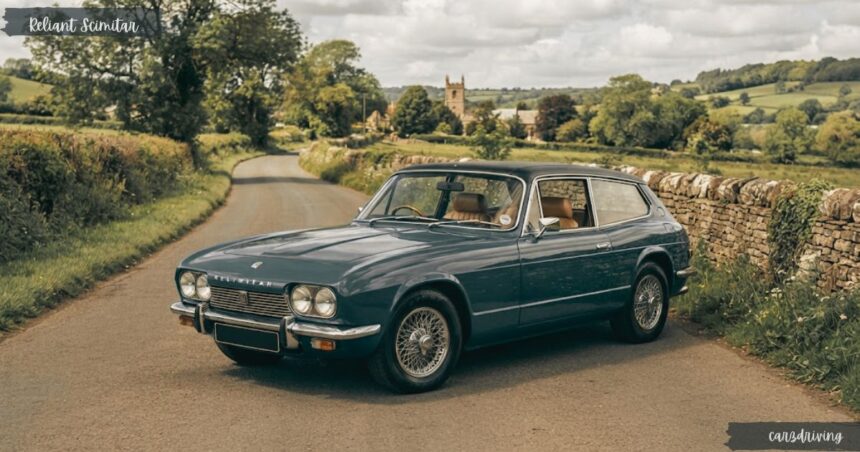
I think the four-wheeled Reliant Scimitar is the real unsung hero of a brand most people only know for its three-wheelers. The estate-shaped GTE ran from 1968-1986, and it works as a shooting brake with a V6 engine and a glassfibre body. This grand tourer carries four people and their luggage on long trips without any fuss.
The car had a flakey reputation in its earlier years, but owners have sorted out most foibles since then. Its sturdy Ford mechanicals and rust-immune body make it difficult to kill, so I see it as a safe bet for reliability in a classic car.
I would not call it unloved, yet it stays under-appreciated because it sits below the mainstream radar, and that keeps both low prices and down-to-earth prices in place.
A thriving community looks after the survivors, and that support turns ownership into real affordable fun. This guide walks you through the Scimitar from its history to buying advice. I would join a club before you buy.
History
The Scimitar story starts with the Ogle SX250 of 1962, a two-door luxury coupé that Reliant bought and reworked. Reliant sold it as the SE4 Scimitar GT from 1964, and you will also see it called the GT SE4 or the coupé-shaped GT.
The first cars used a Reliant Sabre chassis, and Reliant fitted a Ford 2.6-litre straight-six taken from the Ford Zodiac.
Reliant then dropped the straight-six for the Essex 3.0-litre V6, which arrived in 1966 by one account and 1967 by another, after about 296 early cars.
Beneath the glassfibre body, the car has a steel box-section chassis, Triumph TR-derived double A-arm front suspension and a live rear axle. Two trailing arms, coil springs and a Watt’s linkage locate that axle, and the range later grew into the SE4a and SE4b.
Ogle handled the styling while Ford supplied the engines. The one-off Triplex Ogle GTS of 1965 was a show car by Tom Karen, and it convinced Reliant that a shooting brake could sell. Karen then took the idea from the drawing board to a production-friendly version in two years.
The SE5 followed, and the SE5 GTE met the public in 1968 on a longer chassis with a larger fuel tank. John Crosthwaite tuned that chassis, and long gearing gave the car a relaxed cruiser feel. The torquey powerplant suited this budget GT car, and an automatic gearbox joined the options in 1970.
Alongside the coupés, Reliant built 442 GTC convertibles. The SE5a brought an improved dashboard, and sources quote 145bhp or 138bhp along with a 125mph top speed. Then Reliant pushed the car upmarket with the SE6, which arrived in 1975 by one count and 1976 by another.
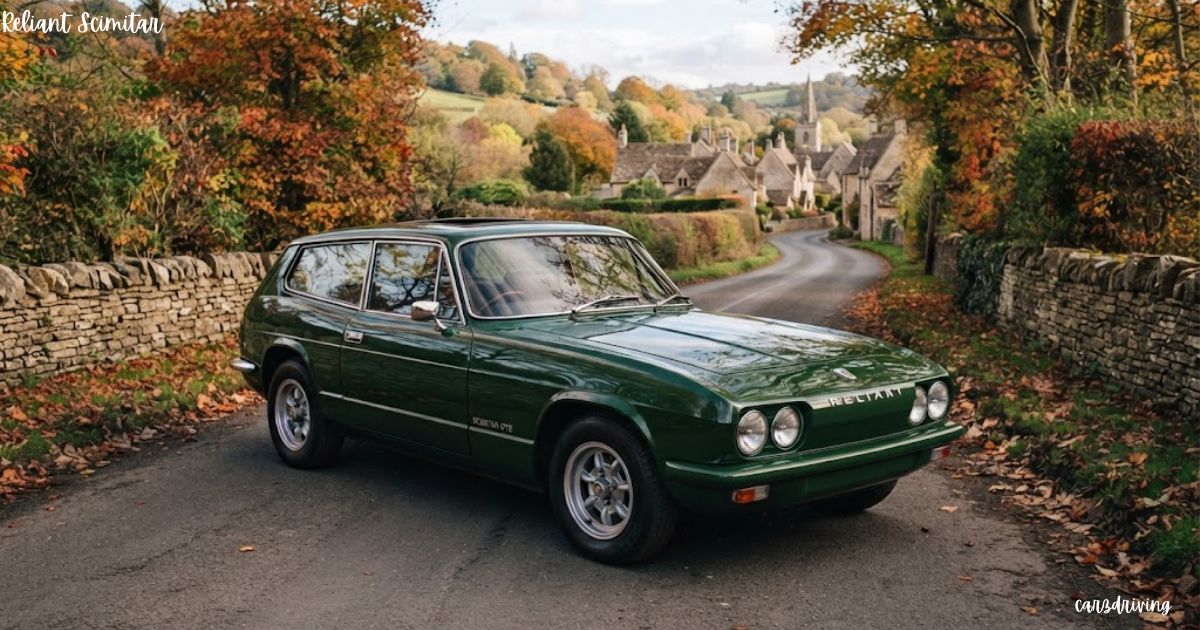
The SE6 grew wider and gave more cabin space, so it worked as a real four-seater. It wore bigger bumpers in the form of rubber bumpers, plus new headlamps and better soundproofing. Buyers could add optional power steering, and Reliant made several brake and suspension revisions.
The SE6a of 1977 brought improved steering, improved brakes and a strengthened chassis. The SE6b followed in 1979 or 1980, depending on the source, and it finally gave the heavy car the 160bhp 2.8-litre Cologne V6 it deserved. It also got chassis reinforcements and exterior tweaks, and the convertible GTC appeared in 1982.
Reliant ended production in 1986, but the story kept going. Middlebridge Scimitar Ltd took over in 1987, and Middlebridge built a 2.9-litre five-speed car with a 2.9L fuel-injected V6, a five-speed manual, a four-speed automatic gearbox option and 15-inch wheels. Only 77 cars came from that run, and one source counts them as 77 GTEs plus one GTC, before the firm ceased trading in 1989 by one account and 1990 by another. Graham Walker later acquired rights to the name and keeps up limited production.
Bodywork
The chassis is a simple ladder frame made of two long steel box sections, outriggers and an extra box section for the outer sill. The engine, gearbox, live axle and suspension all mount to it, while just 18 bolts hold the GRP body in place. Removal still takes days once corrosion sets in, and the SE6 models need bumper removal and front chassis panel removal first.
Chassis corrosion is the big worry, especially on pre-1985 cars, which are MoT-exempt. Galvanisation from 1981 onward gives no guarantee of rust protection today. You can buy repair sections, such as outriggers, for about £25-£40, and I find front outriggers and side outriggers manageable jobs.
Welding with the body in place is a fire hazard, and jobs like trailing arm mounts mean cutting the floor for access. Inspect the chassis from below with a torch and a rubber-handled screwdriver, because you can see most of it. I always poke every seam before I talk price.
A glass fibre respray can top £5000, so set aside some budget. Tatty paint often needs a full respray for proper colour matching, and you should look for spider cracks, which are tiny fractures, and micro blisters, which signal trapped moisture. Sanding and rebuilding the surface cure cracks, but polishing will not fix blisters.
The glassfibre body gives you no cosmetic rust, yet damage can cause crazing in the body panels. Skip any cover that traps moisture, because the bodywork needs to breathe. A cheap breathable cover does more good than an expensive plastic one.
Engine and Transmission
Both the Ford Essex V6 and the Cologne V6 are tough and unstressed, so they give a long life, and classic Ford specialists keep parts availability good. The camshaft gear on the Essex uses a composite material that wears, which brings engine noise and later running issues. A steel replacement or aluminium replacement lasts longer, and misfires often trace back to the distributor drive, a £25 part.
Cast iron exhaust manifolds can develop cracks and leaks, so budget £175 for a reconditioned exhaust manifold or £275 for a stainless-steel tubular assembly. The spare wheel sits in the engine bay and squeezes the engine against the bulkhead, so cooling issues can appear. Watch the temperature gauge, and make sure the electric fan starts when the coolant runs hot.
Whether you pick a manual or an automatic, check the gearbox carefully. The four-speed manual gearbox has overdrive for relaxed cruising, so test that the dash switch engages it and that it drops out in reverse. These boxes suffer from jumping out of gear, especially when they jump out of first and second, and notchy gear selection points to a damaged clutch release fork.
The SE5 first used a three-speed automatic gearbox, the Borg Warner Type 35, and it often shows oil leaks, so ask for service evidence. The SE5a and later cars use the four-speed Ford C3, the same box that sat in the Mk1 Granada and Mk2 Granada, and its front oil seal may leak.
Every car has a Salisbury 4HA live axle, first with a 3.58:1 final drive ratio and later with 3.31:1. The automatic started at 3.07:1, and Reliant changed it to 3.54:1 on the SE6b with the 2.8 V6, since that engine is less torquey. Look around the casing for seals that leak, though a blocked breather hole can cause the same problem, and a noisy diff usually means a rebuild.
What to Pay
The Scimitar GTE is an all-round usable classic car with strong practicality and performance, and it stays more affordable than similar cars. The rust-free GRP body helps, but the steel chassis underneath still demands a meticulous inspection. Check parts availability before you commit.
The cost of buying one is a big draw. Restoration projects sell for around £3000, while a roadworthy example usually costs £8000–£15,000. An earlier SE4 GT or a collectable GTC fetches comparable prices.
That compares well with the Volvo P1800 ES, Ford Capri and Jensen Interceptor on the classic market. More than 10 per cent of the 14,000 built have survived, so availability is good and you can track down a car without much trouble.
Larger and more plentiful SE6/a/b projects go for under £1000, and £2500 buys a solid runner. Spend £5000-8000 for the best examples, though rarity makes the smaller and prettier SE5 and SE5a slightly more expensive. Middlebridge Scimitars are highly sought-after, so expect £20,000 for the best, while average examples cost less than £10k.
Suspension, Steering and Brakes
Early cars carry Girling brake components with servo-assistance, three-pot calipers, solid discs at the front and drums at the rear. The system is single-circuit up to the SE5a and dual-circuit from the SE6.
From the SE6a onward, Reliant switched to Lockheed components, and these Lockheed brakes use two-pot calipers and larger diameter rear drums, while revised suspension came along too. All brake components available today cost reasonable money.
A hard pedal, or brakes stay on after you lift off, usually means servo failure. A new servo with Scimitar brackets costs about £185, and a brake master cylinder costs £200–£300.
The front suspension uses upper and lower wishbones joined to a vertical link by a ball joint on top and a trunnion below. Each corner has a coil-over, and the front adds an anti-roll bar. Check the springs for fractures and corrosion, since a new one costs £55, and look at the lower mounting panel, which costs £90.
The front chassis panel is a set of individual panels bolted together up to the SE6a, while the SE6b uses one prefabricated front support panel. The rear suspension relies on trailing arms, radius arms and the live axle, and vague handling at the back often means worn bushes.
Every car has rack-and-pinion steering, and power steering became an option in 1976 with the SE6. Check for notchy steering, and if the car has power assistance, look for fluid leaks around the belt-driven pump, the pipework and the steering rack.
Cars on Dunlop wheels, which look like MGB GT V8 items, need extra care. Their composite design joins a steel rim, riveted to an aluminium centre, and it can cost £300 per corner to restore.
Interior, Trim and Electrics
Interior trim and exterior trim are scarce, especially big items like bumpers, though exterior lighting is easier because it uses shared parts with other cars. The early SE5 only had black vinyl trim, the SE5a added tan and leather, and the SE6 offered blue nylon seat facings. Those facings suffer UV degradation, so expect them to look baggy.
Front seat frames crack with age, so make sure the seats stay supportive and negotiate on price if they do not. On the SE5a, check the vacuum-formed dashboard for cracks and the headlining for sagging, since a new headlining costs £250. A new centre console costs £245, and veneer inserts add £95.
All models use 12-volt negative earth electrics, except the SE4 GT, which has positive earth. Corroded connections and worn switch contacts are common, and you will often find extra wiring from old stereo modifications.
Test the electric windows, which run slow but should work, and a new regulator costs £187. If the rear wash/wipe system, which came in 1969, has died, a replacement motor costs £255 and a worn wheel box costs £45. A heated windscreen makes a great upgrade, and it costs about £400.
Timeline
In 1968, Reliant showed the SE5-generation GTE to the public with a new longer chassis over the SE4, new suspension, a new fuel tank, a rollover bar and a relocated spare wheel. In 1970, the Borg-Warner 35 automatic transmission joined the options.
That year Princess Anne received a manual SE5 for her 20th birthday, and she has reportedly owned eight other Scimitars since.
In 1971, Reliant added the four-speed manual gearbox with overdrive, and in 1972 the SE5a update brought a power boost and a curved plastic dashboard.
The 1975 SE6 arrived with a longer wheelbase for more rear legroom, a wider track, larger headlights, rubber bumpers and optional overdrive on 3rd and 4th gears. In 1976, the SE6a added Lockheed brakes and revised suspension.
In 1980, Reliant launched the Scimitar GTC convertible, also called the SE8B, and the SE6b arrived with its 2.8-litre Cologne V6. In 1986, Reliant ended production, but in 1989 Middlebridge restarted it with a fuel-injected 2.9-litre V6 and 15-inch wheels. In 1990, Middlebridge stopped again, and the GTE lives on through its fans.
Reliant Scimitar GTE Alternatives
If you want a stylish British 2+2 with a bigger club scene instead of a Reliant Scimitar, look at the MGB GT. It offers nimbler handling, a vast following and arguably prettier Pininfarina styling, though some buyers find it too obvious.
If you want a load-lugger with elegant lines and a six-pot soundtrack, the Triumph 2000 Estate gives you rear doors as a bonus. It has a steel body, so rust worries you more, and it does not look as exotic as the Scimitar.
FAQs
Which engine does the Reliant Scimitar GTE use?
Early cars use the Essex 3.0-litre V6, while the SE6b switched to the 160bhp 2.8-litre Cologne V6.
Are parts easy to find for a Reliant Scimitar?
Parts availability is good for the engine because classic Ford specialists help, but interior trim and exterior trim like bumpers are scarce.
How many Reliant Scimitar GTEs have survived?
More than 10 per cent of the 14,000 built have survived, so availability is surprisingly good.
Did Princess Anne own a Reliant Scimitar?
Yes, she received a manual SE5 for her 20th birthday in 1970 and has reportedly owned eight other Scimitars since.
What are the best alternatives to the Reliant Scimitar GTE?
The MGB GT offers nimbler handling and a vast following, while the Triumph 2000 Estate gives you rear doors and elegant lines.