

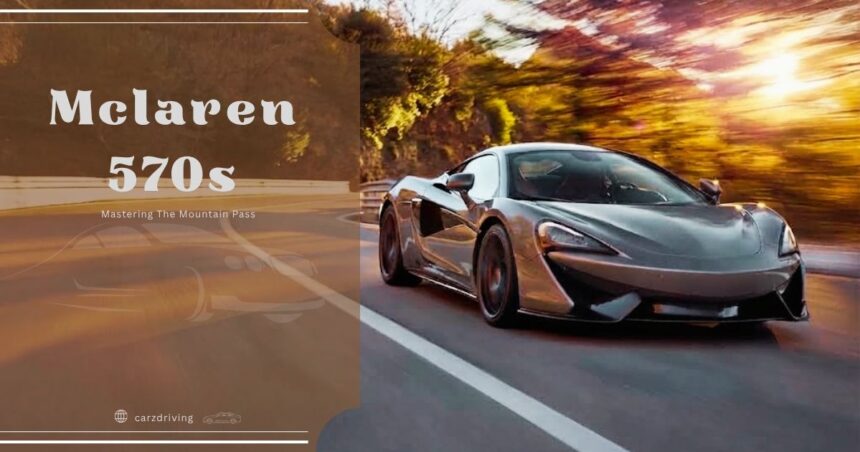
I still remember the first time I dropped into a Mclaren 570S, McLaren’s answer to buyers who wanted a mid-engine thrill without stepping all the way up to the Super Series or Ultimate Series.
Built out of Woking, this entry-level hero anchors the Sport Series, sitting alongside the 540C, 600LT, and open-top Spider, and McLaren originally hoped this whole Sports Series push would lift road car output past 4000 units per year a target that proved harder to hit than expected.
Shoppers cross this car against the Aston Martin Vantage, a Porsche 911 Turbo S, plain old 911 Turbo models, an Audi R8, and even a Lamborghini Huracan, yet the 570S still feels like a genuine junior supercar among junior supercars because it skips the powertrain theatrics some rivals chase.
What impressed me most, years after its 2015 debut, is how it set a dynamic benchmark in the marketplace despite lacking a screaming Lamborghini-style soundtrack.
Its unimpeachable chassis, supercar looks, and touch of exotica add up to a performance car proposition that still holds weight even with an incumbent successor waiting in the wings and a rumoured V6 hybrid powertrain on the horizon.
Its eCoty-winning stablemates prove the Sports Series was never just about technical capability on a spec sheet it delivered real supercar feel to a wide circle of buyers.
By the time production stopped, the 570S had already banked plenty of commercial success, showing an entry-level McLaren could still be easy to live with. Even now, on the used market, its expiration date as tomorrow’s classic seems delayed, since interest in the 570S and its 570GT cousin keeps climbing among fans chasing this accessible territory of the McLaren lineup, whatever variants they eventually pick, and the GT badge only adds to the appeal.
Driving Experience of Mclaren 570s
Push the starter button on a 570S and the 3.8-litre twin turbo V8 barks gruffly into life, and from that moment on, this twin-turbocharged V8 feels like it means business. On the move, the lightweight carbon fibre chassis tub helps this 1,313kg car hit 62mph in 3.1 seconds, and it won’t ease off until it touches 204mph flat out on a German autobahn.
In Normal mode, the ride quality feels genuinely comfortable around town and along the motorway, without any of the crashiness you’d brace for, and honestly, that surprised me the first time I drove one through pothole-riddled streets.
The electro-hydraulic steering is crisp and direct, giving real connection through the front axle as you turn into a corner, and the 570S stays alert and agile thanks to tight-fisted body control and a genuinely playful car attitude at corner exit.
Flick the Active button and the rotary controllers for Handling and Powertrain shuffle through Sport mode, Track, and back to Normal mode, changing steering feel, stability control thresholds, and gear change timings on the 7-speed dual-clutch paddleshift transmission.
That adaptive damping system soaks up bumps without losing chassis balance, so pliancy and suppleness never feel like they’ve come at the cost of roll control, and the car lands out of compressions with real composure.
Compared with a 650S, this 570S feels more responsive and more rewarding, with a more progressive transition from grip to slip that makes it genuinely fun on a twisting road; knock the ESC system into its Dynamic setting and the chassis lets the rear axle step out progressively, which is exactly the kind of hard driving thrill I look for.
It isn’t perfect, though the gearbox and twin-clutch unit shift cleanly in manual mode, but the automatic mode and subdued engine sound can feel a touch dry in character, and the brake pedal itself turns wooden and lifeless short of full force, even though the carbon ceramic brakes deliver serious stopping power.
Without four wheel drive or a limited slip differential, the 570S can turn into a real handful in the wet, so traction takes more care than it would in an Audi R8, and the tuneful powerplant needs revs above 3500rpm before it truly wakes up, pulling hard to 8000rpm.
Inside, the sports seats suit a long journey as much as they suit daily use, the Sport trim beats the Luxury trim for feel, and cabin quality holds up well, though the satellite navigation occasionally confuses itself.
Fuel economy is claimed at 26.6mpg combined fuel consumption with a 249g/km CO2 rating, but real-world driving rarely gets close, and that’s a fair trade for astonishing punch and genuine performance from this mid-mounted configuration.
Engine, Transmission and 0-60mph Time
The 570S runs a Ricardo-sourced twin-turbo V8 shared across the whole McLaren line-up, all the way to the £1.98m P1 GTR, and my ears never tire of that flat-plane crank V8 note.
Against the 650S’s 3.8-litre power unit, this engine is 30 percent different, with new internals and reworked valve gear, producing 562bhp at 7500rpm and 443lb ft from 5000rpm a step down from the 650S’s 641bhp and 500lb ft, yet it keeps the same high redline and linear torque curve. A dry sump lubrication system and stop-start function round out the engineering.
Power reaches the rear wheels through a seven-speed twin clutch unit, badged the Seamless Shift Gearbox, working through an open differential rather than anything fancier. Flip between Normal mode, Sport, or Track and both response and shift times sharpen up noticeably. All told, the 570S dispatches 0-60mph in 3.1 seconds and tops out at 204mph.
Technical Highlights
Every 570S starts life around a carbon fibre tub called MonoCell II, and the tub weight comes in at just 75kg McLaren claims it’s 25 per cent stiffer than an equivalent aluminium structure. Front subframes and rear subframes, both cast from aluminium, carry the drivetrain and suspension components, while 80mm was trimmed from the sill height purely to ease ingress and egress for everyday sports car duty.
Dry weight lands at 1313kg, with kerb weight adding roughly 100kg, undercutting the Porsche 911 Turbo S by 227kg and the Audi R8 Performance by 282kg. In terms of dimensions, it sits close to the 720S but stays noticeably tighter than the newer GT, priced at £163,000, which effectively replaced the 570GT’s rear lip spoiler setup.
Where Super Series cars lean on the ProActive Chassis Control system, which links dampers hydraulically to separate ride from roll stiffness, the Sports Series keeps things simpler with conventional anti-roll bars an anti-roll bar solution that trims both cost and complexity in chassis terms.
Double wishbones feature front and rear alongside three-way adaptive dampers offering Track modes to match the powertrain. Since 2017, buyers could add a track pack bundling lightweight options with that 570GT’s rear lip spoiler.
There are no active aerodynamic components here, but the frontal area, rear diffuser, and flying buttresses all shape cooling air and drag through clever bodywork, while the occasional use supercar tag never quite fit this genuinely usable machine, thanks to its carbon tub construction.
Price, Specs and Rivals
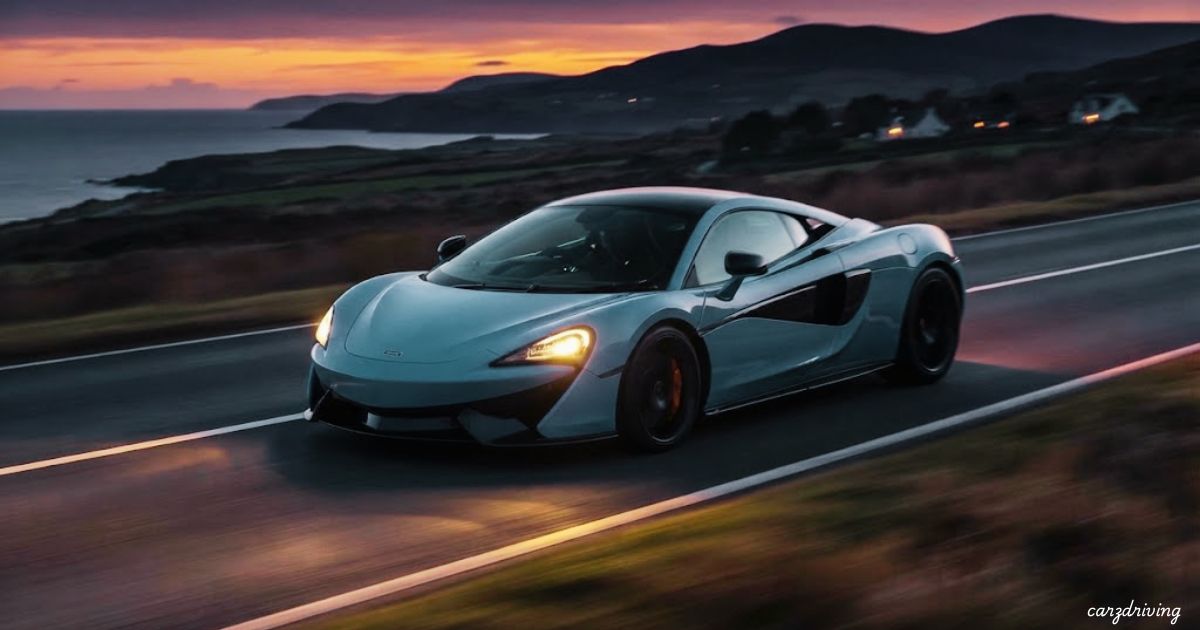
McLaren priced the 570S from £150,815, and that Spider version jumps to £165,000 once you start configuring the car properly, bridging the gap between the 540C and 600LT. Colour choice matters more than you’d think only blue and silver come free across 35 choices, with paintwork running from £1500 into five figures.
Carbon addenda add up fast: the Carbon Fibre Exterior Pack 2 brings aero blades, side skirts, and a diffuser for nearly £10k, while the Carbon Fibre Interior Pack costs £5k. I’d still call the security pack worth its £4k, since vehicle lift, front parking sensors, rear parking sensors, and a rear view camera genuinely help in urban environments.
Rivals crowd this price bracket. The Audi R8 V10 Performance, from £139,850, sticks with a naturally aspirated engine and a howling 631bhp V10, proving downsized turbocharged engines aren’t the only path to thrills.
The Turbo S, at £155,970 for the 992-generation car, hits 62mph in 2.6sec with 640bhp, and feels genuinely entertaining and desirable. Meanwhile, the Lamborghini Huracan Evo RWD, at £165,256, brings Italian supercar theatre and a proper V10 supercar feel, and all three share a four-wheel drivetrain approach that suits a different wheelbase philosophy than the McLaren’s rear-drive customisation-heavy options list.
Models
The 570S came as a 2dr coupe and, for open-air fans, a 2dr Spider.
History
Back in 2015, the Woking maker billed this as “just” a fast sportscar, yet it carried every hallmark of a fully-fledged supercar: lightweight carbon fibre construction, low-slung futuristic looks, and a mid-engined rear wheel drive configuration delivering genuine shattering performance.
If your benchmark was a Porsche 911 Turbo S, an Audi R8 V10 Plus, or a Mercedes-AMG GT, this 570S made you reconsider, because Price, Performance, and Daily usability all leaned in its favour.
McLaren wasn’t new to this game the brand built its name in proper supercar territory, launching against Ferrari and Lamborghini with the MP4-12C in 2011. That car evolved into the 650S by 2014, then again into the 720S by 2017, which anchored the mid-range Super Series, while the Senna topped the exotic Ultimate Series. 720S-level cars got trick suspension and active aerodynamics, but the Sports Series, including this 570S, shared plenty with them at a friendlier price. The 540C undercut it by a few thousand less, but the 570 name brought the widest choice, including a Spider body style and a practical GT version of the standard Coupe variant.
Most McLaren customers wanted the fixed-top 570S, and by the time sales wound down in 2021, the McLaren GT had already stepped in as its replacement in this competitive exclusive sportscar segment, adding more power across the range along the way.
What You Get
Every 570S opens with dihedral doors, a party trick borrowed from the F1 model of the 1990s, and even closed, the pavement theatre never really stops. In profile, the side-glazed area runs larger than you’d expect from an exotic supercar, because this Sports model was built to stay everyday-usable.
Choose the GT version and you gain rear storage space through a glass hatch in revised rear bodywork, though you lose the standard car’s floating C-pillars and rear flying buttresses, framed by a concave rear screen. Go for the Spider model instead and you keep much of that shape, plus an electrically-retractable roof panel that folds away in 15 seconds at up to 25mph.
Climb aboard and the Dihedral doors rise on a button tucked beneath the bodywork, lifting in an elegant arc higher than on more exotic McLaren models; the door sill’s forward section drops by 80mm for a more dignified entry and exit.
It’s still a hand-crafted McLaren road car, taking 370 technicians roughly 188 man hours per build, with most controls routed through the infotainment screen on the centre stack. Boot space sits under the bonnet, just 144-litres in the standard coupe version enough for one medium-sized travel case, but nothing more, which keeps this from being a true volume model despite its everyday manners.
What to Look For
Hunt for a car with the optional nose lift and reversing camera, since these must-have options protect resale values later on. Watch for stray warning lights, because clearing them needs a code reset only McLaren holds McLaren exclusive codes cover everything from oil changes to general maintenance, and oil services alone can eat 6 hours. Confirm both main services appear on record, since skipping the 10,000 mile service voids the warranty.
Common issues include leaking coolant hoses, so check underneath before any test drive, plus reports of windscreen wiper motors failing and rear windows cracking alongside windscreens, so inspect the glasswork closely. Aluminium corrosion shows up as bubbling paintwork around the engine cover, door seams, and wheel arches, and you should also test the IRIS infotainment set-up and doors opening when wet, since the early touch sensor mechanism has proven troublesome, alongside occasional engine immobiliser issues and defective glass seals.
Later cars benefit from tighter quality control, and dealers push specification hard — lightweight wheels, the sports exhaust, and an upgraded sound system all help £20k worth of carbon fibre bits feel less like a stretch, though leather seats and Alcantara seats remain popular regardless.
Replacement Parts
Budget around £24 for an oil filter, £63 for an air filter, and £78 for a pollen filter, with prices sourced from Exotic Auto Parts for a 2015 570S coupe. A thermostat runs about £220, a driveline damper near £1,384, and water pump gaskets cost roughly £40 a pair. A front carbon brake pad kit costs about £734, or £367 for steel pads, while steel front brake discs run £1,343. Expect £2,393 for a Gen3 Lithium battery, £1,322 for a water pump, and £1,580 for an engine oil pump.
Overall
Nothing from this era apes a supercar impression quite like the Mclaren 570S, blending real feedback, excitement, and involvement with sensible price and genuine everyday practicality that’s the honest verdict after real seat time. McLaren walked a delicate job here, making sure buyers still felt pulled toward the 720S and the Ultimate Series above it, even though those unique designs barely have to compete in the real world.
Sure, rivals bring more technology, interior space, and safety standards, and some pack more power too, often sitting at the pinnacle of their own model line-ups. But this McLaren was only ever the first step into a genuine supercar, not the final word, and it shows: build quality lacks the granite-like feel of a German rival, and the 3.8-litre V8 noise isn’t quite as intoxicating as the spec sheet promises.
Even so, it stays free of front-mounted engines, occasional back seats, and four driven wheels, giving it a purer, more exciting feel than most sportscar rivals from the 2015-2021 era can manage genuinely one of the most compelling machines I’ve driven, and every inch a British sports car built to take on the world.
FAQs
How fast is the McLaren 570S from 0-60mph?
The McLaren 570S hits 0-60mph in just 3.1 seconds, delivering pure supercar thrill.
What engine powers the McLaren 570S?
It uses a twin-turbo V8 producing 562bhp, giving it serious performance for a junior supercar.
What is the top speed of the McLaren 570S?
The 570S reaches an exhilarating top speed of 204mph, proving its true supercar credentials.
Is the McLaren 570S comfortable for daily driving?
Yes, its Normal mode offers surprising ride quality, making it genuinely everyday-usable despite the supercar looks.
How much does a McLaren 570S cost?
Prices start from £150,815, with the Spider version climbing to £165,000 for open-top thrills.