


The topic of a labour house value tax has dominated headlines this year, and after digging through the details myself, I found the story goes far deeper than a single headline number. Here’s everything broken down heading by heading, written the way I’d explain it to a friend over coffee.
How Will Labour House Value Tax Work?
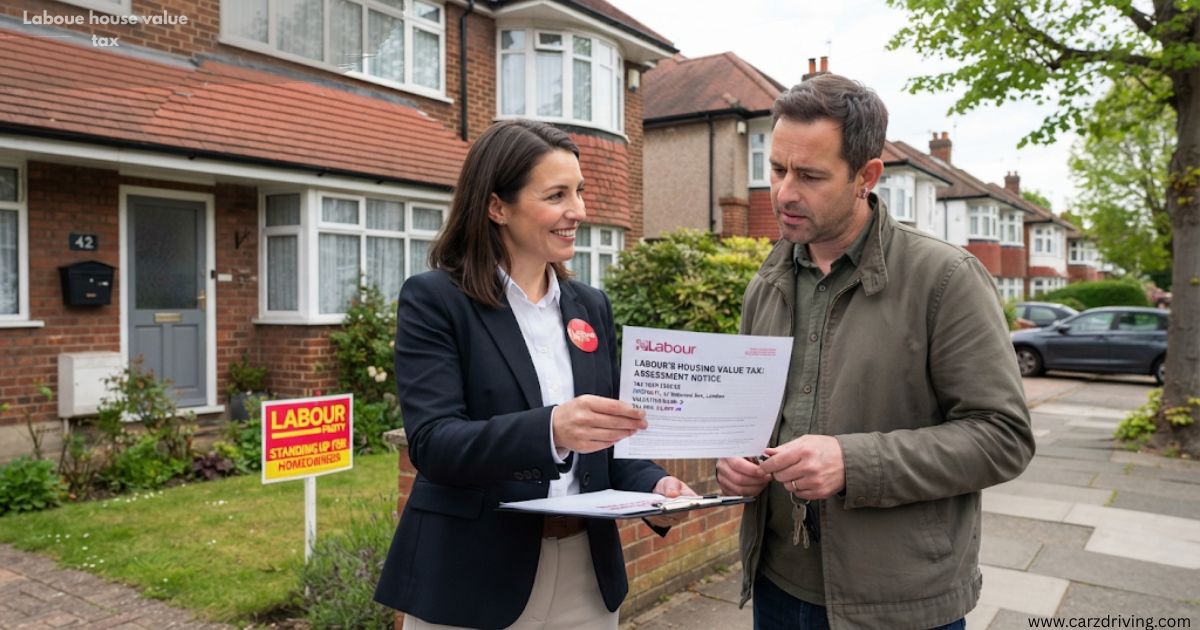
Reeves stood up during her Autumn Budget and ended months of speculation by confirming a new high value council tax surcharge, a plan that political circles often call a mansion levy.
In her Budget speech, the Chancellor explained that this move tackles wealth inequality, a longstanding source of frustration among political parties for years.
She used a striking example: a band D home in Darlington pays close to £2,400 in council tax, which is actually more than what a £10 million house in Mayfair currently pays.
To fix this imbalance, the government built a charging structure with four thresholds that starts from 1 April 2028. Homes valued between £2.0-2.5 million pay £2,500, those between £2.5-3.5 pay £3,500, properties sitting in the £3.5-5.0 band pay £5,000, and anything above £5+ million pays £7,500.
A house worth £2.2 million falls into the lowest band, while one priced at £6 million hits the top rate, and both figures show how thresholds decide the final bill.
Owners should also know these amounts won’t stay fixed forever, since CPI inflation pushes the rates upward from 2029-30 onward, meaning the tax year figures only apply once before rising again.
This shifting scale keeps pressure on homeowners owning £2 million properties and above, a group the surcharge specifically targets.
Who Will Be Affected?
The mansion tax falls on homeowners, not occupiers, and it stacks directly on top of existing council tax bills rather than replacing them.
The Valuation Office will carry out a targeted valuation exercise next year, and the Treasury says any home worth £2 million or more in 2026 will owe the charge starting April 2028. Revaluations happen every five years after that, keeping the list current.
Local authorities collect the payment, but the money doesn’t stay with local councils it flows straight into central government, landing in the Treasury coffers instead of local budgets. Officials estimate only 1% of homes across England will actually cross the threshold, and most of these sit in London and the South East, where house prices run highest.
That said, rising values mean more owners could get pulled in over time. Property portal Rightmove reports listings priced at a million pounds or above have jumped 103% across Great Britain in the last six years, so the pool of homes for sale in that bracket keeps growing.
What Happens if I Can’t Pay the Levy?
This new tax could squeeze families already juggling heavy mortgage payments and a punishing cost of living. Older homeowners face a particular struggle too, since many are asset-rich but cash-poor their house appreciation has soared while their income has shrunk or stayed flat.
Some owners may choose downsizing instead of paying up, and that could create a glut of properties worth over £2 million hitting the market at once. To soften the blow, the government promises a support scheme, with a public consultation planned for next year to work out the details.
Many expect an option to defer payment until someone decides to sell the home, or even until death, giving stretched owners breathing room.
Did You Know?
Political parties have floated a mansion tax idea long before this Budget. Labour included it in its 2015 election manifesto under Ed Miliband, and Jeremy Corbyn kept championing the idea afterward. The Liberal Democrats actually got there earlier, listing a similar plan in their 2010 general election manifesto.
Plan Early for the Mansion Tax
Nobody enjoys an extra tax bill, so anyone likely to face the mansion tax should start planning well before 2028 arrives.
Talking to a financial adviser early helps you manage savings and assets tax-efficiently, building resilience against sudden financial demands down the road.
Good financial advice matters more than ever now, especially since levels of taxation and reliefs from taxation can shift at any moment, and tax relief always depends on individual circumstances.
A Change of Personnel
The UK got a new tax minister this autumn. Former Exchequer Secretary James Murray moved up to Chief Secretary to the Treasury on 1 September, taking over from Darren Jones, who now serves as Chief Secretary to the Prime Minister, supporting the Prime Minister’s priorities directly. Stepping into Murray’s old seat is Dan Tomlinson, the MP for Chipping Barnet.
Tomlinson works as an economist with a background at the Treasury, the Resolution Foundation, and the Joseph Rowntree Foundation, and he’s already made his name on housing issues, much like his predecessor who once held the Deputy Mayor for Housing role.
Fellow Labour MPs see him as a leading voice, and he belongs to the Labour Growth Group, while the Labour Yimby group welcomed his promotion warmly.
Meanwhile, Angela Rayner’s tax affairs triggered her resignation on 5 September, and that episode exposed just how tangled tax policy and the wider tax system have become, particularly around stamp duty land tax (SDLT).
With property taxes already under the spotlight, many wonder if this moment finally pushes reform forward.
The Budget: Coming Back for More?
Back at Westminster, speculation about the autumn Budget never really stopped over summer, with growing chatter that taxes must rise again despite earlier promises.
Rachel Reeves, the Chancellor, has warned of tough trade-offs ahead, pointing to weak economic growth, Trump tariffs, and choices like restoring winter fuel payments and reversing welfare cuts. Even the Prime Minister appears to be preparing the public for fresh tax increases.
Think tanks back this view. The National Institute for Economic and Social Research warns the budget deficit could reach £40 billion, while Capital Economics puts the gap closer to £20 billion, though both agree the government’s tax promises face real strain, possibly forcing a pull on VAT, income tax, or employee National Insurance to escape the budget black hole.
Ministers insist they won’t touch rates for working people, yet nobody agrees whether that phrase covers six-figure salaries, landlords, or shareholders. Most now read the election pledge as covering rates only, which leaves room to extend the income tax thresholds freeze already set to expire in 2028.
A Proportional Property Tax?
Speculation around property taxes keeps building, and The Guardian reports that Treasury officials are studying how rising house prices have made council tax, still based on 1990s values, deeply unfair and prone to deepening inequality. One idea would replace SDLT with a levy on homes selling above £500,000, touching only a slice of property sales compared with today’s 60%.
Officials are also weighing a national property tax, and possibly a local property tax further down the medium term. Much of this thinking borrows from Onward, a thinktank led by Dr Tim Leunig, whose proportional property tax proposal asks homeowners, not tenants, to fund local services through a scheme with an £800 minimum payment supporting local government.
Under his plan, a local rate set by councils would average 0.44%, while a national rate would sit at 0.54% for homes up to £1 million and 0.81% above that, with anyone already taxed exempt from double taxation until they move.
Separately, The Times says the Chancellor is eyeing national insurance on landlords’ rental income, a move that could raise £2.3 billion, an idea first floated by the Resolution Foundation, once run by Torsten Bell, now a Treasury minister guiding Budget preparation.
There’s also talk of extending capital gains tax (CGT) to main homes worth £1.5 million or more by stripping away private residence relief from these high value properties.
Personal Taxes
Inheritance tax and capital gains tax both climbed in last year’s Budget, and the Treasury may push them higher again. Reports suggest officials are considering a lifetime cap on gifts, aimed at trimming the eventual inheritance tax bill, according to the Telegraph, which also notes that taper relief the discount for surviving three years after gifting sits under review too.
The Independent quotes a well-placed source saying focus currently rests on the gambling tax and capital gains, even though trade unions want gains taxed the same as wages. Elsewhere, talk of trimming tax-free cash ISAs persists, despite earlier reports that this idea got shelved for now.
With Torsten Bell, the Parliamentary Secretary to the Treasury, steering preparations, expect closer scrutiny of pensions and pension contributions, including a possible cut to the tax-free lump sum down to £40,000, a figure the pensions minister himself floated before through his old employer, the Resolution Foundation.
That same think tank wants marginal capital gains tax rates on shares matched with dividend tax rates, and property gains taxed just like wages.
Lord Neil Kinnock, the former Labour leader, has thrown his support behind a wealth tax too, backing a 2% levy on assets above £10 million proposed by Tax Justice UK and the Patriotic Millionaires, an idea that’s picked up backing through an Early Day Motion signed by 33 MPs. Downing Street hasn’t rejected it outright, though Jonathan Reynolds, the Business Secretary, called it daft and other officials call it unworkable.
Business Taxes
On the business side, the Treasury reportedly wants a £2 billion squeeze on small businesses and sole traders by lowering the VAT threshold, a plan backed by Torsten Bell and Treasury tax chief Dan York-Smith, who has previously floated cutting it to £30,000.
Yet the Telegraph claims the Chancellor is actually considering raising that threshold to support growth, showing just how divided the government remains on this point.
Capital Economics believes a rise in the bank corporation tax surcharge alongside a quantitative easing levy are the likeliest changes, an idea the Institute for Public Policy Research (IPPR) says could raise £8 billion a year.
Angela Rayner’s leaked memo, written while she was Deputy Prime Minister, had already suggested lifting the bank surcharge to 5%, alongside axing inheritance tax relief on AIM shares and restoring the pensions lifetime allowance.
Gordon Brown, a former Labour Prime Minister, has backed IPPR calls to raise gambling taxes by around £3 billion, arguing the industry can help fund lifting the two-child benefit cap. That plan includes pushing online casinos tax from 21% to 50%, and The Independent reports the Chancellor is genuinely weighing it.
Reform UK
Reform UK gathered in Birmingham on 5-6 September, riding high on recent defections and strong opinion polls. Their general election manifesto had promised scrapping inheritance tax, cutting fuel duty by 20p per litre, and dropping stamp duty on homes under £750,000, plus perks for married couples through ending the two-child benefit cap and adding a transferable marriage tax allowance.
But Richard Tice, the party’s deputy leader, hinted those pledges worth £90 billion in tax cuts might need a rethink. He told the BBC that a future chancellor should focus first on savings and cutting regulation, only then affording performance-related tax cuts.
Meanwhile, Nigel Farage, acting as party leader, unveiled a fresh offer for non-doms: pay £250,000 once and shield overseas income and capital gains from UK taxation. Farage also pushed back against Lord Kinnock’s idea of VAT on private healthcare and new levies on remote gambling, warning it could hurt the racing industry.
Liberal Democrats
The Lib Dems meet in Bournemouth on 20-23 September. Their election manifesto promised a crackdown on tax avoidance and tax evasion, reform of capital gains tax, and restoring bank surcharge and bank levy income to 2016 levels.
Over the past year the party fought the rise in employers’ national insurance contributions, pushing for exemptions for hospices and other health providers, and criticised the ongoing income tax thresholds freeze, with Daisy Cooper, the party’s Treasury spokesperson, calling for a higher tax-free personal allowance once public finances allow it.
They’ve also slammed the government’s inheritance tax reforms and suggested raising the digital services tax and remote gaming duty instead.
At conference, expect the party to repeat its plan to swap business rates in England for a Commercial Landowner Levy, plus a hospitality-focused motion proposing a new employer’s National Insurance Contributions band running from £5,000 to £9,100 to help cut costs for part-time staff. Other motions call for SDLT rebates tied to decarbonisation and for doubling the remote gaming duty.
Green Party
The Green Party also heads to Bournemouth, though on 3-5 October, and arrives with a new leader in Zack Polanski, the London Assembly member who beat former co-leader Adrian Ramsay and MP Ellie Chowns, who had run together on a joint ticket, in a landslide victory.
Polanski wants to challenge Labour from the left, promising to take on power and wealth and pushing hard for a wealth tax, arguing the ultra-wealthy should pay more toward tackling the climate crisis.
Conservative Party
Labour house value tax: the Conservatives gather in Manchester from 5-8 October. At the last election, they promised cutting employee NI by 2% down to 6%, scrapping class 4 NI for the self-employed, and raising the income tax personal allowance for pensioners.
Since then, the party has hammered the government over the tax burden reaching a record high, accusing Labour of planning fresh rises in the autumn Budget, and used an Opposition Day in the Commons to demand ministers rule out any property tax increase.
They’ve also attacked the inheritance tax change on agricultural properties, promising to scrap it, and raised concerns about non-doms and VAT on private school policies, branding the latter destructive, disruptive, and divisive.
Kemi Badenoch wants the energy profits levy gone and has voiced support for a flat rate of income tax, though it isn’t official policy from the party leader herself.
FAQs
What is the labour house value tax?
It’s a new high value council tax surcharge, dubbed the mansion tax, hitting homes worth £2 million or more from April 2028.
How much will homeowners pay under the mansion tax?
Homeowners pay between £2,500 and £7,500 a year, depending on which threshold their property falls into.
Who has to pay the mansion tax surcharge?
Homeowners, not occupiers, must pay, and the charge stacks on top of their normal council tax bill.
Will the mansion tax rise every year?
Yes, sadly, the rates climb with CPI inflation each tax year starting from 2029-30.
What if I can’t afford the new house value tax?
The government promises a support scheme, likely letting struggling homeowners defer payment until they sell or pass away.