

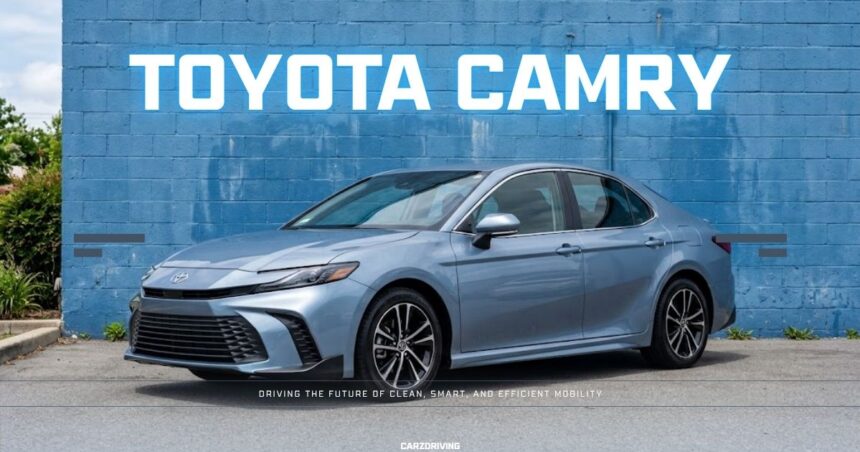
The Toyota Camry never chases thrills, yet it keeps winning awards and honors for its affordability, efficiency and spacious, comfortable cabin. Plenty of drivers ask me why a plain saloon still matters in the age of the SUV, and I tell them a good family sedan simply does its job. The 2026 Camry backs that up, because Toyota sells it only as a hybrid in 2026.
Toyota gives buyers two powertrain options, and only two sets of power figures matter. The standard front-wheel-drive setup makes 225-hp and works as a true fuel-miser. The all-wheel-drive version makes 232-hp and lifts the output without hurting economy. Both combine a 2.5-litre petrol engine with an electric motor and batteries, so the Camry Hybrid feels smooth in daily motoring.
The UK lost the Camry for a while. It stayed off-sale for 15 years before the Camry Hybrid came back with just two trim levels, Design and Excel. Its limited engine options set it apart, and its sales depend on how well it handles that competition.
The story began in Japan in January 1980, when Toyota built a four-door saloon from the second-generation Toyota Celica. That car took its mechanicals and lengthened chassis from the Toyota Carina, so it had little in common with the sporty Celica.
Engine, Transmission and Performance
On my test drive, the Camry Hybrid felt responsive around town. The front-wheel-drive model pairs a 2.5-litre four-cylinder engine with two electric motors to make 225 horsepower.
The strong shove from those motors helps a lot when accelerating. The older UK hybrid engine made 178hp and sent its power through a CVT automatic gearbox.
Every version uses a continuously variable automatic transmission, so it has no individual gears. That means some revving, but engine noise stays low. The all-wheel-drive setup adds a third motor on the rear axle and lifts output to 232.
It sends power to all four wheels, while the front wheels still do most of the work. These powertrains share a lot with the Toyota Prius, though the Camry uses a 2.5-litre engine where the Prius has a 2.0-litre four.
At the test track, a Camry XSE AWD reached 60 mph in 6.8 seconds, and a Nightshade took 7.0 seconds for 0–60 mph. That makes it quicker than the Hyundai Sonata but a little slower than the Accord Hybrid. The SE, XSE and Nightshade trims get sportier suspension tuning, and I noticed better body control in corners. The steering lacks feel, though. Overall performance works well for overtaking.
Low speeds are where the Camry Toyota shines, thanks to its silent electric operation. It handles lumps and bumps well and stays comfortable, although the Passat rides a little better. On country roads it grips hard, but most rivals feel more engaging.
Fuel Economy
A 2.5-litre petrol engine sounds thirsty, but the electric motor changes the picture. If you drive carefully, the hybrid returns about 50mpg. Its 98g/km CO2 emissions also beat most alternatives, and you spend less on petrol every month.
The EPA ratings for the 2026 Camry name the front-drive LE trim as the most efficient. It scores 52 mpg city and 49 mpg highway. With all-wheel drive, the LE drops to 50 mpg city and 49 mpg highway.
The top XSE with all-wheel drive is the least-efficient version at 43 mpg city and 43 mpg highway. On a 75-mph highway fuel economy test route, a 2025 Camry XSE AWD matched that number with 43 mpg highway. That kind of real-world MPG is rare, and you can read more about fuel economy on the EPA website.
Interior, Comfort and Space
The spacious interior of the Camry Hybrid gave my family plenty of room to relax. Four adults fit easily, though a fifth person in the rear middle seat feels cramped. The driver gets electronic seat adjustment and wheel adjustment, plus a broad, supportive driver’s seat.
The cabin feels well built. Soft-touch plastics, solid switches and attractive trims give it real quality that matches the Passat and Skoda Superb. XLE and XSE models add leather upholstery, heated seats, a heated steering wheel, ambient lighting, acoustic-laminated glass, an auto-dimming rear-view mirror and adjustable rear-seat headrests. In the UK, every car gets leather seats.
The UK boot holds 524 litres, and the rear seats have a 60:40 split and fold flat. The US trunk swallows 7 carry-on suitcases, or 19 cases with the seats folded, which roughly matches the Honda Accord for cargo capacity.
Infotainment and Connectivity
Early UK infotainment felt old-hat. A 7-inch touchscreen sat in the dashboard beside a 7-inch driver’s info display, and neither matched the class’s best systems or felt easy to use. Those cars also lacked smartphone mirroring, so drivers got no Apple CarPlay or Android Auto.
The newer Camry fixes most of this. The base screen measures 8.0-inch, the SE offers a 12.3-inch screen as an optional upgrade, and the XLE and XSE get it as standard. Toyota’s latest software interface feels intuitive and quick, and I never waited for it to respond.
Apple CarPlay and Android Auto both connect over wireless links on all trims. Every car gets a digitized gauge display, but only the top two trims get the fully digital screen. Buyers who love music can add the nine-speaker JBL stereo system, and it makes connectivity a real strength.
Price
In the UK, it starts near £30,000. That makes it more expensive than an entry-level Passat, Superb, Mondeo and Insignia.
The standard equipment list is generous, which softens the blow. Still, unless you need hybrid power or you buy a company car, I would check the cheaper, more spacious and better-to-drive Skoda Superb first. Which One to Buy comes down to your budget, and the Camry rewards buyers who value low running costs.
Toyota Camry
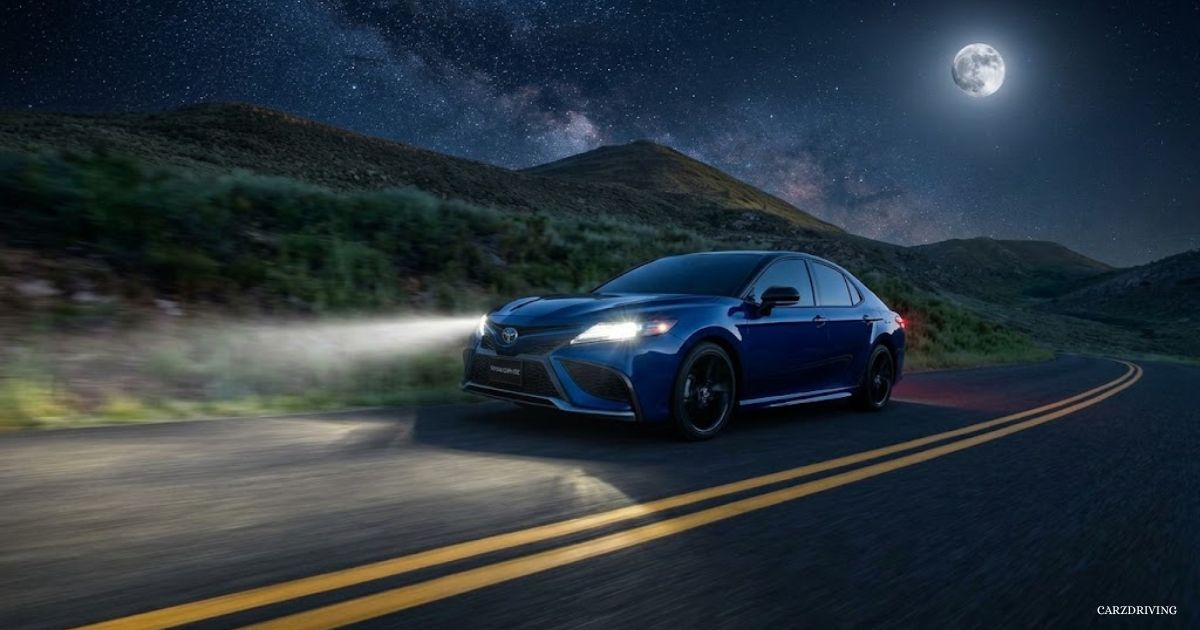
2026 adds a new trim to the lineup, the Nightshade trim. Toyota Camry bases it on the SE trim and gives it a dark theme with Midnight Black Metallic exterior detailing, 19-inch wheels and gloss-black badging. It also gets the sportier suspension tune of the XSE. SE, XLE and XSE buyers can pick Dark Cosmos as an exterior color.
The Camry Hybrid comes with strong driver-assistance features and safety features. You get automated emergency braking with pedestrian detection and cyclist detection, plus automatic high-beam headlamps. Adaptive cruise control works with lane-centering, and lane-departure warning joins lane-keeping assist.
One system even eases the brakes before curves. You can check crash-test results at the NHTSA (National Highway Traffic Safety Administration) and the IIHS (Insurance Institute for Highway Safety).
Toyota offers solid maintenance coverage. The limited warranty lasts three years or 36,000 miles, and the powertrain warranty runs five years or 60,000 miles. Hybrid components get ten years or 150,000 miles, and complimentary scheduled maintenance lasts two years or 25,000 miles. The Hyundai Sonata and Kia K5 offer longer warranty periods.
FAQs
How much does the 2026 Toyota Camry cost?
The 2026 Toyota Camry price starts at $30,895 and reaches $37,295, depending on trim and options.
How good is the Camry Hybrid’s fuel economy?
The front-drive LE trim is the most efficient, with 52 mpg city and 49 mpg highway by EPA ratings.
How fast is the Toyota Camry?
At the test track, a Camry XSE AWD reached 60 mph in 6.8 seconds, which is quicker than the Hyundai Sonata.
Does the Camry have Apple CarPlay and Android Auto?
Yes, Apple CarPlay and Android Auto come standard and work over wireless links on all trims.
What warranty does the Camry offer for its hybrid parts?
Hybrid components have coverage for ten years or 150,000 miles, which gives your family extra peace of mind.