
Unlike a kit car, most modern cars roll off assembly lines inside massive factories, where robots and computer systems check every wire, bolt, nut, and screw, with monitoring checkpoints catching anything out of place. A self build car flips that whole idea around, since you build it yourself in your own garage, working at your own pace, spending hours turning components into something special without a factory robot in sight.
This side of the motoring scene owes a lot of its growth to an old purchase tax exemption, and it still lets everyday drivers put together a Cobra, a racer, or another dream car for roughly the price of a family hatchback, no Ferrari budget required.
Tribute MX250
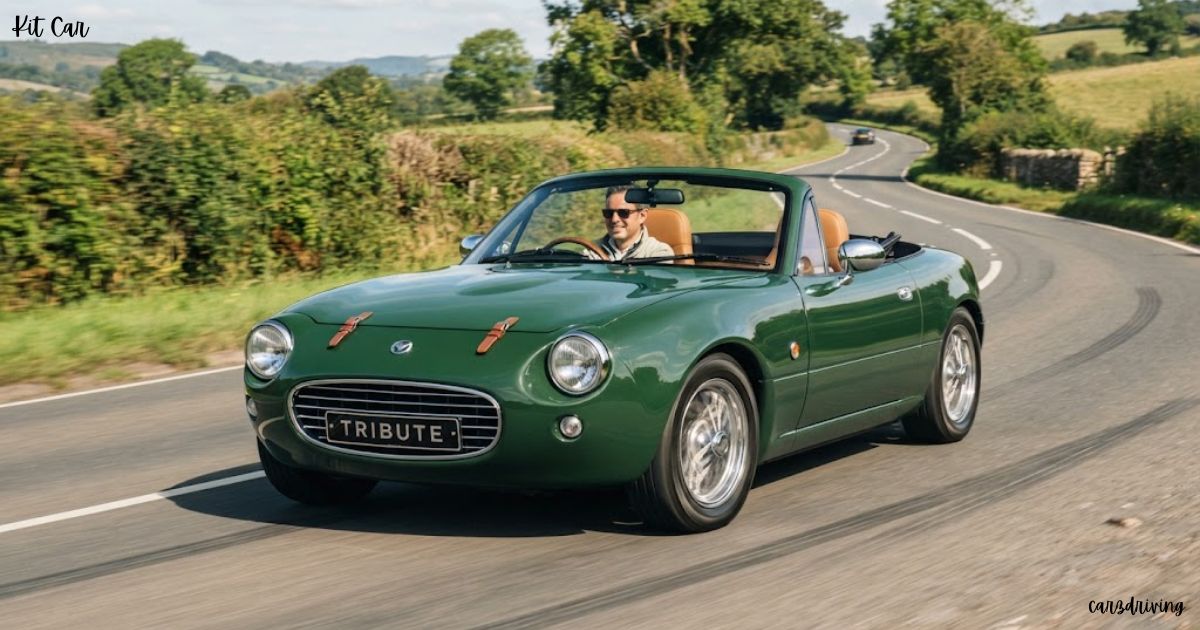
Tribute Automotive, based in Dorset, takes a regular Mazda MX-5 and turns it into something far more exotic through clever self build car body conversions.
Their MX250 kit lets you swap the standard body panels for a shape inspired by the Ferrari 250 GTO, and since original GTOs sell for close to £50m, paying 0.01% of that for the bodykit and a donor car feels like a bargain. They also offer conversions for the BMW Z3, so if you already own a suitable donor car, most of the hard work is already done for you.
CAV GT
Few race cars stir up as much passion as the Ford GT40, the legendary machine that beat Ferrari at its own game at Le Mans, but original cars are locked away in millionaire collections. The
South African-built CAV GT solves that problem, offering a GT40 replica that the company itself calls the most comfortable and user-friendly version of the ’60s legend available today.
It arrives either fully assembled or as a rolling chassis without engine and drivetrain, so while it isn’t strictly a full self build car, it still delivers a classic driving experience wrapped in a modern age package.
Ultima Evolution
Anyone chasing hypercar speed paired with Le Mans-style looks should take a serious look at the Ultima Evolution, the follow-up to the brand’s well-loved Ultima GTR. EVO magazine once called it an under-rated car, and it’s easy to see why once you learn the top LS V8 trim pumps out 1020bhp from a supercharged 6800cc Chevrolet engine, firing the car from 0-60 in just 2.3 seconds and on toward 240mph.
Buyers who want something gentler can choose the LS3, good for 480bhp and a 3.1 seconds sprint, while the middle-ground LS7 brings 700bhp and still beats a Lamborghini Aventador Coupe S, all available in coupe or convertible bodywork at 60mph and beyond.
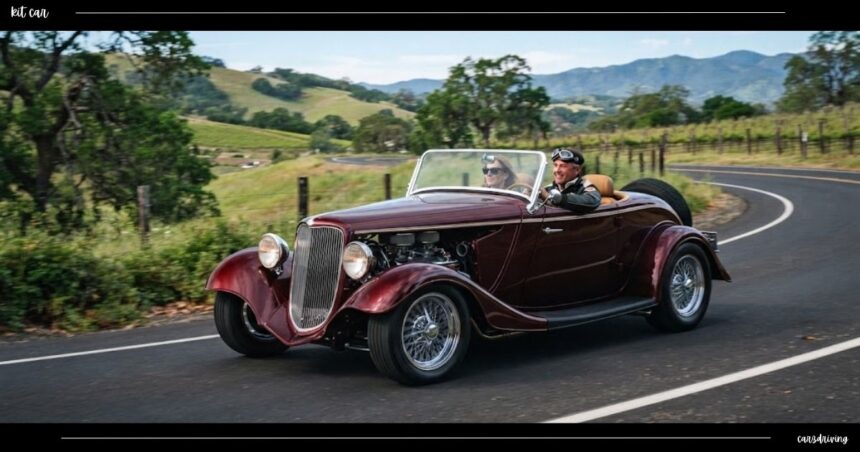
’33 Hot Rod – Factory Five
Sourcing a ’33 Hot Rod kit in the UK takes some digging, and buyers often need extra work to meet roadworthiness standards, but a UK partner of Factory Five makes owning this iconic car possible.
This kit stands out because it uses the first ever all-steel body from Factory Five that lines up correctly straight out of the box, with no trimming required on any panel. Every piece comes E-coated for corrosion protection, complete with stylish side covers, blending classic looks with genuine modern engineering and strong performance.
Westfield Eleven
The Eleven traces its roots to Colin Chapman, whose race car design became Lotus’s most successful effort between 1956 and 1958, taking seventh overall at Le Mans and setting a class world record of 143mph at Sebring with Stirling Moss behind the wheel.
Westfield began building its own version, the XI, back in 1983, and the company still produces small batches of five kits priced from £10,999 to meet steady demand. Built using parts from the 1275 MG Midget or Austin-Healey Sprite alongside bespoke parts and panels, the Eleven delivers a driving experience dripping with ’50s nostalgia, matching the Seven’s enduring charm.
Lister Bell STR
Lancia built the Stratos for a single purpose, winning the World Rally Championship, and it dominated competition between 1974 and 1976 so completely that only 492 examples of the roadgoing Stratos Stradale ever left the factory, each powered by a detuned 2.4-litre Ferrari Dino V6.
Bertone’s wedged-shaped design still looks outrageous today, a squat piece of automotive art, and since original cars command stratospheric prices, kit versions available since the 1980s, such as the Lister Bell STR, offer real buyers a way in through several body variations ranging from Stradale to Group 4.
The standard STR takes an Alfa V6 engine, while the STR-M variant is built around a 3-litre or 3.2-litre Ferrari V8 borrowed from the Mondial.
MEV Exocet
Mills Extreme Vehicles built its Exocet to be the cheapest and easiest car on the market, priced under £3000 plus VAT for a basic kit. Builders strip the MX-5 monocoque from a Mazda MX-5 donor car and bolt on the supplied G-Type chassis and GRP body panels, cutting roughly a third of the weight loss off the finished machine while keeping a bullet-proof engine.
Suitable donor cars include 1.6-litre and 1.8-litre mark I or mark II models, plus the mark 2.5 with its VVT engine, and thanks to endless after-market tuning options, this little sports car shines equally on road or track.
Cobra replica
Carroll Shelby, an American racing driver turned car designer, wrote to AC back in 1962 asking them to build him a car around a V8 engine, and that letter gave the world the original AC Cobra.
The British car company kept building the series III Cobra 427 until 1967, and countless replicas have kept its spirit alive ever since, second only to the Caterham 7 in kit form popularity.
In the UK, the Pilgrim Sumo ranks among the biggest-selling kits, prized for delivering serious V8 power and an iconic design built to handle huge American engines.
Caterham 7
Known as the granddaddy of every self build car car on this list, the Seven has stayed in production since 1957, when Colin Chapman’s stripped-back Lotus 7 first went on sale to dodge the new car tax. Caterham picked up the licence in 1973 and still builds cars from the original series 3 model, offered either as a kit or in factory built form.
Many other companies, Westfield included, have produced their own Sevens over the decades, and whether you pick the gentle 80bhp Caterham 160 or the wild 310bhp 620S, the car still captures the true essence of fun more than 60 years after Chapman first drew it up.
What Is a Kit Car?
A car arrives in pieces, and after payment, the delivery brings every part you need straight to your home, leaving the assembly work entirely up to you alongside some specialist tools.
Every kit is configured differently: Caterham, one of the best-known suppliers, which also sells factory-built cars, usually pre-builds the body and chassis structure, leaving buyers to fit the engine, gearbox, wheel arches, axles, suspension, and cooling system. Factory Five takes a different route with its Type 65, one of 11 kits on offer, shipping a separate tubular chassis that needs its body panels and seats attached later, and many of these builds, like the Dax, get created with track days or classic historical models in mind.
How Do You Build a This Car?
Building a this car really comes down to following the instructions, since every nut, bolt, and fixing needs tightening to a precise torque, and the entire assembly must happen in a set order. Builders apply greases, adhesives, silicones, and threadlockers at exact amounts and locations, which explains why most of these cars get assembled rather than truly built from scratch.
The engine and gearbox each arrive as a complete unit that still needs joining together before installation, and Caterham’s own assembly manual gives a good sense of just how detailed the whole process gets.
Is Building This Car Easy?
Ask ten builders to define “easy” and you’ll get ten different answers, though most agree a this car build shares some logic with assembling a Lego set, just on a far bigger scale.
Success usually favours people with mechanical knowledge or engineering knowledge, though genuine passion and a practical mindset can carry a newcomer just as far, especially since kit-car instructions tend to be thorough and helplines staffed by real experts with technical knowledge stand ready to help with any difficulties.
It’s worth preparing for the long haul, because plenty of builders underestimate the time needed and end up selling a half-built project, yet those who stick with the challenge and lean on forums or their kit-car company usually finish with something they’re genuinely proud of.
How Long Does It Take to Build This Car?
The time a this car takes depends almost entirely on how many hours you can spare each weekend, since a slow, steady pace can stretch the project past a full year, while a dedicated month off work might see it finished far sooner.
Some tasks prove trickier than expected, turning a one hour job into six hours, and getting something wrong means you have to install it again correctly, adding real delays on top of any problems caused by tools that simply aren’t up to the job.
An extra pair of hands genuinely speeds things along, since heavy components or bulky components that take one person four hours might only take two people two hours, and a helper is sometimes essential for safe working; Westfield itself estimates a typical build runs between 120 and 150 hours.
Do I Need Any Special Tools to Build This Car?
Special tools are non-negotiable for this car project, starting with an engine hoist, which can be rented, plus a set of axle stands, screwdrivers, Torx drivers, glues, greases, pliers, spanners, lubricants, knives, and saws.
A good torque wrench, sometimes two, keeps every fastener at the right tightness, while a rivet gun and other items rarely found in a standard toolbox round out the list, and some companies, like Draper with its Caterham builds kit including a trolley jack and axle stands, sell a dedicated toolkit to cover everything at once.
Beyond tools, you’ll need a proper garage with a reliable electricity supply, and since winter can make any workspace bitterly cold, a decent space heater is worth the investment.
How Much Do These Cars Cost?
Pricing for a this car varies enormously depending on the brand and specification you choose. Caterham kits start around £29,990, a saving of £2,595 compared with a factory build as of Feb ’23, though extras like carbon-fibre dash inserts or a spare wheel push that figure higher.
A Factory Five Type 65 Coupe starts near £24,600, while DAX sells its chassis for £2,260 and a DAX 01 body for £3,880, alongside separate modules such as brake kits, electrical kits, and suspension, letting builders spread out costs and tailor the build to their budget.
Does This Car Need to Be Approved Before It Can Be Driven?
Before any kit car touches public roads, it needs proper approval, and having an expert, such as Caterham’s own inspection service, check the finished build is always a smart first step.
Every car must then pass Individual Vehicle Approval, known as IVA, run by the Driver and Vehicle Standards Agency, or DVSA, and builders first need a vehicle identification number, or VIN, before booking that inspection appointment, which can take 20 working days to arrange through the application process.
Once booked, the car usually travels by trailer to an IVA centre, found in places like the east of England, Scotland, or Wales, and after passing this strict technical assessment, it receives a ‘Q’ number plate, ready for the road once road tax and car insurance are sorted, though some companies will handle the whole legally drive process on the builder’s behalf.
FAQs
Is building a kit car hard for beginners?
It takes real mechanical knowledge or genuine passion, but detailed instructions and helplines make every kit car build achievable.
What’s the easiest kit car to build?
The MEV Exocet is often called the cheapest and easiest kit car, built from a simple Mazda MX-5 donor car.
Can I drive a kit car on the road immediately after building it?
No, your kit car needs a ‘Q’ number plate, road tax, and car insurance before it’s road-legal.
What’s the most famous kit car ever made?
The Caterham 7, based on Colin Chapman’s original Lotus 7, remains the true granddaddy of every kit car.
Do kit car companies help with the build process?
Yes, most offer helplines staffed by real experts, plus detailed assembly manuals to guide you through the entire kit car journey.