

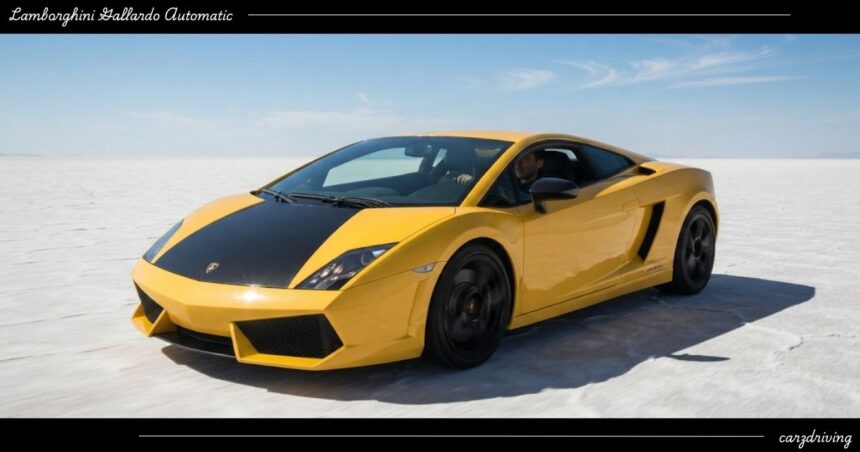
I still remember the first time I sat behind the wheel of a Lamborghini Gallardo Automatic and felt my hands go slightly clammy before I’d even started the engine. That’s the kind of reaction the Gallardo Spyder pulls out of people, and back when it launched at £131,000, hitting 197mph felt like a party trick reserved for the autobahn rather than something you could actually use on UK roads.
Most cars built for foreign roads, sunny weather, and glassy-smooth tarmac fall apart the moment they reach our damp shores, yet this 520bhp machine somehow made itself at home here.
Its roots trace back to the Lamborghini Jalpa, produced between 1981 and 1988, though the 15-year gap between the two cars means calling the Gallardo a direct successor is a bit of a stretch.
What the Jalpa never managed, the Gallardo achieved with ease, becoming Lamborghini’s best-selling model with 14,022 examples rolling out of the factory, a name borrowed from a breed of fighting bulls and revealed to the world at the 2003 Geneva Auto Show.
Lamborghini marketed it as an everyday supercar, and as the brand’s entry-level offering it slotted neatly beneath the Lamborghini Murciélago in the model lineup.
A long wheel-base and a properly engineered V10 engine gave it blistering performance without sacrificing ride quality or its sharp handling characteristics, and Lamborghini’s obsessive engineering standards and attention-to-detail meant the car felt just as happy weaving through city streets or lapping a race track as it did parked outside the grocery store on a Saturday morning, all while capable of a top speed north of 300 km/h.
What still surprises people I talk to is that you can pick one up today for less than a fully loaded BMW 5 Series. Back in 2003, the Gallardo arrived with a mid-mounted 5.0-litre V10 producing 493bhp, sending power to all four wheels through either a single-clutch automated manual for
drivers who wanted flappy paddles or a traditional six-speed manual for purists who preferred to do the work themselves, and either way the 10-cylinder roar left people speechless, distinguishable from almost anything else short of an Audi R8, a Lexus LFA, or a Porsche Carrera GT.
The droptop Spyder joined the range in 2006, bringing along an uprated engine that the coupé had already received a year earlier, lifting output to 513bhp, and alongside that came reworked suspension, a revised exhaust system, and an updated steering rack, with the biggest change coming from shorter ratios in the six-speed gearbox, described simply as lower ratios.
Then 2008 brought what felt like a near-total transformation: the fighter-jet design was modernised, and a punchier 5.2-litre V10 replaced the old unit, almost as if the car had been through Top Gun training and come out the other side with sharper reflexes.
That second-generation car spawned some genuinely special versions, including the Valentino Balboni, named after Lamborghini’s famous test driver, producing 542bhp and sending it all to the rear wheels only, making it a proper handful, while the standard model offered 552bhp and a genuinely rapid 3.7sec dash from 0-60mph, topping out at 202mph.
Every version is genuinely exhilarating, delivering thrilling power high up in the rev range, backed by strong grip and sharp handling whether you take it to a track or simply potter around at low speeds, because this car has that much theatre built into it.
Entry into ownership today starts around £60,000, a bargain next to the £120,000 it once commanded new, and it still wears one of the most prestigious badges in the business as a genuine supercar.
Lamborghini Gallardo Automatic
Lower the roof on this car and you’ll swear a stairlift has come to life somewhere behind your head, which is a strange but oddly charming way to describe a piece of engineering that is genuinely a work of art.
Press the gearknob button and the rear deck lifts to reveal a glimpse of the engine before the fabric folds down out of its tiny cubby, clicking into place with a properly watertight seal against the windows in about 20sec, which is quick enough to beat most traffic lights and spare you a soaking.
It’s noisier with the roof up than in the coupe, and the cabin feels a touch snug, but the Spyder never feels genuinely comfortable-lacking, borrowing bright colours and carbon fibre trim from the flagship SE version, while the major controls, lifted straight from the Audi A8, all work properly and put you in a driving position behind a brilliant suede wheel that feels spot on, making the whole experience comfy, leak-proof, and genuinely semi-practical.
What About Parking in Tight City Spaces?
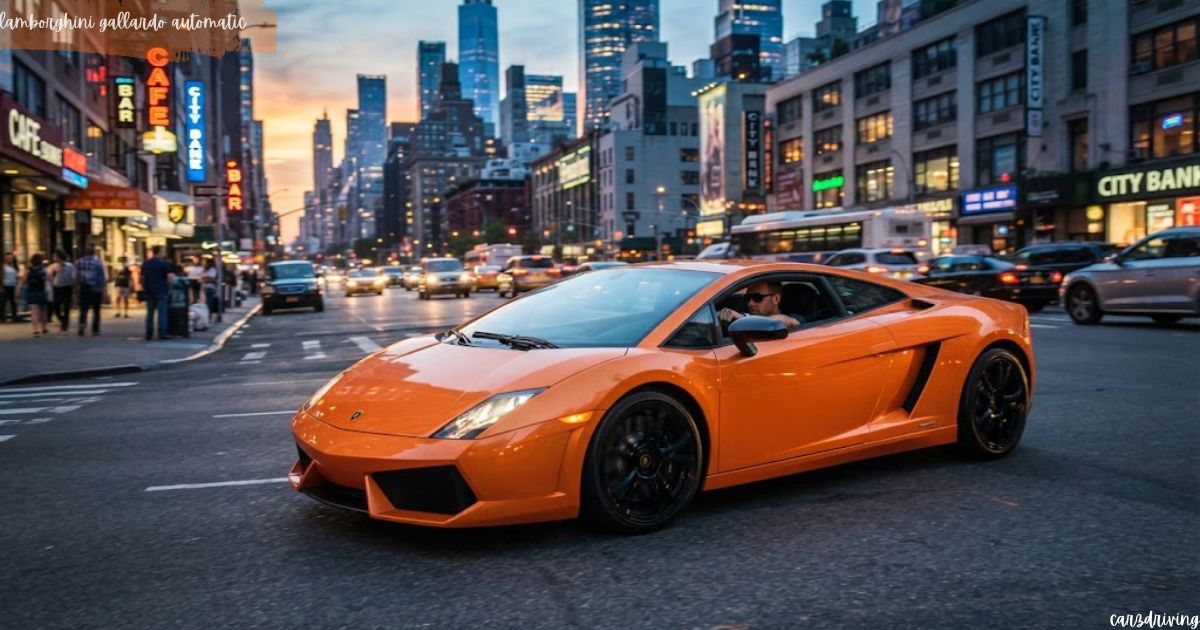
Anyone picturing a nightmare every time they approach an NCP car park can relax a little, because despite its mighty presence the Gallardo is actually 169mm shorter than a Ford Mondeo and only 100mm wider, which makes it easy to thread down narrow roads. Parking, though, is a different story entirely, since that gorgeous wedge profile turns reversing into something close to a spiritual experience, and I’d strongly recommend the optional parking sensors and rear view camera, because without them a trip to the body shop after a spot of parallel parking becomes a genuine risk.
What’s It Like to Drive?
Lamborghini reinforced the spaceframe chassis around the windscreen pillars and rear bulkhead to boost overall ridgidity, and the payoff is a car that stays impressively stiff on all but the bumpy roads, with only a hint of body flexing on the roughest surfaces, which is remarkable engineering given how much 520bhp and 376lb ft of torque is being pushed through the chassis.
Borrowing its underpinnings from the Gallardo SE, the Spyder gains sharper steering, revised damping, an extra 27bhp, and reworked gear ratios to sharpen the whole performance package, resulting in a genuinely quick and capable supercar that’s easy to exploit on UK roads, even if the damping can get caught out over a series of bumps while generally keeping the body planted to the tarmac.
The engine itself is the real story, delivering a linear power delivery matched by an incredible soundtrack, and when the butterfly opens in the exhaust nothing else comes close to the ferocity of the noise, which is shrill, angry, and genuinely a little scary; the only weak point is the steering, which never quite matches the chassis and engine due to a lack of feel.
Anything else?
Watching the scenery rush past is far easier once you stop fighting with the gearbox, because while the manual gearbox looks and feels the part, it’s a little cumbersome for quick changes, and I’d side with CAR Online in recommending the E-Gear semi-automatic gearbox instead, since it’s lightning quick, easy to use, and lets you keep your full attention on the road ahead.
Verdict
Few cars manage to be this sensational, and the Gallardo Spyder stands among the best looking cars in the UK, arguably one of the most beautiful anywhere on the planet, carrying enormous presence and a rare blend of German engineering and Italian style, with a soul-that howling V10-that feels genuinely urgent every time you start it.
Specs
At £136,540 Price when new, the Engine measured 4961cc, a V10 producing 520bhp at 7800rpm and 376lb ft at 4500rpm, sent through a Six-speed manual Transmission to four-wheel drive, delivering Performance figures of 0-62mph in 4.2secs, a top speed of 197mph, fuel economy of 16.6mpg, and emissions of 400g/km CO2, all wrapped in a Weight of 1450kg built from steel and aluminium material, with Dimensions of 4300 length, 1900 width, and 1165 height in millimetres.
The Basics
Built with RWD/AWD options across its Production Years of 2003–2013 and Model Years running 2004–2014, total Production reached 14,022 units, all built at the Assembly plant in Sant’Agata Bolognese, Italy, using a Longitudinal mid-engine Layout with Driven Wheels sending power through a naturally aspirated Engine ranging from 5.0L to 5.2L known as the Nat Aspirated V10.
Gallardo Fun Fact
It’s a fun bit of trivia worth sharing at any car meet: the Huracán eventually wore the crown the Gallardo once held, matching its total sales in half the time, since it took the Gallardo a full decade before the 14,022nd vehicle rolled off the assembly line in 2013, while the same output for the Huracán took only five years into its model line, proving that even a best seller doesn’t hold the title forever.
Best Gallardo? The Gallardo LP570-4 Superleggera
Ask any enthusiast which version deserves the title of best Gallardo and most will point to the LP570-4 Superleggera, built with less weight and more power at a time when Ferrari and McLaren were pushing tech-first supercars onto the market.
Lamborghini remapped the engine management to squeeze another 10bhp out of high-octane fuel, lifting the power-to-weight ratio to 399bhp per ton compared with the LP560’s 384bhp per ton, a natural progression and arguably the peak of the analogue baby supercar, a celebration of a simpler driver/machine relationship built by skipping fancy R&D recipe books and sticking to a formula of remove weight and add power.
What We Said Then
Back in the day, 25 June 2003 brought a review declaring that this highly credible Lamborghini was set to scare the 360 Modena with its blend of glamour, performance, drivability, and build quality, adding that Maranello should be worried, and looking back now, that verdict has aged remarkably well.
Buyer Beware
Anyone shopping for one of these should start with the Engine, because early 5.0-litre engines are known for oil pump problems, so always have the compression and oil pressure checked,
and watch for owners who overfill the dry-sump engine, since an engine management light can point to overheating after the exhaust noise reduction valves have been disabled, and low-mileage cars sometimes develop sticking throttle bodies that cause the engine revs to hunt.
On the Transmission side, the automatic can feel sticky with some clutch slip if the clutch has been overheating, though this usually resolves once it cools down, and a laptop can be plugged in to confirm whether the manuals have received their updates, with the rare stick-shift cars only really prone to cable stretch.
Suspension and brakes take a beating too, particularly the front pads and discs, along with the ball joints, antiroll bar bushes, and track rod ends, so on post-2005 cars always test the front-end lift system and confirm the handbrake holds properly.
The Body is built from aluminium, which is genuinely tricky to repair, so dents should be avoided at all costs, and corrosion can appear around the side oil-cooler vents seams; check for stone chips on a nose that should either be film-protected or, if repainted, free of blow-over areas, and make sure a non-functioning hood isn’t just a simple solenoid fail.
Inside the cabin, most controls come from Audi and rarely cause trouble, though the trim holds up well while the Alcantara-wrapped steering wheel can wear to a shine and the driver’s side bolsters can start to look genuinely scabby.
Also Worth Knowing
The Lamborghini Gallardo Automatic Superleggera model was offered in both pre-facelift and post-facelift forms, and the newer version pushed power up to 562bhp while trimming a weight decrease of 70kg, dropping the 0-60mph time to 3.5sec and sharpening both handling and agility along the way, and by 2010 Lamborghini confirmed that 618 Superleggeras had been produced and sold in a single year.
FAQs
Is the Lamborghini Gallardo available with an automatic transmission?
Yes, the Gallardo offers a single-clutch automated manual known as E-Gear, giving you thrilling flappy paddles control without a clutch pedal.
How fast is the Lamborghini Gallardo automatic?
It rockets from 0-60mph in as little as 3.5sec, reaching a top speed of up to 202mph with pure V10 fury.
How much does a Lamborghini Gallardo automatic cost today?
Entry into ownership starts around £50,000, making this supercar far more attainable than most people expect.
What engine powers the Lamborghini Gallardo automatic?
It’s driven by a naturally aspirated V10 engine, ranging from 5.0L to 5.2L, delivering unforgettable performance and soundtrack.
Is the Lamborghini Gallardo automatic reliable for daily driving?
With proper checks on the clutch, engine, and suspension, it can genuinely be enjoyed as an everyday supercar.