

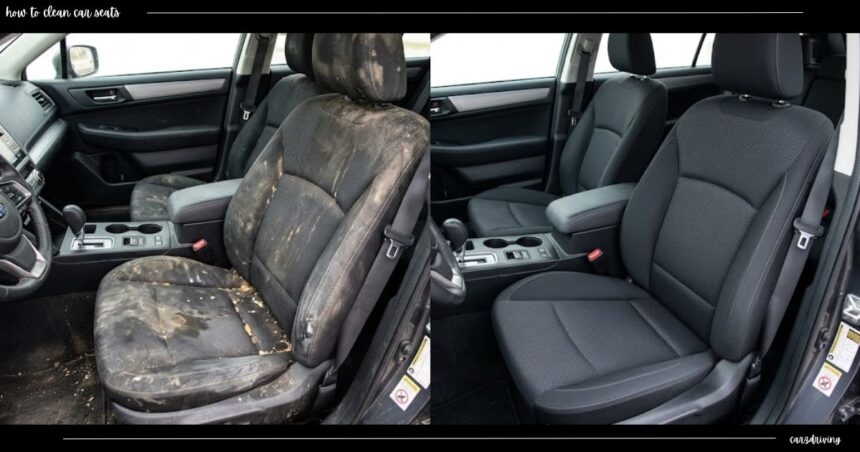
I still remember the exact moment I finally learned how to clean car seats properly, after years of just ignoring the state of my car.It happened right after a school run, when my son climbed in wearing muddy football boots and left a trail across the seat, right next to a week-old coffee ring from when a friend let a full cup spill a coffee on the way to work.
That combination of mud and coffee spillages taught me that cleaning car seats isn’t optional if you want a clean car interior you’re not embarrassed to sit in. Between busy family life, work trips, and the odd takeaway on the move, dirty car seats build up fast, and some of those tough stains feel genuinely difficult to tackle without a proper plan.
How to Clean Car Seats
This guide rolls up its sleeves and walks through everything I’ve learned from researching and testing different approaches on my own car seats. We’ll look at fabric car seats, leather car seats, and softer materials like suede and Alcantara, plus the step-by-step methods that actually work for each one.
Whether your seats are pure fabric or genuine leather, there’s a method that fits. You’ll also find out which best products, including trusted names like Halfords, deserve a spot in your boot, whether that’s a dedicated car seat cleaner, handy car wipes, or a bottle of upholstery sprays for a quick refresh.
We’ll cover the drying steps that stop damp problems returning, and how to shift a stubborn smell for good. If you’re running a leasing car, under either personal leasing or business leasing, this matters even more, because a fresher cabin at handback can genuinely save you money and hassle.
Recommended Products to Clean Car Seats
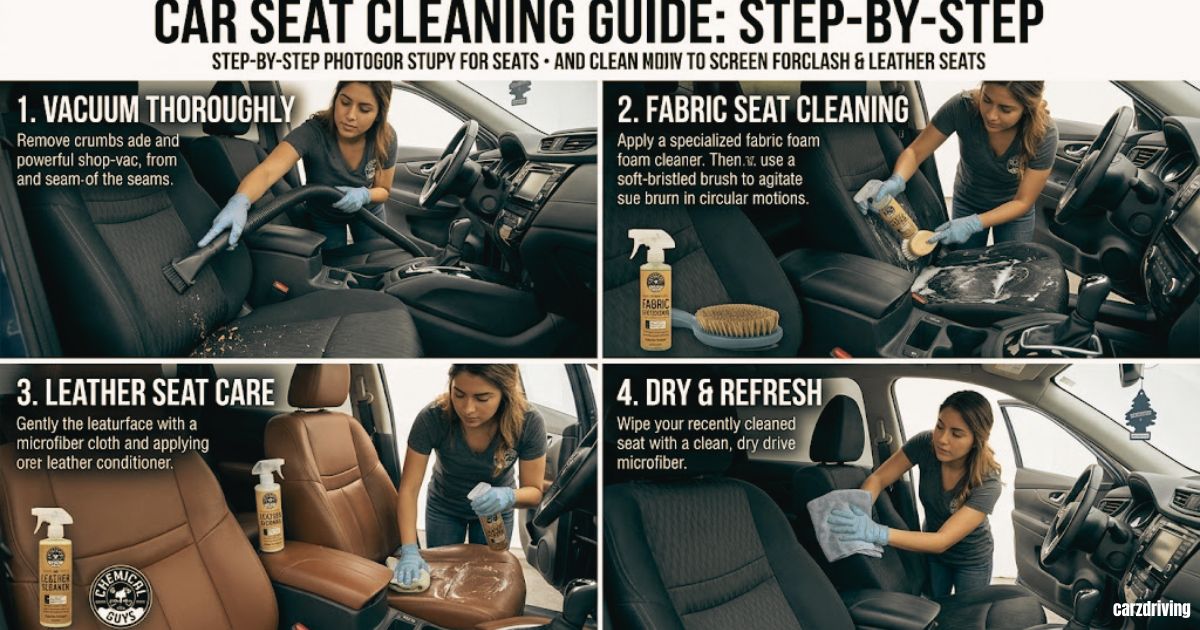
Before reaching for any spray, give your seats a quick pass with a car vacuum. This lifts loose crumbs and debris out of stained areas so you’re not grinding dirt and grime further into the material. Skipping this step is the main reason people end up with ground-in dirt that no product can fully lift afterwards.
For fabric car seats, the Halfords Advanced Upholstery Cleaner is one I keep coming back to. Its 500ml bottle handles fabrics, car carpets, and roof linings, lifting stubborn stains across multiple surfaces and leaving behind a light fragrance that boosts overall freshness.
As a quick reference, Fabric seats respond best to gentle sprays, while general car wipes are handy for a fast wipe-down between deeper cleans.
The Armour All Carpet and Seat Wipes work well too, and they’re small enough to tuck into a side door pocket or glove box, ready whenever tough car seat stains or minor stains show up unexpectedly.
Leather car seats and Leather trims need their own care. The Armour All Leather Wipes clean quickly without leaving marks, giving a streak-free finish every time.
A dedicated leather cleaner paired with a proper leather conditioner keeps the surface soft and helps prevent cracking. A pH-neutral upholstery cleaner is worth having too, since it’s gentle enough for Suede and Alcantara, and pairing it with an Alcantara-specific cleaner or suede-specific cleaner protects those delicate fibres.
The Autoglym Interior Shampoo is a genuine multipurpose cleaner, working on car seats, steering wheels, and beyond, thanks to its intensive formula that tackles spillages and stains without much effort.
The Turtle Wax Interior 1 Multipurpose Cleaner and Stain Remover handles food and drink spillages and odours left by pets or smoke, and its detachable cleaning brush makes light work of the mess. Wipe everything down with a microfibre cloth afterwards, then vacuum away any residue.
Finish the job with an Air Freshener. A fruity scent, sweet scent, or new-car scent helps neutralise odours and leaves a refreshed interior that feels properly sanitised.
Use a soft-bristled brush or soft brush attachment to work products into tight corners, and you’ll notice a spotless car interior and a genuinely fresh fragrance that lasts, free from any lingering unpleasant odours.
Why it’s important to clean your car seats
Dust, crumbs, and spilled drinks build up faster than most people realise, and left alone they turn into odours and a smell that just won’t shift. Some research, including a study from Aston University, found that car interiors can carry more bacteria than an average toilet, with the driver’s seat often ranking among the worst-affected areas.
It’s not only about hygiene either left too long, dirt and grit wear down the upholstery, weakening the fibres and the surface of the material itself, so regular cleaning genuinely protects what you’ve paid for.
If you’re driving a leasing vehicle, this matters even more. Most lease agreements expect the car back in good condition, judged against fair wear and tear, and charges for stains or damaged upholstery are common if you fall short of that standard. Staying on top of cleaning is one of the simplest ways to dodge unexpected costs once your lease ends our fair wear and tear guide breaks down exactly what’s expected.
What you’ll Need
Before you start cleaning seats, check your vehicle’s manual. Some manufacturers include specific guidance for your exact seat material, and ignoring it can cause lasting damage or even affect your warranty.
Look for recommended products, such as approved cleaners and conditioners, alongside a list of products to avoid, since certain chemicals and cleaning agents may be flagged as unsuitable. It’s also worth reading the warranty conditions, because an unapproved product or method could affect your cover.
Pay close attention to any seat-specific features too. Heated seats, ventilated seats, and built-in electronics often need extra care and specific techniques, and a few minutes checking now can save you from a costly mistake later.
Can you Use Household Products?
Household products can help with everyday cleaning, but they’re not always the safest choice for your seats. Diluted white vinegar is fine for light stains and odours, baking soda works well for absorbing smells before vacuuming, and warm water with a touch of mild detergent suits fabric seats nicely.
On the other hand, bleach can discolour or weaken upholstery fibres, abrasive cleaners and scouring pads risk damage surface, and solvents can strip colour or dry out leather. Even undiluted washing-up liquid can leave leather prone to cracking.
Car interiors are best treated with purpose-made upholstery cleaners and leather cleaners, since these are formulated specifically for the job.
Modern seats often include coatings, stitching details, and even built-in technology, so choosing the right product matters more than ever. If you’re driving a leasing car, avoiding accidental damage helps you steer clear of trouble at return.
How to Clean Fabric Car Seats
Many modern fabric seats come with stain-resistant coatings, so a gentle pH-neutral upholstery cleaner works best rather than anything harsh. Start with a proper vacuum seats pass to remove loose dirt, dust, crumbs, and debris.
Then apply upholstery cleaner with a light spray, following the product instructions on the bottle. Use a soft brush to gently agitate the area in circular motions, avoiding pressing hard, since that can push dirt deeper into the fibres.
Finish by using a microfibre cloth, ideally a light-coloured cloth, to wipe away residue and lift any loosened dirt. Steer clear of coloured cloths, as they can cause transfer dye onto lighter seats.
Allow seats to dry fully, giving them time to air dry completely, because using damp seats too soon invites mould. Avoid saturating fabric with too much water, since it soaks into the padding underneath, and skip scrubbing too hard, which leads to wear down fibres and a stiff fabric feel afterwards.
Steam cleaning
Steam cleaning can work wonders on deep-set stains and stubborn odours, especially on heavily soiled seats. But it isn’t right for every type of fabric. High heat and moisture can affect stain-resistant coatings, weaken adhesives, or cause shrinkage in some materials, so check your vehicle’s manual first. When in doubt, always test a small hidden area before steaming the whole seat.
How to Clean Leather Car Seats
Leather needs a different approach to fabric, since the wrong product or technique can dry out the surface or damage surface finishes. Begin with a proper vacuum and dust seats pass, clearing loose dirt and debris from creases and seams.
Reach for a dedicated leather cleaner rather than a general upholstery product, because leather needs different care.
Work through clean one section at a time, tackling smaller areas rather than the whole seat in one go, which gives better control and stops product drying before you’ve wiped it off.
Use a clean microfibre cloth to wipe away excess product, removing any leftover cleaner without pressing hard. Once the seat is clean and dry, apply leather conditioner to keep everything soft and supple.
Why Conditioning Matters
Cleaning removes dirt, but it also strips away some of leather’s natural oils. Left unconditioned, leather will dry out over time, turning stiff and more likely to crack or split, especially on high-use spots like the driver’s seat. Regular conditioning keeps the flexibility in place, so your seats end up looking and feeling its best for years to come.
How to Clean Suede and Alcantara
Suede and Alcantara are more delicate than fabric or leather, so they need a gentler approach to avoid damaging fibres. Vacuum gently using a soft brush attachment, clearing loose dirt and dust with light pressure, since a stiff attachment can flatten fibres. Then brush fibres in one direction to smooth fibres and restore an even texture across the seat.
Apply a suede cleaner or Alcantara cleaner sparingly, because ordinary upholstery cleaners are often too harsh for these fabrics. Blot away moisture with a clean microfibre cloth rather than scrubbing, and blot gently to avoid visible marks.
Let everything air dry and dry fully before brushing again to restore texture. Never use these seats while damp seats are still drying, since it affects both the material and its appearance.
How to Remove Stains from Car Seats
Stain removal is not one-size-fits-all what’s safe on fabric can wreck leather, and what suits leather might be far too harsh for suede or Alcantara. Here’s how I tackle the common stains that show up most, material by material.
For food and drink stains, blot excess liquid and debris straight away instead of wiping, which only causes a spread stain. On fabric, use a mild upholstery cleaner; on leather, reach for a damp cloth and a leather cleaner if the mark lingers; on suede or Alcantara, a suede/Alcantara cleaner once dry does the trick.
Mud behaves differently let it dry rather than working it in wet, since that only makes it push deeper into the material. Once dry, vacuum away dried mud on fabric and follow with an upholstery cleaner. On leather, brush off loose dirt then wipe with damp cloth, and on suede, brush gently with a suede cleaner if needed, once it’s fully dry fully.
Grease responds best to absorption before cleaning. Sprinkle baking soda to absorb grease on fabric, then vacuum; on leather, use a dedicated leather cleaner and avoid solvents, which can strip surface finish; on suede, cornstarch helps absorb the grease before you brush away the residue and treat with suede cleaner.
Ink ranks among the trickiest stains, since it risks damaging material if you’re not careful, so take a cautious approach. Fabric needs a specialist ink remover, always testing hidden area first.
Leather calls for a leather-safe ink remover, avoiding alcohol-based products that can strip colour. Suede and Alcantara are best left to a professional, since ink can end up marking fibres permanently.
Pet accidents bring their own challenge, since the odours need more than a standard cleaner, especially once the stain set. On fabric, blot, then use an enzyme-based cleaner to break down odours. On leather, wipe promptly, clean with leather cleaner, and condition once dry. On suede or Alcantara, blot gently, apply a suitable cleaner, and consider professional cleaning if the odour persists.
How to Remove Mould from Car Seats
Mould in a car seat calls for a careful approach, both for your health and for the upholstery itself. Wear proper PPE, including gloves and a mask, since disturbing mould releases spores into the air. Ventilate vehicle by keeping open doors and windows, which keeps air moving and helps reduce exposure.
Remove loose mould using a brush or vacuum, working outdoors where possible to avoid spreading spores through the cabin. Apply a mould remover suited to your specific upholstery material, always testing hidden area first. Let the seats dry thoroughly and stay completely dry, since leftover moisture invites mould return. If it keeps coming back, seek professional help when mould persists or covers a large area, a professional will get better results than you can at home.
When to Consider Professional Cleaning or Replacement
Mould that has spread through the padding beneath the surface, rather than sitting on top, is genuinely difficult to treat at home. In these cases, professional cleaning gives a far more thorough result, and in severe cases, replacing affected upholstery may be the safest option and the cost-effective option long-term. This matters even more if anyone in the car has allergies or respiratory conditions, since mould exposure hits them hardest.
How to Dry Car Seats After Cleaning
Drying seats properly matters just as much as cleaning them. Rushing this step leads to lingering damp smells or, worse, mould. Keep open doors or windows to improve airflow; good airflow is the simplest way to speed up drying and stop moisture sitting in the fabric or padding.
On a bad-weather day, increase ventilation with fans, since a fan pointed into car helps move air through the cabin and speed up process regardless of the weather.
Avoid using seats until they’re completely dry. Sitting on damp seats will push moisture further into the padding, undoing work you’ve just done, so it’s worth waiting until they’re fully dry before getting back in.
Common Mistakes to Avoid
A few small missteps can undo an otherwise good cleaning job, causing damage that’s harder to fix than the original stain. Soaking seats with too much water lets it soak into the padding, which can bring on mould and mildew and even harm foam or electrical components like seat heaters. Washing-up liquid is made for dishes, not upholstery, and it tends to leave residue behind or dry out leather over time.
Scrubbing leather causes marks and scratches, so gentle wiping always beats vigorous scrubbing. S
teer clear of harsh chemicals like bleach and solvents, since strong household cleaners can discolour or damage upholstery, particularly on suede and Alcantara. And never skip a patch test skipping patch test on a new product is a common mistake, since testing on a small hidden area first shows how reactions vary, even across seats of same material.
Keeping Your Lease Car in Great Condition
Knowing how to clean car seats properly makes a real difference over the life of a lease, keeping the cabin comfortable and hygienic and in good condition for when it’s time to hand car back.
Cleaning car seats regularly with a quick clean every few weeks, and a closer look whenever a stain or spill happens, goes a long way toward avoiding bigger problems later. Stick to products suited to seat material, and check the owner’s manual before trying anything new, especially with modern interiors that carry specific care requirements.
FAQs
What’s the best way to clean fabric car seats?
Vacuum away loose dirt first, then use a pH-neutral upholstery cleaner with a soft brush and wipe clean with a microfibre cloth.
Can I use household products to clean car seats?
Yes, diluted white vinegar and baking soda work for light stains and odours, but avoid bleach and harsh chemicals.
How do I remove tough stains like mud or coffee from car seats?
Let mud dry before vacuuming, and blot coffee spillages quickly with a damp cloth before they turn into stubborn stains.
Do leather car seats need special care?
Yes, leather car seats need a dedicated leather cleaner and a leather conditioner afterward to stay soft and supple.
How can I get rid of mould or musty smells in my car?
Ventilate the cabin, use a mould remover, and let the seats dry thoroughly to stop that lingering smell for good.