

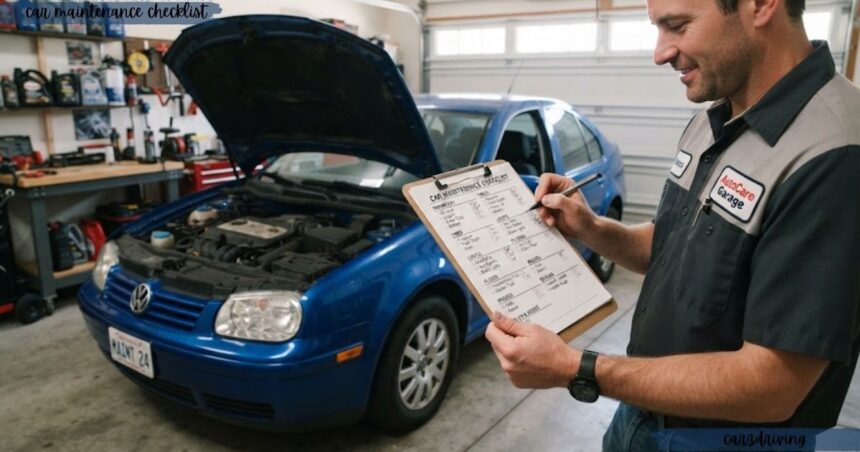
Every car owner learns pretty quickly that a bit of regular care, guided by a solid car maintenance checklist, goes a long way. I’ve kept my own vehicle running for years past what most people expect, simply by working through the same small checks over and over. Here’s a full breakdown of what actually matters, broken down by area.
Car Maintenance Checklist (Fuel)
Every driver knows that a full tank makes the difference between a smooth journey and a stressful one. Many drivers forget to check the fuel gauge before setting off, and this becomes risky during harsh winter weather when roads get busier and delays pile up. Nobody wants to run out of fuel halfway through a trip, so a quick glance at the tank before any journey saves a lot of hassle.
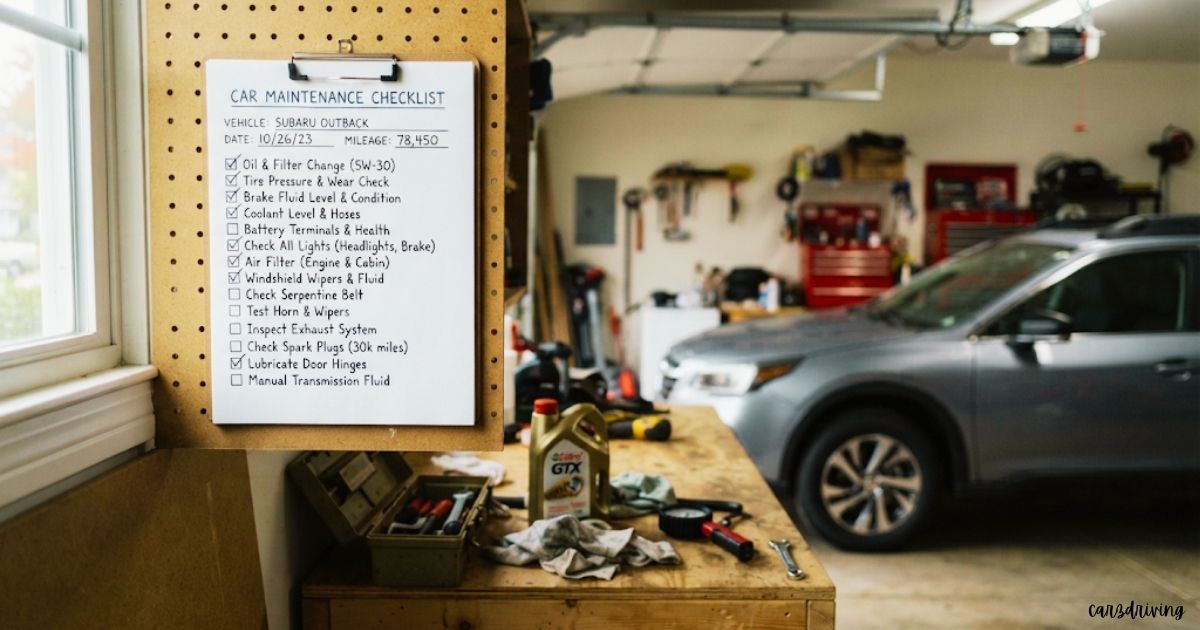
Oil & Coolant
Checking the oil level and coolant level should become second nature for every vehicle owner, especially before long road trips. Roadside patrols report that one in three cars they attend have oil readings that sit dangerously low, and this can quickly cause catastrophic engine damage if nobody catches it in time.
Pull out the dipstick, wipe it clean, and check whether the oil sits between the minimum mark and the maximum mark; top up if it’s low, using the owner’s handbook or a local dealer to confirm the right motor oil and oil filter for your engine.
Motor oil lubricates all the moving parts inside the engine, works as a sealant against debris, cools the engine, fights engine corrosion, and protects the engine components from wear and tear.
Depending on the car, an oil change might be due every 3 months or 3000 miles, though many modern owner’s manual guides stretch the exchange intervals out to 5,000 miles or even 10,000 miles.
The coolant sits inside a sealed system, so it shouldn’t need topping up over regular gas fill-ups, but check it anyway, since a frozen engine in winter months or an overheat in summer both start with poor coolant care. Look at the radiator level when the engine is cold, and check for the right antifreeze and water mix, typically a 50/50 mix, inside the coolant system.
Watch for buildup around the radiator, and let a professional handle flushing if it looks dirty, because ignoring it invites a breakdown and other engine problems later.
Tyres
Tyres deserve a visual inspection every few weeks, since splits, bulges, and general wear and tear develop slowly and catch drivers off guard. Check the tread depth across the front tires and back tires, keeping in mind the minimum tread level sits at 1.6mm, while 3mm gives better grip in the colder months.
A tire pressure gauge helps confirm the correct tyre pressure, and the right numbers usually sit inside the owner’s handbook, alongside guidance for the spare tyre and any extra load you plan to carry. During a freezing temperature drop, tyre pressure falls by roughly one pound for every 10 degrees, so it pays to check more often once the weather turns.
Uneven tread wear patterns often point to poor wheel alignment or heavy usage, so rotate tires regularly to balance things out and cut down on noise and vibration. In icy driving conditions or slush, winter tires or a snow tire with softer tire compounds grip the road far better than standard rubber, improving traction and shortening braking distance.
When unsure about tread depth, the penny method offers a quick way to check inflation and wear on any tyres without extra tools.
Wiper Blades
Wiper blades wear out faster than most drivers expect, and small cracks or splits in the rubber mean it’s time to replace them, usually about once a year. In winter, freezing conditions cause ice buildup on the windscreen, and slipping a plastic sheet or cloth between the blade and the glass stops it sticking overnight.
A splash of de-icer or a little warm water frees stuck blades quickly, and swapping to winter wiper blades during the coldest months keeps visibility sharp. When the car sits parked for long stretches in the cold, pulling the blades away from the glass protects the rubber edge from damage.
Electrics
A car’s electrics cover everything from headlights and fog lights to the battery, and all of it needs regular attention to stay safe on the road.
Park facing a flat wall or garage door and switch on the headlights to check they sit level, then ask a friend to stand behind while you tap brakes to confirm the brake lights work, along with the turn signals and parking lights; skipping this risks getting fined over unreadable number plate lights or a blurry registration.
Check the bulbs regularly, since a burnt-out bulb is easy to miss until it causes trouble. Inside the garage, look at the battery terminals for corrosion, clean them with hot water, and note that petroleum jelly acts as an insulator, which can reduce conductivity over time, so ask a mechanic about proper terminal coating instead.
A battery older than four years old may struggle with the starter, so get battery testing done at a garage, checking both the charging system and the starting system for any draining battery issue.
Patrols deal with around 400,000 battery faults every year, since cold weather, extreme cold, extreme hot spells, wet conditions, and ice conditions all put pressure on an ageing battery, especially with extra electrical equipment like the heater running and drawing extra electrical current in winter.
Air Filter
The air filter sits inside a black box under the bonnet, and keeping it clean improves fuel efficiency, supports engine protection, and prevents a drop in engine power.
Dirt and debris clog the filter over time, so most vehicle handbook guides suggest a replacement every 12 months or 12,000 miles, whichever comes first. A clean filter also helps lower emissions, so check the owner’s manual for the exact steps for your car.
Spark Plugs
Spark plugs ignite the gas and air mixture that powers petrol engines, so a worn plug quickly leads to an engine misfire and a drop in engine power and engine efficiency. Most need swapping around every 30,000 miles, and a DIY replacement is possible with the right tools, though checking the handbook or asking a dealer or professional first confirms whether your car allows it.
Exterior
Regular car cleaning keeps the exteriors looking sharp, and a simple wash by hand should focus on the headlights, brake lights, and number plates, since these keep you visible on the road.
Skipping this can get you fined for driving in a dangerous condition, especially if the windscreen or windows stay dirty and block your view. Wax applied roughly every six months protects the paint and finish from sun damage, rust, and everyday grime like dust, sand, salt, and ozone.
Screen wash
Screen wash matters all year, since winter snow and grit leave dirty windscreens, while bugs and pollen in summer smear the view just as badly. Check the tank under the bonnet and top up with a good additive or a ready-made pre-mix, both easy to grab at most petrol stations.
Brakes
Properly working brakes matter more than almost anything else on a car, so check the brake fluid level regularly and top up using the fluid specification listed in your vehicle handbook. Brake fluid is corrosive, so if you feel unsure, hand the job to a professional rather than risk repair failures or costly repair bills later.
Air conditioning
Whether it’s 35 degrees outside or close to freezing, a working air conditioning system makes every drive comfortable, though beyond simple visual checks of the pipework, there isn’t much you can inspect yourself. A competent person with the right equipment should handle servicing the aircon unit, and on hot summer days, a system that doesn’t feel cool enough often needs re-gassing using specialist equipment at an authorised servicing centre.
Interiors
Nobody wants their car turning into a skip-on-wheels, so keeping the interiors tidy matters for more than looks. Clear out the footwells, wipe the dashboard, and keep only the essentials in the boot, since discarded bottles rolling near the pedals create a real safety risk. Being tidy isn’t about being a neat freak — it’s about staying safe.
Transmission Fluid
Transmission fluid works as a lubricant, keeping the moving parts inside the transmission running smoothly, whether the car has an automatic transmission or a manual transmission. Follow the manufacturer recommendations for when to check and change it, since ignoring it risks costly transmission damage or a full replacement.
Transfer Case Fluid
In four-wheel drive and all-wheel drive cars, the transfer case shifts power from the transmission to the axles, so keeping it leak-free matters for smooth handling. Have a professional carry out a fluid check at the manufacturer intervals to keep everything running as it should.
Inspect Shocks And Struts
Shocks and struts absorb bumps in the road and keep every trip a smooth ride rather than a rough ride. Get a professional inspection every 50,000 miles, or sooner if you notice a loss of control on rough roads.
Serpentine Belt
The serpentine belt drives key parts like the alternator, power steering, and air conditioner, so a quick look for cracks or wear each service catches problems early. Swap it for a replacement as soon as you spot damage, or follow whatever interval the vehicle manual recommends.
Front And/or Rear Differential
Differentials, an often-overlooked part of any car maintenance checklist, send engine power from the engine to the tires, and most front-wheel drive or rear-wheel drive cars carry just one, while 4WD and AWD vehicles often add a center differential as well.
Keep them lubricated and let a professional carry out a fluid change according to the manufacturer recommendation for your vehicle.
FAQs
How often should I follow a car maintenance checklist?
Run through your car maintenance checklist every month, and always before a long journey, to catch engine problems early.
What should I check first on my car?
Start with the oil level, coolant level, and tyre pressure, since these cause the most common breakdown issues.
How do I know if my battery needs replacing?
If your car is four years old or struggles to starter, get battery testing done before it leaves you stranded.
Why is tyre tread depth so important?
Worn tread depth below the minimum tread level reduces grip and traction, putting your safety at real risk.
Can regular maintenance really save me money?
Yes catching small issues early through routine checks protects you from costly repair bills and sudden transmission damage.