

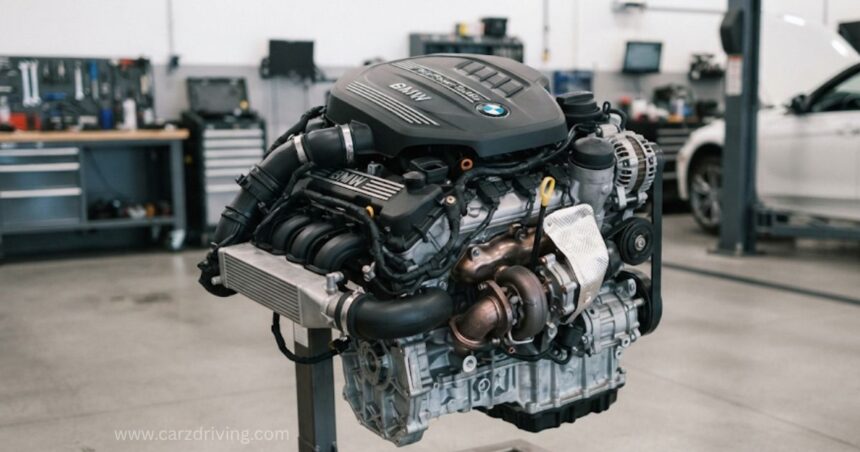
Owners across the UK love how responsive and economical this 1.5-liter engine B38 feels day to day, since its compact size, direct injection, and focus on fuel efficiency, efficiency, and emissions compliance give drivers smooth, turbocharged engines style pulling power without heavy fuel bills, and performance and smooth performance rarely disappoint on a well-kept car.
What Is the BMW B38 Engine?
Technically speaking, this engine is a 1.5-litre turbocharged petrol engine built inside BMW’s modular engine family, sharing hardware ideas with the B58 and B48 the same way cousins share a family trait, and it leans on direct fuel injection along with an aluminium block for real weight reduction without hurting strength.
A clever balance shaft system calms down the natural vibrations you’d expect from three-cylinder engines, so the whole unit feels smoother than its small engine size suggests on UK roads.
Its turbocharger pushes out strong low-end torque and a solid power output, landing most versions between 134 bhp and 138 bhp, which is more punch than the numbers alone let on.
Which Cars Use This Engine?
Under BMW Group ownership, this little engine spreads across a huge chassis code list, starting with the BMW 1 Series in F20, F21, and F40 guise as the 116i and 118i, moving into the BMW 2 Series in F22, F23, and F44 form as the 218i Coupe, Convertible, and Gran Coupé, plus the 2 Series Active Tourer and Gran Tourer in F45 and F46 bodies, then the BMW 3 Series as the 318i
in F30 and F31 LCI trim, and finally the BMW X1 in F48 guise and the BMW X2 in F39 form, both badged sDrive18i, alongside the BMW 225xe Active Tourer plug-in hybrid using U11 and U12 platforms and the U10 code for hybrid variants.
The MINI side of the family looks just as broad, covering the MINI Hatch in F55, F56, and F57 guise as the Cooper and One, the MINI Clubman in F54 form, and the MINI Countryman in F60 shape, every one running the same core engine architecture under different bodywork.
Beyond regular petrol duty, this engine also powers the BMW i8 as a high-output hybrid, and it even turns up in range-extender and other hybrid applications outside typical BMW badges, proving real adaptability across the lineup. Output and tuning shift slightly from car to car, but that shared design keeps things consistent, and I’ve always found it impressive how one small block covers so much ground for BMW.
Timing Chain Issues
BMW markets the timing chain as a lifetime part, but real-world higher-mileage engines often prove otherwise, showing chain stretch, or timing chain stretch, along with noisy timing components that get louder over time, much like the diesel sibling engine known as B47.
Drivers usually notice rattling noise on cold starts, a lit engine warning light or check engine light, rough idle, and sometimes engine misfires, all clear warning signs that something inside needs attention before small trouble turns into catastrophic failure or the chain snaps outright, causing serious internal engine damage.
Good news is that BMW improved timing chain components on later models, though earlier models still carry more risk, and most mechanics suggest a replacement somewhere around the 60,000 miles to 80,000 miles mile mark if symptoms show up.
I always push for early diagnosis, since catching poor engine performance or a full failure early saves real money down the line.
Oil Issues
High oil consumption ranks as one of the most common complaints I hear from this engine owners, usually traced back to worn piston rings, a failing PCV valve, or turbocharger oil seal wear deep inside the engine.
Many drivers only spot a problem once oil levels drop low between services, triggering oil level warnings on the dash, while separate oil leaks from the valve cover gasket or oil pan gasket show up as oil stains under the car or a burning oil smell in the cabin.
These rubber gaskets tend to harden faster under high temperatures, so regular maintenance really is the best defence against both problems at once.
Turbocharger Issues
The turbocharger works hard for such a small engine, so loss of power, dropping boost pressure, and strange whining noises often signal trouble building up inside.
Some owners also deal with oil leaks into the intake, visible exhaust smoke, and noticeable turbo lag, especially on cars stuck doing mostly short journeys with infrequent oil changes.
A milder issue called turbo wastegate noise, or wastegate rattle, shows up at low RPM and usually stays a minor annoyance rather than a full reliability issue, but poor-quality oil speeds up engine wear regardless. Sticking to clean synthetic oil and proper oil changes is the simplest way to avoid full turbo failure later.
Cooling System Issues
Plastic parts inside the cooling system age faster than metal ones, and I regularly see plastic components turn into cracked hoses or slow coolant leaks over time.
A failing coolant thermostat, general thermostat failure, or water pump failure in the electric water pumps and thermostats setup tends to appear around 50,000 miles to 70,000 miles, since BMW itself lists these as known wear items.
Warning signs include an overheating engine, an erratic temperature gauge, unusual coolant temperature readings, or a check engine light tied to heat, and full overheating even once can silently damage the cylinder head for good.
Direct Injection Carbon Build-Up
Common signs include poor throttle response, random misfires, rough idle, hesitation during acceleration, and reduced fuel economy or reduced fuel efficiency, and the problem grows worse on cars used mainly for short urban trips.
Cars reaching higher mileage, roughly between 40,000 miles and 60,000 miles, usually benefit from walnut blasting or preventive intake cleaning, while topping up with high-quality fuel and occasional fuel additives helps slow the build-up between services.
Ignition Components
Coil packs and spark plugs can suffer premature failure on this, though this weak spot shows up across plenty of other BMW engines too, not just this one.
The upside is that both parts stay fairly inexpensive to replace, so this issue rarely turns into a big repair bill. Ignoring either part for too long slowly drags down overall running smoothness and fuel use.
Fuel Injector Issues
Dirty or failing fuel injectors often show up as poor fuel economy, random misfires, a rough idle, or a glowing check engine light on the dash.
Clogged injectors usually trace back to lower-quality fuel filling the tank too often, and the fix is either cleaning the injectors or a full replacement depending on how far the damage has gone. Adding fuel injector cleaner now and then stretches their lifespan and keeps running costs down.
Reliability
In my experience, this stays reasonably reliable when maintained correctly, but it turns unforgiving fast once neglected, so a full service history paired with frequent oil changes and sensible driving habits usually carries a car well past 100,000 miles.
Sticking to shorter routines instead of BMW long service intervals and treating basic maintenance as non-negotiable protects oil quality, and that single change frequency habit does more for turbocharger protection, timing components, and internal bearings than anything else, since worn oil speeds up wear acceleration across the board.
Owners of higher-mileage examples rarely report internal failures, bottom-end failures, or structural weaknesses, largely thanks to its shared DNA with other modular engines, where familiar components, systems, and service.
How Long Does It Last?
Across the UK, a well-maintained engine typically runs between 100,000 miles and 140,000 miles before wear-related issues start creeping in as mileage climbs higher.
Early failures almost never appear out of nowhere, since they usually follow months of warning signs like rising oil consumption, strange noises, or persistent warning lights.
Once major internal damage hits, owners must choose between an engine rebuild, a full engine replacement, or fitting a reconditioned unit, and that choice really depends on the extent of damage alongside overall vehicle condition.
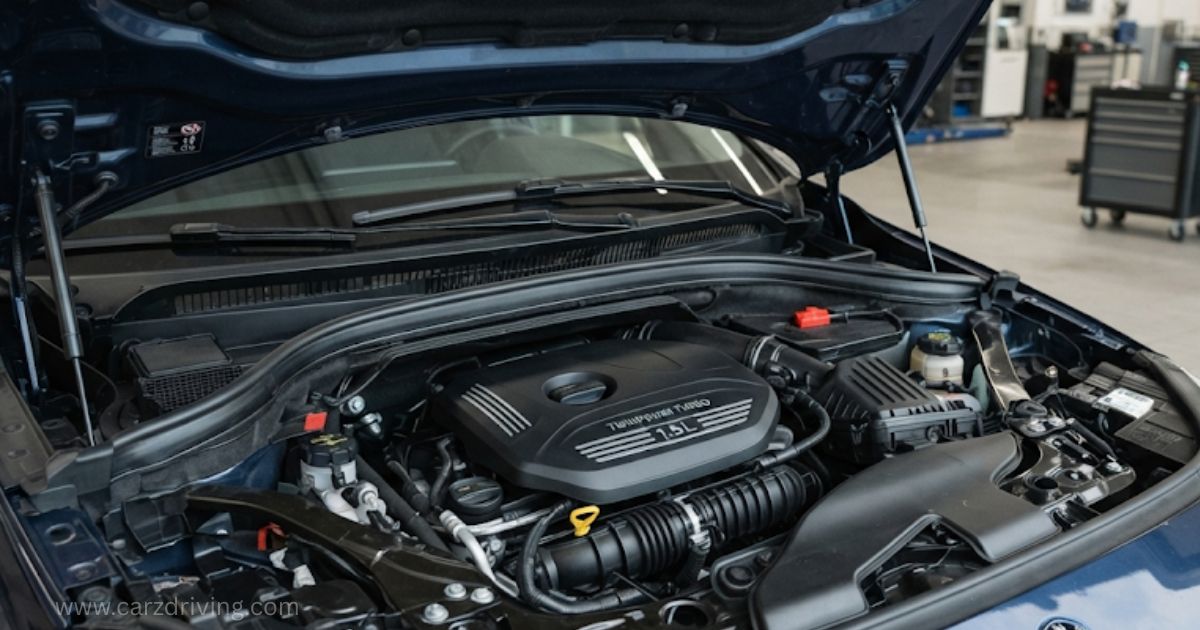
Maintenance Tips
Shorter oil change intervals beat the official schedule every time, so I always recommend changing engine oil every 5,000 miles to 7,000 miles, or at most 6,000 miles to 8,000 miles, well ahead of the factory’s 10,000 miles to 12,000 miles window, using BMW-approved fully synthetic oil or BMW-approved synthetic oil to protect against turbo issues and timing-related issues before they start.
Letting the cold engine finish an engine warm up before aggressive driving gives proper oil circulation time to reach every part, and that one small habit alone quietly saves owners huge repair costs later.
Check the oil level and coolant level yourself rather than trusting the dash alone, glancing at oil every few weeks and coolant monthly, because small leaks, whether oil leaks or coolant leaks, can grow into serious damage if nobody notices in time.
Never ignore warning lights or engine management lights, since acting fast can stop timing chain failure, turbo damage, internal engine wear, cooling system damage, or full catastrophic engine failure before it starts, and a proper timing chain inspection helps the moment you hear a strange rattling noise.
Owners driving mostly short trips should also schedule preventive carbon cleaning, or walnut blasting, somewhere between 40,000 miles and 60,000 miles, since this keeps carbon buildup and carbon deposits from causing real performance degradation and protects both performance and fuel efficiency over time.
Regularly topping up coolant levels with BMW-approved coolant, alongside periodic intake cleaning, rounds out a maintenance routine built to protect this engine for the long run. Filling up with premium fuel and running a fuel system cleaner through the injectors every so often keeps things clean, while checking for recalls and software updates at the dealer can fix known faults for free.
Finally, treat any check engine lights, rough idles, or unusual noises as an early alarm rather than something to ignore, because catching engine damage at this stage is always cheaper than paying for it after the fact.
Rebuilding vs Replacing
When major damage strikes, repair costs can spiral fast, and the right fix, whether an engine rebuild or full engine replacement, always depends on how bad the damage really is alongside overall vehicle condition.
For severe internal failures, many owners turn to a reconditioned engine instead, and across the UK market, reconditioned BMW 38 engines stand out for solid reliability, real warranty coverage.
I’ve steered several customers toward this route myself, and it almost always saves money without sacrificing peace of mind.
Efficiency
This engine was born straight out of BMW’s downsizing push, so low fuel consumption and reduced emissions sit right at the centre of its design, built around small displacement, turbocharging, and direct injection.
Clever tech like Valvetronic and Double VANOS delivers strong low-end torque and smooth power delivery, making it feel noticeably livelier than older naturally aspirated four-cylinders with similar output.
Its compact size and low weight also improve vehicle dynamics, boosting fuel economy while keeping good balance and drivability, and that same focus on thermal efficiency and clever packaging is exactly why engineers picked this engine for the BMW i8.
Tuning & Performance Potential
On paper, a small 1.5-liter three-cylinder doesn’t look like an obvious tuning candidate, yet it hides more headroom than people expect.
A careful Stage 1 ECU tune usually lifts horsepower from the stock mid-130 range into the 170s, and the torque gains often feel more noticeable in daily driving than the peak horsepower figure alone, sharpening mid-range response and everyday drivability.
Small extras like intake improvements or better exhaust components can sharpen throttle response further, though the gains stay modest next to BMW’s larger engines.
Still, the stock turbocharger, fuel system, and cooling setup set a hard ceiling on safe power increases, and aggressive tuning without support quickly hurts reliability, since the engine’s torque management and knock management strategies demand care, so I always push clients toward sensible upgrades and calibrated upgrades built for real driving rather than chasing big dyno numbers.
Should You Buy a BMW With a B38 Engine?
This little downsized engine was never built to thrill traditional enthusiasts or purists the way a straight-six does, yet it stays genuinely capable and well-engineered at delivering solid real-world performance, strong efficiency, and dependable daily operation across a wide model range.
With proper maintenance, it proves generally reliable and stays durable over the years, and thanks to advanced turbocharging and direct injection technology, owners chasing light tuning still get worthwhile gains without giving up longevity.
Before buying, always arrange a pre-purchase inspection, or PPI, from a reputable mechanic, and check for a full service history or comprehensive service history from the previous owner, since mileage considerations matter a lot on a higher-mileage car past 60,000 miles, where timing chain wear, carbon buildup, and cooling system component replacements become more likely.
Staying on top of vigilant maintenance and preventive maintenance through careful ownership keeps costly repairs away and rewards buyers with years of trouble-free driving.
Conclusion
After years around this engine, I still see the B38 as a genuinely well-engineered, efficient power unit whose long-term performance depends almost entirely on proper maintenance.
It delivers real fuel economy and smooth driving for a small three-cylinder engine, yet timing chain wear, rising oil consumption, and turbocharger problems can all creep in the moment servicing neglect sets in.
Sticking with regular oil changes, building careful driving habits, and reacting fast to warning signs makes all the difference, and for UK drivers who stay on top of it, this engine stays reliable and genuinely cost-effective for many years to come.
FAQs of B38
Why is my BMW B38 engine making a rattling noise on cold starts?
A rattling noise on cold starts often signals early timing chain wear, so don’t ignore it quick early diagnosis saves you real money.
Can a BMW B38 engine be tuned safely?
Yes, a careful Stage 1 ECU tune can boost horsepower and torque gains without hurting reliability, as long as you avoid aggressive tuning.
What causes carbon build-up in a BMW B38 engine?
Direct injection naturally causes carbon build-up on intake valves, especially in cars used mostly for short urban trips.
Is it expensive to repair a BMW B38 engine?
Repair costs vary, but a reconditioned engine offers real reliability and lower cost compared to brand-new engines.
Which BMW and MINI models use the B38 engine?
The BMW B38 engine powers the BMW 1 Series, 2 Series, X1, MINI Cooper, and even the hybrid BMW i8.